A buyer-focused editorial on how ultra-premium families should evaluate trainer, tutor, wellness, and household-service access when considering Vita at Grove Isle in 2026.
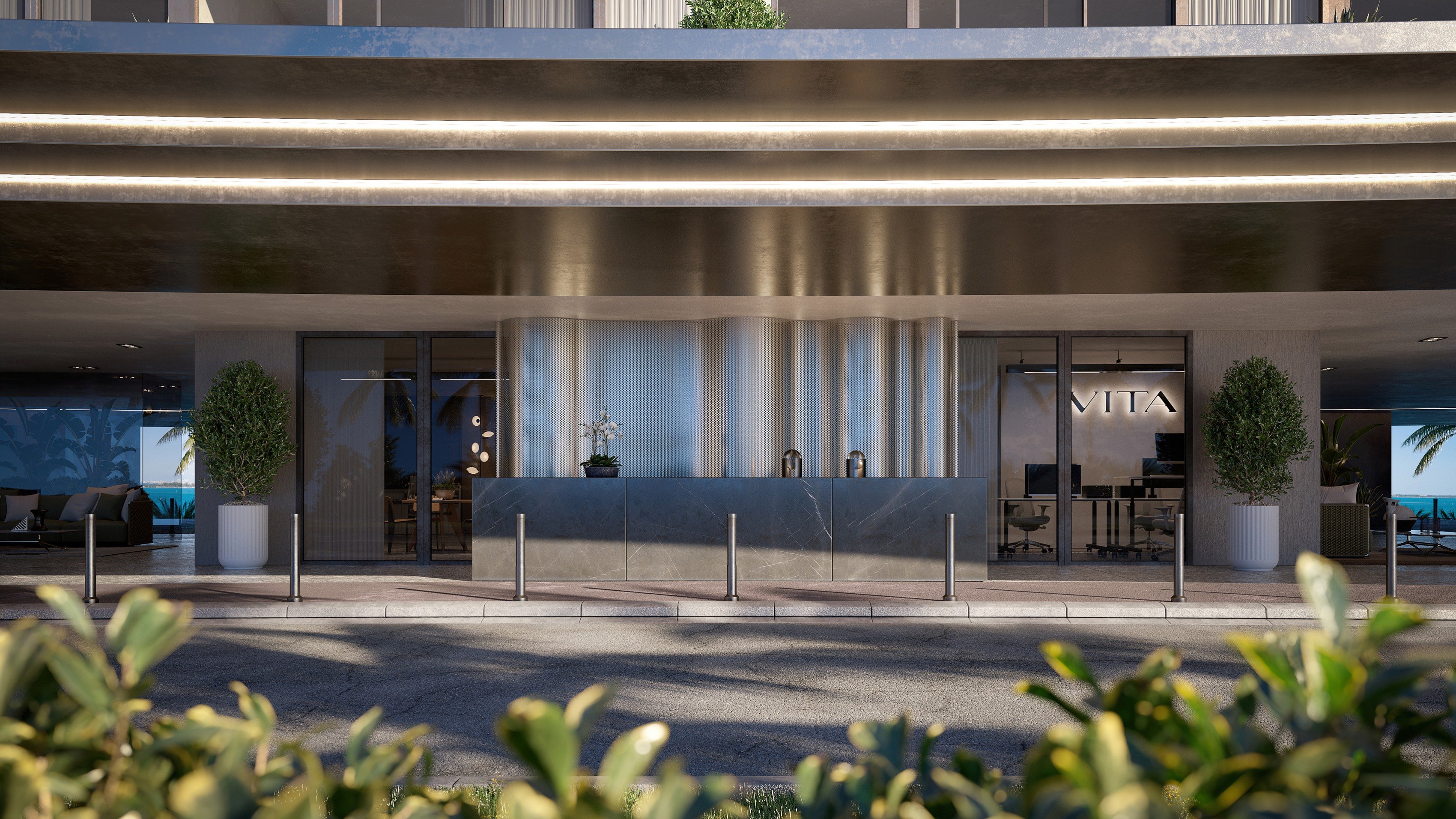
For the ultra-premium buyer, residential scrutiny is no longer limited to views, finishes, parking, or the elegance of a lobby arrival. The sharper question is operational: can the home support the people who keep a household performing at its highest level? At Vita at Grove Isle, that means looking beyond the residence itself and examining how trainers, tutors, therapists, coaches, drivers, chefs, assistants, and visiting specialists move through the day.
This matters deeply for 2026 buyers who treat time as the true asset. A private Pilates session before school drop-off, a math tutor after tennis, a language instructor before dinner, or a recovery specialist after travel can define the practical success of a home. When the access pattern is graceful, the residence feels larger than its square footage. When it is strained, even a beautiful address can become inconvenient.
The trainer and tutor conversation is not merely about lifestyle indulgence. It is about household continuity. Buyers with school-age children, multi-generational routines, athletic goals, or demanding travel schedules increasingly expect a residence to absorb support services without friction. That expectation changes how a family should tour, question, and compare properties.
At this level, the right building does not simply allow a visitor to arrive. It gives the household confidence that the visitor can be announced, routed, scheduled, hosted, and released without disturbing privacy. The most refined homes make these movements nearly invisible. The test is whether a buyer can imagine a full Tuesday, not just a ceremonial Saturday showing.
For Vita at Grove Isle, access should be evaluated as a lived sequence. Where does the trainer arrive? How is the tutor greeted? Can a session begin on time if the household is hosting guests? Is there a natural pause between a child’s academic session and a parent’s wellness appointment? These questions sit at the intersection of service, design, and discipline.
A serious buyer should begin with the morning. Between 6:00 and 9:00, even the most composed household can become compressed. A trainer may need early access, children may be preparing for school, a driver may be waiting, and household staff may be coordinating meals or packing. The question is whether the property supports simultaneous motion.
The best audit is simple: walk through a hypothetical morning in exact order. A trainer arrives. A resident wakes. A child has an online review session. Breakfast is served. A car is called. A second professional arrives just as the first leaves. If the sequence feels chaotic on paper, it may feel worse in real life.
Buyers should ask how arrivals are announced, where a waiting professional may pause, and how private areas are protected. The point is not to create a commercial flow inside a family residence. It is to preserve calm while maintaining access to the services that make the household work.
The private-school conversation in South Florida often centers on commute time, admissions, calendars, and after-school enrichment. Yet the residence itself plays a major role in whether academic support feels sustainable. A tutor needs a quiet setting, predictable timing, and an entry protocol that does not interrupt the entire home.
For families considering Vita at Grove Isle, the tutor test should include three questions. First, is there an appropriate place for a focused session that is not the child’s bedroom? Second, can the session occur while adults continue their own routines? Third, can the tutor leave without resetting the household for the evening?
The answer may involve a library-like room, a den, a flexible family space, or a secondary sitting area. The label matters less than the atmosphere. Good study space is acoustically calm, comfortably supervised, and visually separate from entertainment. In a luxury residence, education should not feel improvised.
Pool time, strength training, stretching, and recovery are often part of the same household calendar. The modern buyer may not be asking only for an amenity. The buyer may be asking whether a wellness routine can be maintained with discretion and regularity.
A trainer’s access should be tested against weather, school schedules, guest visits, and travel recovery. Can a resident move from a session to a shower without crossing the social center of the home? Can equipment be stored without turning a beautiful room into a utility zone? Can a wellness provider arrive for a short session without creating a disproportionate amount of household coordination?
For new-construction buyers, the appeal is often the promise of contemporary planning. But the true measure is not novelty. It is whether the floor plan, building culture, and service protocols align with the way the household actually lives.
Access without privacy is not luxury. The household may welcome support, but it should not feel exposed to it. A tutor should not become a witness to dinner preparation. A trainer should not need to pass through the most intimate family areas. A visiting specialist should not be forced into awkward proximity with guests.
This is where the buyer’s questions should become precise. Who knows when a provider arrives? How are recurring visitors identified? Can different professionals be scheduled without confusion? What is the protocol when a substitute tutor or new trainer appears? The more prominent the household, the more these details matter.
Discretion is also emotional. Children should feel that academic support is normal, not staged. Adults should feel that fitness and wellness appointments are part of a private routine, not a performance. A residence succeeds when support becomes seamless.
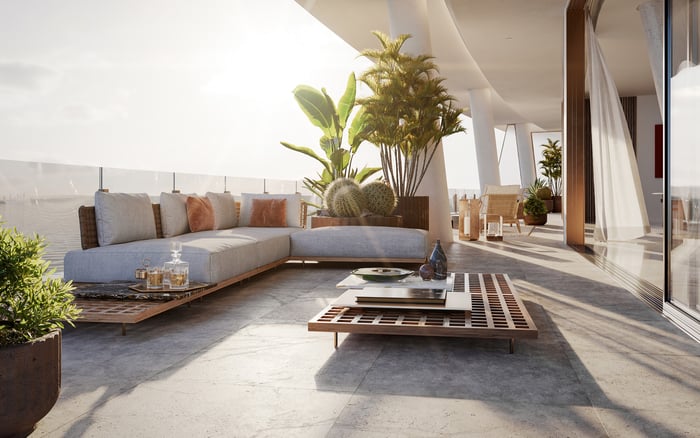
Terrace use can be part of the access conversation, particularly for stretching, quiet reading, language practice, or decompression after a long day. Yet outdoor space only works if it connects intelligently to the interior. If every movement requires crossing a formal room, the space may be admired more than used.
A buyer should study how the residence transitions from arrival to activity. A tutor may need a table, light, and quiet. A trainer may need open space, ventilation, and a surface that can be reset quickly. A therapist or coach may need privacy and a comfortable seating arrangement. The residence should not need to be rearranged every time professional support arrives.
In buyer shorthand, Coconut Grove often signals a preference for a more residential pace, mature daily rituals, and a strong connection between indoor life and the surrounding neighborhood mood. For Vita at Grove Isle, that expectation raises the bar. The home should feel serene, but not isolated from the practical demands of a high-functioning family.
The most effective buyers arrive with a service calendar. It does not need to be elaborate, but it should be honest. List the actual weekly touchpoints: personal training, tutoring, music lessons, academic coaching, physical therapy, massage, styling, pet care, household management, and visiting guests. Then ask whether the property can handle those touchpoints without ceremony.
A buyer should also distinguish between occasional hospitality and recurring access. A dinner guest is different from a tutor who comes three times a week. A visiting chef for a party is different from a daily wellness professional. Recurring visitors create patterns, and patterns reveal whether the residence is truly compatible with the household.
For Vita at Grove Isle, the central buyer test is therefore less about a single amenity and more about cadence. Can the home support ambition, recovery, education, and privacy in the same week? Can it do so without making the family feel managed by the property? That is where luxury becomes personal rather than decorative.
Why is trainer access important for a luxury buyer in 2026? Trainer access affects how easily a household can maintain wellness routines without disrupting privacy, family schedules, or guest use of the home.
Why should tutor access be reviewed before purchase? Tutor access helps determine whether academic support can happen calmly, consistently, and without turning family spaces into improvised classrooms.
Is Vita at Grove Isle only a design decision? No. For many buyers, Vita at Grove Isle should also be evaluated as a daily operating environment for family, wellness, education, and service access.
What should families test during a property visit? Families should walk through a normal weekday, including morning fitness, school preparation, afternoon tutoring, dinner routines, and visitor arrivals.
How does privacy affect the trainer and tutor conversation? Privacy determines whether recurring professionals can enter, work, and leave without exposing intimate family areas or interrupting household rhythm.
Should buyers ask about recurring visitor protocols? Yes. Recurring access for tutors, trainers, and specialists should be clear, consistent, and compatible with the household’s expectations for discretion.
What room works best for tutoring? The strongest tutoring space is quiet, supervised, comfortable, and separate from both bedrooms and high-traffic entertaining areas.
How should wellness routines influence floor-plan review? Buyers should consider movement paths, storage, shower access, acoustic separation, and whether a training session can occur without household disruption.
Does service access matter for resale appeal? It can. Homes that support modern family and wellness routines may feel more relevant to buyers who value time, privacy, and operational ease.
What is the core buyer test for Vita at Grove Isle? The core test is whether the residence can support a sophisticated weekly rhythm while preserving calm, privacy, and a sense of effortless living.
For a tailored shortlist and next-step guidance, connect with MILLION.
If branded residences are on your mind — as a home or as an allocation — we would be glad to share what we are seeing, privately.
Begin a quiet conversation