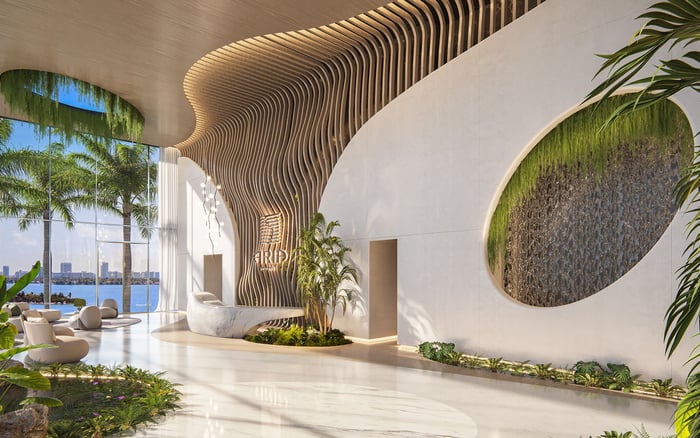
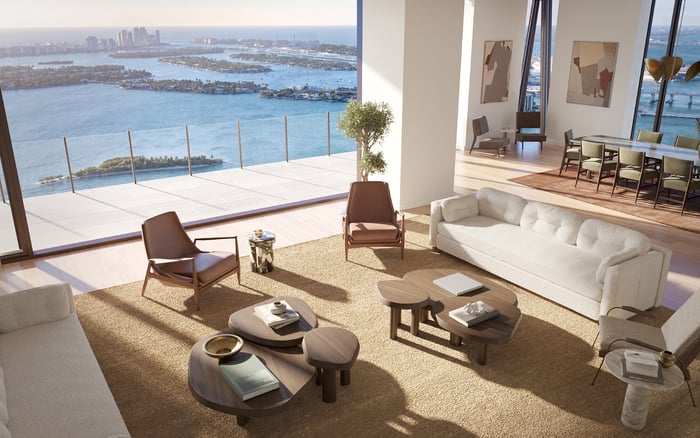
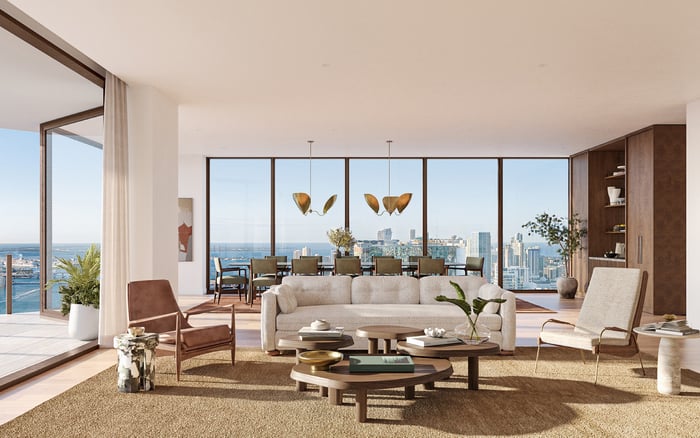
A discreet, buyer-focused look at EDITION Edgewater through the lens of daily use, from service culture and HVAC performance to traffic, pets, packages, and long-term ownership rhythm.
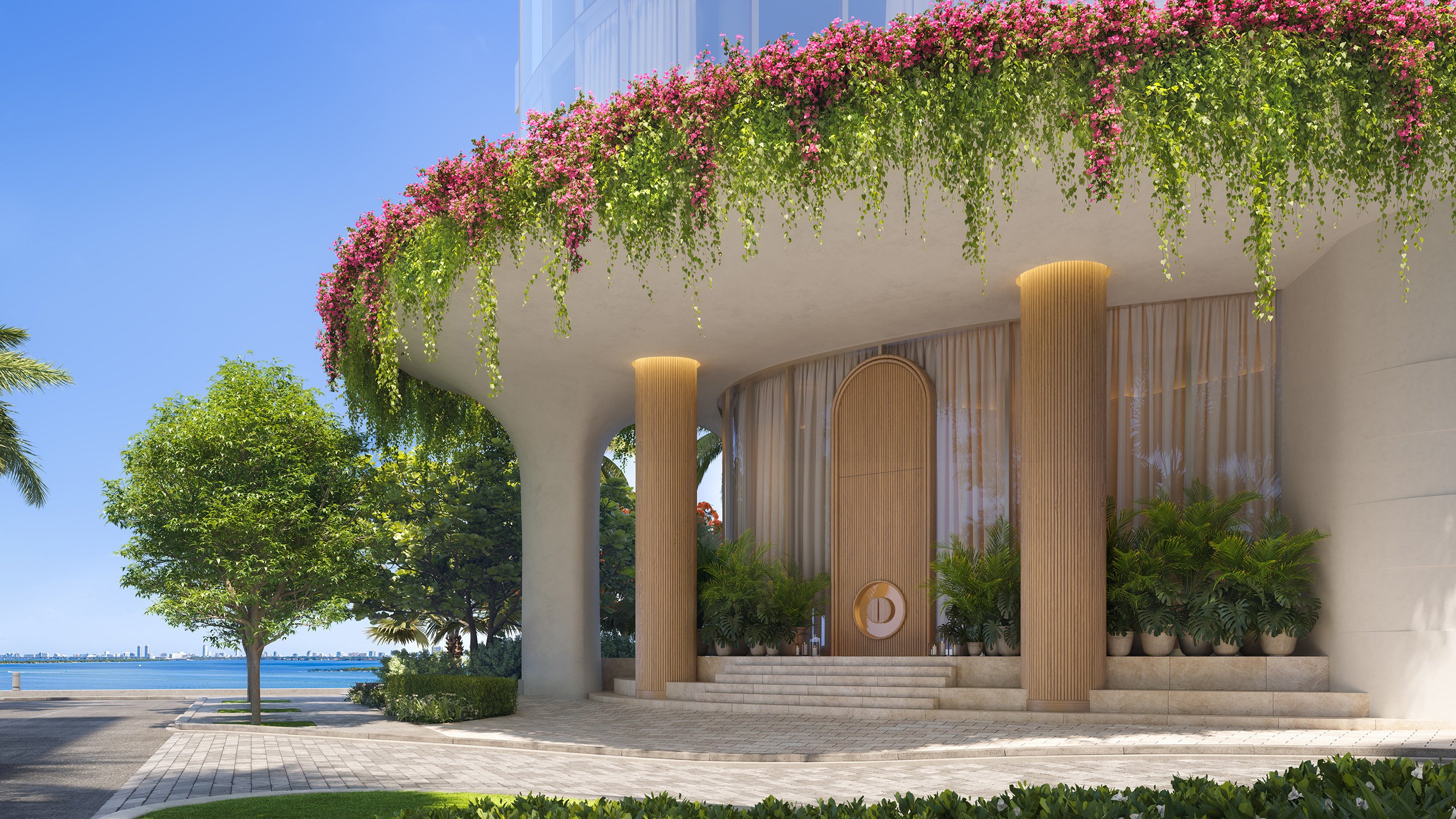
Launch renderings are designed to seduce. They show glass catching the sunset, Biscayne Bay softening into color, amenity decks suspended above the city, and a brand atmosphere that feels composed before anyone has moved in. For a buyer considering EDITION Edgewater, the more important question begins after that first visual impact: how will the building feel on an ordinary Tuesday in August?
EDITION Residences Edgewater is positioned as a luxury branded residential project in Miami’s Edgewater neighborhood, placing it in one of the city’s most closely watched vertical districts. That branding carries weight. It implies service, mood, design discipline, and a hospitality sensibility adapted to private ownership. Yet a residence is not a hotel room. Owners will judge the building over years of arrivals, deliveries, family visits, maintenance calls, association meetings, and quiet mornings before the city wakes.
This is where daily livability becomes the real luxury metric. The most valuable buildings in South Florida are not merely photogenic. They are legible, well-operated, climate-aware, and calm under pressure.
A branded residence asks buyers to believe that a known hospitality culture can become a durable residential operating system. In a hotel, service is experienced over a few curated days. In a condominium, it is tested through repetition. The doorman remembers patterns, not just names. Management must solve ordinary problems without turning them into theater. Staff must balance privacy, warmth, and consistency for residents who are not transient guests.
That distinction matters at EDITION Edgewater. The brand promise will not be measured only by whether public spaces feel cinematic. It will be measured by how naturally the team handles a late package, a visiting relative, a pet concern, a busy elevator bank, or a service request when the building is full. In this category, polish is the beginning, not the endpoint.
Buyers comparing Edgewater with other design-forward Miami addresses, including Aria Reserve Miami and Villa Miami, should look beyond skyline presence. The question is not simply which tower photographs best. It is which residential ecosystem is most likely to feel effortless after the excitement of closing has faded.
Miami heat is not an abstract consideration. Midsummer humidity changes how a lobby feels, how quickly elevators become uncomfortable, how terraces are used, and how much residents rely on interior common areas. For new-construction buyers, HVAC performance is central to the ownership experience.
This does not require a buyer to become an engineer. It does require practical questions. How are arrival areas cooled and shaded? How does the building manage transitions from garage, valet, lobby, elevator, corridor, and residence? Are amenity spaces designed for seasonal use, or do they depend too heavily on perfect weather? In South Florida, luxury fails quickly when climate comfort is treated as secondary.
The renderings may emphasize bay views and glass. Daily life will emphasize thermal control, air movement, humidity management, and the ability to move from car to residence without feeling exposed to heat at every step. For a serious buyer, these are not minor lifestyle details. They affect how a property is used, especially by families, older relatives, and seasonal owners arriving after travel.
Edgewater offers a coveted urban waterfront-adjacent setting, but Miami traffic is part of the lived equation. The experience of arriving home depends on how the building manages vehicles, valet rhythms, deliveries, ride-share pickups, guests, and service providers. A beautiful porte cochere in an image is one thing. A calm arrival during a rainy rush hour is another.
Resident flow is especially important in a branded residence because service expectations are higher. The building must feel composed when several things happen at once: owners returning from dinner, guests checking in with front desk staff, food deliveries arriving, pets moving through the lobby, and packages being sorted. The stronger the operating plan, the less residents notice the complexity.
This is where buyers should think in scenarios rather than adjectives. Imagine a Friday evening. Imagine a storm. Imagine school pickups, holiday guests, and a full amenity deck. If the building’s circulation, staffing, and policies can absorb those moments gracefully, the branded experience becomes more than atmosphere.
The true test of EDITION Edgewater will include the least glamorous parts of ownership. Package delivery is one. A luxury building must not only receive items, but route them clearly, securely, and without creating lobby clutter. Elevator congestion is another. A tower can feel serene in marketing materials and still feel strained if vertical circulation is not managed well during peak hours.
Pets deserve the same practical attention. Pet policies, service elevator access, lobby etiquette, cleaning standards, and outdoor routines all affect how daily life feels. A building that welcomes residents elegantly but treats pets as an afterthought risks friction among owners. The same is true for children, visiting family, caregivers, and household staff. Real residential luxury accommodates domestic complexity without making it visible.
Pre-construction buyers should ask how rules will be communicated and enforced. The best policies are neither vague nor punitive. They create predictability. Owners know what to expect, staff know how to respond, and residents can live privately without renegotiating basic routines each week.
Amenities can be spectacular and still be incomplete as a measure of value. In branded residential projects, the amenity deck often carries the emotional promise: resort-like calm, curated design, the sense that everyday life has been elevated. At EDITION Edgewater, that promise should be weighed against maintenance, programming, staffing, reservation systems, guest access, and the long-term cost of keeping spaces fresh.
This is where association culture enters the conversation. Owners are not merely consumers of a brand. They are members of a residential community with shared financial and operational responsibilities. Association meetings, budgets, capital planning, and rule changes will eventually become part of the ownership cycle. The brand may shape the service ethos, but governance will shape the lived reality.
For buyers also considering hospitality-driven residences such as Baccarat Residences Brickell or resort-oriented coastal addresses like The Ritz-Carlton Residences® Miami Beach, the same principle applies. Brand equity is most persuasive when it is supported by disciplined operations.
The strongest buyer questions are grounded in ordinary use. How are packages handled at volume? What happens when multiple elevators are out for service or move-ins? How will HVAC performance be maintained over time? How are guests registered? How are pets managed? How will management respond to recurring owner concerns? What is the plan for resident communication when issues arise?
These questions are not skeptical. They are sophisticated. At the ultra-premium level, buyers are not purchasing a picture. They are making a major capital commitment to a building that must operate through heat, traffic, storms, holidays, repairs, staffing changes, and evolving resident expectations.
That is the central lens for EDITION Edgewater. The project’s visual identity may create the first desire, but lasting residential value will depend on whether branded luxury becomes a calm daily system. If it does, the residence can offer more than theatrical impact. It can offer a way of living that remains elegant because it remains functional.
What is EDITION Edgewater? EDITION Edgewater refers to a luxury branded residential project positioned in Miami’s Edgewater neighborhood.
Why look beyond launch renderings? Renderings show atmosphere, views, and design intent, but ownership is judged through daily routines and building operations.
What daily issues matter most for buyers? Packages, elevator flow, HVAC performance, traffic, pets, guests, children, and association operations all matter.
How is a branded residence different from a hotel? A hotel is experienced briefly, while a residence must deliver service consistently over years of ownership.
Why is Miami heat important to livability? Heat and humidity affect arrival areas, amenity use, elevator comfort, terraces, and interior climate performance.
Should buyers ask about pet policies? Yes. Pet routines influence lobby flow, cleaning standards, service access, and day-to-day resident comfort.
Does Edgewater traffic affect ownership? Yes. Arrival sequence, valet flow, ride-share access, and delivery management shape the lived experience.
Are amenities enough to define luxury? No. Amenities must be supported by staffing, maintenance, reservation systems, and clear operating policies.
What should pre-construction buyers focus on? They should study practical operations, climate comfort, resident flow, governance, and service consistency.
What is the central buyer question? Whether the branded promise creates lasting residential value rather than only short-term visual impact.
For a tailored shortlist and next-step guidance, connect with MILLION.
If branded residences are on your mind — as a home or as an allocation — we would be glad to share what we are seeing, privately.
Begin a quiet conversation