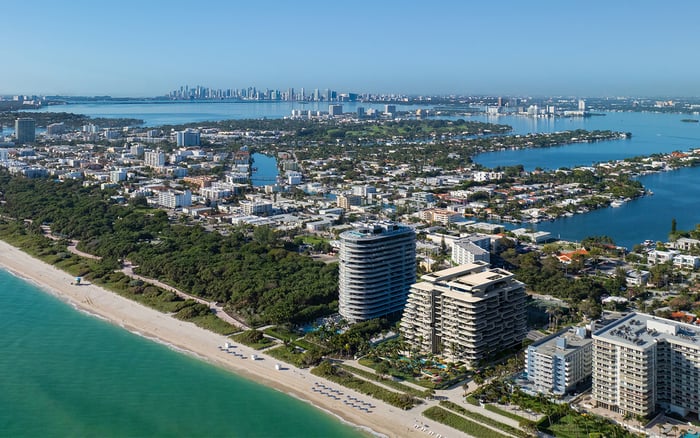
A disciplined guide to separating structural condition from reserve readiness when evaluating a luxury condominium in Surfside.

A polished lobby, composed landscaping, and attentive service may signal that a condominium is well managed day to day. They do not, on their own, reveal whether the structure has been fully evaluated or the association has accumulated sufficient funds for the next decade of capital work.
For a luxury buyer in Surfside, diligence should answer two distinct questions: Is the building structurally sound today? And can the association finance the work its consultants anticipate later? The milestone inspection principally addresses the first question. The Structural Integrity Reserve Study, commonly called a SIRS, helps illuminate the second.
This distinction matters across the local market, whether a buyer is considering Arte Surfside, Ocean House Surfside, or another condominium. Architecture and service shape the ownership experience. Inspection findings, reserve balances, and assessment exposure shape its risk-adjusted cost.
Florida's post-Surfside milestone-inspection framework generally applies to condominium and cooperative buildings at least three habitable stories tall. The initial inspection is generally triggered at 30 years, although a local jurisdiction may apply a 25-year trigger to a building within three miles of the coastline. Qualifying properties are generally reinspected every 10 years after the initial inspection.
A Florida-licensed architect or engineer must perform the milestone inspection. Phase 1 is a visual examination designed to identify evidence of substantial structural deterioration and life-safety concerns. If the professional identifies potential substantial deterioration, the process can advance to Phase 2 testing.
Completion alone is not a clean bill of health. Examine the findings, repair recommendations, testing, evidence of completed work, and remaining scope. A report may establish the condition observed at a given time, but the buyer must still determine what was corrected, what remains open, and how each recommended project will be funded.
That discipline is equally relevant when comparing established properties such as Fendi Château Residences Surfside and The Surf Club Four Seasons Surfside. The correct conclusion comes from the building-specific record-not from age, appearance, reputation, or listing language alone.
A SIRS estimates future funding needs for major common components. Its scope can include roofs, structural members, fire-protection systems, plumbing, electrical systems, waterproofing, exterior painting, windows, and exterior doors. It must generally be updated at least once every 10 years.
Florida's newer reserve rules require funding for SIRS components and eliminated the former practice of annually waiving reserves for those items. For qualifying associations that existed before July 1, 2022, legislative changes extended the initial SIRS deadline to December 31, 2025. In certain circumstances, an association could coordinate the study with a required milestone inspection, subject to an outside completion date of December 31, 2026. House Bill 913, enacted in 2025, also introduced deadline, procedural, and reserve-funding changes intended to ease parts of the compliance burden.
Treat those dates as prompts for verification, not substitutes for it. The rules have changed repeatedly, and applicability depends on building age, height, location, inspection history, and local enforcement. Current association records, reviewed by counsel and a qualified engineer, should govern the buyer's analysis.
Before contracting, request the latest milestone report, current SIRS, reserve balances, approved budgets, recent board minutes, and records of pending or adopted assessments. Then reconcile them. If the engineering documents identify major work, the budget and reserves should reveal how the association intends to pay for it. Board minutes may provide essential context on bids, timing, owner votes, financing, or debated scope.
Inadequate reserves can lead to special assessments when required repairs exceed available balances. That possibility can materially alter effective carrying costs and negotiating leverage, even when the residence itself appears impeccable. A buyer should model not only the stated monthly expense, but also known assessments, plausible capital calls supported by the records, and the timing of planned work.
This is where investment discipline and personal-use priorities converge. A second-home buyer may value simplicity and predictability, while a resale buyer may focus on marketability and the treatment of an assessment at closing. For an oceanfront property, neither perspective excuses an incomplete document review. The enduring principle is straightforward: price the residence and the association's obligations together.
Begin with structural status. Identify which inspection phase was completed, what concerns were found, and whether recommended repairs have documentary evidence of completion. Next, test financial readiness by comparing the SIRS schedule with actual reserve balances and annual contributions.
Then assess timing risk. Planned work can affect access, noise, views, services, and ownership convenience even when fully funded. Finally, determine contractual allocation. Counsel can help establish responsibility for adopted or pending assessments and determine which representations, document-delivery rights, or review periods belong in the transaction.
For buyers evaluating newer choices such as The Delmore Surfside alongside existing condominiums, the precise compliance profile may differ. The discipline does not. Verify the records, distinguish present condition from future funding, and never treat visual quality as a proxy for balance-sheet strength.
What is the difference between a SIRS and a milestone inspection? A milestone inspection evaluates structural condition and life-safety concerns, while a SIRS estimates funding needs for major common components.
Which buildings generally fall under these requirements? The post-Surfside framework generally applies to condominium and cooperative buildings at least three habitable stories tall.
When is the first milestone inspection generally required? The usual trigger is 30 years, although local jurisdictions may use 25 years for buildings within three miles of the coastline.
Who may conduct a milestone inspection? A Florida-licensed architect or engineer must perform it.
What happens after a Phase 1 inspection? If the inspection identifies potential substantial structural deterioration, the process can advance to Phase 2 testing.
How often are milestone inspections repeated? After the initial inspection, qualifying buildings generally must be reinspected every 10 years.
How often should a SIRS be updated? A SIRS generally must be updated at least once every 10 years.
Can an attractive, well-maintained building still carry financial risk? Yes. Visible upkeep does not establish that reserves are sufficient for long-term structural and mechanical work.
Which records should a buyer request before contracting? Request the milestone report, SIRS, reserve balances, approved budgets, recent board minutes, and records of pending or adopted assessments.
Should listing remarks be treated as proof of compliance? No. Buyers should verify current compliance through association records with appropriate legal and engineering review.
If you'd like a private walkthrough and a curated shortlist, connect with MILLION.
If branded residences are on your mind — as a home or as an allocation — we would be glad to share what we are seeing, privately.
Begin a quiet conversation