A buyer-focused look at 2200 Brickell and why its boutique positioning may appeal to owners who value privacy, predictable building culture, and low-friction daily living in Miami’s urban core.
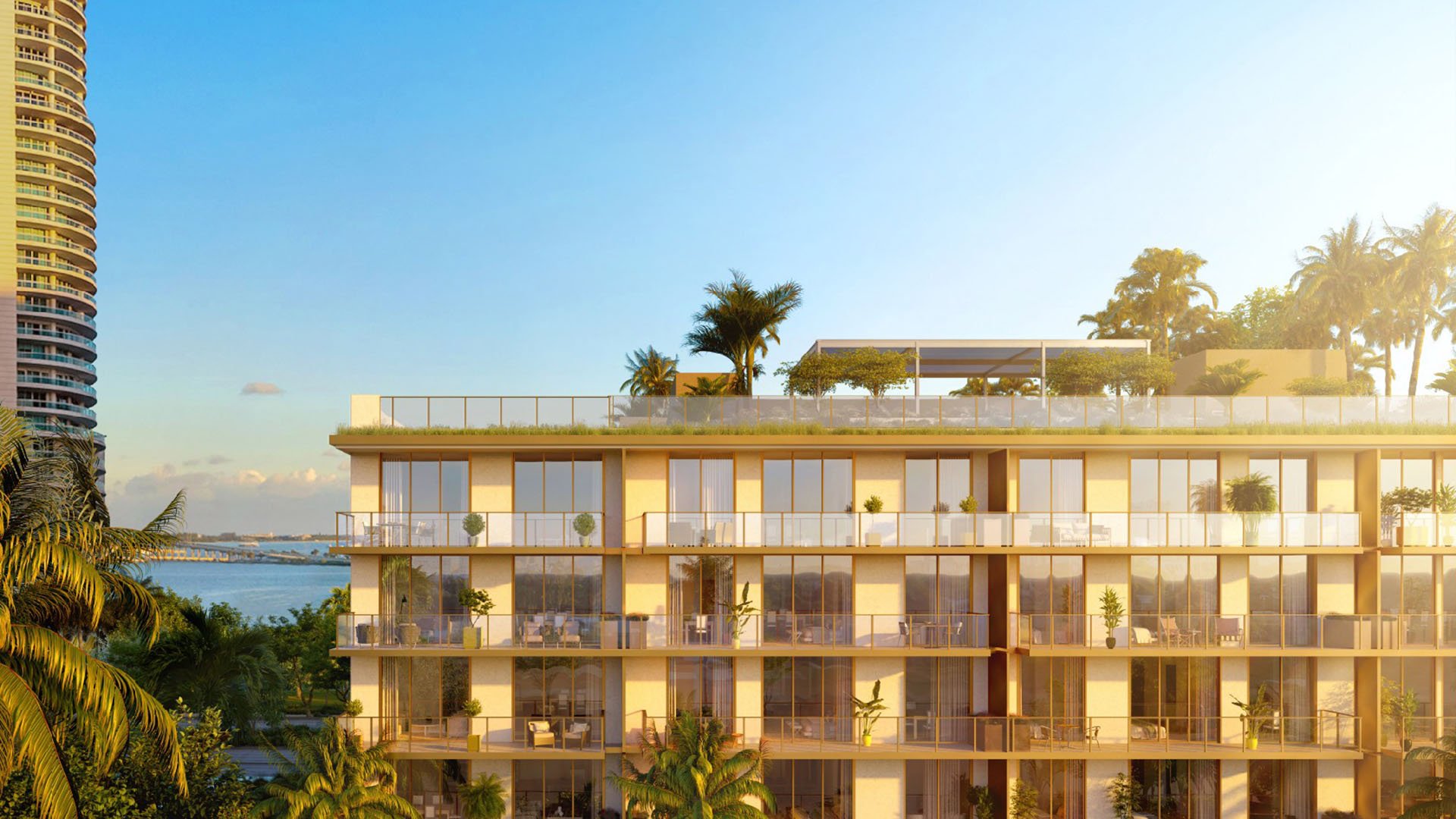
For a certain Brickell buyer, luxury is no longer defined by the loudest lobby, the largest amenity deck, or the most theatrical arrival sequence. It is defined by control: control over the rhythm of the building, the feel of the residential community, the ease of daily movement, and the confidence that the property was conceived for people who intend to live with it, not simply pass through it.
That is the ownership case for 2200 Brickell, a residential project on Brickell Avenue in Miami’s Brickell corridor. Its appeal is not that it tries to outscale every tower in the district. It is that it is positioned as a boutique alternative within one of South Florida’s most active luxury condominium markets, with an emphasis on privacy, practical autonomy, and low-friction living.
For buyers assembling a serious Brickell comparison set, that distinction matters. Brickell has evolved from a primarily business-focused district into a fuller live-work lifestyle neighborhood, and the residential product has diversified accordingly. Some buildings lean into scale, spectacle, branding, or mixed-use energy. Others make a quieter argument: that urban convenience is most valuable when the building itself remains calm, residential, and easy to own.
Control-oriented buyers tend to ask different questions. They are less impressed by the longest amenity inventory and more interested in how a building will actually operate five or ten years after closing. Who uses the property day to day? How transient is the resident base likely to feel? What does the association prioritize? How clearly are rental rules, reserves, and governance structures understood before purchase?
In that sense, 2200 Brickell functions as a case study in the new buyer psychology. Its positioning speaks to end users who want Brickell Avenue access without necessarily adopting a hotel-like or highly transient ownership experience. The word “ease” is important here. Ease is not minimalism. It is the absence of avoidable friction: fewer surprises at the front desk, fewer questions about building culture, fewer compromises between city convenience and residential privacy.
This is where Brickell’s breadth becomes useful. A buyer may compare 2200 Brickell with larger or more highly programmed projects such as Cipriani Residences Brickell or St. Regis® Residences Brickell, not because one model is universally superior, but because each expresses a different ownership philosophy. For some buyers, service intensity is the point. For others, the priority is a more predictable residential environment.
Boutique is sometimes misread as smallness for its own sake. In a luxury ownership context, it is better understood as a governance and lifestyle signal. A smaller ownership community can support a more knowable building culture, especially for buyers who intend to use the residence consistently and care about the tone of the property.
That does not remove the need for diligence. It sharpens it. Buyers considering 2200 Brickell should study the operating model with the same seriousness they bring to views, floor plans, and finishes. Association governance, rental rules, reserve planning, insurance assumptions, staffing philosophy, and long-term usage profile are not administrative footnotes. They are central to the ownership experience.
This is why the project’s appeal is less about amenity spectacle and more about practical autonomy. In a dense urban core, luxury can mean the ability to leave quickly, return easily, receive guests without friction, and live in a building whose residential identity feels stable. For many end users, that has become more valuable than maximal programming.
Brickell Avenue places residents inside Miami’s dense residential and commercial core. That proximity is the fundamental advantage: offices, dining, waterfront walks, shopping, transit connections, and the everyday pulse of the city are part of the broader lifestyle proposition. The challenge is preserving a sense of retreat within that intensity.
2200 Brickell’s ownership narrative is built around that balance. It offers a way to participate in Brickell’s live-work lifestyle while seeking a calmer and more residential experience at home. In a market where certain towers emphasize skyline drama and destination energy, this is a more discreet proposition.
A buyer looking across the corridor may naturally include The Residences at 1428 Brickell or 888 Brickell by Dolce & Gabbana in the conversation. Those names help frame the range of Brickell choices. The key is not to rank them by glamour, but to understand how each building’s operating personality may shape daily ownership.
For control-first buyers, the most important questions are often the least glamorous. What is the intended usage profile of the building? How will the association manage rentals? What level of reserves is anticipated over time? How much discretion does management have in enforcing rules? How does the building define residential quiet, guest access, and common-area conduct?
These questions should be answered before a buyer becomes emotionally attached to a view or a preferred exposure. In new-construction purchases especially, the documents and operating assumptions deserve careful review. Buyers should understand not just what is being sold, but what type of building culture is likely to form.
The same principle applies to lifestyle fit. A highly social buyer may prefer a building with broader programming and more visible hospitality energy. A privacy-oriented owner may prefer a residence that feels less public and more consistent. Neither preference is wrong. The costly mistake is buying one model while expecting the other.
The natural 2200 Brickell buyer is likely someone who wants the advantages of Brickell without surrendering to the full intensity of a large-scale urban tower. That may include a primary resident who values convenience, a South Florida buyer moving from a single-family setting into a lock-and-leave residence, or an owner who wants a Miami base that feels practical rather than performative.
This is also why the project belongs in serious buyer’s guides for Brickell rather than only in discussions of new inventory. Its relevance is conceptual. It gives buyers a way to ask whether they want the biggest expression of urban luxury or the most manageable one. In a maturing market, that question is often more important than the headline amenity count.
2200 Brickell’s case is strongest when viewed through the lens of ownership quality. It is not trying to make every buyer want the same thing. It is speaking to those who prioritize privacy, ease, and a more residential interpretation of urban luxury.
For Brickell buyers, that is a meaningful distinction. The neighborhood now offers many ways to live vertically, from branded residences to high-profile towers to quieter residential alternatives. The best choice depends on how a buyer defines control: control over access, control over building culture, control over long-term operating risk, and control over the daily experience of coming home.
What is 2200 Brickell? 2200 Brickell is a residential project on Brickell Avenue in Miami’s Brickell corridor, positioned as a boutique alternative in the luxury market.
Who is the likely buyer for 2200 Brickell? The natural buyer values privacy, control, and low-friction daily living more than maximal amenity spectacle.
Why does the Brickell Avenue location matter? Brickell Avenue places residents within Miami’s dense urban residential and commercial core, supporting a live-work lifestyle.
Is 2200 Brickell positioned as a hotel-condo? The project is framed as more aligned with end-user ownership than with transient hotel-condo usage.
What does boutique mean for ownership? Boutique positioning can suggest a smaller ownership community and a potentially more predictable building culture.
What should buyers review before purchasing? Buyers should review association governance, rental rules, operating model, reserves, and the long-term usage profile.
How should buyers compare 2200 Brickell with larger towers? They should compare not only design and amenities, but also operating personality, resident mix, and daily ease.
Is practical autonomy part of the appeal? Yes. The buyer thesis emphasizes practical autonomy and residential calm over amenity spectacle.
Does Brickell still function mainly as a business district? Brickell has shifted toward a fuller live-work lifestyle neighborhood while remaining a major urban commercial core.
Why might control matter more than amenities? Over time, governance, privacy, and daily predictability can shape ownership satisfaction as much as visible amenities.
For a tailored shortlist and next-step guidance, connect with MILLION.
If branded residences are on your mind — as a home or as an allocation — we would be glad to share what we are seeing, privately.
Begin a quiet conversation