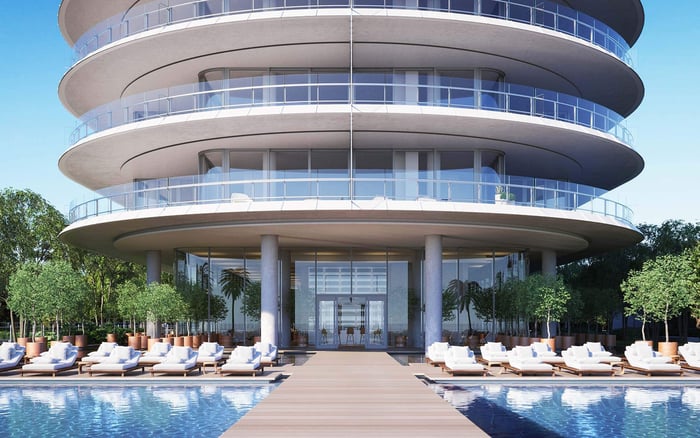
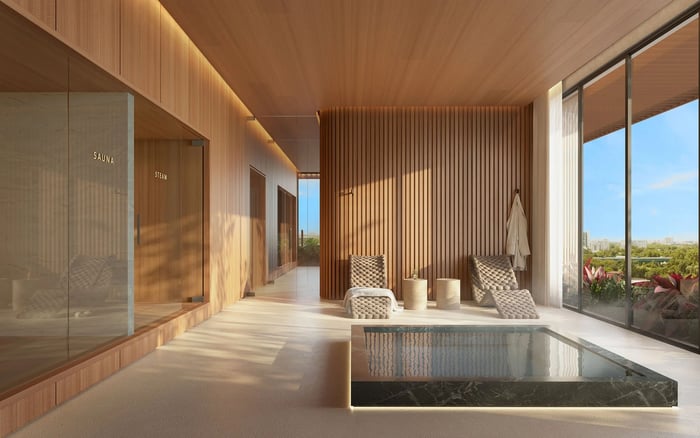
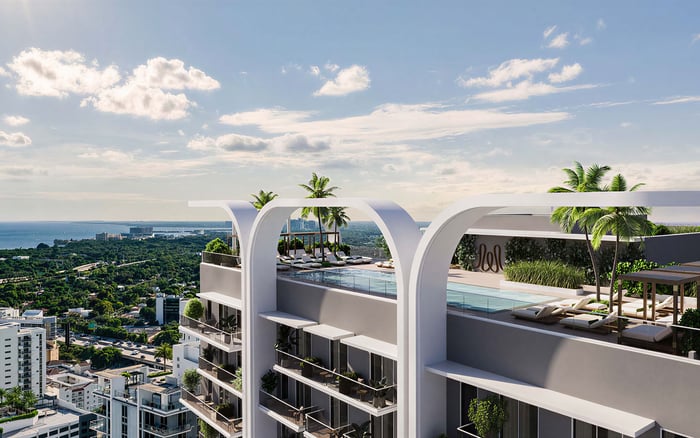
A practical luxury buyer’s guide to evaluating outdoor recovery terraces beyond the wellness language, with questions on privacy, climate, operations, design, and long-term value.
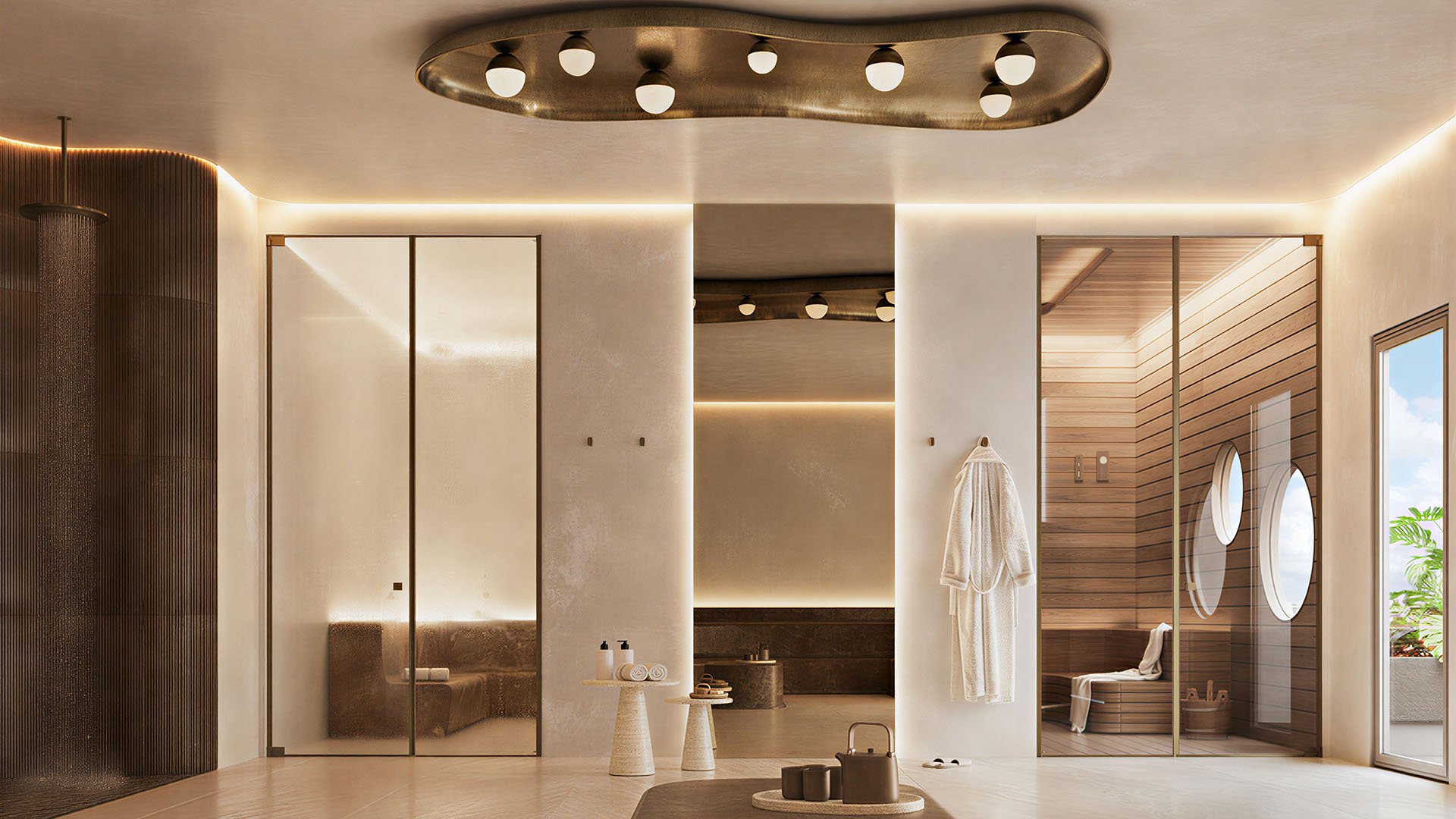
In South Florida luxury real estate, wellness has become a seductive word. It can describe a spa suite, a cold plunge, a meditation lawn, a shaded deck, or simply an attractive outdoor space positioned near a pool. For buyers, the label matters less than the lived experience. A recovery terrace should not be evaluated as a mood board. It should be evaluated as a daily-use amenity with design, operational, privacy, and maintenance consequences.
Start with the essential question: what is the terrace for? If the answer is vague, keep asking. Is it intended for post-workout cooling, quiet stretching, hydrotherapy adjacency, guided wellness programming, sunrise meditation, social lounging, or private decompression after a beach day? Each use requires different planning. A terrace designed for silence is not the same as one designed for group fitness. A terrace that looks beautiful at golden hour may be uncomfortable at midday if shade, surfaces, and circulation were treated as secondary.
This is especially important for new-construction buyers, where renderings can make wellness spaces feel inevitable. Renderings communicate atmosphere. They do not always communicate rules, hours, staffing, equipment durability, wind exposure, or the number of residents who may want the same chaise at the same time.
A credible recovery terrace should answer practical questions with confidence. Where does a resident place a towel, water bottle, phone, robe, or yoga mat? Is there a logical path from the fitness area, spa, sauna, steam room, or changing space? Are wet feet expected on the route, and if so, what surfaces are being used? Are outdoor showers nearby? Is the terrace meant to be barefoot, robe-friendly, and quiet, or is it part of a broader entertainment deck?
Balcony depth is not the same as recovery value, and a large open area is not automatically restorative. The best outdoor wellness spaces feel composed. They provide a place to pause, not merely a place to photograph. Ask whether seating is movable or fixed, whether private corners exist, and whether the space supports both solo use and discreet social use. A buyer who values recovery should expect more than a photogenic edge condition.
Also ask how the terrace performs during the hours you are most likely to use it. A morning terrace, an afternoon terrace, and an evening terrace can feel like three different amenities. South Florida light is strong. Heat, glare, rain, and wind can define the experience as much as architecture.
A recovery terrace that feels exposed may not feel restorative. Ask what can be seen from neighboring towers, amenity decks, public rights of way, adjacent restaurants, hotel spaces, or other residential lines. In Brickell, for example, vertical proximity can be part of the urban appeal, but it can also create overlooked outdoor amenities. In lower-density settings, sight lines may be more forgiving, but they still deserve scrutiny.
Privacy is not only visual. Acoustics matter. A terrace placed near a busy pool deck, bar, children’s area, service corridor, or mechanical equipment zone may not deliver the quiet implied by wellness language. Ask whether the terrace has a dedicated sound strategy, whether music is permitted, whether classes are amplified, and how management handles conflicting uses.
Terrace etiquette should not be improvised after residents move in. Buyers should ask whether the condominium documents, house rules, or amenity policies distinguish between quiet recovery use and social use. If a terrace is marketed for wellness but programmed like a party deck, the branding may not match the lifestyle.
Oceanfront conditions deserve specific questions because salt air, sun, humidity, and storms influence outdoor spaces. Even away from the water, exterior amenities need materials that can handle South Florida conditions. Ask about the intended furniture specifications, replacement standards, drainage, slip resistance, surface heat, umbrella or canopy systems, and whether shaded areas are permanent or seasonal.
Shade is not a decorative detail. It determines whether an outdoor wellness space can be used comfortably beyond a narrow window of the day. Ask where shade falls in the morning and afternoon, and whether the recovery zones remain usable after rain. If the terrace includes planters, water features, or planted edges, ask who maintains them and how that maintenance is funded.
The same applies to plunge pools, contrast therapy features, saunas with exterior transitions, and outdoor treatment zones. If these are part of the sales narrative, ask who operates them, who cleans them, how often they are inspected, and what happens when equipment is offline. Luxury is not the absence of maintenance. It is maintenance made invisible, consistent, and properly budgeted.
A recovery terrace is only as good as its management. Ask about hours of access, guest privileges, reservation systems, age restrictions, noise policies, food and beverage rules, towel service, staffing, and security. If the terrace is connected to a broader amenity program, ask whether private events can close it. If so, how often, and with what notice?
Buyers should also ask how peak usage is expected to be handled. Wellness amenities can become crowded when they are well designed. That is not a flaw, but it requires thoughtful operations. Reservation requirements may protect the experience, but they can also limit spontaneity. Open access feels luxurious until demand exceeds supply.
The most revealing question may be this: who is accountable when the terrace is not functioning as promised? A strong answer will identify management responsibility, maintenance procedures, resident communication, and budget planning. A weak answer will return to lifestyle language.
A well-executed outdoor recovery terrace can support the emotional logic of a residence. It tells a buyer that the building understands how people actually want to live in South Florida: outdoors, privately, comfortably, and with some separation from the pace of the city. But buyers should resist assigning value to wellness vocabulary alone.
The resale question is not whether a terrace sounds impressive. It is whether future buyers will find it usable, well maintained, and differentiated. If the space is exposed, overheated, noisy, underfunded, or difficult to access, it may become part of the brochure rather than part of daily life. If it is quiet, shaded, well serviced, and intelligently connected to the building’s wellness program, it can become one of the amenities residents remember.
Ask to walk the actual terrace if it exists. If it does not, ask for plans that show adjacency, dimensions, access points, shade logic, and nearby uses. Ask how the experience will change by season, time of day, and occupancy. The more precise the answers, the more credible the wellness promise.
Before accepting a wellness pitch, ask these questions in sequence. What recovery use is the terrace designed to support? How is it separated from louder amenity areas? Where is the shade? What are the materials? Who maintains the furniture, planting, surfaces, and equipment? What are the hours and rules? How many residents can use it comfortably? What happens during private events? How are repairs handled? How does the terrace feel from the actual residence you are considering?
The goal is not to be skeptical of wellness. It is to be exacting. South Florida buyers are increasingly sophisticated, and the best residences are responding with amenities that feel more personal, more outdoor-oriented, and more integrated into daily life. A recovery terrace can be one of those amenities, but only when its design and operations support the promise.
What is an outdoor recovery terrace? It is an outdoor residential amenity intended for decompression, post-fitness recovery, quiet lounging, stretching, or related wellness use.
Is a recovery terrace different from a pool deck? It should be. A recovery terrace should prioritize quiet, comfort, privacy, and restorative use rather than general recreation.
What is the first question a buyer should ask? Ask what specific activity the terrace is designed to support and how that activity is protected by layout, rules, and operations.
Why does shade matter so much? Shade affects comfort, usability, and the number of hours the terrace can function as a true wellness space.
Should I ask about maintenance costs? Yes. Outdoor furniture, surfaces, planting, equipment, and water features require ongoing maintenance and clear budget responsibility.
Can privacy issues reduce the value of a wellness terrace? Yes. If residents feel overlooked or exposed, the space may be used less often regardless of how appealing it looks.
Are reservation systems good or bad? They can be either. Reservations may preserve the experience, but they can also make the amenity feel less spontaneous.
What should I ask if the building is not complete yet? Ask for plans, access diagrams, shade studies if available, nearby amenity uses, and the proposed operating rules.
Does a terrace need water features to qualify as wellness? No. Quiet, shade, privacy, airflow, and comfortable seating can be more valuable than dramatic features.
What is the best way to shortlist comparable options for touring? Start with location fit, delivery status, and daily lifestyle priorities, then compare stacks and elevations to validate views and privacy.
To compare the best-fit options with clarity, connect with MILLION.
If branded residences are on your mind — as a home or as an allocation — we would be glad to share what we are seeing, privately.
Begin a quiet conversation