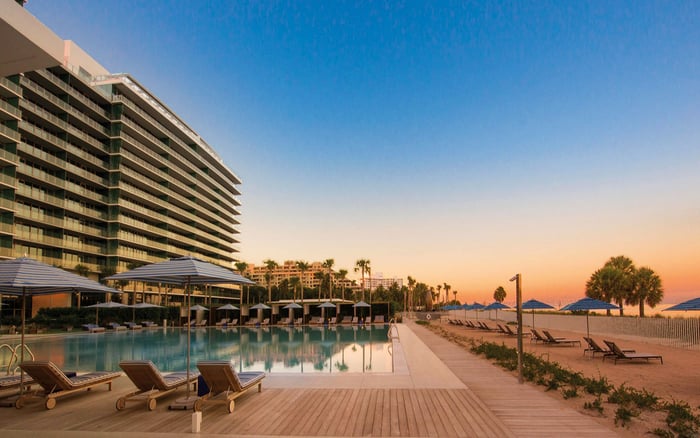
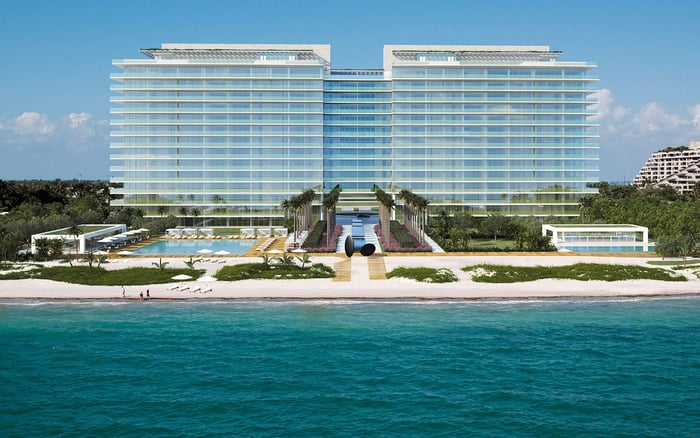
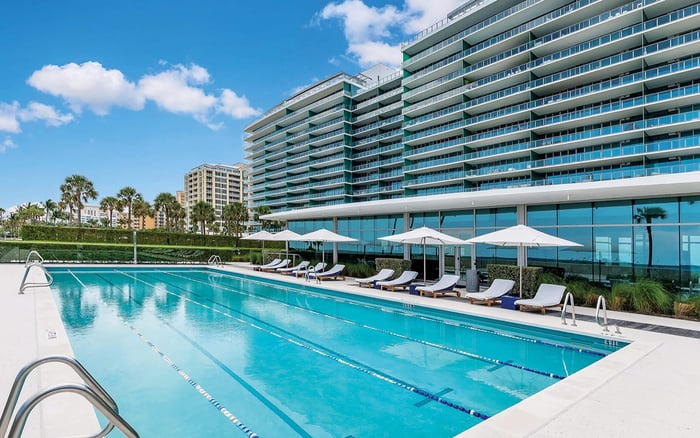
A discreet buyer’s guide to assessing hotel-related traffic, valet operations, event surges, service access, and privacy before purchasing luxury real estate in Key Biscayne.
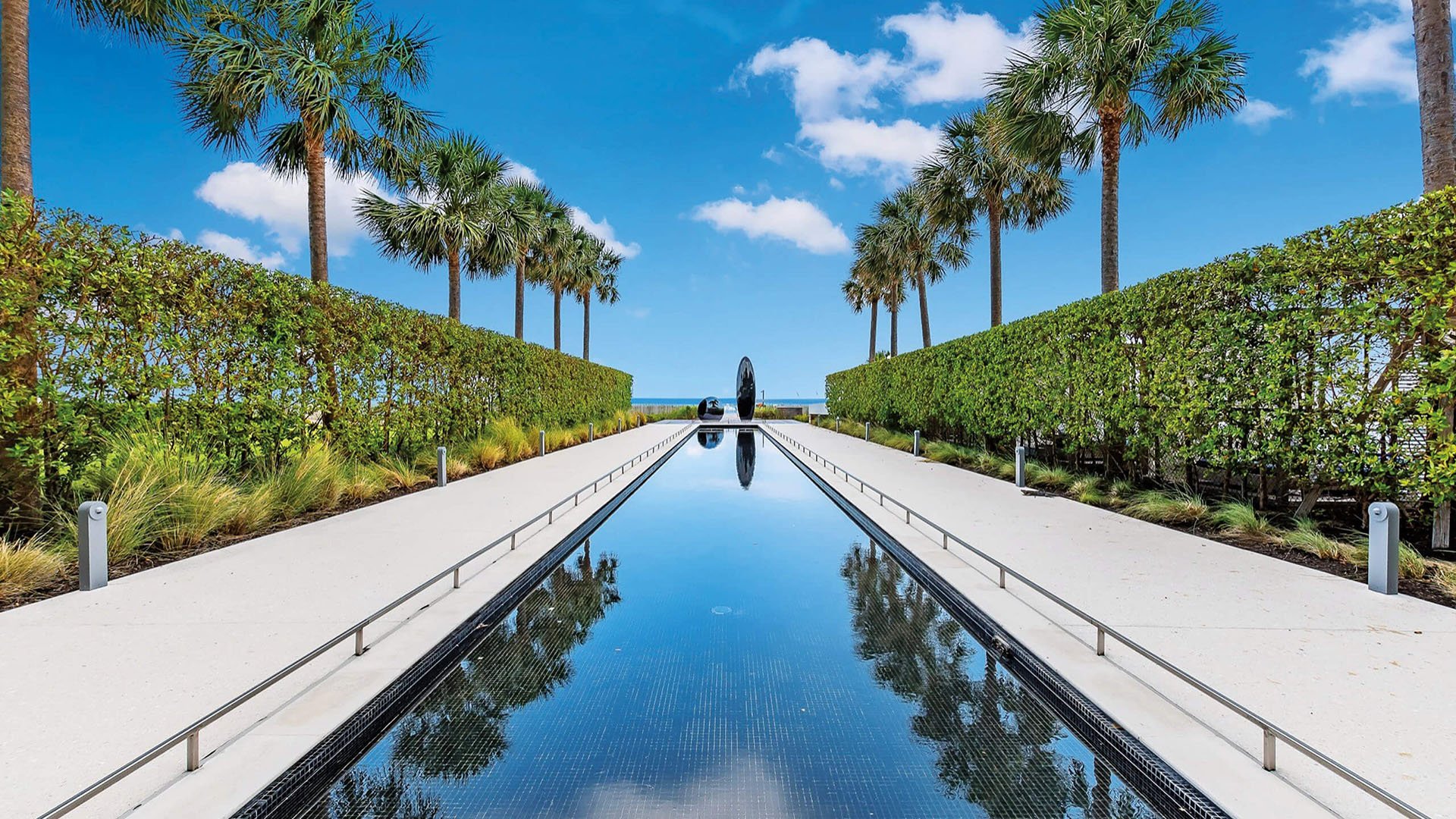
In Key Biscayne, luxury buying is often framed around water, architecture, privacy, views, and club-like service. Yet one quieter variable can shape daily ownership in an outsized way: how nearby or associated hotel traffic is managed. The issue is not merely whether cars are present. It is whether arrivals, valet queues, rideshare pickups, service vehicles, restaurant patrons, event guests, deliveries, and residents can coexist without compromising calm.
For a buyer considering Oceana Key Biscayne or any residence influenced by hospitality patterns, the central question is simple: does the property feel residential precisely when hotel demand is most intense? A flawless lobby experience during a weekday tour may reveal little about Friday evening arrivals, holiday brunch departures, or a rain-soaked rideshare surge.
For luxury due diligence, the issue sits at the intersection of Investment, Lifestyle, and Waterfront ownership. Traffic is not only a convenience matter. It affects perceived exclusivity, privacy, noise, staff performance, guest experience, and the way a home lives across seasons.
Ask to walk the actual route a resident will use from the street to the garage, lobby, elevator, and unit. If hotel guests, restaurant guests, beach visitors, or event attendees share any portion of that path, understand precisely where the overlap occurs and how it is controlled. The most important distinction is not whether an entry looks elegant. It is whether the entry remains functional when several types of users arrive at once.
Key questions include: where do hotel guests pull in, where do residents pull in, and where do vehicles wait if the porte cochere is full? Is there a dedicated resident lane, or is priority handled by staff discretion? Are residents identified by transponder, plate recognition, credential, or attendant familiarity? If an owner returns during a large event, what prevents the driveway from becoming a negotiation?
A polished arrival court can conceal operational stress. Ask for a diagram, not just a verbal explanation. The diagram should show valet stacking, resident access, guest drop-off, rideshare staging, delivery routing, and service entrances. If the answer depends entirely on staff judgment, ask how staff are trained, supervised, and empowered to intervene.
Hotel traffic often becomes most visible in the spaces where vehicles wait. Valet lines, rideshare pickups, private drivers, delivery vans, and car services each create distinct pressure points. A buyer should ask whether these functions are physically separated, operationally timed, or simply absorbed by the same curb.
Valet management deserves particular attention. Who controls the valet operation? Is it dedicated to the residential building, shared with hospitality uses, or contracted across multiple functions? Where are valet vehicles stored when demand rises? Are drivers permitted to stage along internal drives, public curbs, or garage ramps? What happens when a resident wants immediate access to a vehicle during a peak guest departure period?
Rideshare can be more disruptive than formal valet because it is less predictable. Ask whether rideshare vehicles have a designated pickup point, whether app-based drivers are directed away from resident entries, and whether security can redirect vehicles idling in the wrong place. The question is not whether technology is used. The question is whether the building has rules that still work when a driver ignores the ideal route.
Buyers comparing Key Biscayne with other high-service coastal markets, such as The Surf Club Four Seasons Surfside or Rivage Bal Harbour, should evaluate the same arrival logic: resident priority, controlled access, discreet staging, and staff accountability.
A hotel component can introduce demand that is periodic rather than constant. That distinction matters. A residence may feel serene most of the week yet operate differently during private events, restaurant peaks, holiday weekends, charity gatherings, or seasonal entertaining. Ask whether the property has a written event traffic plan and whether resident access is protected during those periods.
The strongest questions are practical. How are event guests notified of where to arrive? Are private drivers allowed to queue? Are buses, vans, catering vehicles, or production crews permitted, and if so, where do they load and unload? Does the property use temporary signage, additional attendants, off-site staging, or timed arrivals? Who decides when an event requires extra traffic staffing?
For luxury owners, the irritant is rarely one car. It is uncertainty. If residents do not know when high-volume activity is scheduled, daily planning becomes less graceful. Ask whether owners receive advance notice for large events that may affect access, service elevators, amenity spaces, or guest parking. A discreet notification system can preserve the feeling of control.
The most revealing part of a hotel traffic plan is often back-of-house. Service vehicles have to arrive, unload, exit, and sometimes return. Laundry, catering, maintenance, flowers, food and beverage, contractors, and supplies can all create circulation demands. Ask where service vehicles enter, whether they share resident routes, and how loading is timed.
A well-managed property separates the resident experience from operational logistics as much as possible. If that separation is not physical, it should be procedural. Are delivery windows restricted? Are vendors required to register? Are large deliveries scheduled outside peak resident arrival periods? What happens when a resident move-in overlaps with hotel operations?
In Waterfront settings, traffic and service planning can also influence the feeling of privacy around outdoor amenities. Owners should ask whether service routes pass near pools, terraces, promenades, gardens, or beach access points. The goal is not to eliminate operations. The goal is to ensure they remain discreet.
Traffic management is also a security system in motion. Every vehicle that enters a property creates a decision point. Who is expected, who is credentialed, who is redirected, and who is allowed to wait? Ask how the building distinguishes between residents, hotel guests, restaurant patrons, vendors, private drivers, and visitors.
The privacy questions should be direct. Can hotel guests approach residential elevators? Are residential lobbies fully separated? Do guests ever pass through resident amenity zones? Are garages shared, partially shared, or fully independent? If shared, how are levels, gates, elevators, and pedestrian paths controlled?
Buyers considering cross-market alternatives such as The Residences at Six Fisher Island or The Ritz-Carlton Residences® Miami Beach often focus on service culture, but the same scrutiny should apply to circulation. The best luxury buildings make movement feel invisible. Residents should not have to think about who is arriving, where they are going, or why they are waiting.
Before committing, ask for the building's traffic, valet, loading, and event protocols, if available. Request a site plan that identifies resident, guest, service, and emergency access. Review condominium documents for parking rights, guest parking rules, loading restrictions, commercial use provisions, and any language governing shared facilities.
Tour at more than one time. A late morning visit and an early evening visit can feel like two different properties. If possible, observe the approach during a period when hotel or hospitality demand is likely to be active. Note whether staff appear proactive, whether cars are directed clearly, whether pedestrians feel protected, and whether residents appear to receive priority without asking.
Finally, ask what changes after sellout, stabilization, renovation, or management transition. Traffic systems can evolve. A buyer should understand whether current procedures are contractual, policy-based, or informal. In ultra-premium real estate, informal can work beautifully until volume, staffing, or ownership changes.
Why should hotel traffic matter to a Key Biscayne luxury buyer? Because arrival quality, privacy, wait times, and service access shape daily ownership as much as finishes or views.
What is the first traffic question to ask? Ask whether residents have a distinct, protected arrival route or whether they share access with hotel guests and visitors.
Should I review valet operations before buying? Yes. Understand who controls valet, where cars are staged, and how resident priority is maintained during peak demand.
Are rideshare pickups a real concern? They can be. Rideshare vehicles may create unpredictable curb activity unless the property has clear pickup zones and enforcement.
What should I ask about hotel events? Ask how event guests, private drivers, vendors, and catering vehicles are routed without disrupting residents.
How do service deliveries affect luxury ownership? Poorly planned deliveries can create noise, congestion, and visual clutter near residential entries or amenity areas.
Should traffic plans be in writing? Written protocols are preferable because they are easier to review, enforce, and preserve through management changes.
Can traffic management affect resale appeal? Yes. Buyers in the luxury segment value privacy, ease, and predictability, all of which influence perceived quality.
When should I visit the property before purchasing? Visit at different times, including a busier arrival period, so you can observe how staff and vehicles actually move.
What is the best way to shortlist comparable options for touring? Start with location fit, delivery status, and daily lifestyle priorities, then compare stacks and elevations to validate views and privacy.
To compare the best-fit options with clarity, connect with MILLION.
If branded residences are on your mind — as a home or as an allocation — we would be glad to share what we are seeing, privately.
Begin a quiet conversation