A discreet buyer’s guide to evaluating South Florida luxury real estate through the lens of wellness, privacy, daily rhythm, waterfront living, and long-term ownership fit.
Wealth migration into South Florida has changed how many owners evaluate a residence. The purchase is no longer only about square footage, views or a recognizable address. For buyers arriving with established routines, family offices, demanding travel schedules and a serious commitment to health, the sharper question is how a home supports the life they are trying to protect.
That makes wellness a more exacting standard than a spa menu or a gym photo. It is the quiet ability to wake well, move easily, recover privately, host without friction and remain connected to work, family and nature without feeling overexposed. In South Florida, that requires studying the relationship between neighborhood, building, water, light, service and daily access before being seduced by finish packages.
For owners who see lifestyle as part of asset selection, the strongest purchase is not always the most theatrical. It is the one that makes the day feel calmer, more deliberate and easier to repeat.
A wellness-focused owner should start with a private audit of ordinary days. Where do you train? How often do you swim? Do you work from home in silence, or do you need proximity to restaurants, meetings and cultural life? Is the residence primarily for restoration, entertaining, family continuity or seasonal use?
The answers will point to different South Florida choices. Brickell can suit owners who want a more urban rhythm, private elevator living and immediate access to dining and business. A project such as House of Wellness Brickell speaks directly to buyers who want the language of health embedded into the residential experience rather than treated as an afterthought.
By contrast, Coconut Grove often appeals to buyers who prioritize a softer residential texture, greenery and a more village-like pace. The Well Coconut Grove may be relevant for owners who want wellness to feel integrated with neighborhood life, not separated behind a formal resort presentation.
South Florida is not one market experience. Miami Beach, Brickell, Coconut Grove, Bay Harbor Islands, Boca Raton, Fort Lauderdale, Palm Beach and Sunny Isles Beach each create a different daily cadence. For wellness buyers, the distinction is less about prestige and more about nervous system fit.
Miami Beach offers proximity to the ocean, dining and cultural energy, but the right address depends on whether the owner wants serenity, walkability, beach access or a more social environment. 57 Ocean Miami Beach is an example of how an oceanfront setting can appeal to buyers who place outdoor ritual and the beach at the center of their day.
Bay Harbor Islands, meanwhile, may attract owners seeking a more residential scale while remaining connected to the broader Miami ecosystem. The Well Bay Harbor Islands gives wellness-focused buyers another way to think about balance: privacy, neighborhood ease and a purposeful amenity philosophy.
The essential exercise is simple but often skipped. Visit at different hours. Walk the immediate blocks. Test the route to the beach, school, marina, private club, airport, office or favorite restaurant. A residence that photographs beautifully but complicates your most frequent movements is not a wellness purchase.
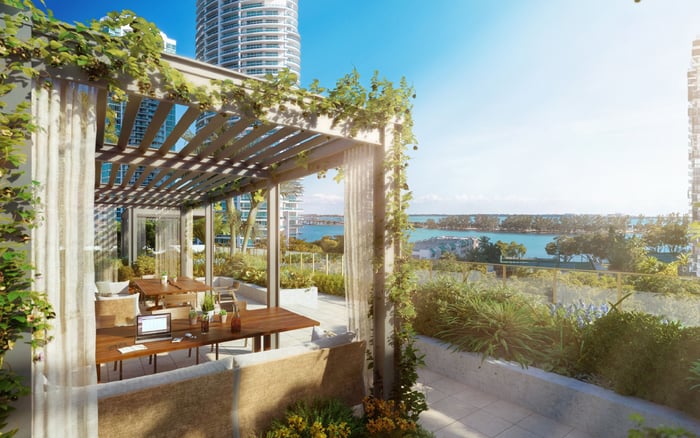
Waterfront living is one of South Florida’s defining luxuries, and it can be profoundly restorative. Light changes throughout the day. Breezes alter the feel of a terrace. The visual openness of water can create a sense of spaciousness that no interior design decision can replicate.
Still, waterfront ownership should be evaluated with discipline. Buyers should understand building maintenance, insurance posture, storm preparation protocols, terrace usability, privacy from neighboring buildings and the practical realities of salt air. The experience of living near water is both emotional and operational.
For some owners, a direct oceanfront residence is the ideal wellness environment. For others, a bayfront, intracoastal or garden-oriented home may offer a calmer balance. The correct answer depends on use, sensitivity to wind, tolerance for exposure and the desire for outdoor space that feels truly usable rather than merely impressive.
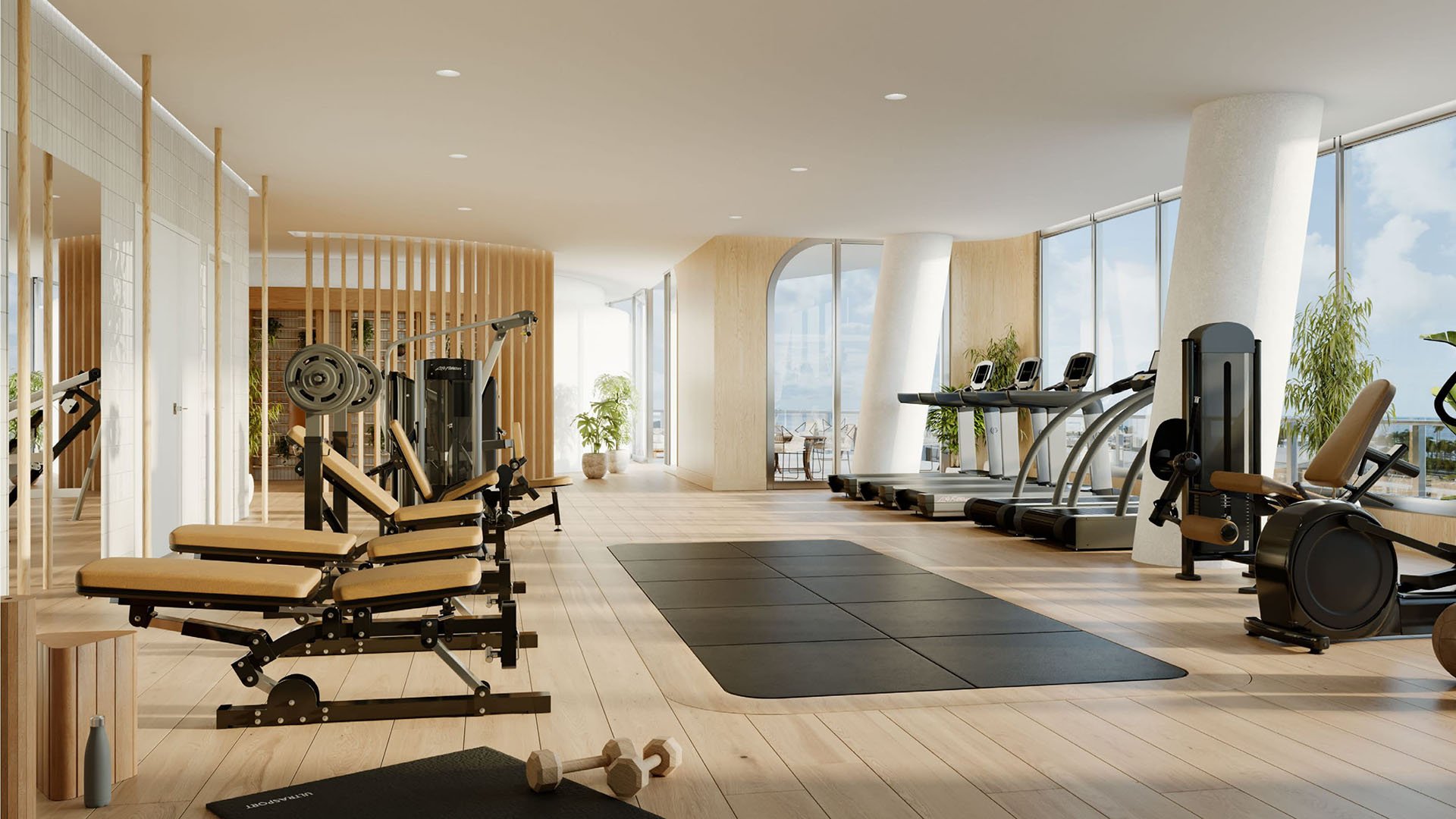
Luxury developments often speak fluently about fitness, spa, pools and treatment rooms. A wellness-focused buyer should look beyond the vocabulary. Ask whether the amenity sequence supports actual routines. Is the gym practical at the hours you train? Is there natural light? Are recovery areas quiet? Can you move from residence to pool, treatment room or outdoor space without feeling as if you are passing through a public stage?
Service culture also matters. Wellness is supported when staff, security, valet, receiving, maintenance and management reduce friction rather than create it. A building can have an extraordinary amenity floor and still feel exhausting if arrivals are chaotic or privacy is inconsistent.
Evaluate air, sound, light and circulation with the same care you would apply to stone, cabinetry and ceiling heights. South Florida residences often emphasize terraces and views, but interior calm is equally important. A beautiful home should also allow sleep, concentration and recovery.
For wealth migration buyers, privacy is often a form of wellness. The question is not only whether a building is secure, but whether it feels discreet. Some owners prefer a highly social property with hospitality energy. Others want minimal visibility, controlled access and a quieter ownership culture.
Before buying, study lobby scale, elevator configuration, amenity traffic, guest policies, staff professionalism and the likely mix of full-time and seasonal residents. These elements affect how a home feels after the first impression fades.
Privacy is also architectural. Sightlines from neighboring towers, terrace exposure, window orientation and elevator landings all shape the lived experience. A floor plan that looks efficient on paper may feel compromised if its primary rooms are too visible or acoustically vulnerable.
A wellness-oriented purchase should still be financially coherent. Owners should consider whether the property is intended as a primary residence, second home, legacy asset or flexible base. The decision influences location, service expectations, carrying costs, management needs and tolerance for future construction nearby.
New construction can offer contemporary systems, amenity programming and design continuity, while resale may offer immediate occupancy and a clearer sense of building culture. Neither is inherently superior. The better choice is the one that matches the owner’s timeline, appetite for customization and desire for certainty.
For buyers comparing multiple submarkets, it is wise to separate emotional appeal from operational fit. The most restorative home is the one that performs on ordinary days, not only during a perfect showing.
What should wellness-focused buyers prioritize first? Begin with daily routine: sleep, movement, privacy, work needs and access. The right residence should make those patterns easier, not more complicated.
Is Brickell suitable for wellness-oriented ownership? Yes, if the buyer wants an urban rhythm with strong convenience. The key is choosing a building that balances energy with privacy and calm interiors.
Why does Miami Beach appeal to wellness buyers? Miami Beach can offer ocean proximity, outdoor ritual and a strong sense of place. Buyers should still compare privacy, access and the exact feel of each location.
Is Coconut Grove a good fit for a quieter lifestyle? Coconut Grove may appeal to owners seeking greenery, neighborhood texture and a softer daily pace. It should be evaluated block by block.
Are wellness amenities enough to justify a purchase? No. Amenities matter only if they support real routines and are paired with strong service, privacy, acoustics and practical access.
What should buyers examine in waterfront residences? Study exposure, terrace usability, maintenance culture, storm protocols, insurance posture and privacy. The view is only one part of the ownership experience.
Should wellness buyers prefer new construction? New construction can be appealing for modern systems and amenity planning. Resale may suit buyers who want immediate use and observable building culture.
How important is privacy in a wellness purchase? Very important for many relocating owners. Privacy influences rest, security, arrival experience, entertaining and the long-term comfort of the home.
Can a second home still be wellness-driven? Absolutely. A second home should reduce decision fatigue and feel effortless from arrival to departure, especially for seasonal owners.
What is the best way to compare South Florida areas? Test ordinary days in each area rather than relying on reputation alone. Visit at different times and evaluate access, sound, light and daily rhythm.
To compare the best-fit options with clarity, connect with MILLION.
If branded residences are on your mind — as a home or as an allocation — we would be glad to share what we are seeing, privately.
Begin a quiet conversation