A buyer-focused look at how water intrusion history can alter the comparison between Downtown Miami and Brickell, especially for luxury condo purchasers weighing building condition, documentation, lifestyle and long-term confidence.
For a luxury buyer choosing between Downtown Miami and Brickell, the first conversation is often aesthetic: skyline, bay presence, restaurant access, private elevators, ceiling heights and the feeling of arrival. Yet the more consequential conversation can be quieter. It begins with a simple question: has the building had any history of water intrusion?
That question does not automatically disqualify a residence, nor should it reduce the search to anxiety. In South Florida, sophisticated buyers understand that water is part of the setting, the architecture and the long-term ownership equation. The issue is not simply that a building exists in a coastal climate. The issue is how transparently the building has documented, repaired and monitored any concern.
This is where Downtown Miami and Brickell begin to separate. Both can offer a compelling urban lifestyle, but the buyer’s lens changes once water history enters the conversation. A residence is no longer judged only by its view corridor or floor plan. It is judged by the depth of its maintenance record, the seriousness of its association oversight, the quality of its inspections and the clarity of its future capital planning.
Downtown Miami often attracts buyers who want cultural proximity, skyline drama and a sense of civic scale. When water intrusion history becomes part of the evaluation, the neighborhood conversation becomes more building-specific. The question is less about the district as a whole and more about each tower’s envelope, age, repair history, garage condition, window systems, balconies, roof areas and mechanical spaces.
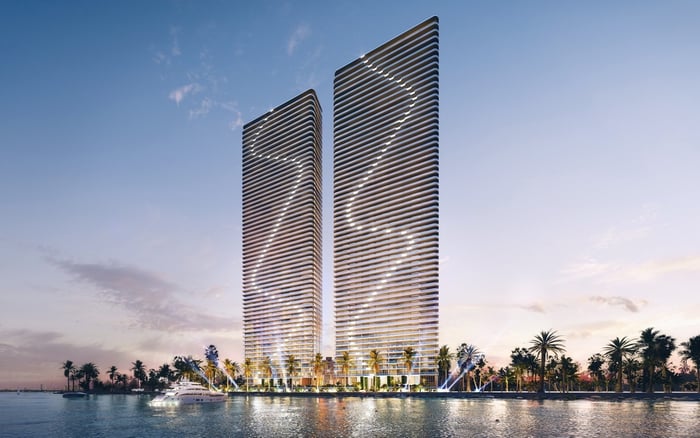
A buyer touring Aston Martin Residences Downtown Miami, for example, may be viewing Downtown Miami through a new-development or recently delivered luxury lens. The due-diligence posture still matters. The buyer should ask for the same discipline: what warranties exist, how water-related service requests are handled, how common areas are inspected and how the association will maintain exterior systems over time.
For buyers considering Waldorf Astoria Residences Downtown Miami, the conversation can be equally refined. The point is not to assume risk. It is to insist on a complete file. Luxury is not only marble, glass and branded service. Luxury is the ability to understand the ownership structure before emotion takes over.
In Downtown Miami, the strongest decisions often come from weighing the romance of the skyline against the discipline of the documents. If the water file is incomplete, a buyer should slow down. If the file is detailed, responsive and professionally managed, confidence can increase.
Brickell carries a different emotional charge. It is dense, polished and intensely convenient, with a lifestyle that appeals to buyers who want restaurants, offices, private clubs, wellness amenities and waterfront energy close at hand. But when water intrusion history enters the discussion, convenience alone is not enough.
In Brickell, many buyers focus on the promise of a full-service vertical neighborhood. That promise depends on operational excellence. If a tower has had water-related issues, the buyer should understand whether they were isolated, recurring, cosmetic, structural, owner-specific, common-area related or tied to a larger building system. The answer changes the meaning of value.
A buyer comparing Baccarat Residences Brickell with another Brickell address may be comparing not only design language and amenity style, but also governance quality and long-term maintenance culture. Similarly, Cipriani Residences Brickell may enter the conversation for a buyer who wants a branded residential environment, yet the same practical questions remain: what is the inspection protocol, how are owner reports tracked and what reserves support future exterior work?
Brickell buyers often pay for immediacy. The water-history question asks whether that immediacy is matched by durable stewardship. In the ultra-premium segment, the strongest buildings do not avoid difficult questions. They answer them clearly.
Waterfront living and Waterview living are not identical from a due-diligence perspective. A direct waterfront position can heighten attention to exposure, drainage, exterior materials and lower-level building systems. A Waterview residence set farther from the edge may still require careful review, but the nature of the questions can differ.
This distinction matters when comparing Downtown Miami and Brickell. A buyer should not use a neighborhood label as a shortcut. Two residences on the same side of the market can have very different water narratives. One building may have a clean, well-documented maintenance rhythm. Another may have unresolved owner complaints, repeated repairs or vague association minutes.
The intelligent buyer does not ask, “Is water a problem here?” The sharper question is, “Show me the record.” That record may include inspection notes, association communications, repair scopes, insurance correspondence, warranty information, engineering observations and evidence that prior issues were addressed rather than deferred.
In luxury real estate, uncertainty has a price. It may appear in negotiations, insurance comfort, resale confidence or the buyer’s willingness to proceed. A pristine view can lose some of its force if the documentation is thin.
New-construction buyers sometimes assume that water intrusion history is irrelevant because the building is new. That assumption is too simple. New residences can offer modern systems, current codes and warranties, but buyers should still understand handover procedures, punch-list history, warranty response timelines and how the association will transition into long-term maintenance.
Resale buyers face a different advantage. A mature building may have a longer paper trail. That history can be reassuring when it shows consistent care, timely repairs and prudent reserves. It can be concerning when the trail is incomplete or when the same issue appears repeatedly without a clear closeout.
A Brickell purchaser evaluating The Residences at 1428 Brickell may view the decision through the lens of new luxury expectations. A Resale buyer in another tower may look for years of association minutes and repair documentation. Neither approach is inherently superior. The right answer depends on transparency.
For sophisticated buyers, the divide is not new versus old. It is documented versus undocumented.
Before choosing between Downtown Miami and Brickell, buyers should ask questions that move beyond surface appeal. Has the unit ever experienced water intrusion? Have neighboring units reported similar issues? Were repairs completed by licensed professionals? Did the association participate? Were common elements involved? Is there an engineering opinion? Are there open claims, pending assessments or planned exterior projects?
The answers can redirect the search. A buyer initially drawn to Brickell may choose Downtown Miami if a particular building offers stronger documentation and cleaner maintenance history. A buyer leaning Downtown may move to Brickell if the Brickell association provides a more complete record and a more credible capital plan.
This is the central shift: water intrusion history turns the choice from neighborhood preference into asset selection. The best residence is not merely the one with the most seductive arrival sequence. It is the one where beauty, governance and building health align.
The most composed approach is to treat water questions as standard practice, not confrontation. Request the file early. Bring in qualified inspectors and counsel. Review association materials with patience. Ask direct questions and notice the quality of the response.
A vague answer does not always indicate a serious problem, but it does require more inquiry. A detailed answer does not guarantee perfection, but it gives the buyer a more elegant basis for judgment.
For Downtown Miami and Brickell, this level of review is not a brake on the lifestyle dream. It is what protects it. The buyer who understands the water history owns with more confidence, negotiates with more precision and exits with a clearer story when the time comes to resell.
Should water intrusion history automatically eliminate a condo? No. The more important issue is whether the history is clearly documented, professionally repaired and supported by credible follow-up.
Is Downtown Miami riskier than Brickell for water concerns? Not as a blanket rule. The better comparison is building by building, with attention to records, inspections and association practices.
What documents should a buyer request first? Start with association minutes, inspection materials, repair records, insurance-related correspondence and any disclosures connected to the unit.
Does New-construction remove the need for water due diligence? No. Buyers should still review warranties, punch-list procedures, turnover details and maintenance protocols.
Can Resale buildings be more reassuring? Yes, when their longer history shows consistent maintenance, clear repairs and strong documentation.
How does water history affect negotiation? It can influence price, credits, contingencies, inspection timelines and the buyer’s willingness to assume future uncertainty.
Should buyers rely only on seller disclosures? No. Seller disclosures matter, but they should be paired with association records, inspections and professional review.
Are Waterfront units always more exposed? Waterfront positions deserve careful review, but exposure depends on the specific building, systems, elevation and maintenance history.
Can a Waterview residence still require water-related review? Yes. Waterview alone does not determine risk, so the building envelope and unit history still need attention.
What is the best way to shortlist comparable options for touring? Start with location fit, delivery status, and daily lifestyle priorities, then compare stacks and elevations to validate views and privacy.
For a confidential assessment and a building-by-building shortlist, connect with MILLION.
If branded residences are on your mind — as a home or as an allocation — we would be glad to share what we are seeing, privately.
Begin a quiet conversation