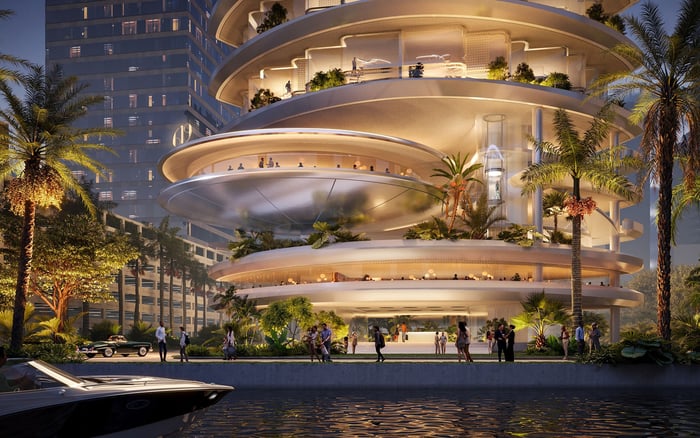
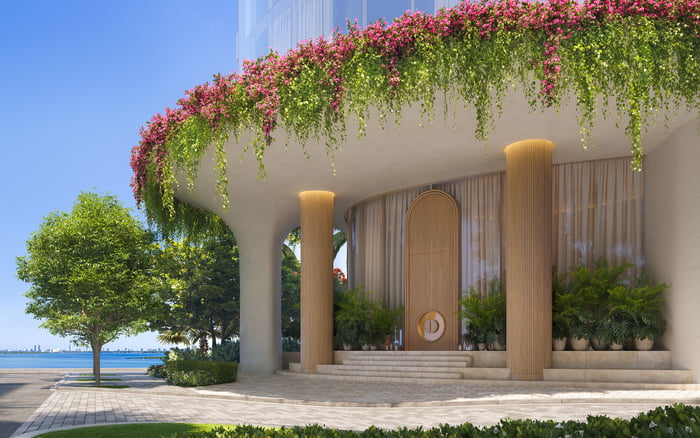
A practical due-diligence framework for ultra-luxury Brickell buyers weighing beauty, brand, wellness positioning, ownership costs, livability, and long-term exit value.

Brickell has become one of South Florida’s most closely examined luxury markets, not because buyers lack options, but because those options have become increasingly nuanced. A residence may be architecturally compelling, highly amenitized, beautifully branded, or wellness-forward and still require a more disciplined question: is this the right asset on the right terms?
That question is especially relevant for buyers comparing 2200 Brickell, St. Regis® Residences Brickell, and House of Wellness Brickell. Each sits within a broader conversation about how ultra-luxury buyers should evaluate Brickell today: not only through aesthetics, but through legal structure, cost exposure, service reliability, privacy, livability, resilience, and resale logic.
For sophisticated buyers, the residence is not simply a place to live. It is a lifestyle instrument, a capital allocation decision, and potentially a future resale product competing against the next wave of Brickell supply.
Before studying finishes, terraces, or amenity imagery, serious buyers should understand who stands behind the building. For 2200 Brickell, that means asking who the sponsor or developer is, what comparable projects the team has delivered, and whether that track record is relevant to luxury Brickell product.
This is not a formality. In a Pre-Construction purchase, the sponsor’s experience, construction coordination, and ability to deliver the promised product can influence confidence long before closing. Buyers should ask whether prior projects were delivered in a manner consistent with initial expectations, whether the team understands high-service urban luxury, and whether the design and operating concept are supported by execution experience rather than presentation alone.
The same discipline applies across Branded Residences and wellness-positioned concepts. A name, philosophy, or amenity narrative may help define the lifestyle, but the buyer still needs to know who controls delivery, who operates the experience, and what is enforceable in writing.
The most elegant mistake in luxury real estate is assuming that prestige automatically provides protection. With St. Regis® Residences Brickell, serious buyers should separate brand prestige from underlying real estate fundamentals before committing. A brand can be powerful, but buyers should ask what the affiliation legally provides, which services are guaranteed, which offerings are subject to change, and how long the relevant agreements remain in effect.
This is where written clarification becomes essential. Buyers comparing Brickell projects should ask what is included, what is optional, what is aspirational marketing, and what is contractually enforceable. That standard applies whether the comparison includes branded service, wellness programming, club-style amenities, private dining, spa concepts, or owner privileges.
A residence may be marketed around a compelling way of life, but a closing table is governed by documents. The prudent buyer distinguishes among an idea, an amenity, a service standard, and a legal obligation.
The purchase price is only the visible entry point. Serious buyers evaluating 2200 Brickell should ask about total financial exposure beyond price, including closing costs, association fees, reserves, assessments, insurance, and taxes. In a luxury condominium, these numbers matter because they shape both the carrying cost and the future buyer pool.
For St. Regis® Residences Brickell, the analysis should also include branded-service fees, association dues, reserves, insurance, and potential special assessments. Service-rich buildings can be deeply appealing, but buyers should understand the recurring cost of maintaining that standard and how those costs may evolve.
This is not an argument against high-service ownership. It is an argument for precision. If a buyer expects privacy, staffing, elevated hospitality, and immaculate common spaces, there will be a financial architecture behind that experience. The strongest buyers want to see it clearly before they commit.
Brickell is seductive from above: bay views, city lights, water, glass, and an unmistakable urban pulse. But day-to-day livability is tested at ground level and inside the floor plan. For 2200 Brickell, buyers should evaluate floor plan efficiency, elevator capacity, parking, noise, traffic access, and proximity to Brickell services.
These details are not secondary. A beautiful residence can feel compromised if elevator waits are frustrating, parking is inconvenient, traffic patterns do not match a buyer’s schedule, or the floor plan wastes space in ways that only become obvious after move-in. The right question is not simply whether the residence photographs well, but whether it supports the way the owner actually lives.
For buyers considering Baccarat Residences Brickell or Una Residences Brickell as part of a wider Brickell comparison, the same practical filter applies. The highest-value decision is often the one that aligns design, arrival sequence, privacy, service, and daily movement with the buyer’s real habits.
Construction and delivery risk should be evaluated directly. For 2200 Brickell, buyers should ask about the timeline, contractor quality, completion guarantees, and remedies if delivery is delayed. These questions belong early in the process, before a buyer becomes emotionally attached to a preferred line, view, or floor.
Legal review is equally important. Buyers should examine condominium documents, deposit terms, cancellation rights, and any developer-reserved rights. A luxury purchase should never rely on verbal comfort when the governing documents carry the actual obligations.
Long-term resilience also belongs in the conversation. Buyers should ask how a building addresses storm protection, insurance exposure, flood considerations, and maintenance planning. In South Florida, resilience is not merely a technical detail. It influences operating costs, buyer confidence, insurability, and long-term marketability.
Resale strength is where lifestyle decisions meet market discipline. For St. Regis® Residences Brickell, buyers should evaluate how the building’s brand, location, unit mix, and service model may perform against future Brickell luxury supply. A residence that feels rare today should still have a clear argument when a future buyer compares it with newer offerings.
The same logic applies to wellness-centered and amenity-driven decisions. A buyer should ask whether the concept has lasting utility or whether it depends heavily on current fashion. Privacy expectations, guest policies, service needs, and actual usage patterns should all be tested honestly.
This is the tone of a serious Buyer's Guides conversation: the best purchase is not merely the most beautiful one, but the one whose legal, financial, and lifestyle terms support the buyer’s intended hold period and exit strategy.
What is the first question to ask before choosing a Brickell residence? Ask whether the property fits your financial, lifestyle, and exit objectives, not only whether it feels beautiful.
Why does the developer matter in a Pre-Construction purchase? The developer’s track record can influence confidence in delivery, quality control, timing, and execution of the promised product.
What documents should a buyer review carefully? Review condominium documents, deposit terms, cancellation rights, developer-reserved rights, budgets, and ownership cost disclosures.
How should buyers evaluate branded residences? Ask what the brand legally provides, which services are guaranteed, and which elements may change over time.
Are amenities always a reliable value driver? Amenities matter, but buyers should distinguish between attractive marketing, optional offerings, and contractually enforceable commitments.
What ownership costs deserve close attention? Focus on association dues, reserves, insurance, taxes, closing costs, branded-service fees, and possible assessments.
How important is day-to-day livability in Brickell? It is essential, especially when evaluating elevators, parking, traffic access, noise, floor plan efficiency, and proximity to services.
What resilience questions should buyers ask? Ask about storm protection, flood considerations, insurance exposure, long-term maintenance planning, and reserve strategy.
How should buyers think about resale? Consider whether the building’s location, brand, service model, unit mix, and lifestyle proposition will remain competitive.
Should buyers rely on verbal assurances? No. Important inclusions, services, rights, remedies, and obligations should be confirmed in writing before commitment.
For a confidential assessment and a building-by-building shortlist, connect with MILLION.
If branded residences are on your mind — as a home or as an allocation — we would be glad to share what we are seeing, privately.
Begin a quiet conversation