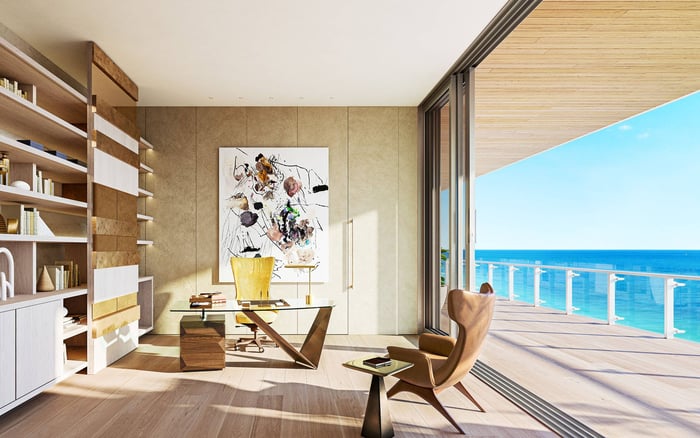
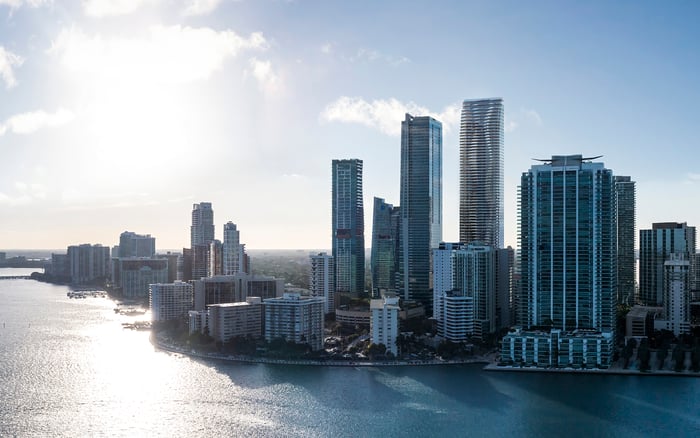
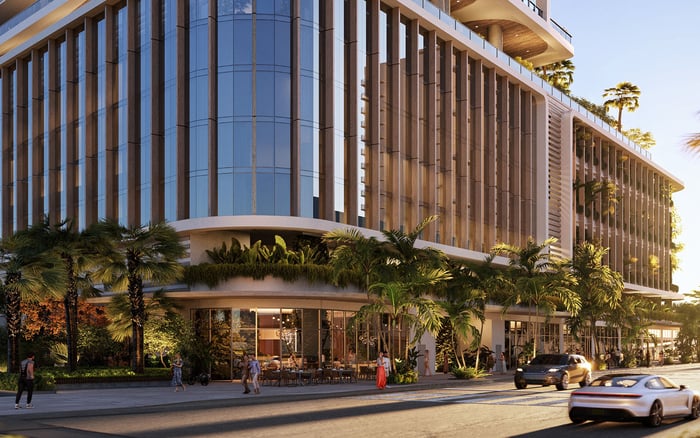
For the ultra-wealthy, discretion is rarely about visual modesty. It is about controlling who sees the resident, when they are seen, and how effortlessly they move from street to sky. In South Florida’s most ambitious residential design, bold architecture and operational privacy are not opposites at all. They are often the same strategy executed at different scales.
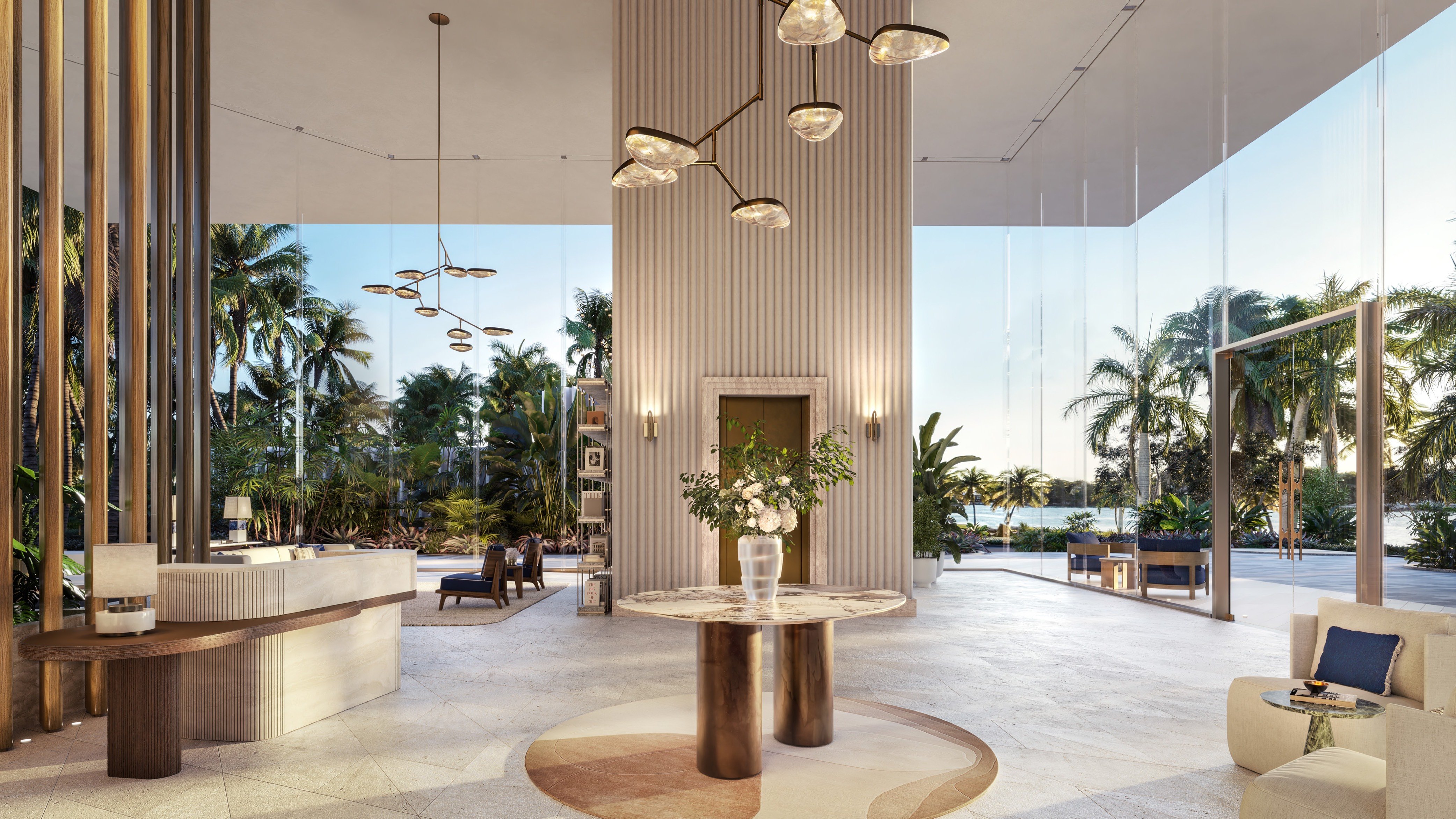
When buyers at the highest end describe a building as discreet, they are usually not asking for a quiet building. In many cases, they are choosing towers with highly recognizable silhouettes, sculptural facades, or dramatic waterfront positions. What they want is something more exacting: privacy that performs.
A building can be visually loud and still feel deeply controlled if the resident experience is separated from the public image. The public sees the architecture. Residents move through an edited sequence of entry, circulation, access, and retreat. That distinction matters. For a billionaire, discretion is less about whether the tower attracts attention and more about whether daily life inside it remains unreadable.
This is one reason the newest generation of trophy residences in South Florida feels so refined. Buildings project one identity to the skyline and another to the owner. In places like The Residences at 1428 Brickell, The Perigon Miami Beach, Rivage Bal Harbour, 888 Brickell by Dolce & Gabbana, and Villa Miami, design ambition sits comfortably alongside the expectation that movement, arrival, and residential access remain controlled and low-friction.
The first paradox of discreet luxury is that expressive architecture often helps conceal private life rather than expose it. Large gestures at the podium, dramatic massing, cantilevers, layered balconies, and monumental entries draw attention to the building as an object. But they do not necessarily reveal how residents actually enter, travel upward, or occupy space.
This works because visual drama is often concentrated where a project wants to be seen: the base, amenity decks, landscaped forecourts, and skyline-defining edges. The residential floors above can become quieter, more recessed, and harder to read. A building may announce itself at city scale while withholding legibility at human scale.
Setbacks, deep overhangs, screened balcony edges, and recessed terraces all contribute to this effect. From the street, they enrich shadow, texture, and depth. From inside, they narrow sightlines and soften exposure from neighboring towers, passing traffic, and waterfront promenades. The result is not bunker luxury. It is edited visibility.
That is especially relevant in Miami Beach and Surfside, where oceanfront architecture is expected to be iconic. Coastal prestige now demands a balance of openness and protection, giving owners outdoor living and commanding views without turning those spaces into a stage set.
If discretion has a pressure point, it is arrival. A dazzling facade does little for an ultra-private buyer if stepping out of the car feels exposed. That is why the most sophisticated buildings treat the drive-in sequence as seriously as the architecture itself.
Separate resident drop-off zones, concealed vehicular entries, gated ramps, basement parking access, and sheltered arrival courts reduce the social theater of coming and going. The objective is not merely security. It is continuity. A resident should be able to move from street to residence with minimal friction, minimal audience, and minimal interpretation.
This is where landscape becomes part of the privacy infrastructure. Water features, plantings, walls, and sculptural entries can create a sense of openness and prestige while quietly controlling approach, buffering sightlines, and discouraging casual observation. The smartest buildings never advertise their defensive logic. They aestheticize it.
In Brickell, where mixed-use intensity and visibility are part of the district’s appeal, this balance is particularly important. The district often pairs public glamour at the urban scale with the expectation that the residential experience itself remains separate, filtered, and hard to decode.
Among the clearest markers of billionaire-oriented planning is private vertical circulation. Shared lift lobbies may be acceptable in conventional luxury, but at the very top of the market they introduce unnecessary exposure. The more discreet model is direct elevator access to a single residence or to a very small cluster of homes.
This changes the psychology of the entire building. Hallways become shorter or less important. Encounters become intentional rather than incidental. Movement from car to residence feels choreographed rather than communal. In larger towers, private sky lobbies and subdivided access sequences can create additional layers, separating ultra-prime residences from busier amenity zones or public-facing areas below.
Even when a tower includes activated retail or hospitality elements, resident access can still feel insulated if separate cores and secluded entrances are built into the plan. That is why mixed-use podiums can function as camouflage. They give the building urban energy while obscuring where residents actually circulate.
For buyers evaluating projects in Edgewater or Downtown, this distinction often matters more than architectural style. A dramatic exterior may impress, but the deeper test is whether the building allows owners to bypass the social exposure embedded in ordinary apartment living.
A discreet building often relies on surfaces that do double duty. High-performance glazing can be tinted, fritted, or otherwise treated to shape the building’s visual character while limiting direct visibility into interiors. Likewise, heavier materials such as stone or metallic cladding can add tactility and drama while supporting acoustic separation and shielding private zones.
This dual-purpose approach is one of the defining signatures of contemporary ultra-luxury design. The envelope is not simply decorative. It is an instrument of privacy. A beautiful facade earns its keep when it reduces glare, softens views inward, and helps a residence feel hushed even in a highly public setting.
The same principle applies to terraces. Recessed outdoor spaces and screened balcony conditions allow owners to enjoy the climate without placing daily life on display. In South Florida, where indoor-outdoor living is non-negotiable, this may be one of the clearest distinctions between performative luxury and truly resolved luxury.
On the water, discretion has another layer. Private beaches, yacht adjacency, landscaped setbacks, and controlled shoreline edges all signal status, but they also create distance. That distance is physical, visual, and social. It shapes who approaches, from where, and under what conditions.
For ultra-prime buyers, this matters because waterfront living can be both the greatest luxury and the greatest exposure. The most successful projects solve that tension by turning the edge itself into a buffer. Landscape, setbacks, controlled access, and carefully edited common zones create a softer form of perimeter security than overt barriers ever could.
Minimal exterior signage also plays a role. Trophy buildings do not need to broadcast themselves aggressively. They are already recognizable to the right audience. In many of the most sophisticated addresses, branding is public but resident identity remains intentionally opaque. That combination is central to modern discretion.
Old luxury often performed privacy through gates, guards, and visible exclusion. The newer model is subtler. It embeds privacy into zoning, circulation, materials, technology, and planning logic. Controlled-access monitoring and vehicle identification can now sit behind polished design rather than dominate it.
That is why a building can feel discreet even when it is impossible to miss on the skyline. The architecture may be loud, but the resident experience is edited, buffered, and protected. For the billionaire buyer, that is the ideal synthesis: a residence with enough presence to matter publicly and enough control to disappear privately.
Can a very iconic tower still be considered discreet? Yes. At the top end, discretion usually refers to controlled movement, hidden access, and limited exposure rather than a modest exterior.
Why are private elevators so important in ultra-luxury buildings? They reduce incidental encounters and keep residents from being exposed in shared lift lobbies or long common corridors.
Do mixed-use buildings feel less private? Not necessarily. If resident entries and vertical circulation are properly separated, public activity can help camouflage private access.
What design features help shield interiors without sacrificing views? Recessed terraces, screened balcony edges, and high-performance glazing can preserve openness while limiting direct sightlines inward.
Is the arrival sequence more important than the facade for privacy? Often, yes. A concealed or controlled drop-off experience is one of the clearest indicators of operational discretion.
How do waterfront projects maintain privacy? They often use landscape buffers, controlled edges, and setback planning to create softer separation from public approach points.
Does minimal signage really matter in luxury residential design? It does. Low-profile branding helps a building remain legible to insiders without inviting unnecessary public attention.
Are amenity floors usually the most exposed parts of a tower? They are often the most photogenic and public-facing areas, while residential access points remain intentionally quieter and harder to read.
What makes a building feel private without seeming defensive? The best projects hide security within planning, technology, landscaping, and circulation instead of presenting fortress-like barriers.
What should buyers ask about when evaluating discretion? Ask about arrival routes, elevator access, balcony screening, parking separation, and how clearly the residential entry can be identified.
For a confidential assessment and a building-by-building shortlist, connect with MILLION Luxury.
If branded residences are on your mind — as a home or as an allocation — we would be glad to share what we are seeing, privately.
Begin a quiet conversation