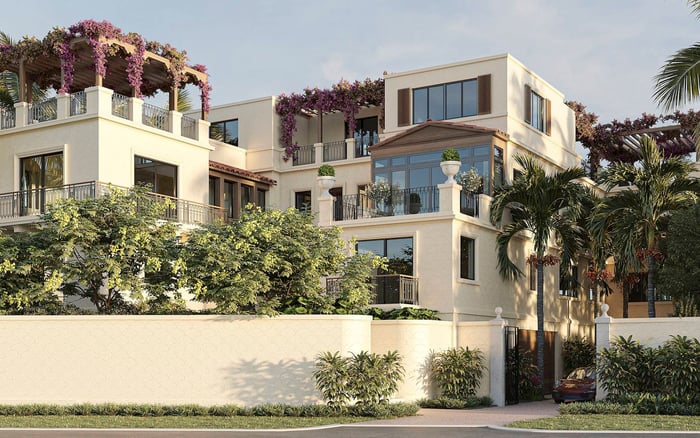
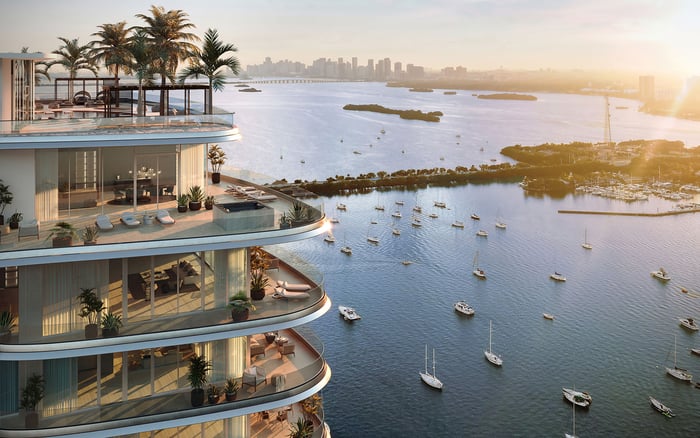
For serious boat owners, the right South Florida residence is defined less by the horizon line and more by dependable private slip utility. This MILLION Luxury editorial ranks the standout communities highlighted in the research and explains what buyers should verify around slip type, size, fees, covenants, and long-term value.
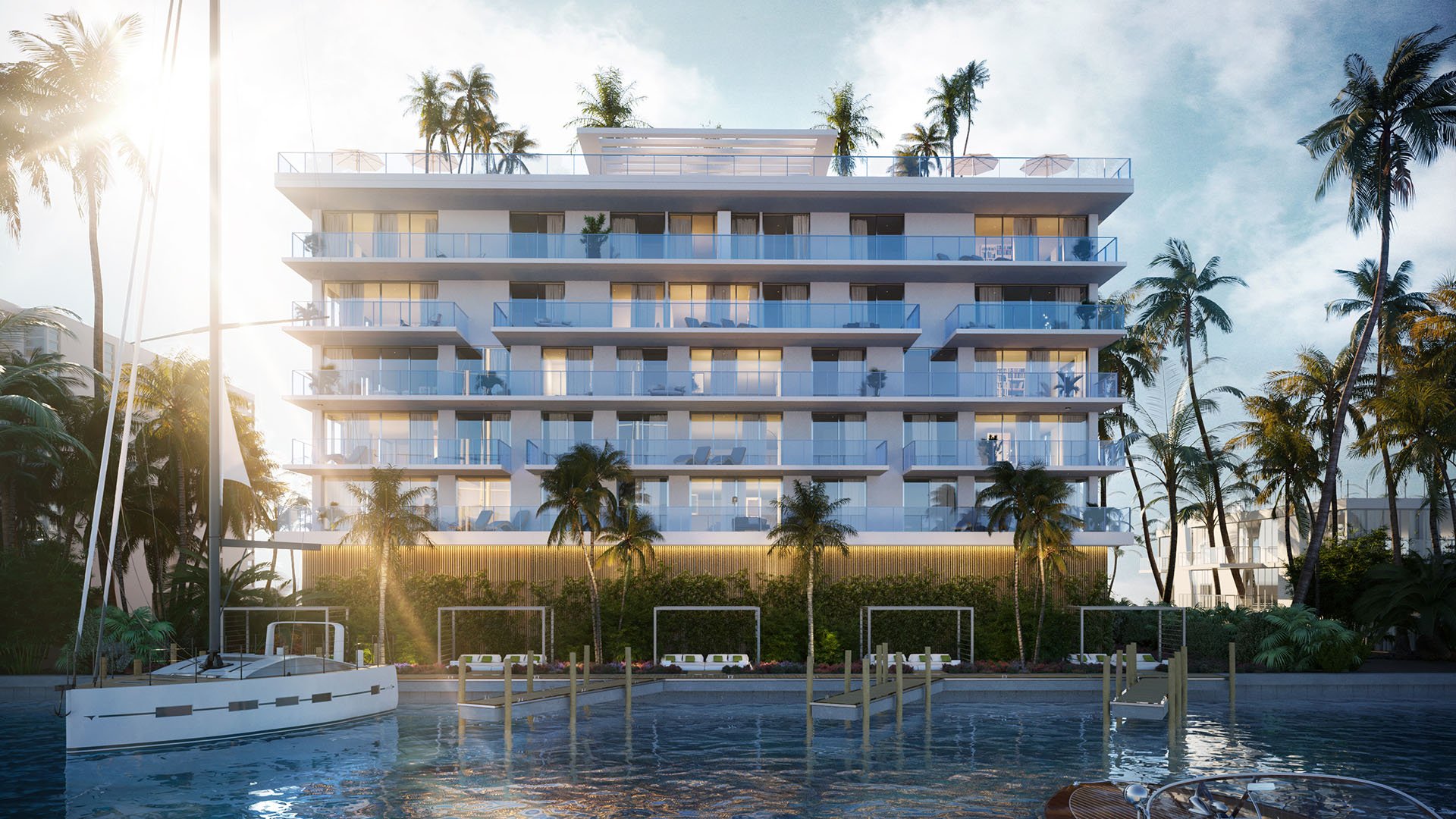
In South Florida, the distinction between waterfront prestige and waterfront utility is not subtle. A bay view can be beautiful, but for owners who actually keep a vessel, beauty is secondary to reliability. Real private marina utility means assigned, deeded, or consistently resident-only wet-slip access that supports regular use. It does not mean a public marina nearby, a guest dock that may or may not be available, or a building that sells the romance of boating without the infrastructure to support it.
That distinction matters because private docking is a recurring-use amenity, not a decorative one. Buyers who prioritize real utility typically value the ability to board on short notice, keep a vessel close to home, and avoid the friction of transient marina logistics. In practice, that often makes marina-capable residences more defensible over time than view-only waterfront.
The South Florida market also rewards existing marina infrastructure. New marina construction is difficult, permitting is restrictive, and established residential communities with functioning slips benefit from that constrained supply. For buyers seeking true boating convenience, scarcity is part of the value proposition.
In areas where the conversation centers more on skyline or surf than slips, projects such as Una Residences Brickell or 57 Ocean Miami Beach may appeal for design and waterfront setting, but serious marina buyers should still separate lifestyle positioning from dependable resident docking.
1. Fisher Island, Miami-Dade - private island marina ecosystem
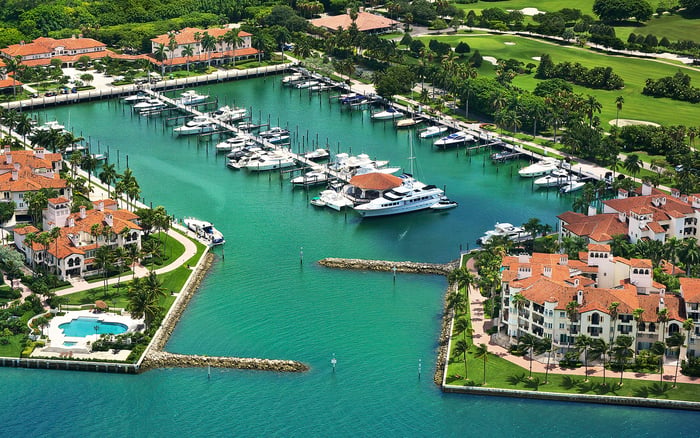
Fisher Island stands apart because the boating proposition is not incidental. It is a private residential island community associated with exclusive marina access, deep-water slips, and yacht-support services for residents. For buyers who want a residential environment where maritime use is embedded in daily life, this is one of the clearest expressions of true marina utility in South Florida.
The appeal is especially strong for owners with larger vessels or those who want a more service-oriented marina setting rather than a simple neighborhood dock.
2. Gables Estates, Coral Gables - estate-scale private docking on Biscayne Bay
Gables Estates is one of the region’s most compelling addresses for buyers who prefer single-family scale and direct control over their docking. The community is identified as a Biscayne Bay waterfront enclave where estates have private docking and often boat-lift capability.
That combination matters for owners who want a residence to function as a true marine base, not merely a scenic waterfront home. In Coral Gables, that practicality is part of the premium.
3. Port Royale, Fort Lauderdale - resident-reserved marina depth
Fort Lauderdale remains one of the most convincing markets for private boating households, and Port Royale is a notable example. It is described as a gated community with a 125-slip private marina reserved for residents, an important distinction in a market where many homes advertise water access without dedicated marina infrastructure.
For buyers who want clear separation between resident use and public boating traffic, Port Royale’s private framework is exactly the kind of utility-first setup that deserves attention.
4. Coral Ridge Yacht Club, Fort Lauderdale - assigned slips tied to residences
Another Fort Lauderdale standout, Coral Ridge Yacht Club is presented as a waterfront residential option with on-site private marina access and assigned wet slips tied to residences. That assignment structure can be especially attractive because it reduces ambiguity around access, one of the most important points buyers should investigate before closing.
This is the kind of setup that moves a community from merely waterfront to functionally boat-ready.
5. The Ritz-Carlton Residences Miami Beach, Miami Beach - branded luxury with select slip utility
Among luxury condominium options, The Ritz-Carlton Residences® Miami Beach is especially relevant because select residences are presented as offering private boat-slip utility for yacht owners. That is materially different from a generic marina-adjacent location.
For buyers who want a polished service environment in Miami Beach without giving up boating practicality, this is one of the more nuanced options in the market.
6. Isles of Boca, Boca Raton - canal-network living with resident dock privileges
In Boca Raton, Isles of Boca is described as having more than 60 miles of private waterways and resident boat-dock privileges. The boating proposition here is tied to a broader networked-waterway lifestyle rather than a single marquee marina.
That can be highly attractive for buyers who prefer frequent neighborhood cruising and easy local access over the theater of a trophy marina address.
7. Galleon Bay, Aventura - owner-access slips in a waterfront community
Aventura is not always the first place boating purists mention, yet Galleon Bay is described as a waterfront community with marina slips available to residence owners. For certain buyers, that combination of urban convenience and practical slip access is compelling.
It is best suited to those who want marine utility within a polished residential setting rather than a purely boating-centric enclave.
8. Pompano Beach inlet communities, Broward - direct-access value play
Pompano Beach inlet-area communities such as Harborwood and Harborside are noted for direct inlet access and private boat-slip potential at a lower price point than central Miami waterfront. The appeal here is straightforward: less emphasis on social signaling, more emphasis on getting out to sea quickly.
For buyers who prioritize use over spectacle, this remains one of the more pragmatic corners of the South Florida waterfront market.
The first question is not whether a residence sits on the water. It is whether the slip is deeded, assigned, rentable on a resident-only basis, or simply nearby. Those are very different ownership experiences. Many properties marketed as waterfront rely on public or municipal docking, which may be perfectly adequate for occasional use but is not the same as dependable private marina utility.
The second issue is fit. Private-marina slip capacity in South Florida commonly spans roughly 35 to 120 feet, so vessel length, beam, draft, and turning radius should all be confirmed during due diligence. In Fort Lauderdale, homes and communities with functional docking often command a meaningful premium, and slip sizes in the 40- to 80-foot range are commonly associated with the most practical owner-use scenarios.
The third issue is cost structure. Residential docking is often materially more efficient than paying transient public rates, but ownership is never frictionless. HOA or community fees may cover marina maintenance, dredging, and insurance, and marina communities often carry monthly obligations in the mid-hundreds depending on the slip structure and community profile. Restrictive covenants are also common, particularly where residents want to preserve a quiet, private boating environment.
In nearby luxury markets where waterfront living is part of the appeal but dedicated private-marina infrastructure may be less central, residences like The Ritz-Carlton Residences® Pompano Beach, Riva Residenze Fort Lauderdale, or The Links Estates at Fisher Island can still serve as useful reference points for buyers comparing broader waterfront lifestyle options across Broward, Fisher Island, and Miami.
The strongest private marina residences are not always the most photographed. Their advantage is operational. They let an owner leave on short notice, return without public-marina uncertainty, and integrate a vessel into everyday life rather than weekend planning.
That is why boating buyers should be cautious in locations where the waterfront story is compelling but the marina infrastructure is less specialized. Coconut Grove and other bayside neighborhoods can offer private boat access, yet they do not always provide the same dedicated on-site private-marina framework found in more boating-oriented enclaves. A residence such as Vita at Grove Isle may appeal to buyers comparing bayfront living styles, but marina-first buyers should still focus on the practical details of access, assignment, and vessel compatibility.
For the right owner, true marina utility is not a luxury extra. It is the asset. The most durable choices are the ones where the dock is part of the residential logic from day one.
What counts as real private marina utility? It means deeded, assigned, or reliably resident-only slip access, not just proximity to a public marina or guest dock.
Why do boating buyers pay a premium for functional docking? Because docking is a repeat-use amenity that saves time, reduces friction, and adds practical value beyond scenery.
Is a waterfront view enough for a yacht owner? Usually not. A beautiful outlook does not solve slip availability, vessel fit, or access control.
Which South Florida areas are strongest for true marina living? Fisher Island, Coral Gables, Fort Lauderdale, Boca Raton, Aventura, and select Pompano Beach enclaves stand out.
Are all marina slips deeded with the residence? No. Some are deeded, some assigned, and some are rentable only to residents, so documentation matters.
What slip size should buyers confirm? Buyers should verify vessel length, beam, draft, and maneuvering needs against the actual slip and marina layout.
Do marina communities usually have extra fees? Yes. Fees often support dredging, maintenance, insurance, and related marina operations.
Can private marina rules limit how owners use their slips? Yes. Covenants may restrict transient use, guest access, or other boating activity to preserve residential character.
Why are established marina communities especially valuable now? Because new marina construction is difficult, making existing private slip infrastructure relatively scarce.
What is the smartest first step before buying? Ask for written confirmation of slip rights, dimensions, fees, and restrictions before treating a residence as truly boat-ready.
For a discreet conversation and a curated building-by-building shortlist, connect with MILLION Luxury.
If branded residences are on your mind — as a home or as an allocation — we would be glad to share what we are seeing, privately.
Begin a quiet conversation