A design-led look at why media lounges are redefining penthouse living in South Florida, turning occasional showpiece residences into comfortable full-time homes.
For years, the penthouse was judged by altitude, view corridor, and the drama of arrival. A private elevator opened, the horizon performed, and the residence delivered the expected sense of occasion. Yet the most sophisticated buyers in South Florida are now asking a quieter question: can this home support ordinary life as beautifully as it supports a dinner party?
That is where the media lounge has become pivotal. Not merely a screening room, not a leftover den, and not a dark box hidden behind acoustic panels, the best media lounges are purposeful social rooms. They absorb the rhythms that make a penthouse livable: Sunday football, children’s movies, late-night work, houseguests, quiet reading, and the decompression that follows a long day.
A penthouse can impress in five minutes. A full-time residence must work over five years. The media lounge is increasingly the room that reveals the difference.
Penthouses often come with magnificent proportions, but grandeur can create distance. Formal living rooms are ideal for arrival, cocktails, and art, yet they are not always the rooms where residents want to put their feet up. A media lounge softens that architecture. It introduces a lower register of living, one that feels private without feeling secondary.
The distinction is especially important in South Florida, where indoor and outdoor life overlap. A penthouse may have a terrace, expansive glazing, and rooms designed around light. The media lounge gives the home a counterpoint: a space where light can be controlled, sound can be tuned, and the family can retreat without losing the sense of being in a highly designed residence.
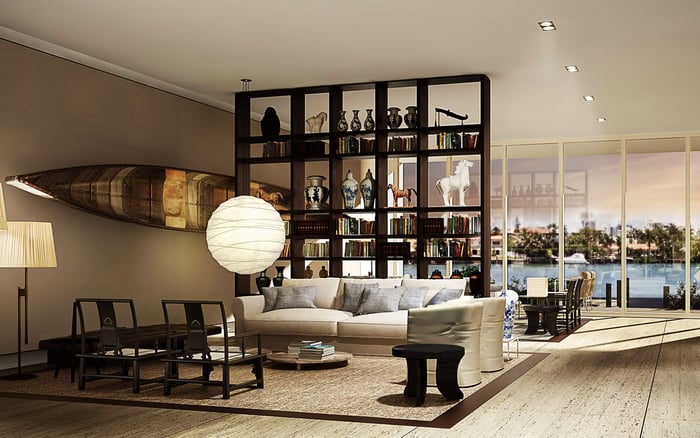
This does not mean sacrificing elegance. In the strongest executions, the screen disappears, millwork conceals equipment, and seating is scaled for conversation as much as viewing. The room feels complete even when nothing is playing.
The old private theater was often a specialized space: impressive, but underused. Rows of recliners, a single focal point, and limited flexibility made it feel closer to a hotel amenity than a room within a home. Today’s media lounge is more layered. It may include a large-format display, integrated speakers, concealed storage, a game table, a bar wall, or a library edge. More importantly, it is arranged for multiple uses.
A well-planned lounge can host an intimate film night, then function the next morning as a quiet place for a teenager to study or an owner to take an informal call. It can sit adjacent to a family room, tuck near secondary bedrooms, or act as a hinge between the main entertaining area and a private terrace. The key is not size alone. It is whether the room has the right relationship to the rest of the plan.
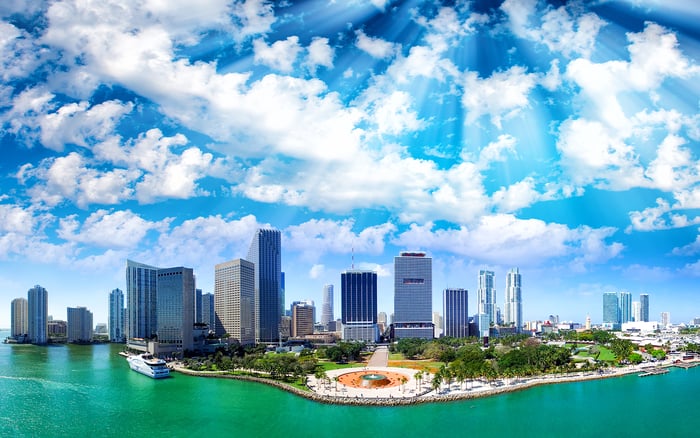
Buyers comparing high-design residences such as The Residences at 1428 Brickell often think carefully about how formal and informal spaces relate. In Brickell, where vertical living and city energy are part of the appeal, a media lounge can provide the pause that makes a sky residence feel grounded.
A successful media lounge begins with restraint. The room should not feel like a technology showroom. Screens, speakers, lighting controls, and shades matter, but they should recede into the architecture. The luxury is in the absence of visual clutter.
Acoustics are equally important. Hard surfaces, glass walls, and stone floors can make a penthouse visually spectacular but sonically unforgiving. Upholstered walls, rugs, drapery, textured ceilings, and carefully selected furniture can make the lounge feel intimate without turning it into a sealed chamber. The best rooms manage sound without advertising the effort.
Lighting is another defining layer. Full-time residents need more than a cinema preset. They need soft ambient light for conversation, task light for reading, low glare for viewing, and the ability to transition from day to night without fuss. In a penthouse, where windows may frame water, skyline, or both, shade integration becomes part of the room’s luxury.
The media lounge also solves a social problem. Full-time penthouse living often means overlapping schedules. Owners entertain. Children have friends over. Guests stay for a weekend. Staff may be present. The residence needs a room that can separate activity without isolating people.
This is where circulation matters. A lounge placed too close to the primary suite may compromise privacy. A lounge buried too far from the kitchen may feel inconvenient. A lounge that connects naturally to a secondary living zone can become the most used room in the home.
In family-oriented luxury buildings and coastal residences, buyers may consider how informal rooms support multigenerational use. At The Perigon Miami Beach, a buyer focused on full-time living would naturally examine how private interiors, view-facing rooms, and quieter areas can work together. In Miami Beach, the most valuable plan is not always the most theatrical one. It is the one that lets residents live without constantly adjusting to the architecture.
When evaluating a penthouse, do not treat the media lounge as a decorative extra. Study it as a daily-use room. Is it wide enough for generous seating without blocking circulation? Can the screen be viewed comfortably from more than one position? Is there wall depth for proper millwork? Can sound be controlled? Is the room close enough to the kitchen or service area for easy hosting?
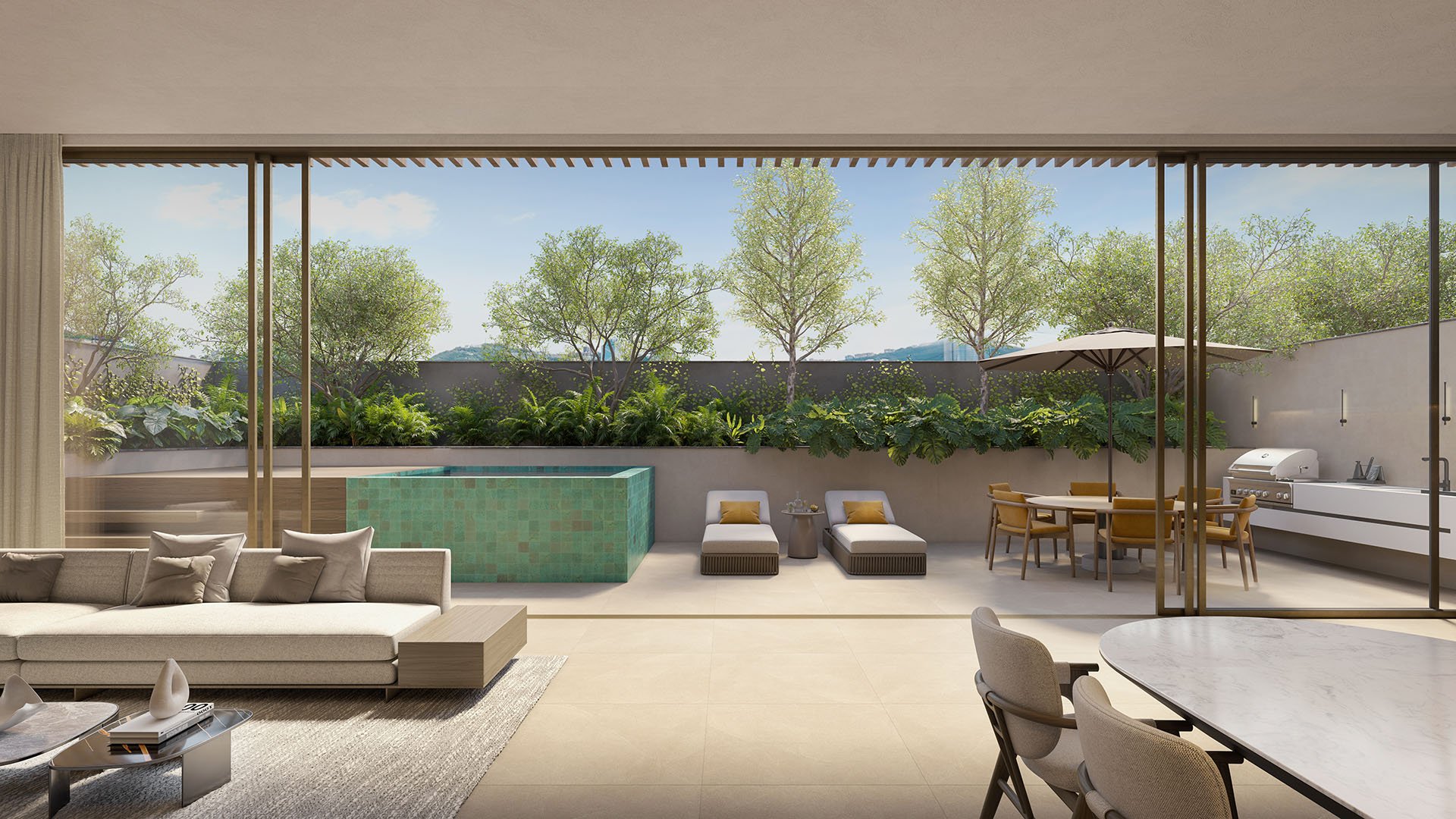
Also consider its relationship to the pool, terrace, and main entertaining spaces. A lounge that supports indoor-outdoor entertaining can extend the evening after dinner outside. A lounge near guest suites can make visitors feel accommodated without giving them the run of the entire home. A lounge near children’s bedrooms can preserve the main salon for adults.
In Sunny Isles, for example, buyers looking at residences such as Bentley Residences Sunny Isles may place particular value on how a penthouse balances dramatic outlooks with relaxed interior zones. The point is not to diminish the view. It is to make sure the home remains comfortable when the view is not the main event.
New-construction residences increasingly reflect a more mature understanding of luxury. Buyers still want scale, privacy, service, and design pedigree, but they also want rooms that anticipate real life. The media lounge fits this shift because it is both indulgent and practical. It can be a private cinema, a family room, a listening room, a sports room, or a quiet evening retreat.
Coconut Grove offers another useful lens. In a neighborhood associated with a softer residential pace, Park Grove Coconut Grove reminds buyers to think beyond spectacle. A penthouse that feels connected to daily rituals, morning coffee, casual conversation, and evenings in has a different kind of staying power.
The best media lounge is not necessarily the largest. It is the one that makes the entire penthouse easier to inhabit. That is the defining line between a trophy and a true primary residence.
Why is a media lounge important in a penthouse? It creates an informal, comfortable room that supports daily life beyond formal entertaining.
Is a media lounge the same as a home theater? Not necessarily. A media lounge is usually more flexible, with seating and lighting designed for conversation, viewing, and casual use.
Where should a media lounge be located? It should be convenient to the main living areas while still offering privacy from bedrooms and formal entertaining spaces.
Does a media lounge add value for full-time residents? It can make the penthouse more livable, especially for families, frequent hosts, and owners who use the residence daily.
What design features matter most? Comfortable seating, controlled lighting, concealed technology, acoustic softness, and practical storage are key.
Should the media lounge have windows? Windows can be desirable if shades and glare control are properly integrated into the design.
Can a media lounge work in a smaller penthouse? Yes. A compact lounge can be highly effective if it is well proportioned and not treated as leftover space.
How does the room support guests? It gives visitors a relaxed place to gather without occupying the formal living room all day.
What should buyers ask during a showing? Ask how sound, lighting, wiring, ventilation, and furniture placement can support real daily use.
Is the media lounge replacing the formal living room? No. It complements the formal room by giving the residence a more private and relaxed center of gravity.
For a discreet conversation and a curated building-by-building shortlist, connect with MILLION.
If branded residences are on your mind — as a home or as an allocation — we would be glad to share what we are seeing, privately.
Begin a quiet conversation