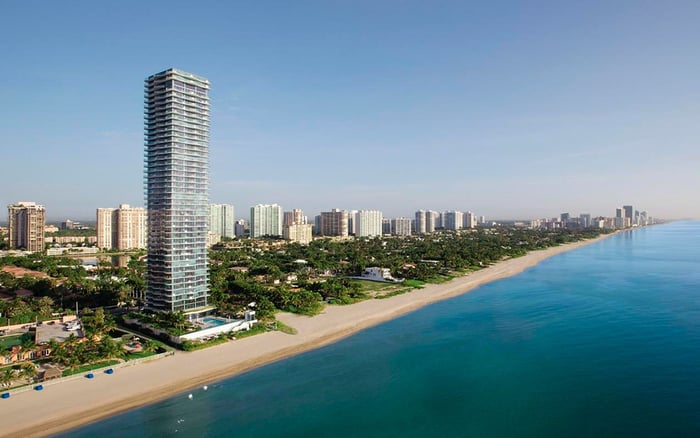
A practical underwriting framework for South Florida luxury buyers evaluating bilingual service culture alongside insurance exposure, HOA fees, staffing depth, and daily usability.

In South Florida luxury real estate, bilingual service culture is often treated as an atmospheric detail: a warm greeting at the porte cochère, a concierge who can move between languages with ease, a property manager who understands a family’s preference before it becomes a request. For a serious buyer, it deserves a more disciplined reading. Service is not simply hospitality. It is an operating layer that affects comfort, privacy, resale appeal, and the owner’s willingness to use the residence often.
The challenge is that service culture can feel intangible during a polished showing. A lobby may be serene, the staff gracious, and the amenities pristine. Yet the real question is whether that experience is durable after closing, during holiday weeks, storm preparation, guest arrivals, maintenance requests, board changes, and insurance renewals. The best underwriting does not separate elegance from expense. It studies how the building pays for, trains, supervises, and protects the service experience it presents.
For buyers comparing Brickell, Miami Beach, Sunny Isles, Coconut Grove, and other prime enclaves, the analysis should be less about which building feels most impressive in a single visit and more about which building can sustain its promise under normal pressure.
A buyer should begin by mapping the daily touchpoints. Who greets owners? Who handles deliveries? Who coordinates vendors? Who communicates with family offices, domestic staff, drivers, guests, or seasonal visitors? Where does language flexibility matter most: front desk, valet, management, security, maintenance, spa, beach, marina, or private dining?
This exercise turns a soft amenity into a measurable operating requirement. A building that markets itself to an international or multilingual ownership base should have a clear staffing philosophy, not merely a few personable employees who happen to be bilingual. The distinction matters. If language capability resides in individuals rather than in the system, the culture may change quickly with turnover.
Ask how requests are logged, escalated, and closed. Ask whether communications are standardized or improvised. Ask how a new employee learns the tone of the building. Luxury service is not defined by saying yes to everything. It is defined by consistent judgment, discretion, and follow-through.
Insurance is not separate from service quality. It shapes the association budget, influences reserves, and may affect decisions about staffing, maintenance, and capital planning. A buyer who admires bilingual concierge depth but overlooks insurance exposure is evaluating only half the building.
Review the association’s insurance obligations, deductibles, renewal timing, and allocation method. Understand what is covered by the association and what remains the responsibility of the individual owner. Luxury buyers should also consider whether the building’s physical profile, waterfront setting, systems, and maintenance history are matched by prudent risk planning.
The purpose is not to avoid buildings with meaningful insurance costs. In coastal luxury ownership, resilience has a price. The purpose is to know whether that price is visible, governed, and integrated into the broader operating plan. A building that underfunds risk may appear more attractive in the short term, but less elegant when unexpected assessments or service cuts become necessary.
HOA fees are often summarized too quickly as high or low. For a luxury buyer, the more useful question is what the fees are designed to support. A building with attentive staffing, bilingual front-of-house capability, security, valet, amenities, engineering, reserves, and common-area maintenance should be evaluated as a private operating environment, not a commodity expense.
Request the budget and read it line by line. Look for payroll, management, insurance, utilities, maintenance contracts, reserve contributions, amenity operations, and any line items that appear unusually lean for the building’s positioning. A fee that seems appealing can conceal future pressure if staffing or maintenance is insufficient. A fee that seems elevated may be rational if it supports a disciplined standard of care.
The essential test is alignment. Does the service promise match the financial structure? If a residence is being purchased for investment, second-home use, or eventual legacy ownership, the operating budget should reinforce the lifestyle narrative rather than contradict it.
The best buildings reveal themselves in ordinary moments. Arrive without ceremony. Watch how staff handle overlapping requests. Notice whether owners are greeted by name or by unit number. Observe whether the lobby remains calm when deliveries, guests, and vehicles converge. Ask how the building manages peak arrival periods, vendor access, private events, and owner absences.
Daily use also includes friction points that rarely appear in sales language. Where do dogs enter? How are groceries delivered? Can a driver wait comfortably? How does a guest reach the unit? How are service providers cleared? What happens when an owner is abroad and needs a repair authorized in another language?
For new-construction buyers, the underwriting must be especially forward-looking. A new building may have a compelling service concept, but the culture is not fully proven until residents occupy it, staff routines settle, and the association begins managing real-world complexity. The buyer should evaluate the proposed service model, the expected cost structure, and the governance framework with equal attention.
Service culture is fragile when it depends on personality alone. It becomes more durable when board governance, management standards, staffing budgets, training, and owner expectations are aligned. A bilingual service environment can deteriorate if the association treats language capability as optional, if payroll is repeatedly compressed, or if board priorities shift away from hospitality and toward minimal carrying costs.
Review meeting materials, budgets, reserve discussions, and rules. Ask how the board approaches service standards. Ask whether management has authority to maintain staffing levels. Ask how owner complaints are handled and whether recurring issues are tracked. The goal is not to intrude into governance, but to understand whether the building’s culture is protected by process.
Buyers should be particularly attentive to buildings where the marketing identity is more luxurious than the operating documents. The most refined properties tend to have a quiet consistency between promise and practice. The numbers, the rules, and the human experience all tell the same story.
A practical underwriting exercise is to imagine one ordinary week in residence. A family arrives late. Luggage, groceries, and guests arrive separately. A maintenance issue appears. A reservation needs to be changed. A vendor requires access. A family member prefers to communicate in another language. The owner is deciding whether the residence feels effortless or managerial.
If the building can handle that week gracefully, the service culture has value. If the week depends on one exceptional staff member being on duty, the buyer should ask harder questions. Luxury living is not the absence of complexity. It is the presence of systems that absorb complexity without drawing attention to themselves.
This is where bilingual service should be underwritten with nuance. It is not only about translation. It is about trust, tone, cultural fluency, privacy, and the confidence that important instructions will not be diluted. In South Florida, where ownership patterns can be global, seasonal, and family-centered, that confidence can materially shape the living experience.
Before committing, place three columns side by side: service, risk, and use. Under service, list language capability, staffing depth, management responsiveness, privacy, and training. Under risk, list insurance, reserves, capital planning, deductibles, and potential assessments. Under use, list arrival, parking, guests, pets, deliveries, vendors, amenities, and absence management.
Then look for contradictions. A building cannot promise hotel-level responsiveness while funding a minimal staff. It cannot offer a serene residential experience if access control is chaotic. It cannot support a sophisticated bilingual ownership base if communication standards are informal. Conversely, a property with higher carrying costs may be the better value if those costs purchase reliability, discretion, and durability.
The strongest acquisition decisions are rarely driven by one impressive amenity. They come from the convergence of architecture, location, governance, service, and financial transparency. When those elements reinforce one another, the residence feels less like a purchase and more like an operating platform for a life well lived.
Why should bilingual service be part of underwriting? Because it affects daily comfort, privacy, and the building’s ability to serve a sophisticated ownership base consistently.
Is bilingual staff enough to prove strong service culture? No. Buyers should look for systems, training, management oversight, and staffing depth beyond individual personalities.
How do HOA fees relate to service quality? HOA fees fund the operating environment, including staffing, management, maintenance, insurance, amenities, and reserves.
Should a buyer avoid high HOA fees? Not automatically. The better question is whether the fees are transparent, justified, and aligned with the service promise.
Why is insurance part of a lifestyle decision? Insurance affects association budgets, risk planning, reserves, and the long-term stability of the building experience.
What should second-home buyers focus on? They should examine absence management, vendor access, communication standards, security, and responsiveness when they are away.
How can a buyer test daily use before closing? Visit at different times, observe arrival patterns, ask operational questions, and study how routine requests are handled.
Are new buildings harder to evaluate? They can be, because the service culture may not be fully proven until residents move in and operations mature.
What is the biggest warning sign? A mismatch between an ambitious service promise and a budget or governance structure that cannot sustain it.
What makes service culture durable? Durable service comes from aligned governance, adequate funding, clear standards, trained staff, and consistent management.
For a tailored shortlist and next-step guidance, connect with MILLION.
If branded residences are on your mind — as a home or as an allocation — we would be glad to share what we are seeing, privately.
Begin a quiet conversation