A buyer-focused guide to evaluating owner-only amenity access at 57 Ocean Miami Beach, with emphasis on privacy, service quality, carrying costs, guest rules, and resale value.

57 Ocean Miami Beach is evaluated by many privacy-focused buyers as a residential alternative to larger resort-style settings. In that context, amenities are not merely lifestyle extras. They are part of the building’s privacy architecture.
The central question is not whether a condominium offers a pool, spa, fitness areas, beachfront access, and social spaces. The sharper question is who may use them, under what conditions, and whether those rights are protected by rules that will matter to a future buyer. Properly verified owner-only amenity access can support a calmer atmosphere and a more predictable service experience. If it is only marketing language, its resale value is far weaker.
For 57 Ocean, diligence should begin with the distinction between a residential ownership experience and a broad mixed-use resort experience. Lower density can make shared spaces feel more private, but only when guest policies, renter access, event controls, and staffing levels match the promise.
Oceanfront living in Miami Beach is a form of access. The beach, the waterline, the pool deck, and the wellness spaces all shape the daily experience of ownership. A buyer considering 57 Ocean should therefore evaluate amenity access as part of the residence itself, not as a separate perk.
In a high-value residential building, privacy is created in layers. The first is physical: fewer residences competing for the same amenities can reduce crowding. The second is operational: staff must be able to manage arrivals, seating, service requests, and guest behavior. The third is legal: condominium documents and association rules should clarify whether amenities are restricted to owners, residents, household members, invited guests, renters, staff, or any outside users.
Call it a Miami Beach test of exclusivity: a beautiful amenity package is only as private as the rules that govern access. Buyers should not assume that “residential” automatically means “owner-only” in every space and at every time. The stronger approach is to confirm each category of use, from spa areas to fitness rooms to social lounges.
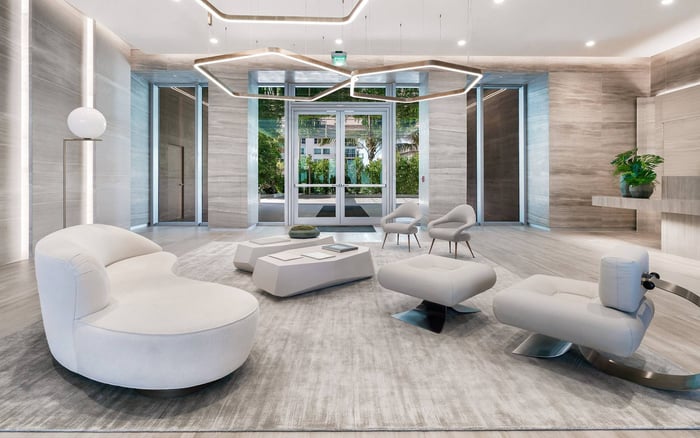
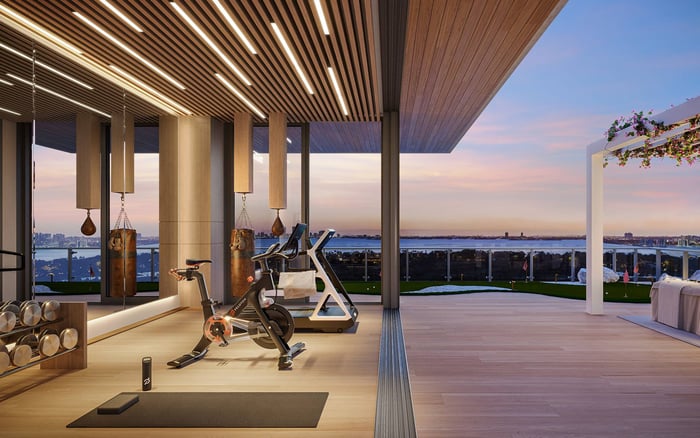
Boutique scale is often one of the quiet luxuries in Miami Beach. In a lower-density building, amenities may feel more personal because fewer residents are using them. That can be especially important when the amenity concept centers on wellness, beachfront living, spa and fitness uses, pool areas, and resident social spaces.
Yet boutique scale is not enough on its own. Service quality depends on the relationship between residences, amenity capacity, and staffing levels. A serene pool deck can feel compromised during peak periods if guest rules are loose, seating is unmanaged, or staffing is thin. A fitness room can feel private most of the year and crowded during winter holidays if there are no sensible guest limits.
A careful buyer should ask practical questions. How are pool chairs handled during seasonal demand? Are guests capped by residence, day, or area? Can renters use the same amenities as owners? Are private trainers, outside therapists, or third-party service providers allowed in wellness spaces? Can the association permit paid memberships, private events, or hospitality-style access in the future?
The answers should be reviewed in writing. A polished sales conversation may describe a resident-first experience, but long-term value depends on enforceable rules.
A pure residential amenity model differs from a hotel-branded or condo-hotel model because it is less likely to introduce rotating transient traffic into resident spaces. That difference can be meaningful for buyers who want quiet enjoyment, familiar staff, and a building culture shaped primarily by owners and invited guests.
This does not mean every hotel-related model lacks privacy, nor does it mean every residential condominium automatically delivers it. The point is that access structure matters. If amenity use is concentrated among owners, household members, residents, and controlled guests, the property can feel more settled. If use expands to outside members, public events, short-stay guests, or commercial programming, the experience changes.
At 57 Ocean, buyers should treat owner-only access as a diligence category rather than an assumption. The condominium documents, house rules, leasing policies, guest policies, and amendment thresholds should all be part of the review. The most valuable form of exclusivity is not decorative. It is documented.
Resale buyers in the ultra-premium segment often respond to privacy, quiet, and service consistency. A building where amenities remain calm, well maintained, and predictably governed can be easier to understand and defend in future pricing conversations. In that sense, resale value may benefit when amenity access supports a stable residential culture.
The opposite is also true. If amenities become crowded, if guest policies feel inconsistent, or if rules allow future outside use, buyers may discount the amenity package even if it photographs beautifully. This is why the review should focus on actual rights and operating realities, not the length of the amenity list.
There is also a cost side. Owner-only amenities are typically paid for by the owners through association fees, rather than subsidized by outside memberships or hotel users. That can be a worthwhile trade for privacy, but only if the building’s service, maintenance, and capacity justify the carrying cost. A buyer should compare monthly obligations against actual exclusivity, staffing, condition, and seasonal performance.
The most refined amenity is not always the largest. It is the one that works gracefully when the building is full.
Before purchasing at 57 Ocean, a privacy-focused buyer should request and review the governing documents and current rules that affect amenity access. The review should clarify who may use each space, whether access differs for owners and renters, how many guests are permitted, and whether outside commercial use is restricted.
Attention should also be paid to amendment procedures. If rules can be changed easily, today’s owner-only atmosphere may not be fully protected tomorrow. If future boards have the ability to authorize paid memberships, public events, or third-party hospitality programming, that possibility should be understood before closing.
Finally, buyers should visit at different times if possible. Midweek calm may not reveal holiday conditions. Seasonal Miami Beach demand can pressure valet, beach service, fitness rooms, and pool seating. The best diligence combines document review with lived observation.
Is 57 Ocean an oceanfront condominium? It is discussed in the market as an oceanfront luxury condominium in Miami Beach, and buyers should verify all property details through current documents and representation.
Does boutique scale automatically guarantee privacy? No. Boutique scale can help, but privacy depends on access rules, guest limits, capacity, and staffing.
What should buyers confirm first about amenities? Buyers should confirm who may use each space, including owners, guests, renters, staff, outside members, or hotel-style users.
Are owner-only amenities always better for resale? They may support resale when they preserve privacy, quiet enjoyment, and consistent service standards.
What is the main trade-off of owner-only access? Owners typically carry more of the operating cost through association fees because outside users are not subsidizing amenities.
Why do guest policies matter so much? Guest policies shape crowding, service quality, pool seating, and the overall tone of the building during peak periods.
Should renters have the same amenity rights as owners? That depends on the condominium documents and rules, so buyers should verify the policy rather than assume.
Can future rules change the amenity experience? Potentially, which is why amendment thresholds and association authority should be reviewed before purchase.
What should buyers observe in person? Buyers should look at pool use, valet flow, fitness-room crowding, staff presence, and the calmness of shared spaces.
What is the core diligence question at 57 Ocean? The key question is whether resident-exclusive amenity use is clearly preserved in documents and daily operations.
For a discreet conversation and a curated building-by-building shortlist, connect with MILLION.
If branded residences are on your mind — as a home or as an allocation — we would be glad to share what we are seeing, privately.
Begin a quiet conversation