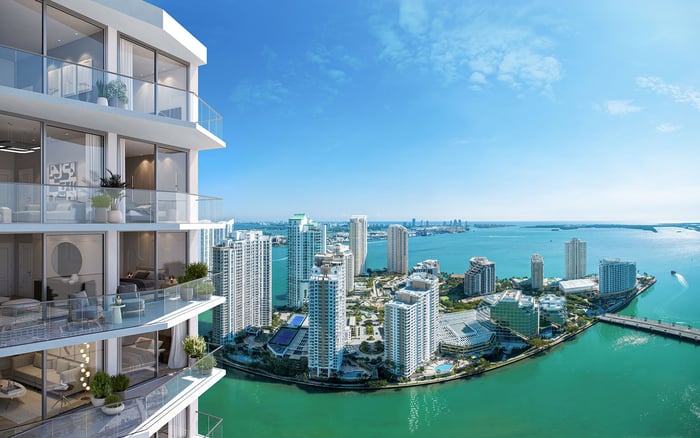
A discreet due-diligence guide for South Florida family buyers evaluating association litigation, structural risk, reserves, insurance, and daily lifestyle impact before closing.
.jpg)
For South Florida family buyers, association litigation belongs in the core property review, alongside floor plan, school commute, amenities, and neighborhood fit. In a condominium or homeowners association, the association may affect common-area maintenance, rules, assessments, insurance coordination, and the daily rhythm of ownership. When that entity is in dispute, every owner can feel the consequences.
The issue is not simply whether a lawsuit exists. The sharper question is what the dispute touches: structural safety, water intrusion, elevators, pool decks, parking, insurance proceeds, developer obligations, construction concerns, rules enforcement, or assessments. A family moving into a high-service building expects calm routines. Litigation can interrupt those routines through repairs, temporary amenity closures, financing concerns, or unexpected charges after closing.
This matters across the luxury map, from Brickell towers to Miami Beach oceanfront buildings, Sunny Isles high-rises, Surfside boutique residences, and gated communities farther north. Whether the purchase is resale or new construction, the standard should be the same: written clarity before a contract becomes an obligation.
A family buyer should demand the full governing-document package early, not at the edge of closing. For a condominium purchase, that means the declaration, bylaws, rules, financial information, and related disclosures. For an HOA, the governing documents, rules, budgets, accounting records, contracts, insurance policies, and meeting minutes deserve the same level of scrutiny.
The official records often reveal more than a polished sales conversation. Minutes may show repeated discussion of leaks, elevator replacements, security concerns, amenity restrictions, or settlement negotiations. Accounting records can show whether legal fees are consuming operating funds. Contracts and bids can reveal whether a repair plan is theoretical or already priced.
Families should ask for recent board and membership minutes, not merely the latest meeting packet. Litigation strategy may be confidential in part, but the operational consequences often surface in open association business: votes on special assessments, owner communications, repair scheduling, construction access, insurance claims, and reserve planning.
A current estoppel certificate is not a courtesy document. It is a closing-critical snapshot designed to help disclose amounts owed, assessments, and association account information. Buyers should review it against the budget, reserve schedule, special-assessment notices, and year-end financial report.
The point is to connect the legal dispute to the family balance sheet. A dispute over defective waterproofing, for example, may lead to legal fees, expert costs, temporary repairs, future construction, or insurance negotiations. If reserves are thin, owners may face a special assessment or borrowing decision. If reserves are strong and the issue is narrow, the risk may be more manageable.
For families, carrying-cost uncertainty is not abstract. It can affect private-school planning, renovation decisions, household staffing budgets, and the ability to hold a property through a market cycle. A buyer should ask whether any pending or threatened claim could require owner votes, borrowing, increased assessments, or special assessments after closing.
For mid-rise and high-rise condominium buyers, structural documentation belongs at the center of the diligence file. Buyers should demand the building’s inspection status, available reports, repair plans, and any related engineering or bid documents that the association can properly provide.
Reserve planning is equally important. Family buyers should ask whether reserves are aligned with known building needs and whether association records show a realistic plan for major common elements such as roofs, façades, balconies, waterproofing, garages, elevators, life-safety systems, and pool decks.
This review should be calm but firm. A luxury lobby, private elevator foyer, or expansive terrace does not replace documented structural diligence. The family question is simple: what has been inspected, what was found, what work is required, how will it be funded, and how will the work affect daily life?
Not every association dispute carries the same weight. A rule-enforcement matter involving pets, parking, or architectural approvals may be materially different from a construction-defect claim, insurance coverage dispute, or structural-repair lawsuit.
The distinction matters because the timeline, cost, and practical disruption can differ dramatically. A narrow owner violation may have little effect on the building as a whole. A defect claim involving exterior walls, balconies, roofs, waterproofing, elevators, or garages may affect safety, financing, insurance, and access to amenities.
Family buyers should ask for a plain-language litigation summary, if available, that identifies the parties, the nature of the claims, the stage of the matter, possible insurance involvement, known settlement discussions, and whether any repair plan or owner vote is anticipated. Buyer-side counsel can help separate what the association can disclose from privileged or confidential material.
Association litigation often intersects with insurance. Buyers should demand proof of property insurance, deductibles, exclusions, and claim history for association-covered property. A building may have insurance in place, yet the deductible, exclusions, or unresolved claims can still create owner exposure.
Ask whether the dispute involves an insurance carrier, whether the association has submitted claims, whether proceeds are expected, and whether repairs have already been funded from operating accounts or reserves. If the dispute concerns storm damage, water intrusion, fire systems, or building-envelope failures, the insurance file may be as important as the court file.
For a family, the concern is not only financial. Insurance disputes can delay repairs, complicate lender review, and create uncertainty around move-in timing or amenity availability. A children’s pool, garage, elevator bank, or lobby access plan can become a practical household issue when litigation and repairs overlap.
The most disciplined buyers demand written seller and association disclosures about pending claims, threatened claims, settlements, known defects, and related repairs before becoming emotionally committed to the home. Verbal reassurance is not enough when the issue could affect financing, insurance, resale value, or the daily use of amenities.
The written request should include open lawsuits, demand letters, construction notices, settlement agreements, engineering reports, inspection findings, repair bids, special-assessment history, and owner communications about the dispute. If the association will not provide certain materials, the buyer should understand why and decide whether the remaining uncertainty is acceptable.
Families should also ask practical questions: Will balconies be closed? Are elevators scheduled for replacement? Is the pool deck under repair? Will school-year move-in timing be affected? Are parking spaces or valet operations changing? Will contractors need access through residential corridors? These details can determine whether a beautiful residence actually supports family life.
South Florida’s luxury buildings offer an extraordinary way to live, but the region’s climate, coastal exposure, vertical construction, insurance environment, and heightened safety focus make association diligence essential. A family buyer should not hesitate to ask difficult questions. The strongest buildings and communities tend to have organized records, direct communication, realistic budgets, and a culture of transparency.
The goal is not to avoid every building with litigation. In mature luxury communities, disputes can arise even where governance is professional. The goal is to understand materiality. Is the litigation isolated or systemic? Is the association proactive or reactive? Are reserves aligned with known needs? Is insurance responding? Are owners being informed? Are children, caregivers, guests, and daily routines likely to be affected?
When the answers are clear, a buyer can proceed with confidence. When answers are vague, delayed, or inconsistent, the uncertainty itself becomes part of the price.
Should family buyers automatically avoid a building with association litigation? No. The key is whether the dispute affects safety, financing, assessments, repairs, amenities, or daily use.
What documents should be requested first? Start with governing documents, budgets, reserves, estoppels, board minutes, insurance records, inspection reports, and special-assessment notices.
Why are meeting minutes so important? Minutes often reveal repair discussions, settlement votes, insurance issues, and assessment planning before those issues appear elsewhere.
What is an estoppel certificate used for? It helps disclose amounts owed, assessments, and association account information before closing.
What structural documents matter most for high-rise buyers? Inspection status, available reports, repair plans, engineering materials, bid documents, and reserve planning should be reviewed.
Can litigation lead to a special assessment after closing? Yes. Legal fees, repairs, settlements, insurance deductibles, or reserve pressure can result in increased assessments or special assessments.
Should HOA buyers ask the same questions as condo buyers? Yes. HOAs can enforce covenants, collect assessments, maintain common areas, and create owner financial exposure.
Are construction-defect claims different from ordinary rule disputes? Yes. Defect claims may involve repairs, experts, insurance, and building-wide cost exposure, while rule disputes may be narrower.
Can an association withhold some litigation materials? Yes. Attorney-client communications and confidential strategy may not be disclosed, so buyer counsel should review the limits carefully.
What is the simplest test for a family buyer? Ask whether the dispute could affect safety, costs, move-in timing, amenities, financing, insurance, or resale value.
For a tailored shortlist and next-step guidance, connect with MILLION.
If branded residences are on your mind — as a home or as an allocation — we would be glad to share what we are seeing, privately.
Begin a quiet conversation