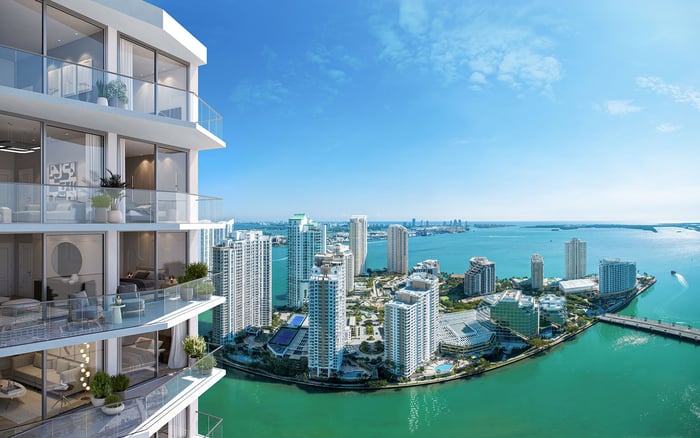
A practical luxury condo due-diligence guide for evaluating water pressure, plumbing stack position, and renovation limits before committing to a South Florida residence.

In South Florida’s luxury condo market, buyers often tour residences through the lens of view corridors, ceiling heights, terraces, millwork, and the emotional pull of a beautiful primary suite. Yet some of the most consequential due-diligence questions sit behind walls and beneath slabs. Water pressure, plumbing stack position, and renovation limits can determine whether a residence is simply beautiful today or genuinely adaptable to the next owner’s lifestyle.
For a buyer considering a major redesign, these issues are not minor technicalities. They affect shower performance, kitchen relocation, powder room feasibility, laundry placement, wet-bar ambitions, construction duration, approval risk, and resale confidence. A trophy address may deliver the right skyline or ocean view, but the strongest acquisition is the one where the architectural vision and the building’s infrastructure can coexist.
This is especially relevant in dense vertical markets such as Brickell, where residences like The Residences at 1428 Brickell appeal to buyers who value design precision as much as location. The more ambitious the customization, the more important it becomes to understand what the building can realistically support.
A luxury bathroom can be visually persuasive, but the quality of the experience depends on the plumbing behind the stone. Before assuming a rain shower, body sprays, soaking tub, steam feature, or expanded primary bath will perform as imagined, a buyer should request a focused evaluation of water delivery. The question is not simply whether water flows. It is whether the system supports the way the residence will actually be used.
The best review is practical. Test showers, tubs, sinks, and kitchen fixtures. Observe whether pressure remains consistent when more than one fixture is running. Ask whether the residence has recently been vacant, because unused fixtures can behave differently once regular use resumes. If a renovation is planned, have a qualified professional assess whether the proposed fixture package aligns with the unit’s supply conditions.
In ultra-luxury residences, expectations are higher because the rituals are more layered. A primary bath may be designed as a wellness suite, the kitchen may include multiple sinks, and service areas may need to function discreetly during entertaining. Water pressure should be evaluated as part of lifestyle performance, not as a checklist item.
The plumbing stack is one of the quiet determinants of renovation freedom. In a condominium, vertical plumbing typically serves multiple residences, and its position can anchor kitchens, baths, laundry rooms, and other wet areas. Moving a sink across a room may sound simple in a design meeting, but in a high-rise context, the path to drainage and venting can quickly become the controlling issue.
For buyers, the essential task is to locate the stack early. Request the best available plans, ask the building team what can and cannot be moved, and have the proposed renovation reviewed before emotional attachment hardens around a new layout. A designer may envision a larger spa bath or a relocated kitchen island with full plumbing, but the building may impose limits that make another solution more elegant and more realistic.
This is where sophisticated buyers distinguish cosmetic renovation from infrastructure-dependent renovation. Replacing finishes, cabinetry, and lighting is one category. Relocating wet areas is another. A residence at The Perigon Miami Beach may invite a design-forward mindset, but even the most refined interiors benefit from early technical discipline.
Every luxury condo lives within a building culture. That culture may include rules on work hours, contractor access, elevator protection, noise, waterproofing, floor assemblies, insurance, deposits, submissions, and board or management approvals. Buyers should treat these limits as part of the asset, because they shape both the renovation timeline and the eventual living experience.
The strongest due diligence begins before closing. Ask for the alteration agreement, renovation guidelines, and any available approval procedures. Clarify whether plans must be submitted by licensed professionals. Understand how the building reviews plumbing changes, waterproofing work, coring, slab penetrations, and changes that may affect neighboring residences. Even when a concept is feasible, the approval sequence can influence how quickly a buyer can move from closing to construction.
New-construction buyers and resale buyers face different versions of the same question. In a new residence, selections and post-closing customization may be coordinated around developer delivery and building procedures. In a resale residence, the buyer may inherit prior alterations that should be understood before planning the next layer of design.
When assessing renovation potential, three areas usually reveal the truth quickly: the kitchen, the laundry, and the powder room. The kitchen may involve drainage, supply, ventilation coordination, appliance demands, and island design. The laundry area may require particular attention to location and building rules. A powder room, especially if proposed in a new location, can be one of the clearest tests of whether the plumbing concept is aspirational or plausible.
A prudent buyer should walk the residence with the proposed plan in hand. Where are the existing wet walls? Which walls appear to align with baths or kitchens above and below? Which design moves depend on long concealed runs? Which require opening floors or ceilings? These questions help separate graceful modifications from costly interventions.
In coastal and waterfront markets such as Sunny Isles, residences like Bentley Residences Sunny Isles attract buyers with strong expectations for personalization. The smartest customization starts with a realistic map of what the infrastructure permits.
The most desirable residence is rarely perfect in every dimension. A buyer may accept an awkward secondary bath because the ocean exposure is irreplaceable. Another may compromise on kitchen location because the building’s service culture and amenities are exactly right. The goal is not to avoid every limitation. It is to know which limitations matter and price them intelligently.
If water pressure is questionable, bring in an expert before assuming premium fixtures will solve it. If the plumbing stack constrains a desired layout, ask the design team to create alternatives that respect the building. If renovation rules are strict, build the timeline and soft costs into the acquisition strategy. In the highest tier of the market, restraint can be as valuable as ambition.
This is particularly true in design-led boutique and oceanfront settings such as The Delmore Surfside, where the architecture and lifestyle may carry enormous appeal. A disciplined infrastructure review protects that appeal by helping ensure the finished residence performs as beautifully as it photographs.
A buyer does not need to become a plumbing specialist, but the advisory team should know what to ask. Request available floor plans, building renovation rules, alteration agreements, prior permits or approvals if available through the seller, and any documentation tied to previous wet-area changes. Ask whether management has a preferred process for reviewing plumbing work. Confirm whether contractors must meet specific building requirements.
During inspection, focus on performance and evidence. Look for inconsistent pressure, slow drainage, unusual odors, staining, prior patching, or signs that previous renovations were more cosmetic than technical. Inquire about shutoff access, riser locations, and the process for work affecting common systems. These conversations should happen quietly and professionally, but they should happen before leverage disappears.
The reward is clarity. A buyer can proceed with confidence, renegotiate with precision, or walk away from a residence whose limitations are not compatible with the intended lifestyle.
True luxury is not merely the freedom to imagine. It is the confidence that imagination can be executed well. Water pressure, plumbing stack position, and renovation limits may not be visible during a champagne tour, but they can define the everyday quality of ownership.
For South Florida buyers, the lesson is simple: evaluate the infrastructure with the same seriousness as the view. A residence that passes both tests is more than a beautiful acquisition. It is a platform for long-term enjoyment, thoughtful design, and confident value preservation.
Should I test water pressure before making an offer? Yes. Test multiple fixtures and have a qualified professional evaluate whether the residence can support your intended fixture package.
Can I move a kitchen anywhere in a luxury condo? Not always. Kitchen relocation often depends on plumbing stack position, drainage routes, and building approval.
Why does the plumbing stack matter so much? It often anchors wet areas and can limit how far baths, kitchens, laundry rooms, and bars can be moved.
Are cosmetic renovations easier than plumbing renovations? Generally, finish changes are simpler than work involving wet-area relocation or common building systems.
What documents should I request before planning a renovation? Ask for renovation rules, alteration agreements, available plans, and any information on prior approved work.
Can building management reject a proposed renovation? A building may require revisions or approvals before work proceeds, especially when plumbing or shared systems are involved.
Should my designer review the unit before closing? Yes. Early review helps align the purchase decision with the renovation you actually want to execute.
Do prior renovations need extra scrutiny? Yes. Prior work should be reviewed for quality, approvals, and compatibility with your future design plans.
Is low water pressure always a dealbreaker? Not necessarily. It depends on the cause, the intended use, and whether a practical remedy is available.
How should I compare two similar luxury condos? Compare not only views and finishes, but also infrastructure flexibility, approval risk, and renovation practicality.
For a discreet conversation and a curated building-by-building shortlist, connect with MILLION.
If branded residences are on your mind — as a home or as an allocation — we would be glad to share what we are seeing, privately.
Begin a quiet conversation
.jpg&width=700&height=438&fit=cover)