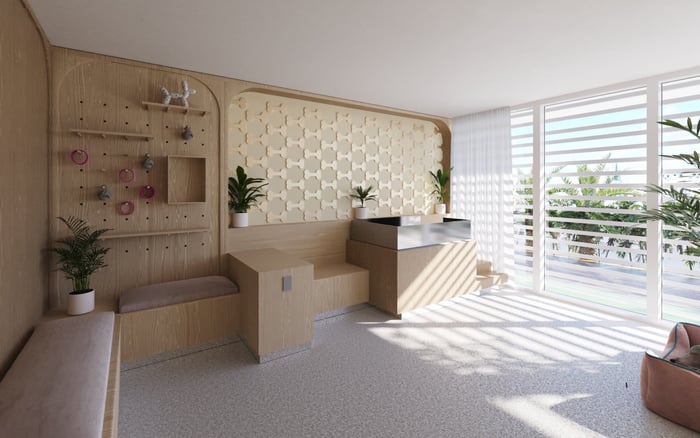
A discreet due diligence guide for cash buyers evaluating pet elevator etiquette, building culture, and daily comfort before closing on a South Florida residence.

Cash can make a purchase feel elegantly simple. It may shorten negotiations, reduce financing friction, and allow a buyer to focus on architecture, views, privacy, and timing. Yet for buyers with animals, a quiet but consequential layer remains: how the building expects pets to move through its vertical world.
Pet elevator etiquette is not a decorative detail. It affects the rhythm of every morning walk, the discretion of every guest arrival, the comfort of neighbors, and the way staff coordinate service corridors, lobbies, garages, and amenity levels. In a market where buyers compare Brickell towers, Aventura waterfront residences, Surfside boutiques, and new-construction offerings with polished amenity narratives, the written rules deserve as much attention as the marble, millwork, and terrace depth.
The central question is not simply whether a building allows pets. The more refined question is whether its rules support the way you and your household actually live.
A sales presentation or showing can communicate warmth toward pet ownership, but closing comfort should be anchored in governing documents and current house rules. Cash buyers, in particular, sometimes move quickly because they can. That speed is useful only when it preserves judgment.
Before the contract becomes emotionally inevitable, ask to review the pet provisions in writing. Look for language on permitted animals, registration, elevator use, common-area movement, cleaning responsibility, noise expectations, leash requirements, carrier rules, and access to amenity areas. If the residence will be used seasonally, ask how visiting pets, family pets, and pet sitters are treated. If staff will handle walks, ask whether the building distinguishes between owner-accompanied pets and employee-accompanied pets.
The most important point is consistency. A rule that seems minor in isolation can become irritating if it is enforced differently by shift, season, or ownership group. A luxury building should feel composed, not improvised.
The elevator question is where etiquette becomes operational. Some buildings may expect pets to use a service elevator, some may permit resident elevators under certain conditions, and some may have more nuanced customs depending on time, pet size, lobby traffic, or staff direction. Do not assume that a private elevator foyer eliminates every shared expectation.
Ask directly: which elevator should be used for daily walks, vet visits, grooming appointments, pet deliveries, and emergencies? If the building has separate service, freight, guest, and resident elevators, understand the distinctions in ordinary language. A rule that works well for a compact dog may feel different for a large dog, an aging pet, or an animal that requires frequent outdoor access.
Also ask how elevator etiquette works during high-traffic moments. Morning departures, valet activity, restaurant reservations, school runs, and event evenings can change the experience of a lobby. In a highly serviced building, the choreography should be clear enough that residents do not need to renegotiate the rule each time the doors open.
Pet etiquette is not only about the elevator cab. It is about the full route from the residence to the outdoors. A buyer should walk the path: unit door, corridor, elevator, lobby or service landing, garage, porte cochère, sidewalk, relief area, wash station, or dog park if one exists. The route should be dignified, safe, and practical in both formal and informal conditions.
Pay attention to surfaces, turns, waiting areas, and transitions. Is there a place to pause without blocking residents? Is the exit intuitive for a pet sitter? Would a wet dog returning from a walk pass through a formal arrival zone? Are there doors that require staff assistance? Is there a route that feels acceptable late at night or early in the morning?
A building can be visually spectacular and still feel awkward for pet routines. The most successful residences make daily life feel effortless, including the small repetitions that never appear in a glossy brochure.
Every building has a culture. Some are highly formal. Some are relaxed but discreet. Some are seasonal, with long quiet periods interrupted by intense social weeks. Some are family-oriented, while others feel more like private clubs. Pet etiquette sits inside that culture.
The goal is not to ask whether residents are “pet friendly” in a vague way. Ask how the building handles repeated issues: barking complaints, accidents in common areas, unregistered animals, off-leash behavior, elevator discomfort, and conflicts between residents. The answers should sound measured, documented, and fair.
Buyers comparing Brickell convenience with Surfside intimacy, or Aventura ease with a more resort-like address, should remember that pet life is partly architectural and partly social. The right building is not necessarily the one with the longest amenity list. It is the one where expectations are understood before they become personal.
A cash buyer can often ask sharper questions earlier because there is less dependency on lender timing. Use that advantage to obtain clarity before momentum carries the deal. Request the relevant rules, ask for confirmation of current practice, and have counsel review the language if the pet routine is central to your lifestyle.
If the purchase is for a second home, clarify whether guests may bring pets and whether housekeepers, drivers, assistants, or pet care professionals can move through the building with them. If the residence may later be rented, even informally to family or long-term occupants, ask how pet permissions transfer. If the pet is aging, large, anxious, or medically complicated, treat elevator logistics as a material lifestyle factor, not an afterthought.
The best luxury purchase is the one that feels graceful on an ordinary Tuesday. For pet owners, that means the route downstairs, the elevator etiquette, and the building culture all work together without friction.
Should cash buyers still review pet rules before closing? Yes. Cash terms may simplify the transaction, but they do not clarify how a building expects pets to move through shared spaces.
Is pet permission the same as pet convenience? No. A building may allow pets while still having elevator, lobby, or access rules that affect daily comfort.
What should I ask about elevator use? Ask which elevator pets should use, whether rules differ by time or situation, and how staff communicate expectations.
Should I walk the pet route before buying? Yes. Walk from the residence to the outdoor area so you understand corridors, doors, elevators, and waiting points.
Do private elevators remove the issue? Not always. Even with private elevator access, pets may still pass through shared lobbies, garages, or service areas.
How should I evaluate building culture around pets? Listen for clear, consistent, and respectful procedures rather than vague assurances or overly casual promises.
Can pet sitters use the same routes as owners? Do not assume so. Ask whether staff, assistants, guests, and pet care providers follow different access rules.
What if I own more than one pet? Review written provisions carefully and confirm whether the building has registration, size, number, or conduct requirements.
Should renters or guests be considered? Yes. If others may occupy the residence, confirm how pet permissions apply to guests, family members, or long-term residents.
When should these questions be asked? Ask before removing key contingencies or becoming emotionally committed, while there is still room to negotiate or reconsider.
When you're ready to tour or underwrite the options, connect with MILLION.
If branded residences are on your mind — as a home or as an allocation — we would be glad to share what we are seeing, privately.
Begin a quiet conversation