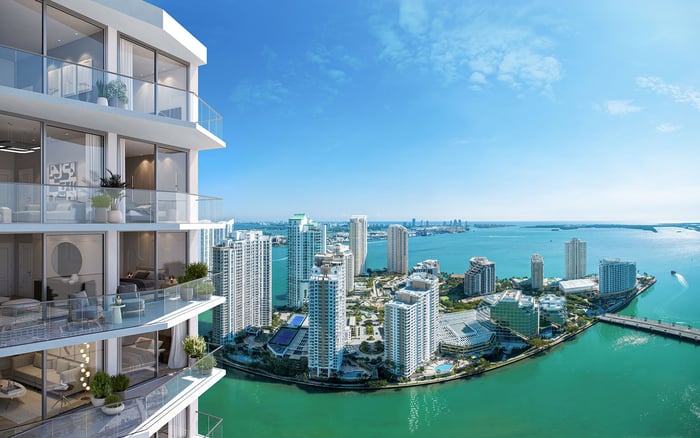
Pet policy enforcement can quietly alter the economics of a boutique South Florida residence by shaping maintenance exposure, insurance sensitivity, staff workload, resale confidence, and the daily tone of shared luxury spaces.

In South Florida’s boutique residential market, the pet policy is often read too late. Buyers study ceiling heights, terrace depth, marina access, concierge programming, and view corridors with forensic care, then skim the pet section as if it were a courtesy note. That oversight can be expensive. In a small, service-rich building, pet policy enforcement can influence the real cost of ownership as clearly as staffing, reserves, valet operations, or insurance.
The issue is not whether a residence feels welcoming to animals. Many luxury buyers want precisely that, and pets are now part of the lifestyle calculus for primary homes, pied-à-terre residences, and seasonal retreats. The more important question is whether the building’s rules are specific, consistently administered, and aligned with the caliber of finishes and service being sold. A generous policy with weak enforcement can be less predictable than a stricter policy with clear procedures.
For buyers comparing a polished urban address such as 2200 Brickell with a quieter coastal or island setting, the pet policy should be treated as part of the building’s operating system. It shapes how elevators are used, how staff respond to incidents, how common areas are maintained, and how disputes are resolved before they become cultural problems.
Boutique residences are prized because they feel private, personal, and controlled. Fewer neighbors can mean quieter amenity spaces, more familiar staff interactions, and a stronger sense of discretion. That same intimacy also makes small operational frictions more visible. One recurring issue in a corridor, elevator, lobby, garden path, or pet relief area can affect a large share of the resident experience.
In a tower with many units, certain costs and inconveniences are dispersed across a larger ownership base. In a boutique property, the same operational pressure is absorbed by fewer owners. Extra cleaning, staff time, damage review, rule communications, attorney involvement, or board attention can become more noticeable in the budget conversation. The true expense is not only the isolated repair. It is the administrative drag that weak enforcement can create.
This is especially relevant in design-forward buildings where finishes are part of the value proposition. Stone floors, custom millwork, upholstered lobby furniture, landscaped entries, and private elevator foyers require disciplined use. A buyer looking at a refined coastal address such as The Delmore Surfside should consider how the building intends to preserve the arrival sequence over time. Pet rules are part of that preservation strategy, not an afterthought.
Pet policy enforcement can affect ownership costs through several channels. The first is maintenance. Buildings that do not clearly manage animal traffic may face higher cleaning demands in elevators, garages, corridors, amenity decks, and landscaped zones. Even when no major damage occurs, recurring upkeep can change the rhythm of staffing and vendor use.
The second is replacement risk. Soft goods, entry rugs, planters, door finishes, and elevator interiors can wear differently when rules are loose. Boutique buildings often pursue a residential, hotel-like atmosphere. That atmosphere depends on materials remaining crisp. If enforcement is inconsistent, boards may eventually respond with more spending, more restrictions, or both.
The third is legal and administrative complexity. Pet restrictions must be handled carefully, especially where accommodation requests and governing documents intersect. A building that lacks a measured process may create unnecessary tension among residents, staff, and boards. Clear procedures help separate ordinary pet privileges from protected exceptions while reducing ad hoc decision-making.
The fourth is market perception. Buyers of high-end South Florida residences often pay for quiet confidence. If a building develops a reputation for inconsistent rule enforcement, the issue can become part of the informal due diligence conversation. It may not appear in glossy marketing, but it can surface in board minutes, resale discussions, or buyer questions.
The pet section should be reviewed alongside the declaration, bylaws, house rules, application package, and leasing provisions. The goal is not to find the friendliest wording. The goal is to understand whether the rules are enforceable, practical, and consistently applied.
Start with the basics: number of pets, size or weight limits, breed language, registration requirements, vaccination documentation, leash rules, elevator protocols, relief-area expectations, guest-pet restrictions, and any fees or deposits. Then move beyond the basics. Ask how violations are documented, who has authority to act, how warnings are issued, and whether fines or access limitations are available under the governing documents.
A buyer evaluating Avenia Aventura, for example, may be drawn to the convenience of Aventura and its residential rhythm. The same buyer should still ask whether the pet framework matches the desired lifestyle. A permissive policy can be appealing, but only if the building has the management capacity to keep common areas elegant and predictable.
For an investment-minded purchaser, the inquiry becomes even sharper. If the residence may be leased long term, the owner should understand whether tenant pets are treated differently from owner pets, whether approvals are transferable, and whether the association has a reliable screening process. A vague rule can become a leasing risk, particularly in a boutique building where resident fit matters.
Luxury amenities are often discussed as assets: pools, wellness rooms, lounges, gardens, private dining rooms, terraces, and arrival courts. Pet enforcement helps determine how those assets feel after move-in. A building can have an exquisite amenity deck, yet lose its composure if pet access is poorly defined or selectively enforced.
Good enforcement is not hostile. It is calm, visible, and even-handed. The best experience is one where residents know what is expected before a problem occurs. Staff should not be forced to improvise in emotional moments. Boards should not have to reinterpret rules for each personality. Owners should not feel that compliance is optional for some and strict for others.
In Bay Harbor Islands, a project such as Alana Bay Harbor Islands illustrates the type of intimate residential setting where governance can matter as much as architecture. In smaller communities, the tone of shared spaces is part of the asset. Pet rules help preserve that tone when they are written with precision and administered without drama.
Some buyers worry that strict pet rules reduce the buyer pool. That can be true in certain cases, but loose enforcement carries its own discount. The most resilient position is usually clarity. A building can be pet-accommodating and still disciplined. It can welcome residents with animals while protecting elevators, gardens, acoustic privacy, and staff boundaries.
Resale confidence comes from predictability. Future buyers want to know that the building has a coherent culture. They want to understand whether rules are real or ornamental. In South Florida, where many owners split time among several homes, predictable governance is especially valuable. Absentee ownership works best when the association does not rely on informal understandings.
Brickell buyers may prioritize convenience and access. Surfside buyers may prioritize serenity and a coastal pace. Aventura buyers may focus on livability and connectivity. Across each submarket, the same principle applies: the pet policy should reinforce the building’s promise. If the promise is privacy, the policy should protect quiet enjoyment. If the promise is resort-style ease, the policy should manage traffic gracefully. If the promise is understated exclusivity, enforcement should be discreet but firm.
Why can pet policy enforcement change the real cost of ownership? Enforcement affects cleaning, repairs, staff time, dispute management, and the perceived quality of shared spaces.
Is a pet-friendly building automatically more expensive to operate? Not necessarily. A clear, consistently enforced policy can support a pet-friendly culture while controlling avoidable costs.
Why are boutique buildings more sensitive to pet-policy issues? Smaller ownership bases share costs across fewer residences, and daily frictions are more visible in intimate common areas.
What documents should buyers review? Review the declaration, bylaws, house rules, application materials, leasing rules, and any pet registration requirements.
Should investors evaluate pet rules differently? Yes. Investors should understand tenant-pet approvals, lease restrictions, deposits, and enforcement procedures before buying.
Can strict pet rules hurt resale value? They can narrow some demand, but clear rules may also attract buyers who value predictability and well-kept common areas.
What is the difference between a pet rule and an accommodation request? Pet privileges and accommodation requests can follow different procedures, so the building should handle each with care.
Are pet deposits enough to protect a luxury building? Deposits may help, but they do not replace clear conduct rules, documentation, staff protocols, and consistent enforcement.
What should a buyer ask management before closing? Ask how pet incidents are reported, how warnings are issued, and whether enforcement has been consistent in practice.
What is the ideal pet policy for a luxury residence? The ideal policy is clear, fair, legally careful, and aligned with the building’s design, staffing, and resident culture.
If you'd like a private walkthrough and a curated shortlist, connect with MILLION.
If branded residences are on your mind — as a home or as an allocation — we would be glad to share what we are seeing, privately.
Begin a quiet conversation