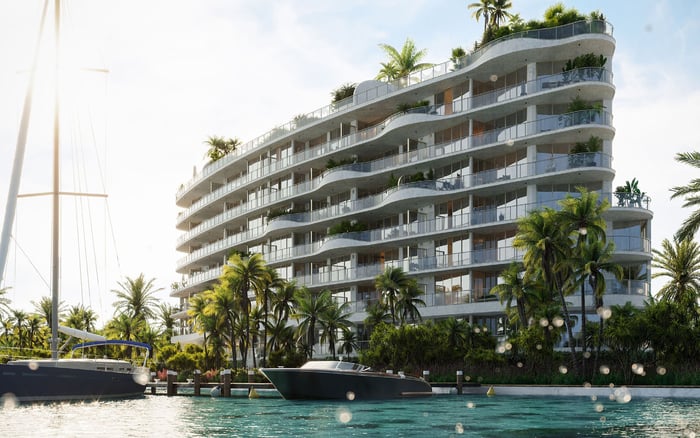
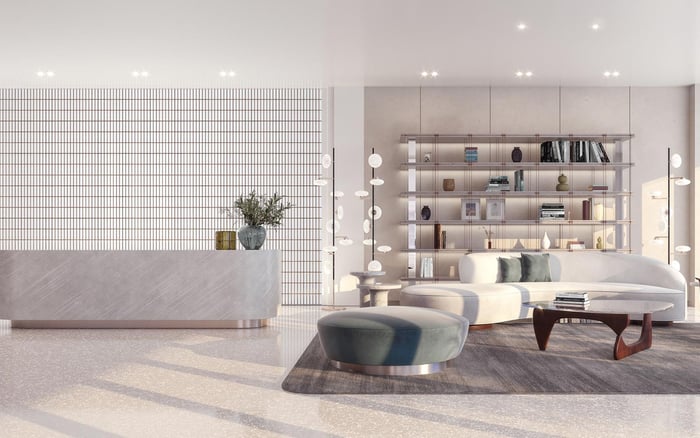
A buyer-focused look at how domestic staff logistics should be evaluated at Onda Bay Harbor, from service access and parking coordination to elevator use, recurring staff authorization, event preparation, and privacy expectations in a boutique waterfront condominium setting.
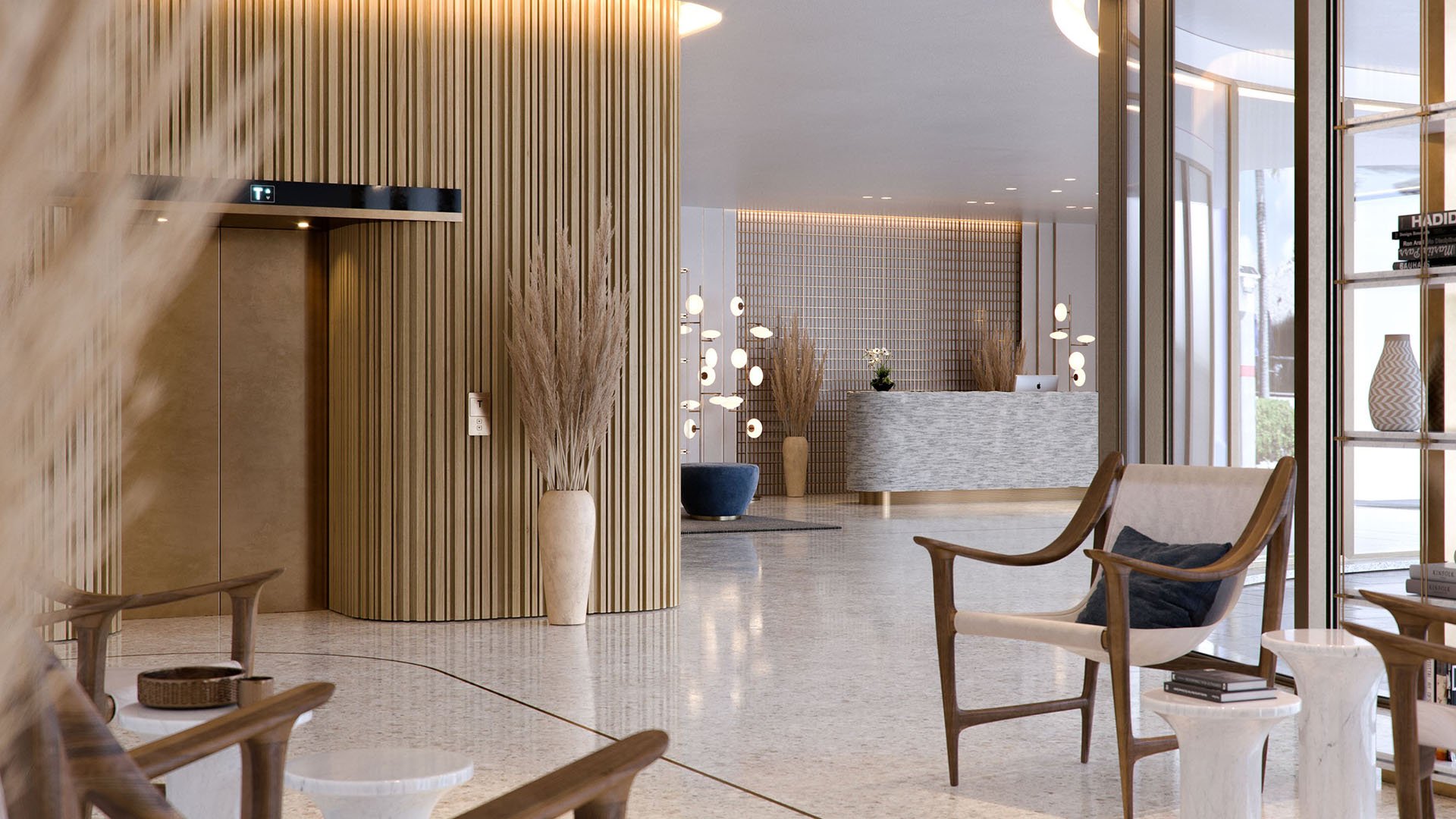
At the very top of the South Florida condominium market, domestic staff logistics are not a secondary operational detail. They are part of the architecture of privacy. At Onda Bay Harbor, a boutique waterfront condominium in Bay Harbor Islands, the daily movement of housekeepers, nannies, chefs, drivers, tutors, personal assistants, and event staff should be understood as part of the building’s broader service ecosystem.
The essential question is simple: can staff perform their work efficiently without diluting the resident experience? In a privacy-focused building, the strongest answer is typically a clear separation between resident-facing circulation and service circulation. That does not mean staff are hidden or treated impersonally. It means the property operates with clarity, discretion, and respect for both residents and the people who support their households.
Buyers should approach this subject with precision. Some operational details may be governed by condominium documents, management protocols, security procedures, or resident-specific approvals. Before contract, owners should confirm the current rules rather than assume every luxury building handles domestic staff in the same way.
For a residence with regular household support, the service entrance is one of the most important questions to ask. Domestic staff access should be coordinated through defined ingress and egress routes rather than casual use of the main lobby or resident-facing amenities. This is especially relevant in a boutique setting, where every arrival is more visible and every circulation path feels more intimate.
A well-managed building typically distinguishes between recurring staff and temporary visitors. A full-time nanny, weekly housekeeper, or long-standing family assistant may be handled differently from a one-time caterer or delivery-related service provider. The strongest access model combines building-level security with resident-specific authorization for each approved domestic employee.
That authorization should also be practical. A resident should know how a staff member is registered, whether identification is required, what hours are permitted, and whether access can be limited to a particular residence or service area. For families comparing Bay Harbor Islands options such as Alana Bay Harbor Islands and Bay Harbor Towers, these operational distinctions can matter as much as finishes, views, or amenity design.
Parking rules for domestic staff should never be vague. A luxury condominium should distinguish among short-term drop-off, valet handling, temporary service visits, and recurring staff access. The needs of a housekeeper arriving for a four-hour daytime shift differ from those of a driver waiting for a school pickup, a personal assistant running errands, or a private chef unloading ingredients and equipment.
For drivers and family assistants, timing is often fluid. Their role may involve rapid pickups, child transportation, airport runs, errands, or waiting nearby until a resident is ready. Buyers should ask whether staff vehicles are accommodated through valet, temporary guest parking, off-site arrangements, or another approved procedure. The answer can influence daily convenience, especially for households that rely on multiple employees.
Chefs, caterers, bartenders, and event staff require even more choreography. When staff arrive with food, barware, table settings, coolers, or equipment, the building must protect lobby calm while allowing work to proceed without unnecessary friction. In waterfront residences, where entertaining often extends from interiors to terraces and water views, the behind-the-scenes movement can become especially important.
Service elevators or approved vertical circulation routes are central to the quiet functioning of an ultra-premium condominium. They keep staff movement efficient, reduce congestion, and minimize disruption in resident-facing areas. At a boutique property, this becomes even more consequential because the building’s scale naturally makes every shared space feel more personal.
Buyers should confirm whether a separate service elevator exists, whether staff must use a specific elevator during certain hours, and how larger loads are scheduled. This is not only about formality. It affects how easily a chef can bring in provisions, how a housekeeper can move supplies, and how event teams can set up without creating unplanned lobby activity.
The comparison is not limited to Bay Harbor Islands. Across South Florida, discerning buyers evaluate service movement at projects such as The Well Bay Harbor Islands and waterfront or wellness-oriented properties in nearby markets with the same seriousness they give to views or amenity programming. Vertical circulation is part of lifestyle design, not just building operations.
Privacy rules should be explicit enough to avoid awkward improvisation. Staff may need to know where they may wait, which public spaces they may use, and whether they may accompany residents or children through resident-facing areas. A nanny walking a child to a car, a tutor arriving for an evening session, and a housekeeper waiting for elevator access each create distinct privacy considerations.
For families, nannies, tutors, and family assistants require particular flexibility. Their schedules can include early mornings, school runs, evenings, and child-accompanied movement through the property. A rigid daytime-only service model may not reflect how a household actually functions. Buyers should ask how the building balances family practicality with resident discretion.
The most refined buildings treat privacy as both a security issue and a hospitality issue. Security protects residents from uncontrolled access. Hospitality allows approved staff to do their work efficiently, respectfully, and without unnecessary embarrassment. In a discreet condominium culture near Bal Harbour, that balance is essential.
Event-related domestic staff should be handled through pre-registration, loading coordination, and elevator scheduling. The goal is to avoid congestion, unplanned lobby activity, or confusion at arrival. A private dinner for twelve can involve a chef, server, bartender, florist, rental delivery, and cleanup team. Each person may have a different arrival time and a different operational need.
Residents who entertain should ask how many staff members can be pre-registered, what information must be provided, whether loading times must be reserved, and how late departures are managed. These are not glamorous questions, but they are the questions that preserve glamour. The most elegant evening is often the one where service movement is almost invisible.
In neighboring Bay Harbor Islands residences, including La Maré Bay Harbor Islands, buyers increasingly view operational discretion as part of the luxury equation. A residence may be beautifully designed, but if staff access is improvised, the ownership experience can feel less composed than expected.
For buyer guidance, domestic staff logistics should be reviewed before closing, not after move-in. A buyer with household staff should ask whether there is a dedicated service entrance, whether there is a separate service elevator, how staff vehicles are handled, and what pre-registration is required for recurring employees.
Other questions are equally useful. Can a resident authorize multiple recurring staff members? Are there different rules for nannies accompanying children? Where may a driver wait? Can a chef use a loading area? Are larger deliveries or party staff scheduled through management? Are there restrictions on staff use of amenities or resident lounges?
The answers may vary by building policy and may change over time, so buyers should request the current governing documents and operating rules. At Onda Bay Harbor, the broader principle is clear: the residence is designed for privacy-focused luxury living, and domestic staff logistics should support that promise rather than compete with it.
Does Onda Bay Harbor have domestic staff rules buyers should review? Buyers should review current condominium documents and management procedures before relying on any specific access or parking assumption.
Why are service entrances important in a boutique condominium? They help separate resident-facing areas from service movement, preserving privacy and reducing unnecessary lobby activity.
Should recurring staff be pre-authorized? Yes, recurring staff should typically be connected to resident-specific authorization as well as building-level security procedures.
How should housekeepers be accommodated? Housekeepers generally need predictable daytime access, especially when carrying cleaning supplies, equipment, or household items.
Do nannies require different access considerations? Often, yes. Nannies may need flexible access for school runs, early mornings, evenings, and child-accompanied movements.
What should private chefs and caterers ask about? Residents should confirm loading access, elevator scheduling, pre-registration, and procedures for carrying food or equipment.
How are drivers usually different from other staff? Drivers may need short-term waiting, rapid pickups, valet coordination, or access tied to errands and child transportation.
Are service elevators essential? They are highly important because they keep staff circulation efficient while limiting disruption to resident-facing spaces.
Can staff use amenities or public spaces? Buyers should confirm the building’s current privacy rules, including where staff may wait and which spaces they may enter.
Why should this be discussed before purchase? Staff logistics affect daily living, privacy, entertaining, parking, and the overall ease of operating a staffed residence.
For a tailored shortlist and next-step guidance, connect with MILLION.
If branded residences are on your mind — as a home or as an allocation — we would be glad to share what we are seeing, privately.
Begin a quiet conversation