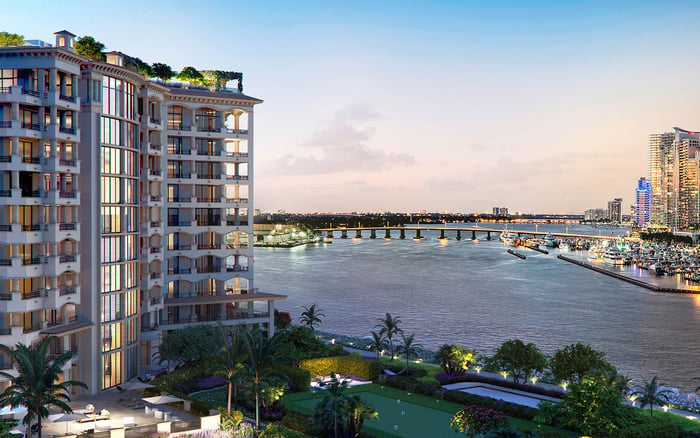
A buyer-focused guide to reading Fisher Island condominium rules through the lens of daily convenience, privacy, and long-term resale appeal.

In Fisher Island real estate, the headline features are easy to admire: privacy, architecture, waterfront exposure, scale, and the quiet sense of separation that draws buyers to the island in the first place. Yet long-term satisfaction often turns on quieter questions. Can your dog move through the building gracefully? Can staff, vendors, art handlers, and caterers operate without disrupting the residence? Will guests feel welcomed, or merely processed?
Pet policies, service elevators, and guest parking rarely lead a buyer’s first conversation. They should. These rules influence how a residence lives day to day, and they can also affect the depth of the future buyer pool. A policy that feels civilized, clear, and consistent is not a nuisance. It is part of the asset.
The goal is not to find the least restrictive building. It is to understand whether the rules align with the lifestyle a future purchaser will expect at this level. That is especially true in a market where discretion, staff logistics, family visits, seasonal entertaining, and companion animals often coexist.
A serious pet review begins with one question: what does the rule mean in real life? A building may be pet friendly in principle but highly specific in execution. Buyers should ask how pets enter and exit, whether registration is required, whether certain areas are restricted, how complaints are handled, and whether service animals and household pets are addressed separately.
The most resale-resilient policies tend to feel balanced. They protect quiet enjoyment without making ownership feel fussy. They recognize that pets are part of many luxury households while still preserving corridors, elevators, landscaping, and shared spaces.
For a buyer comparing a condominium residence with a more estate-like setting, the distinction matters. A residence at The Links Estates at Fisher Island may appeal to someone who wants a different relationship among private outdoor space, arrival, and household routine than a buyer focused on a vertical condominium building. Neither is automatically better. The right answer depends on how the household actually lives.
Resale lens: a policy that accommodates well-trained pets while clearly addressing nuisance behavior usually appeals to a wider audience than rules that feel either vague or unusually restrictive. Ambiguity can be as damaging as prohibition because buyers dislike uncertainty.
In high-end buildings, the service elevator is not simply a back-of-house amenity. It is a privacy instrument. It separates everyday operations from the residential experience and allows a home to function at a high level without making logistics visible.
A buyer should review how service elevators are scheduled, who may reserve them, whether move-ins and deliveries are subject to time windows, how protective padding is handled, and whether contractors, house staff, florists, caterers, and art installers follow different protocols. The issue is not inconvenience alone. It is control.
Homes with significant interiors, collectible furnishings, or frequent entertaining can be deeply affected by service access. If a building’s procedures are too rigid, even simple projects become burdensome. If procedures are too loose, the lobby and resident elevators may feel compromised. The best buildings find a rhythm that is orderly without being theatrical.
For buyers considering Palazzo del Sol, the appeal of refined condominium living should still be tested against how daily operations are managed behind the scenes. The same applies to Palazzo della Luna, where ownership should be assessed not only by finishes and views, but also by the quality of operational choreography.
Resale lens: future buyers often respond positively to buildings where service flow feels invisible. A well-run service elevator policy protects the sense of calm that luxury purchasers are buying.
Guest parking is frequently underestimated because owners assume it is a minor convenience. In practice, it shapes hospitality. Fisher Island buyers often entertain family, friends, advisors, designers, chefs, physicians, trainers, and household staff. The question is not simply whether guests can park. It is whether the experience feels natural, secure, and appropriately polished.
Ask how guest spaces are managed, whether advance notice is needed, how overnight guests are treated, and what happens during peak periods. For owners who expect multigenerational visits or frequent private dinners, the guest parking protocol can become a quality-of-life issue.
The strongest guest parking policies are clear enough to avoid friction and flexible enough to reflect real households. They should support security without making invited guests feel like exceptions. In a gated-community environment, that balance is especially important because arrival rituals are part of the overall impression.
Resale lens: guest parking may not command attention in a marketing headline, but it can influence buyer confidence during due diligence. A buyer imagining holidays, staff rotations, and visitors will notice whether the building has thought through the details.
Every rule should be tested against three questions. First, does it protect the value of the building? Second, does it preserve the owner’s lifestyle? Third, will it still feel reasonable to the next buyer?
This is where resale discipline matters. An owner may tolerate an awkward rule because the residence is otherwise exceptional. A future buyer may not. Pet restrictions that narrow the audience, service access that complicates renovations, or guest parking that feels uncertain can all create hesitation. In the ultra-premium segment, hesitation is expensive because buyers have choices.
When reviewing documents, avoid judging isolated clauses. Look for the overall posture of governance. Are rules written clearly? Are approvals predictable? Are enforcement standards professional? Do policies reflect the tone of a luxury building rather than a defensive association?
For buyers considering new-generation Fisher Island living, The Residences at Six Fisher Island should be evaluated with the same operational lens as any established address: how the residence receives people, pets, vendors, staff, and deliveries over many years of ownership.
Before contract, request the governing documents, current house rules, parking assignments, pet forms, elevator reservation procedures, alteration guidelines, and any recent notices that clarify daily operations. Have counsel and your advisor review not only legal risk, but also lifestyle fit.
During a showing, walk the path of daily life. Where would a dog go? Where does a caterer enter? How does a designer deliver samples? Where does a guest wait? What happens when several owners are hosting in the same week? A polished residence can still live awkwardly if its operating system is poorly matched to the household.
Also consider your likely exit. The next buyer may have pets, staff, visiting family, health aides, an art collection, or renovation plans. Rules that serve these realities can expand demand. Rules that make them difficult can narrow it.
The best Fisher Island purchases combine emotion with discipline. Views, volume, materials, and privacy create desire. Policies preserve it. When pet rules are humane and clear, service elevators are professionally managed, and guest parking feels gracious, ownership becomes easier to recommend to the next sophisticated buyer.
In luxury real estate, operational elegance is not secondary. It is one of the quiet forms of value.
Should pet policies affect my offer strategy? Yes. If a policy limits your household or narrows the future buyer pool, it should be considered alongside price, condition, and location.
Is a pet-friendly building always better for resale? Not always. The strongest policy is balanced, allowing practical ownership while protecting quiet enjoyment and shared spaces.
What service elevator details matter most? Scheduling, access hours, contractor protocols, move-in procedures, and delivery rules all affect how easily the residence functions.
Can service elevator rules influence renovation plans? Yes. Restrictive procedures can complicate timelines, deliveries, and contractor coordination, especially for substantial interior work.
Why is guest parking important on Fisher Island? Guest parking shapes how visitors, family, staff, and service providers experience the property from the moment they arrive.
Should I review parking rules before contract? Yes. Confirm assigned spaces, guest procedures, overnight rules, and any approval requirements before your contingency period ends.
Are vague rules a red flag? They can be. Unclear policies may lead to inconsistent enforcement, which sophisticated buyers often view as avoidable risk.
How do these policies relate to resale? They influence the future buyer’s confidence that the residence will be easy, private, and dignified to own.
Should lifestyle staff be considered during due diligence? Yes. If your household uses staff, vendors, drivers, chefs, or caretakers, service access should be reviewed in practical detail.
What is the ideal policy profile? Clear, fair, professionally enforced rules that support privacy, hospitality, and daily convenience without feeling punitive.
For a confidential assessment and a building-by-building shortlist, connect with MILLION.
If branded residences are on your mind — as a home or as an allocation — we would be glad to share what we are seeing, privately.
Begin a quiet conversation