A discreet buyer’s guide to how private aviation access reshapes the Miami Beach luxury condo search, from transfer rhythm and privacy to service depth and ownership style.
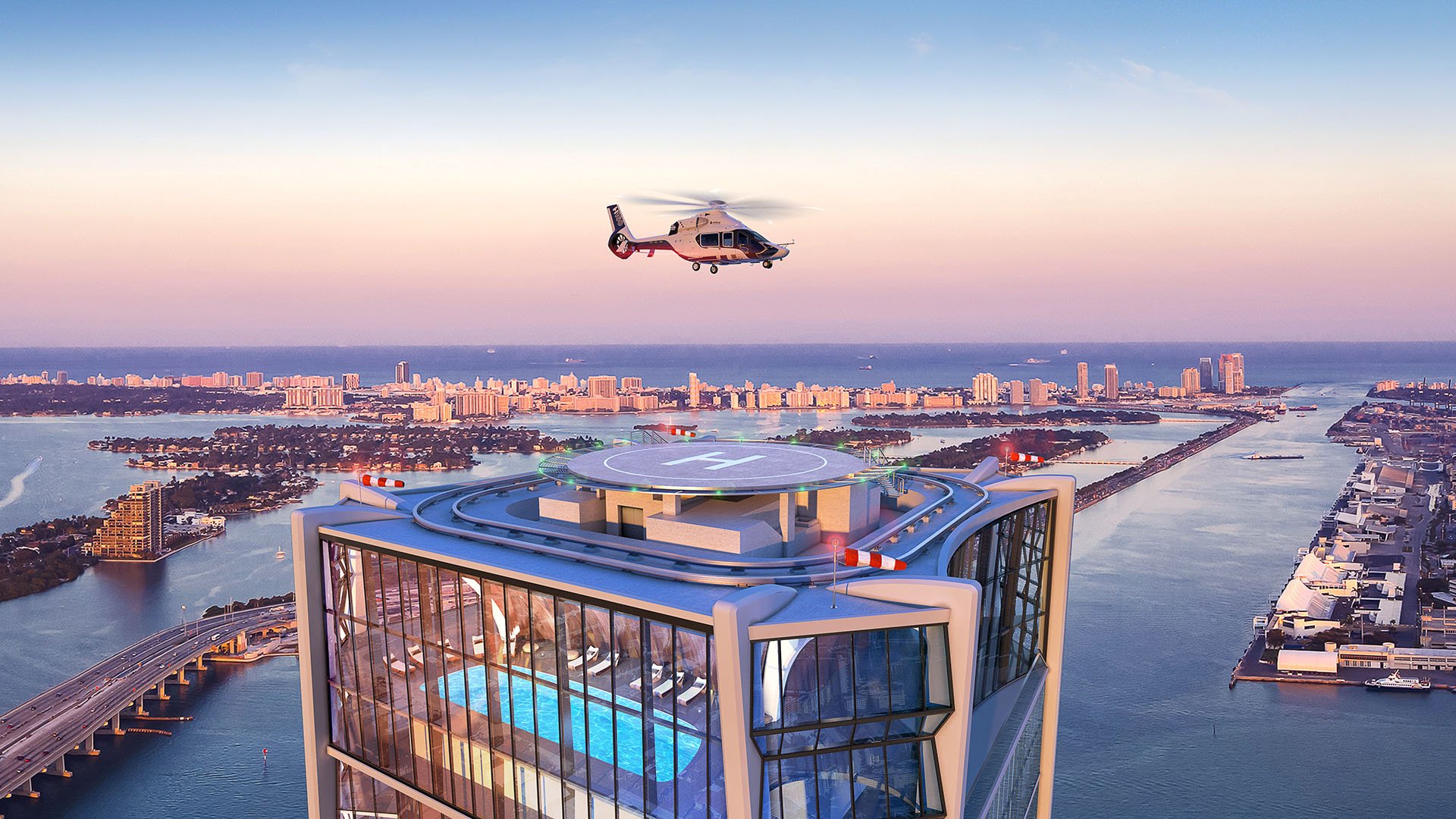
For a certain Miami Beach buyer, the condo search no longer begins at the lobby. It begins earlier, with the cadence of a private flight, a ground transfer, a preferred arrival window, and the expectation of moving from aircraft to residence without friction. Private aviation access does not replace the classic criteria of view, architecture, service, and privacy, but it can reorder them.
A buyer who arrives often and stays briefly may evaluate a residence differently than a buyer planning a conventional seasonal stay. The question becomes less about owning the most dramatic address in isolation and more about how the property performs once the wheels are down. Can luggage move quietly? Can staff prepare the residence before arrival? Does the building feel composed when a family enters late, early, or between commitments? These practical details are rarely theatrical, yet they often define the true luxury of ownership.
In Miami Beach, where waterfront living, culture, dining, and resort sensibility meet, aviation-aware purchasing is best understood as a lifestyle strategy. The right residence compresses the distance between travel and ease.
Private aviation adds precision to the buyer’s checklist. A residence may be exceptional in plan and finish, yet less suitable if the owner’s arrival pattern feels complicated. The most relevant questions are not only geographic. They are operational.
Buyers should consider the reliability of the transfer route, the building’s arrival sequence, valet capacity, package and luggage handling, elevator privacy, and the ability to coordinate household preparation before the owner arrives. These factors are especially important for a second-home owner, who may use the residence in concentrated bursts rather than as a constant base.
This is where Miami Beach’s luxury inventory begins to separate by use case. A residence such as The Perigon Miami Beach may appeal to buyers focused on an oceanfront setting and a calm residential experience, while Shore Club Private Collections Miami Beach speaks to a buyer who wants Miami Beach energy interpreted through a more curated private-residence lens. The aviation question does not make one superior to the other. It clarifies which one fits the owner’s rhythm.
When private aviation is part of the equation, buyers often think in corridors rather than neighborhoods alone. The ideal condo is not simply close to what the owner loves. It must connect gracefully to how the owner arrives, departs, entertains, and resets.
For some, that means prioritizing the beach and accepting a more deliberate transition into privacy. For others, the best match is a residence that makes it easy to move between dinners, wellness appointments, family plans, and a quick departure. Oceanfront living still carries its enduring appeal, but the most aviation-conscious buyers look beyond the postcard view. They study the full path from plane to porte cochere to private elevator to terrace.
The Ritz-Carlton Residences® Miami Beach may fit buyers who want a recognized service environment within Miami Beach, while Five Park Miami Beach can enter the conversation for those evaluating a different urban-beach balance. The key is to match the building’s character with the owner’s travel pattern, not merely with a brand preference or skyline impression.
South of Fifth remains a useful lens for buyers who want an atmosphere that feels distinct within Miami Beach. For aviation users, the appeal is not just prestige. It is the ability to create a highly edited stay: arrive, dine, host, sleep, swim, and depart with minimal wasted motion.
The short-stay mindset favors buildings with strong front-of-house discipline and residences that can be locked, opened, prepared, and enjoyed with confidence. It also rewards floor plans that feel complete for a long weekend. A generous primary suite, proper guest separation, and outdoor space can matter more than sheer square footage when every hour in residence is intentional.
For buyers considering legacy South Beach ownership, Apogee South Beach may appear in the conversation because of its association with the area’s upper-tier condominium market. The aviation-aware buyer should still test the property through practical questions: How does arrival feel at peak hours? How discreet is the movement from car to residence? How well does the building support a household that may be absent for stretches of time?
Private aviation users often understand the difference between amenities and service. An amenity is a feature. Service is the invisible choreography that makes the feature useful at the exact moment the owner needs it.
In a Miami Beach condo search, this means asking how the building handles advance coordination, visiting guests, dining reservations, beach setup, wellness appointments, transportation, maintenance access, and owner preferences. A long list of amenities is less meaningful if the residence cannot be readied with discretion before arrival or maintained seamlessly between stays.
This is particularly important for penthouse buyers and high-floor owners, where privacy expectations tend to be higher and arrival logistics can be more complex. The more exceptional the residence, the more important the operational layer becomes. A spectacular terrace loses some of its power if the owner spends the first hour solving small problems.
Aviation access can tempt buyers to over-index on speed. Yet the best purchase is rarely the one that promises the simplest theoretical route. It is the one that supports the owner’s real lifestyle.
A family with children may prioritize calm interiors, service consistency, and easy beach access. A couple splitting time among several homes may place more weight on lock-and-leave confidence and staff coordination. An owner who entertains frequently may care about guest arrival, valet grace, and the transition from formal living areas to outdoor space. An art-focused buyer may value proximity to cultural districts and dining more than a pure resort posture.
The most disciplined search begins with a travel diary. How often will the owner arrive? Who travels with them? What time of day is most common? Will the residence host guests immediately after arrival? Is the home primarily for recovery, entertaining, family, or all three? Once those answers are clear, private aviation access becomes a lens, not a slogan.
Aviation-aware buyers should experience the building as they intend to use it. Visit at different times. Study the arrival sequence. Ask how staff communicates with absent owners. Look at where luggage moves, where guests wait, how elevators are managed, and how the residence feels after a long travel day.
The best Miami Beach condos create a sense of decompression. The lobby should not feel like a performance unless the owner wants performance. The elevator ride should feel private enough for the price point. The residence should deliver an immediate shift in atmosphere, whether that means an open ocean view, a quiet bay orientation, or a terrace that turns a short stay into a complete escape.
Private aviation access does not narrow the search to a single formula. It sharpens priorities. It asks whether the property honors the most valuable commodity in luxury ownership: time.
Why does private aviation access matter in a Miami Beach condo search? It shifts the focus from the residence alone to the full arrival experience, including transfer, privacy, staff coordination, and ease of use.
Should private aviation buyers choose only the closest condo option? Not necessarily. The better choice is often the building that makes the entire ownership rhythm feel smoother, not simply the one that appears closest.
What building features matter most for frequent flyers? Valet flow, luggage handling, elevator privacy, staff communication, and lock-and-leave reliability are especially important.
Is oceanfront living always best for private aviation users? Oceanfront living can be ideal, but some buyers may prefer a different balance of privacy, access, dining, wellness, and daily convenience.
How should a second-home buyer evaluate service? Ask how the building prepares residences before arrival and maintains them while the owner is away.
Does South of Fifth suit aviation-focused buyers? South of Fifth can suit buyers who want a refined, compact Miami Beach lifestyle with dining, waterfront living, and a more edited routine.
Are branded residences better for this type of buyer? They can be attractive when the service culture matches the owner’s expectations, but the specific building operation matters more than the label.
What should penthouse buyers pay attention to? Penthouse buyers should study privacy, elevator control, terrace usability, staff access, and how the residence functions during short stays.
Can private aviation access influence resale appeal? It can support appeal among like-minded buyers when the residence offers privacy, ease, and a strong Miami Beach lifestyle proposition.
What is the smartest first step before touring? Define how often you will arrive, who travels with you, and what the residence must accomplish in the first hour after arrival.
When you're ready to tour or underwrite the options, connect with MILLION.
If branded residences are on your mind — as a home or as an allocation — we would be glad to share what we are seeing, privately.
Begin a quiet conversation