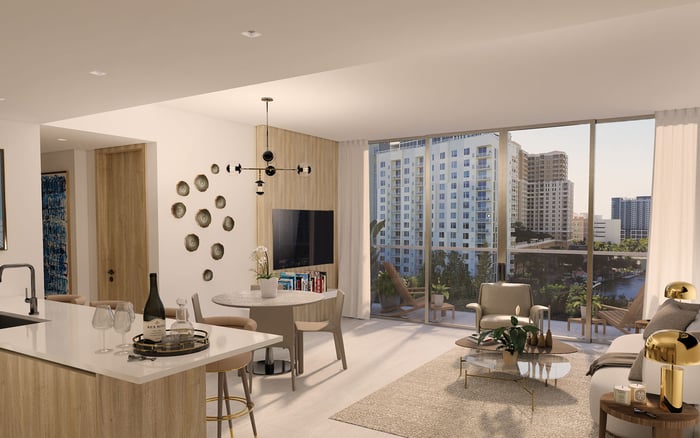
Association documents can quietly define how well a luxury residence supports family arrivals, service access, storage, school routines, pets, guests, and the daily movement between public elegance and private utility.

In luxury real estate, the most revealing spaces are not always the most photographed. A grand salon, sculptural kitchen, and view-facing terrace may shape the emotional first impression, but the family entry zone often determines whether a residence lives beautifully beyond the first week. It is the threshold where school bags, strollers, pets, packages, beach gear, household staff, visiting relatives, and evening arrivals must meet the standards of a private home.
Association documents can define that threshold with unusual clarity. They rarely use the phrase family entry zone, yet they shape it through rules governing elevators, lobbies, loading areas, parking, storage, pets, deliveries, renovations, guests, and building access. For a buyer evaluating an ultra-premium condominium or managed residential community, these documents are not merely bureaucratic. They are choreography. They reveal whether daily life will feel seamless, discreet, and protected, or unnecessarily improvised.
This lens matters across South Florida, whether a family is comparing Miami Beach, Brickell, Coconut Grove, Bal Harbour, Sunny Isles, or a new construction address with resort-level amenities. The question is not only whether a building is beautiful. It is whether the building understands how a family actually arrives home.
A polished lobby tells one story. The association documents tell another. Buyers should review the declaration, bylaws, house rules, architectural guidelines, parking policies, pet rules, guest procedures, delivery protocols, storage provisions, and any move-in or service access requirements available during diligence.
The most consequential details often sit in practical sections. Elevator usage may determine whether children, caregivers, and household staff can move efficiently during school mornings or weekend departures. Loading rules may affect furniture deliveries, seasonal storage movement, and the ease of bringing in bicycles, surfboards, or luggage. Guest and access policies can influence how grandparents, tutors, drivers, chefs, and nannies enter the property without disrupting privacy.
For families, the ideal arrangement is not necessarily the least restrictive one. Well-written documents can protect calm, security, and property value. The key is alignment. A formal, tightly managed building may be perfect for a couple seeking maximum discretion, while a larger household may need more flexibility around frequent arrivals, service coordination, and everyday movement.
The family entry zone begins before the front door. It starts when the car pulls in, the valet greets the household, or a resident enters from a private garage. Association documents can clarify whether the route from vehicle to residence feels intuitive or complicated.
Parking assignments, valet procedures, charging rules, loading areas, and garage access can shape the rhythm of family life. A residence with exceptional interiors may still become inconvenient if the path from parking to elevator is awkward for children, sports gear, groceries, or a stroller. Similarly, separate service elevators can signal sophistication when they support privacy without making routine movement feel punitive.
Corridors matter as well. Rules about items left outside doors, noise, pets, and deliveries affect the entry experience. For a family, a clean and quiet corridor is desirable, but so is the ability to manage everyday transitions without constant friction. The strongest buildings balance order with common sense.
Storage provisions often reveal whether a property understands family living. Association documents may address assigned storage, permitted items, bicycle areas, package rooms, beach equipment, holiday decor, and restrictions on keeping belongings in parking spaces or corridors.
In South Florida, family life often includes layers of equipment: boating supplies, tennis bags, golf clubs, pool toys, paddleboards, luggage, uniforms, and guest linens. The more elevated the residence, the more important it becomes to keep those objects invisible. A refined home should not require the breakfast room to double as a staging area for the weekend.
Buyers should ask how storage is allocated, whether it is deeded or assigned, where it is located, and how accessible it feels in ordinary use. The best family entry zone has a support system nearby. It allows the main residence to remain serene because the operational pieces have somewhere elegant to disappear.
Pet rules are not only about pets. They often reveal a building’s tolerance for active households. Weight limits, breed restrictions, elevator protocols, relief areas, leashing rules, and fines can all shape the tone of daily life.
Children raise a similar question, though the documents may address them indirectly through amenity hours, pool rules, guest policies, noise standards, and common-area conduct. Families should look for a culture of clarity rather than ambiguity. Vague rules can invite uneven enforcement, while thoughtful rules help everyone understand expectations.
The point is not to seek a building without boundaries. In luxury communities, boundaries preserve the atmosphere residents paid to enjoy. The question is whether those boundaries are compatible with the family’s actual routines. A household with young children, multiple caregivers, and frequent guests will read the same documents differently than an empty-nest buyer seeking an occasional winter residence.
Many premium households rely on a network of support: housekeepers, assistants, nannies, drivers, trainers, chefs, dog walkers, and maintenance vendors. Association documents can indicate how those individuals are registered, scheduled, screened, and routed through the property.
This is where privacy and convenience must be carefully balanced. Strong security procedures may be highly desirable, but they should remain workable for recurring staff. If every arrival becomes an exception, the family entry zone will feel less like a private residence and more like a checkpoint.
Service entrances, delivery windows, insurance requirements, elevator reservations, and contractor rules also deserve attention. Renovations, repairs, art installation, millwork, and technology upgrades are part of maintaining a luxury residence. The rules should protect the building while allowing owners to manage their homes at the expected standard.
Family needs evolve. A couple may later need a stroller zone, a homework landing, a pet station, or a more concealed service pantry. Association documents can affect what is possible through alteration rules, flooring requirements, work-hour limits, design approvals, and restrictions on plumbing, electrical, exterior doors, or hallway-facing elements.
Even when a residence already feels well planned, buyers should understand how flexible it can become. Can millwork be added near the entry? Are smart locks or access systems permitted? Are door hardware changes restricted? Can storage be improved without triggering a lengthy approval process?
The best luxury purchase leaves room for graceful adaptation. A family entry zone should be designed for the life a household has now and the life it may have five years from now.
The most productive review is both legal and lifestyle-oriented. Counsel can interpret obligations, while the buyer and advisor should map the actual day. Who arrives first? Where do bags go? How do groceries come up? Where does the dog exit? How does a tutor enter? What happens when guests arrive while the family is at dinner?
Walk the route physically whenever possible. Move from garage or valet to elevator, from elevator to residence, from package area to unit, from amenity deck back home. The documents provide the rules, but the walk reveals the lived experience.
For discerning South Florida buyers, the family entry zone is not a minor operational detail. It is a private luxury. When the rules, architecture, staffing model, and household rhythm align, arrival becomes effortless. That is when a residence begins to feel not just impressive, but truly considered.
What is a family entry zone? It is the arrival and transition area that supports daily family life, including bags, pets, staff, deliveries, groceries, and children.
Why do association documents matter for entry zones? They define how residents, guests, staff, pets, packages, and service providers move through the property.
Which documents should a buyer review first? Start with the declaration, bylaws, house rules, architectural guidelines, parking policies, pet rules, and delivery procedures.
Are stricter rules always a negative for families? No. Clear rules can protect privacy and calm, as long as they fit the household’s daily routines.
What should families ask about elevators? Ask how residents, staff, deliveries, pets, and moves are routed, scheduled, and restricted.
Why is storage so important in luxury residences? Good storage keeps sports gear, beach items, luggage, and seasonal belongings from intruding on formal living spaces.
Can pet rules affect the feel of a building? Yes. Pet policies often signal how the community manages active daily movement and shared spaces.
Should buyers consider staff access before purchasing? Yes. Recurring staff access should be secure, discreet, and practical enough to support the household.
Can renovation rules affect a family entry zone later? Yes. Alteration rules may influence millwork, smart access, flooring, door hardware, and other future improvements.
What is the best sign of a well-planned family entry experience? The best sign is a calm, intuitive route from arrival to residence that supports real life without compromising privacy.
To compare the best-fit options with clarity, connect with MILLION.
If branded residences are on your mind — as a home or as an allocation — we would be glad to share what we are seeing, privately.
Begin a quiet conversation