A discreet buyer’s guide to choosing a South Florida residence through the lens of lower operational friction, from Brickell convenience to coastal, bayfront, and village-style living.
For a buyer moving mentally between Dubai and Brickell, the question is no longer only view, finish, or brand. The sharper question is whether the home reduces complexity. Lower operational friction means a residence that is easier to enter, secure, maintain, insure, furnish, staff, and enjoy without constant intervention. It is the quiet luxury of a home that works well when the owner is in town, abroad, or moving between time zones.
South Florida rewards this lens because its luxury inventory is unusually varied. A buyer can choose a high-service Brickell tower, a discreet Miami Beach residence, a Coconut Grove setting with a softer residential rhythm, or a bayfront building that prioritizes privacy over spectacle. Each can be excellent. The better choice is the one whose operating model matches the owner’s actual life.
Before comparing buildings, clarify how the home will be used. A primary residence has a different friction profile than a pied-a-terre. A seasonal base requires different systems than a property visited several times a year. Second-home ownership, in particular, benefits from buildings where access, deliveries, vendor coordination, and absence management feel orderly rather than improvised.
For some buyers, Brickell is compelling because it compresses daily needs into a compact urban environment. A residence such as 2200 Brickell belongs in that conversation for buyers studying how a Brickell address may support frequent city use without requiring a resort-style commute. The point is not simply location. It is the relationship between the front door, services, parking, guest access, and the owner’s calendar.
Brickell’s appeal is operational intensity. It can suit owners who value proximity, dining access, professional convenience, and a lock-and-leave rhythm. Yet the same density that makes Brickell useful can create friction if a building is poorly managed, difficult for drivers, confusing for guests, or slow in its service protocols.
When evaluating a Brickell purchase, ask how the building handles peak arrival windows, private car circulation, package volume, staff access, and elevator flow. Buyers comparing hospitality-influenced residences may naturally look at Cipriani Residences Brickell as part of a broader study of service culture and urban convenience. The right building should make the city feel close, not chaotic.
A lower-friction Brickell home often has three traits: clear arrival choreography, a reliable management culture, and practical floor plan logic. Glamour matters, but daily usability tends to matter more after closing.
Miami Beach changes the operating equation. The buyer is often choosing atmosphere, light, ocean proximity, and a more retreat-like cadence. The friction questions become more nuanced: How does the building manage coastal exposure? How private is arrival? How simple is beach access? How well does the residence function after weeks away?
For buyers who want a refined coastal base, The Perigon Miami Beach may sit within a wider comparison of beachfront living and high-design residential service. The essential due diligence is not whether the setting feels beautiful during a showing. It is whether ownership remains graceful through maintenance cycles, weather seasons, guest visits, and vendor coordination.
In Miami Beach, a lower-friction choice may be less about maximum amenity count and more about disciplined operations. The best buildings make the coast feel effortless, even though coastal living always requires care.
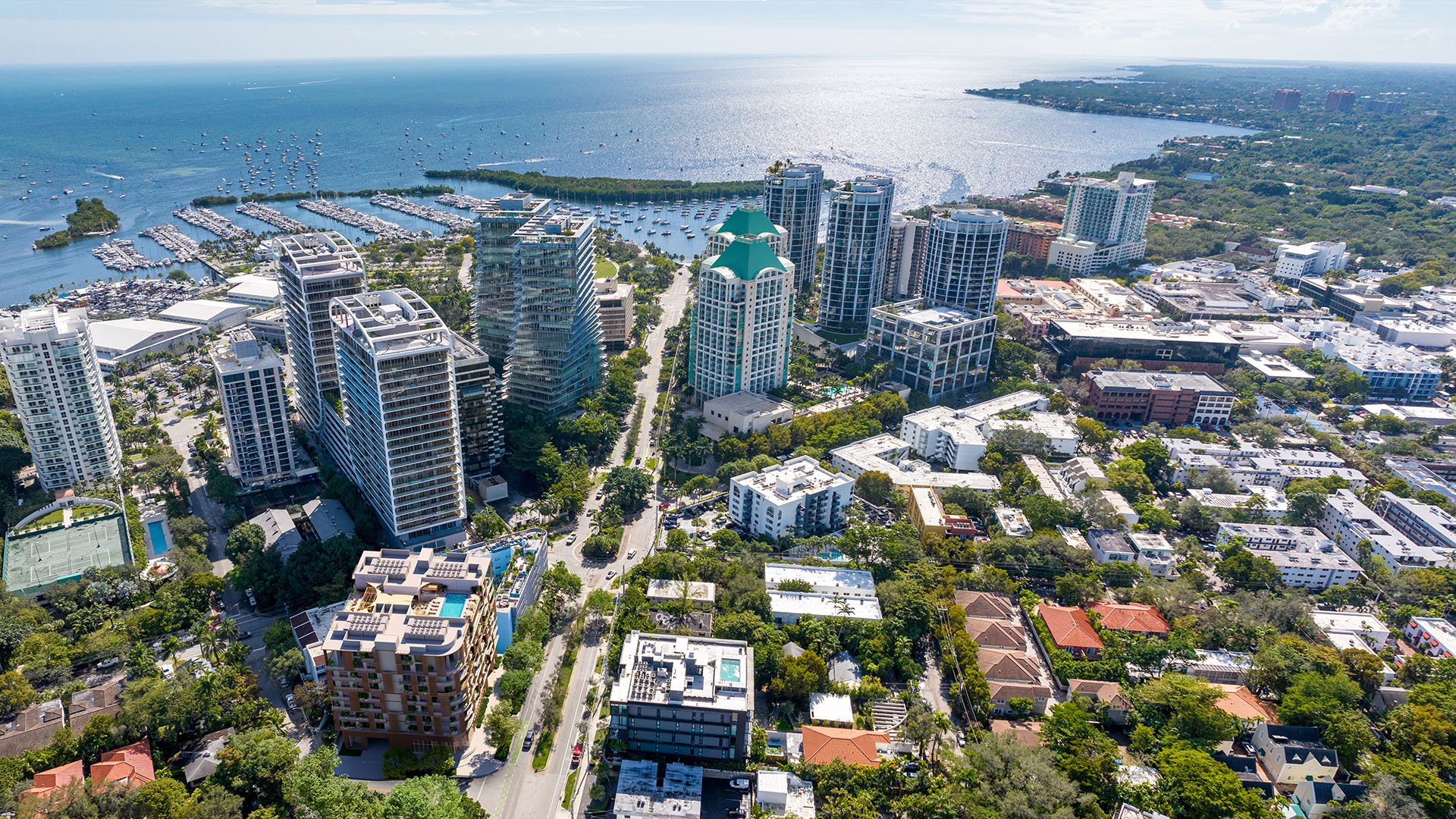
Coconut Grove appeals to buyers who want a softer daily rhythm without leaving Miami’s luxury ecosystem. The Grove can feel more residential, more shaded, and more village-like than the financial core. That creates a different form of ease: less vertical intensity, more neighborhood texture, and a lifestyle that may feel calmer for families or owners seeking longer stays.
A project such as The Well Coconut Grove can be considered by buyers who prioritize wellness-oriented living and a more composed residential pace. Again, the real test is operational: Are services aligned with your use pattern? Does the neighborhood simplify the week? Will the residence feel intuitive for family, guests, and staff?
Bay Harbor and similar low-profile enclaves offer another interpretation of low friction. Buildings such as Bay Harbor Towers may appeal to buyers who prefer quieter access, a residential island feel, and a setting removed from the most visible luxury corridors. For some owners, discretion itself is a friction reducer.
A polished sales presentation cannot replace operational diligence. The buyer should review association governance, rules for guests and vendors, rental policies, pet policies if relevant, insurance obligations, maintenance expectations, and the practical process for renovations or customization. These are not glamorous topics, but they shape the ownership experience.
Ask specific questions. How are service requests logged? What requires approval? How are deliveries handled when the owner is away? Can vendors access the residence without repeated owner involvement? How does the building communicate with residents? What happens during extended absences? A luxury building should have answers that are clear, repeatable, and calm.
Investment thinking also belongs here. Investment value is not only resale narrative or brand recognition. It is also the durability of operations, the breadth of future buyer appeal, and the likelihood that the residence remains easy to own as expectations rise.
Lower operational friction does not mean the same thing for every buyer. A highly social owner may want a serviced tower with energy and immediate access. A private family may prefer controlled entry and a quieter neighborhood. A global executive may prize staff coordination, secure parking, and a residence that can be opened smoothly after weeks away. A collector may care about climate control, storage, and careful delivery protocols.
The most effective South Florida search begins by ranking inconveniences. If traffic is intolerable, choose around mobility. If privacy is paramount, study arrival sequence and exposure. If the home will be vacant often, prioritize management systems. If entertaining is central, focus on elevator access, parking, service circulation, and acoustics. Luxury becomes more personal when the search is organized around what the owner refuses to manage.
What does lower operational friction mean in a luxury residence? It means the home is easier to own, access, maintain, and use with fewer recurring inconveniences.
Is Brickell a good fit for low-friction ownership? Brickell can be highly efficient for buyers who value urban convenience, but building operations and arrival logistics matter.
How should a Dubai-based buyer compare South Florida neighborhoods? Compare each area by use pattern, privacy, mobility, service expectations, and how often the home will be occupied.
Is Miami Beach more complicated to own than Brickell? It can require different diligence because coastal care, privacy, and absence management become especially important.
Why consider Coconut Grove instead of a denser urban tower? Coconut Grove may suit buyers seeking a calmer residential rhythm, neighborhood texture, and longer-stay comfort.
What should second-home buyers prioritize first? Second-home buyers should prioritize access control, vendor coordination, communication systems, and absence procedures.
Do branded residences automatically reduce friction? Not automatically. Service culture can help, but the buyer should still review governance, staffing, and day-to-day protocols.
Which documents should be reviewed before purchase? Buyers should review association rules, financial obligations, rental policies, insurance requirements, and approval procedures.
Can a quieter enclave be more practical than a famous address? Yes. For some owners, privacy, simpler access, and a less exposed routine create a better ownership experience.
How early should operational diligence begin? It should begin before a serious offer, so the buyer can compare lifestyle appeal against the practical realities of ownership.
If you'd like a private walkthrough and a curated shortlist, connect with MILLION.
If branded residences are on your mind — as a home or as an allocation — we would be glad to share what we are seeing, privately.
Begin a quiet conversation