A buyer-focused guide to evaluating biometric access at Shell Bay by Auberge Hallandale, with emphasis on privacy governance, service value, technical safeguards, and long-term resale perception.
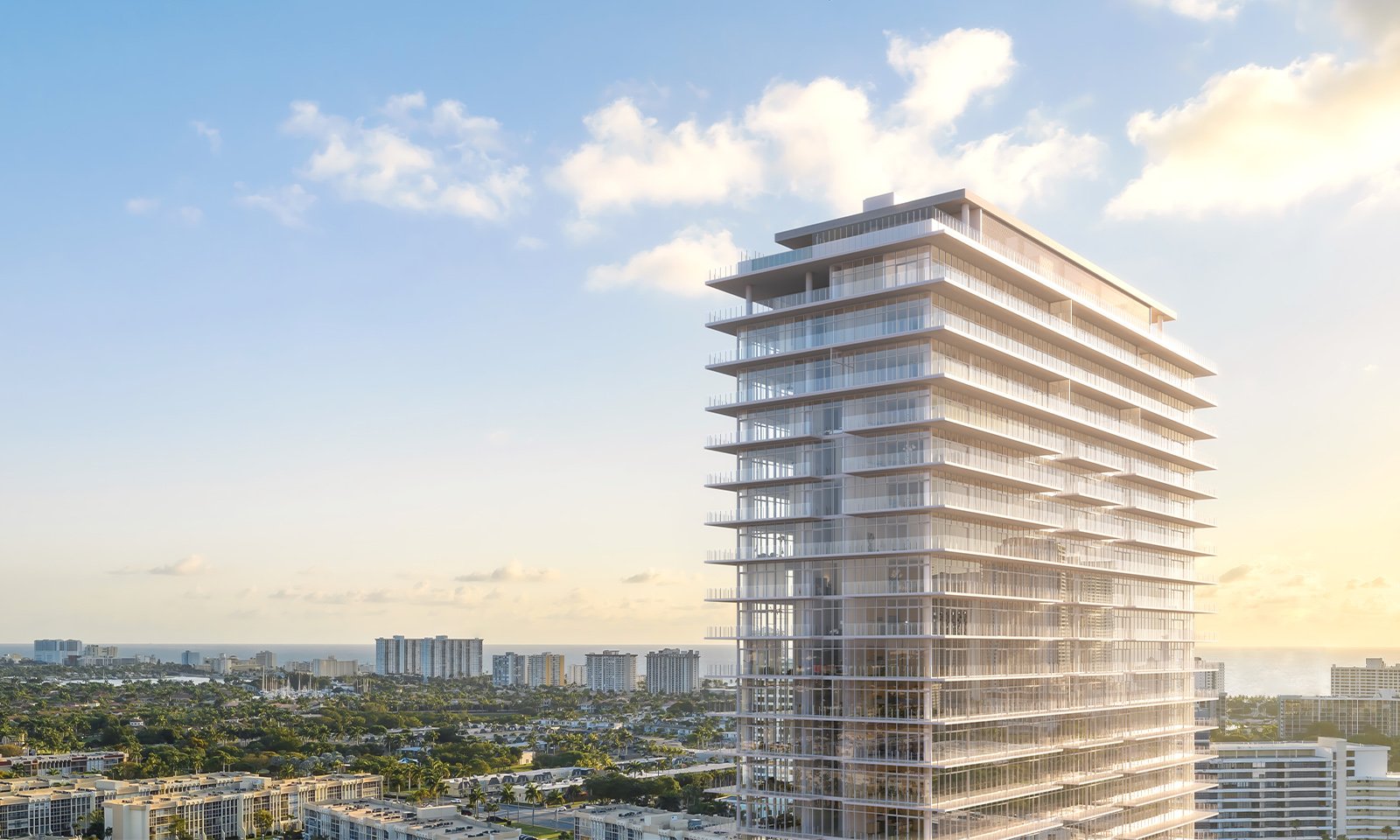
Shell Bay by Auberge Hallandale sits within a South Florida luxury context where access, privacy, and service expectations are closely linked. In that setting, entry protocols are not merely security features. They can shape how owners arrive, how guests are received, how amenities are protected, and how privacy is preserved.
For buyers, the central question is not simply whether biometric access feels advanced. The more useful test is whether any biometric-access protocol improves convenience and exclusivity without creating privacy, governance, or resale concerns. Fingerprints, facial recognition, palm scans, and other biometric identifiers are not interchangeable with key fobs. They are personal, persistent, and difficult to replace if compromised. That distinction gives biometric access both its appeal and its risk.
Because any specific access technology should be confirmed through offering documents, building rules, vendor disclosures, or official project materials, buyers should evaluate the concept as a due-diligence category rather than assume any single system is in place. At Shell Bay by Auberge Hallandale, the issue is relevant because the buyer conversation centers on refined service, discretion, and controlled access.
A disciplined review begins by separating access into three zones: building-level, residence-level, and amenity-level. Each zone has a distinct privacy profile and a different service rationale.
Building-level access covers primary entry points, the lobby experience, garage access, elevators, and perimeter-controlled areas. Here, biometrics may reduce the need for physical credentials and allow for faster, more discreet resident recognition. The upside is strongest when the system supports hospitality rather than surveillance. A resident should feel known, not monitored.
Residence-level access is more intimate. If biometric tools are used near private residential thresholds, buyers should ask whether conventional alternatives remain available. A luxury residence should not require an owner to surrender a sensitive identifier simply to enjoy daily convenience. Opt-out flexibility matters, particularly for family members, household staff, long-term guests, and owners who use the home seasonally.
Amenity-level access can be commercially important because shared spaces often depend on controlled entry and clear user rights. A strong protocol can protect exclusivity, preserve amenity quality, and reduce credential sharing. Still, amenity access may involve guests, service providers, and event scenarios, so the governance language should be especially clear.
Biometric due diligence should begin with ownership. Who owns the biometric template or access credential once it is enrolled? The condominium association, an operator, a third-party vendor, or the resident? Buyers should look for plain-language answers, not broad references to technology or convenience.
The second question is operation. Who actually runs the system day to day? A branded residence can deliver a polished service experience, but technology vendors, property managers, operators, and association boards may each touch the access ecosystem. The more parties involved, the more important it becomes to know who can view, change, export, retain, or delete information.
The third question is consent. Can residents decline biometric enrollment and still access the building, residence, and amenity areas through an alternative credential? In luxury property, opt-out rights are not merely a privacy courtesy. They can affect marketability. Future buyers may admire the sophistication of biometric entry, but some will want a non-biometric path for themselves, family members, or staff.
The fourth question is retention. If an owner sells, leases where allowed, or changes household personnel, what happens to stored credentials? Deletion procedures should be specific enough to inspire confidence. A promise to remove data is weaker than a documented process with defined authority, timing, and auditability.
Luxury buyers do not need to become cybersecurity engineers, but they should know which safeguards separate thoughtful systems from decorative technology. Data minimization comes first. A well-governed access system should collect only what it needs to perform the access function. If a biometric template can be used instead of storing a raw image or complete identifier, that distinction is worth understanding.
Encryption comes next. Buyers should ask whether biometric credentials are encrypted when stored and when transmitted between devices, servers, and operators. Access logs are also important. Logs can support security, but they can also become a map of a resident’s movements. The protocol should clarify who can access logs, for what purpose, and under what approval process.
Vendor controls deserve equal attention. If a third-party platform supports the system, residents should understand whether the vendor can retain data, share it, transfer it, or use it beyond the building’s access-control purpose. In a property where privacy is part of the luxury proposition, vendor discipline is not a back-office issue. It is part of the amenity itself.
Deletion procedures complete the framework. A credible policy should address owner resale, staff turnover, lost credentials, guest access, and resident opt-out. The strongest systems make deletion routine, not exceptional.
The best version of biometric access is quiet. It shortens the distance between arrival and welcome. It reduces the number of cards, fobs, phone apps, and codes residents must manage. It may help staff recognize owners discreetly and route them efficiently through the building or amenity environment.
For Shell Bay by Auberge Hallandale, that service logic aligns with the broader promise of branded residential living. Buyers drawn to this category often expect hospitality, personalization, and ease. In that context, access control should feel like a natural extension of service rather than a barrier disguised as innovation.
The test is proportionality. If a biometric protocol is used for a high-value, access-sensitive amenity, the case may be strong. If it is used in low-risk areas where a card, staffed desk, or mobile credential would perform just as well, buyers should ask why the more sensitive tool is necessary.
This is also where South Florida comparisons matter. Buyers evaluating Hallandale often compare the experience against Miami Beach, Sunny Isles, Brickell, and Fort Lauderdale luxury standards, even when those markets differ in building scale and lifestyle. The most resilient protocols will feel elevated in any of those contexts: seamless, optional where appropriate, and governed with precision.
Resale is where biometric access becomes more than a personal preference. A future buyer may view biometrics as a sign of modernity, privacy, and disciplined access. Another may see them as an unnecessary exposure tied to immutable identifiers and third-party vendor risk. Both reactions are plausible, which is why documentation matters.
For a resale buyer, uncertainty can become leverage. If policies are unclear, if opt-outs are limited, or if vendor retention language feels broad, biometric access may shift from premium feature to negotiation point. Conversely, if governance is well documented, alternatives exist, and deletion rights are clear, the system can support confidence rather than hesitation.
For a new-construction or pre-construction buyer, the opportunity is to ask early. Before closing, buyers can review access policies, association controls, building rules, and technology disclosures with counsel. Early questions can also reveal whether the developer and operator view biometrics as a lifestyle convenience, a security mandate, or a flexible service layer.
From an investment perspective, the goal is not to avoid technology. It is to prefer technology that future owners can understand, trust, and adapt. Luxury buyers pay for discretion. A building standard that feels intrusive, opaque, or mandatory can undermine that discretion, even if the hardware is impressive.
Before treating biometric access as a selling point, buyers should request clarity in five areas. First, identify where the protocol applies: lobby, elevators, garage, residence, amenities, or guest areas. Second, confirm whether enrollment is mandatory or optional. Third, ask who owns, operates, and audits the data. Fourth, review safeguards for minimization, encryption, access logs, vendor control, and deletion. Fifth, consider how the policy would read to a future purchaser who is privacy-conscious but still expects best-in-class service.
The strongest answer is usually not the most futuristic one. It is the clearest one. At Shell Bay, where service and discretion are central to the buyer experience, biometric access should be evaluated as part of the property’s governance architecture. In the best case, it protects the residential atmosphere while remaining discreet, transparent, and respectful of resident choice.
Does Shell Bay by Auberge Hallandale have confirmed biometric access? Buyers should confirm any specific access technology through official project documents, building rules, vendor materials, or closing disclosures.
Why are biometrics different from key fobs? Biometric identifiers are personal and difficult to replace, so their collection and retention require stronger privacy review.
Which access areas should buyers evaluate first? Focus on building-level, residence-level, and amenity-level access because each carries different service and privacy implications.
What is the most important ownership question? Ask who owns the biometric data or template and who has authority to store, use, modify, or delete it.
Should residents be able to opt out? An opt-out path can protect privacy preferences and may improve future resale comfort for cautious buyers.
What safeguards matter most? Look for data minimization, encryption, access logs, vendor controls, and clear deletion procedures.
Can biometric access improve service? Yes, it may support faster entry, fewer credentials, and more discreet resident recognition when implemented carefully.
What is the main privacy concern? The core concern is exposure of immutable identifiers, especially if vendor retention or breach procedures are unclear.
How can biometrics affect resale? Future buyers may see them as a premium amenity, a privacy risk, or a negotiable building-standard issue.
What should a buyer do before closing? Review access policies with counsel and confirm whether the protocol is optional, well governed, and clearly documented.
To compare the best-fit options with clarity, connect with MILLION.
If branded residences are on your mind — as a home or as an allocation — we would be glad to share what we are seeing, privately.
Begin a quiet conversation