A discreet buyer’s guide to reading condominium association documents for balcony shade rights, restrictions, aesthetics, approvals, maintenance, and resale implications in South Florida.
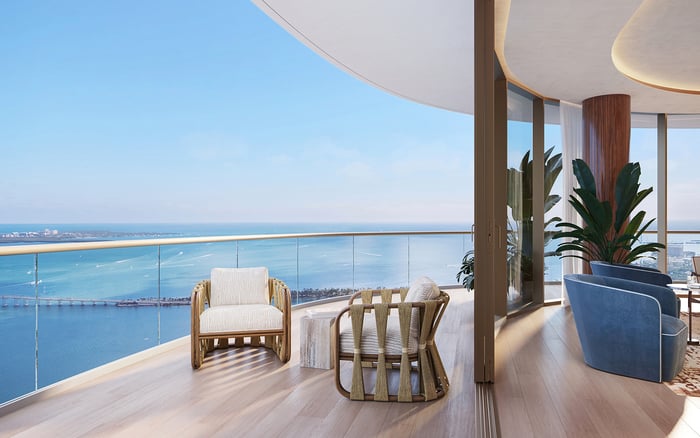
In South Florida, balcony shade is never merely a matter of comfort. It is part climate response, part architectural discipline, and part condominium governance. A terrace may feel generous during a private showing, with room for dining, planting, lounging, and soft outdoor living. Yet the true test is not only what fits there. It is what the association will permit there once the owner begins to live in the residence.
Association documents can reveal whether shade is treated as a flexible lifestyle enhancement or a tightly controlled element of the building’s exterior identity. For a high-floor buyer in Brickell, a waterfront owner in Miami Beach, or a seasonal resident in Sunny Isles, that distinction can shape daily use, entertaining patterns, privacy, and even perceived long-term value.
The most elegant residences tend to make shade feel effortless. In practice, that effortlessness is often supported by careful rules: what may be attached, what must remain removable, which colors are acceptable, what can be visible from the street or water, and which improvements require prior written approval. For buyers, those rules deserve attention before closing, not after the first summer afternoon on the balcony.
The core declaration, bylaws, rules and regulations, architectural guidelines, and alteration procedures may all address balcony use. The relevant language is not always labeled “shade.” It may appear under exterior alterations, limited common elements, façade uniformity, hurricane protection, window treatments, balcony furniture, signage, nuisance, waterproofing, or maintenance access.
A buyer should look for any language that distinguishes the private airspace of the residence from the building envelope. Many condominium balconies are personal in use but communal in legal or architectural impact. That nuance matters. A freestanding umbrella, retractable awning, privacy screen, pergola-like structure, or exterior shade film may all be treated differently, even when the owner’s purpose is the same.
The documents may also define who maintains the slab, railing, ceiling, drains, lighting, exterior wall, and waterproofing membrane. Shade devices that penetrate, lean on, or attach to those surfaces can raise questions beyond aesthetics. They can affect maintenance responsibility, insurance expectations, and access for repairs.
Luxury condominium boards often protect the visual coherence of the tower. That can mean restrictions on canopy colors, exterior fabrics, reflective materials, balcony curtains, bamboo screens, artificial greenery, and items visible above the railing line. Even refined choices may be prohibited if they interrupt the building’s elevation.
This is where a buyer’s lifestyle vision should be compared with the written standard. If the ideal terrace includes outdoor drapery, layered planters, a dining umbrella, or privacy panels, the documents should be read with those specific objects in mind. The issue is not whether the design is tasteful. The issue is whether it is allowed, approvable, removable, and consistent with precedent.
A sophisticated buyer will also consider orientation. A west-facing balcony can have a very different relationship to heat and glare than a shaded north-facing one. Documents will not change the sun path, but they may determine which mitigation tools are available. If the preferred solution is not permitted, the owner may need to rely on interior solar shades, furniture placement, landscaping within allowable limits, or simply a different line in the building.
Written rules are the foundation, but enforcement culture is often revealed in board minutes, architectural committee records, violation notices, and prior alteration approvals. These materials can show whether the association applies balcony standards strictly, selectively, or with some flexibility.
A rule that appears broad may be administered with narrow discipline. Conversely, a restrictive provision may coexist with a pattern of approved, standardized solutions. The best outcome for a buyer is clarity: a defined application process, predictable criteria, and visible consistency across the building.
Questions to ask include whether owners have received approval for retractable awnings, whether balcony umbrellas must be removed during wind events, whether exterior solar screens are allowed, and whether seasonal furniture storage is regulated. The answers can influence how often the balcony will actually be used, especially during the warmest months.
Balcony shade can create hidden maintenance considerations. Any installation that fastens into concrete, stucco, railing systems, ceilings, or exterior walls may be more sensitive than it appears. Even temporary devices can create issues if they trap moisture, block drainage, scrape finishes, or become airborne during severe weather.
Association documents may require licensed contractors, engineering review, indemnity agreements, deposits, certificates of insurance, or post-installation inspections for certain alterations. The language can feel procedural, but it protects the building’s envelope. For owners of premium residences, that protection is part of the asset.
Buyers should pay close attention to hurricane-related provisions. Some associations are especially cautious about exterior objects during named storms or high-wind conditions. A beautiful shade solution that must be dismantled frequently may still be acceptable, but it should be understood as a management habit, not a surprise.
In dense luxury corridors, shade often doubles as privacy. A buyer may want protection from sun, but also from adjacent balconies, neighboring towers, pool decks, marinas, or public promenades. Association rules may allow one goal while limiting the other.
For example, furniture placement may be flexible while vertical screens are not. Planters may be allowed below railing height while trellises are restricted. Interior window treatments may be customizable while exterior-facing films must follow a standard. These distinctions can feel minor during due diligence and major after move-in.
The key is to separate ambience from authorization. A balcony can be beautifully styled for a showing in ways that are not necessarily permanent, transferable, or compliant. Resale buyers should ask whether any existing shade element has written approval and whether that approval transfers to a new owner.
The most useful approach is practical. First, identify the balcony as a legal component: unit property, limited common element, common element, or some combination. Second, locate every rule that affects exterior appearance. Third, study the alteration process, including timing, fees, insurance, contractor limits, and board discretion. Fourth, compare the desired lifestyle to actual precedent in the building.
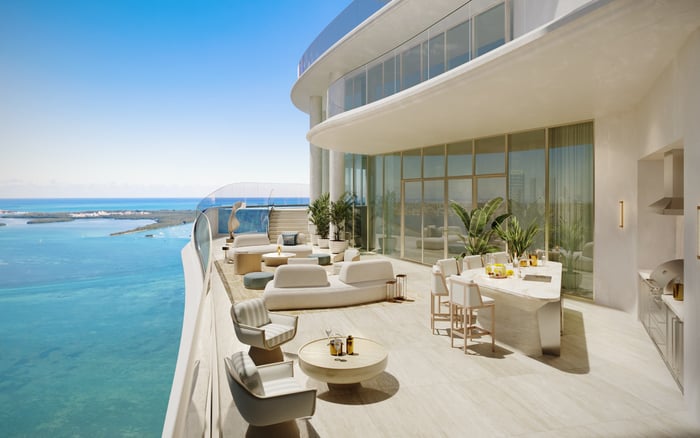
For Brickell buyers, shade may be closely tied to skyline glare, late-day sun, and entertaining on compact outdoor spaces. For Miami Beach owners, it may relate to salt air, ocean exposure, and maintaining an elegant façade. For Sunny Isles residents, broad terraces and dramatic water views can make shade both more desirable and more visible.
The word balcony should be read broadly. The word terrace should be read with equal care. Each may be governed through different language, but the consequences are the same: comfort, compliance, and control.
Balcony shade diligence can inform offers, contingencies, renovation budgets, and post-closing expectations. If a buyer’s intended use depends on a specific shade system, that issue should be addressed before closing whenever possible. Written confirmation is preferable to informal reassurance.
Existing improvements should be reviewed with particular care. If an awning, shade screen, tint, or enclosure is present, the buyer should confirm that it was approved and that there are no pending violations. If approval is personal to the current owner or conditioned on maintenance obligations, that should be understood.
This is not about making a balcony feel less romantic. It is about protecting the romance from preventable friction. The finest outdoor spaces in South Florida are not only beautiful. They are usable, compliant, resilient, and aligned with the building’s long-term character.
Why do association documents matter for balcony shade? They define what owners may place, attach, alter, or display on exterior-facing balcony areas.
Can a buyer assume an umbrella is allowed? No. Even removable items may be regulated by size, color, visibility, storage, or wind-safety rules.
Are retractable awnings usually treated as alterations? They often can be, especially if attached to exterior surfaces or visible from outside the building.
What should resale buyers check first? They should confirm whether existing shade features were approved and whether any violations remain open.
Do rules differ between a balcony and a terrace? They can. The documents may use different terms, so both should be reviewed carefully.
Can interior shades solve exterior shade restrictions? Sometimes. Interior solar shades may reduce glare while avoiding exterior appearance issues.
Why is façade uniformity important? Associations often preserve a consistent architectural appearance across the building’s exterior.
Can plants be used for shade or privacy? Possibly, but rules may limit planter height, drainage, weight, placement, or visibility.
Should buyers ask about prior approvals? Yes. Prior approvals can reveal how the board interprets and enforces the written rules.
What is the best way to shortlist comparable options for touring? Start with location fit, delivery status, and daily lifestyle priorities, then compare stacks and elevations to validate views and privacy.
When you're ready to tour or underwrite the options, connect with MILLION.
If branded residences are on your mind — as a home or as an allocation — we would be glad to share what we are seeing, privately.
Begin a quiet conversation