A buyer-focused guide to evaluating North Bay Village’s leading new residences through insurance structure, view quality, building documentation, and long-term resale appeal.
North Bay Village presents a compelling proposition for waterfront buyers: a residential setting shaped by bay views, proximity to Miami Beach, and a growing selection of new residences. Yet the best purchase is not necessarily the highest floor, largest terrace, or most elaborate amenity package. It is the home whose insurance framework, sightlines, ownership costs, and eventual marketability align with the buyer’s priorities.
The local shortlist begins with Continuum Club & Residences North Bay Village, Shoma Bay North Bay Village, and Tula Residences North Bay Village. Buyers comparing the broader bayfront market may also examine Onda Bay Harbor as a nearby point of reference. The purpose is not to equate distinct properties, but to determine which design, operating model, and ownership proposition best suit the buyer.
1. Continuum Club & Residences North Bay Village: broad luxury positioning
This is the first project to consider for buyers who prioritize a recognizable residential identity and want to assess how that identity may translate at resale. The decisive questions center on the proposed budget, insurance assumptions, maintenance obligations, deposit structure, and practical value of the selected residence.
2. Shoma Bay North Bay Village: daily-life consideration
Shoma Bay merits attention from buyers who weigh convenience and routine alongside the waterfront setting. Evaluate the exact residence rather than relying on the development name alone, with particular attention to exposure, nearby structures, elevator access, parking rights, recurring charges, and rules that could shape future demand.
3. Tula Residences North Bay Village: focused waterfront alternative
Tula belongs in the comparison for purchasers seeking a more specific residential fit. Its position in the ranking will depend on the buyer’s preferred scale, floor plan, view corridor, terrace relationship, and comfort with the project documents available at the time of review.
4. Pagani North Bay Village: design-led consideration
Pagani North Bay Village may appeal to buyers who place design identity high on the brief. That distinction should still be tested against the fundamentals: contract protections, insurance treatment, projected common expenses, residence-level functionality, and the depth of the likely resale audience.
Insurance should be divided into two distinct inquiries. The first concerns the building, including proposed master coverage, deductibles, exclusions, reserve assumptions, and the allocation of responsibility between the association and owner. The second concerns the residence, including interior coverage, personal property, liability, loss assessment, and any lender requirements.
Ask counsel and an independent insurance professional to review the most current documents before any contractual deadline. A preliminary budget is not an operating history, just as a premium estimate is not a guarantee of future cost. Buyers should model a range rather than anchor their decision to a single projected figure.
For pre-construction purchases, the contract also warrants close attention. Determine how changes to specifications, budgets, delivery expectations, and association documents are addressed. The objective is not to eliminate uncertainty-which is impossible-but to understand where it resides and who bears it.
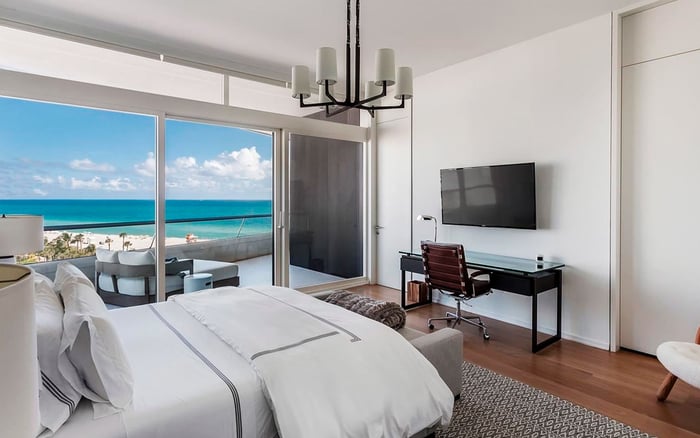
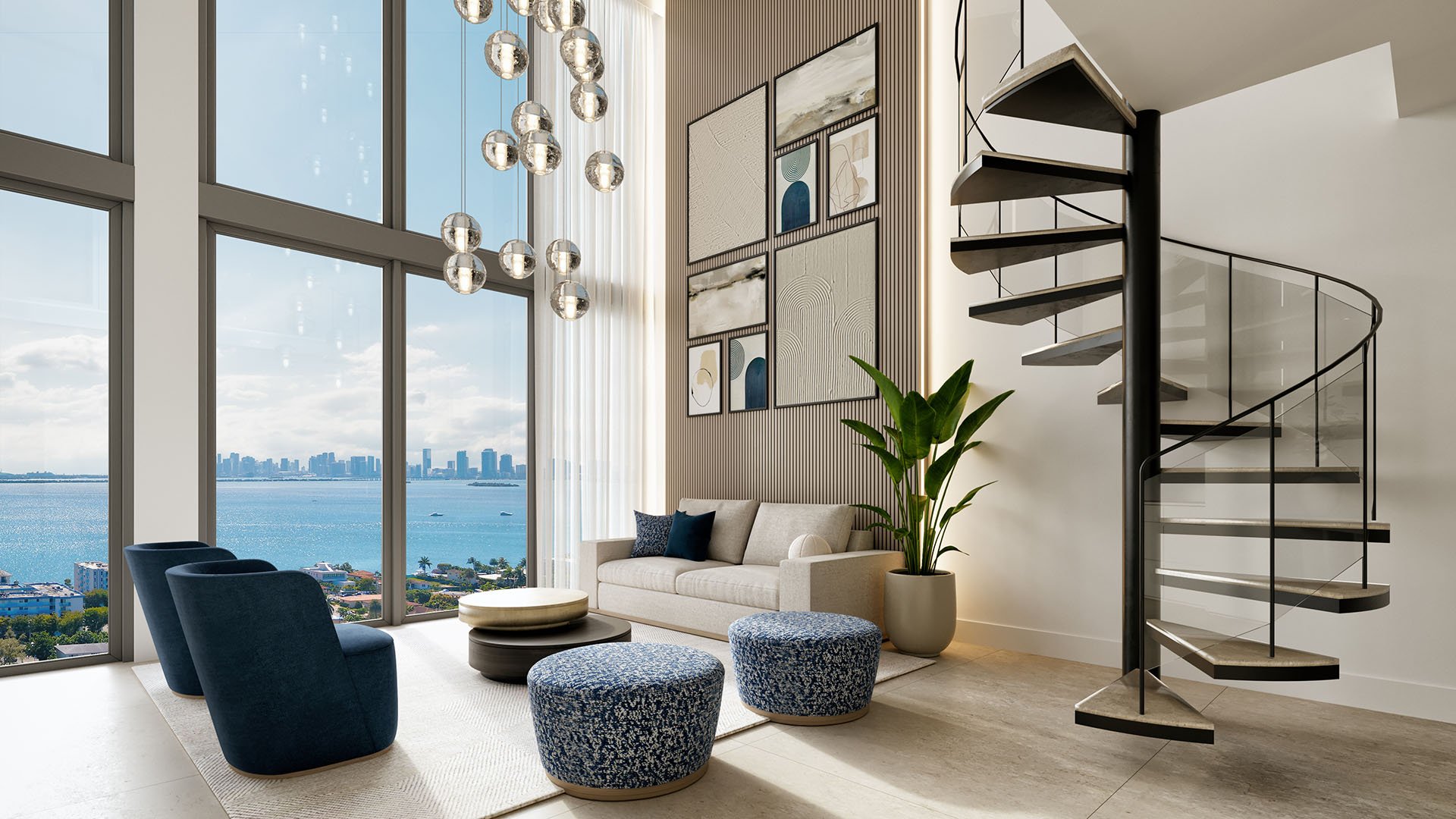
A bay address does not make every outlook equal. Study the precise orientation, floor, neighboring parcels, balcony geometry, glazing, placement of primary rooms, and angle from seated eye level. A dramatic terrace view may feel less persuasive if the kitchen or principal bedroom faces an obstruction.
Waterfront value also depends on livability. Consider afternoon heat, wind exposure, privacy, terrace depth, and whether the outdoor space can accommodate the owner’s intended use. Sunrise and sunset preferences are personal, but their effect on daily comfort can be material.
Request available view studies and compare them with maps, plans, and information about surrounding development. No rendering should substitute for independent diligence. Buyers should distinguish between a current view and a sightline they believe has durable protection.
Future buyers are likely to make the same comparisons being made today. A clear floor plan, useful bedroom separation, intuitive arrival sequence, practical storage, and balanced indoor-outdoor living can widen the audience. Highly personalized layouts may be exceptional for one owner but less liquid when circumstances change.
The most defensible residence is often not the most extreme option. A well-oriented home on a desirable floor, with manageable carrying costs and an intelligible value proposition, may attract more qualified purchasers than a compromised unit carrying a prestige premium.
Examine rental restrictions, pet rules, parking assignments, transfer fees, approval procedures, and any rights associated with storage or boating. These provisions can influence both enjoyment and resale. They should be confirmed in governing and contract documents, not inferred from marketing language.
Create a private scorecard with weighted categories: insurance and financial clarity, view durability, floor-plan quality, terrace usability, projected carrying costs, contract terms, building scale, parking, rules, and exit liquidity. Weight each category according to intended use. A primary resident may value routine and storage differently from a second-home buyer.
Then compare specific residences, not merely projects. Record the price, deposits, projected expenses, included rights, exposure, floor, and meaningful compromises for each candidate. Revisit the score after legal, insurance, and financial review. The best new-construction choice is the one that remains persuasive after its emotional advantages have been translated into ownership obligations.
Which North Bay Village project is best for every waterfront buyer? No single project fits every brief. The strongest choice depends on residence-level views, documents, carrying costs, intended use, and exit strategy.
Should buyers prioritize a higher floor? Not automatically. Orientation, nearby parcels, interior planning, wind, privacy, and price can matter as much as elevation.
Does new construction remove insurance uncertainty? No. Buyers should examine proposed building coverage and obtain separate guidance for owner-level insurance.
What insurance documents deserve close review? Review available master-policy information, deductibles, exclusions, proposed budgets, reserve assumptions, and the owner’s obligations with qualified advisers.
How should a buyer evaluate a bay view? Assess the exact orientation from principal rooms and terraces, then consider surrounding parcels and whether the sightline may change.
Are renderings sufficient for view diligence? No. Use available view studies, plans, maps, and independent professional review to test marketing illustrations.
What makes a floor plan more marketable? Functional circulation, bedroom privacy, storage, furniture-friendly rooms, and a strong connection to usable outdoor space can broaden its appeal.
Why do association rules matter to resale? Rental, pet, parking, transfer, and approval provisions can expand or narrow the future pool of suitable buyers.
Should projected monthly costs be taken at face value? Treat them as planning inputs rather than guarantees, and model a range that accounts for insurance and operating uncertainty.
Who should review a pre-construction purchase? A buyer should consider independent legal, insurance, tax, and financial advice suited to the transaction and personal circumstances.
When you're ready to tour or underwrite the options, connect with MILLION.
If branded residences are on your mind — as a home or as an allocation — we would be glad to share what we are seeing, privately.
Begin a quiet conversation