A buyer-oriented look at why the secondary family room has become one of the most consequential private spaces in a South Florida penthouse, especially for households that value calm, privacy, flexible entertaining, and daily livability over spectacle.
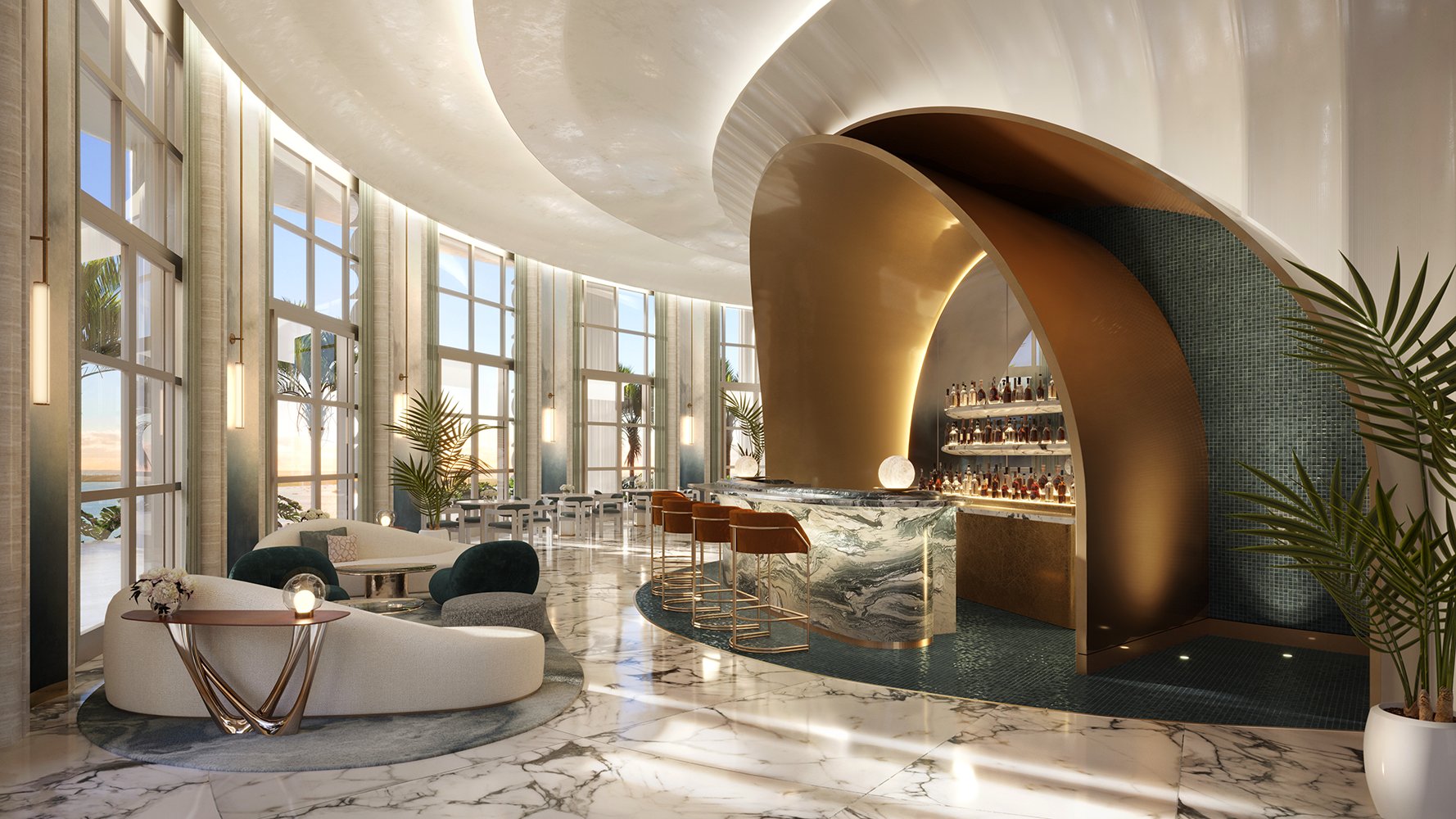
In a South Florida penthouse, the great room usually gets the drama: the longest sightline, the most cinematic glass, the art wall, the formal dining moment, the terrace sequence. Yet the room that often reveals the home’s true sophistication is quieter. It is the secondary family room, den, media lounge, morning room, or informal salon where the household actually settles.
This is the room that absorbs real life without compromising the ceremonial parts of the residence. It is where children can watch a film while adults host nearby, where early coffee does not require opening the entire home, where a visiting parent can read in peace, and where the day can contract after the skyline, ocean, or bay has made its statement.
Quiet luxury is not the absence of luxury. It is the removal of performance. In the penthouse context, that means designing beyond the obvious trophy spaces and giving equal intelligence to the rooms used when no guest is present.
Penthouse living intensifies every design decision. More light, more exposure, more view, more volume, and often more terrace area create a sense of occasion, but they also create practical demands. A single grand living space can feel magnificent at sunset and too public at breakfast. It can be ideal for entertaining and too expansive for a quiet evening. It can frame the horizon beautifully while offering limited acoustic separation.
A better secondary family room solves for that tension. It creates a lower-key counterpoint to the main entertaining space. The best examples do not feel like leftover rooms or compromised media corners. They feel intentional, with proper proportions, comfortable seating depth, softened acoustics, controllable light, and a relationship to circulation that lets the household move naturally.
For a penthouse in Miami Beach, Brickell, or Sunny Isles, the question is not simply whether the residence has a den. The question is whether that den supports the rhythm of the people who will live there.
A strong secondary family room passes a simple test: would the owners choose to spend time there even when the main salon is available? If the answer is yes, the room has likely been designed with dignity.
That dignity begins with placement. A family room near bedroom corridors may become a private retreat for the household. One adjacent to the kitchen may function as the everyday gathering space, especially for mornings and informal meals. One positioned near the main living area can become a decompression zone during larger dinners or weekend visits.
The weakest version is the room that exists only on a floor plan. It may have a television wall but no acoustic logic, a sofa but no intimacy, glass but no glare control, or access but no privacy. In a true quiet luxury residence, secondary space is not secondary in quality.
South Florida’s beauty is also its design challenge. Bright light can make a room feel alive, but uncontrolled glare can make daily use difficult. A family room intended for reading, television, children, or remote work cannot rely on views alone. It needs layered window treatments, material choices that do not punish the eye, and lighting that works after sundown without flattening the room.
This is especially relevant in high-floor homes where glass exposure can be generous. A room with water or city views may still require a quieter interior palette so the eye can rest. Matte finishes, textured textiles, warm woods, soft rugs, and indirect lighting can make the space feel composed rather than decorative.
The balcony is not the family room, and the terrace is not a substitute for one. Outdoor areas extend the lifestyle, but the private interior room is what makes the residence work when the heat rises, weather shifts, or the household wants intimacy.
In luxury residences, privacy is often discussed in terms of access, elevators, staff circulation, and sightlines. Less often discussed is acoustic privacy, although it shapes daily comfort as much as any finish package.
A secondary family room should allow simultaneous living. A film should not dominate the dining room. A video call should not travel through the bedroom hall. Children should not feel exiled because the adults are entertaining. Guests should not hear every private conversation from the main salon.
This does not require heavy-handed design. It requires thoughtful thresholds, soft surfaces, pocketing or solid doors where appropriate, and a furniture plan that absorbs sound rather than amplifies it. The quietest luxury is often felt before it is seen.
When evaluating a penthouse, look beyond room labels. A space called a den may be too small, too exposed, or too disconnected to serve as a true secondary family room. Conversely, an informal dining area, library, or transitional lounge may become the most useful room in the home if its proportions and adjacency are right.
Study how the room relates to the kitchen, bedrooms, elevator entry, powder room, and principal entertaining areas. Ask whether someone can occupy it without feeling on display. Consider whether the television wall fights the view. Notice whether seating can be arranged for conversation rather than only screen watching. Pay attention to whether the room has a natural place for books, games, art, storage, or a concealed bar.
A sophisticated penthouse does not force every activity into one monumental volume. It allows the household to choose scale.
Flexibility is often misunderstood. It does not mean a room without identity. It means a room with enough architectural calm to serve different moments well.
In one household, the secondary family room may be a media lounge with deep seating and blackout capability. In another, it may be a family library with a hidden screen and a table for games. For a seasonal owner, it may function as the first room opened after arrival, a place to unpack emotionally before the home expands into its more formal spaces.
The most successful rooms avoid the trap of becoming purely technological. A screen can be important, but it should not be the only purpose. Quiet luxury favors rooms that can host a conversation, a nap, a call, a child’s homework, or an hour alone without feeling underdesigned.
The penthouse has long been associated with height, rarity, and spectacle. Those qualities still matter, but the more enduring measure is livability. Does the residence support a full day, not just a first impression? Does it allow privacy within togetherness? Does it create places to retreat without leaving the household rhythm?
A better secondary family room is one of the clearest answers. It is an amenity inside the residence, not outside it. It gives the home emotional range. It makes large spaces feel manageable and intimate spaces feel intentional. It acknowledges that even the most extraordinary view is only part of a life well lived.
For South Florida buyers, this is the quiet luxury case: the finest penthouse is not merely the one that entertains beautifully. It is the one that understands how the family wants to live when the doors are closed.
What is a secondary family room in a penthouse? It is a private, informal living space separate from the main salon, often used for media, reading, children, remote work, or relaxed gathering.
Why does this room matter in South Florida? Bright light, heat, outdoor living, and frequent entertaining make a quieter interior retreat especially useful for daily comfort.
Is a den the same as a secondary family room? Not always. A den becomes a true secondary family room only when it has the size, privacy, acoustics, and comfort to support regular use.
Where should the room be located? The best location depends on lifestyle, but strong options include near the kitchen, near bedroom corridors, or adjacent to the main living area with separation.
Should the room have views? Views are welcome, but they should not compromise glare control, furniture placement, or the room’s ability to feel restful.
What design features matter most? Comfortable seating, layered lighting, acoustic softness, concealed storage, flexible media integration, and controllable natural light are all important.
Can a secondary family room support entertaining? Yes. It can serve as an overflow lounge, children’s retreat, or private conversation room while the main spaces remain polished.
Is this only relevant for families with children? No. Couples, seasonal owners, multigenerational households, and frequent hosts all benefit from a private room with a softer daily purpose.
How can buyers identify a weak secondary room? Watch for awkward proportions, poor privacy, limited seating options, uncontrolled glare, inadequate storage, or placement that feels like an afterthought.
What makes the room feel quietly luxurious? It should feel calm, useful, and beautifully resolved without calling attention to itself through excessive decoration or spectacle.
For a confidential assessment and a building-by-building shortlist, connect with MILLION.
If branded residences are on your mind — as a home or as an allocation — we would be glad to share what we are seeing, privately.
Begin a quiet conversation