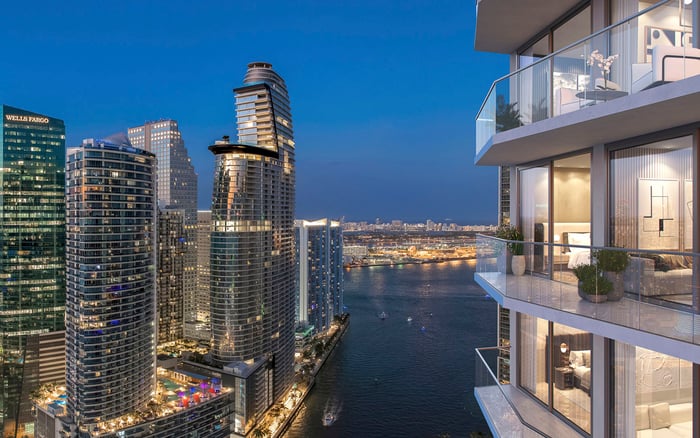
A practical buyer’s guide to evaluating restaurant exhaust, kitchen ventilation, and resale risk in South Florida luxury condominiums.

For serious South Florida buyers, the kitchen is no longer judged only by stone selection, appliance labels, or whether the island can host ten guests before dinner. The more sophisticated question is quieter and more consequential: where does the cooking air go?
Restaurant-style exhaust, or anything approaching it, can become one of the defining technical details in a condominium purchase. It shapes how a residence feels after a dinner party, whether serious cooking is effortless, and how much flexibility an owner may have when tailoring the kitchen over time. In a single-family estate, ventilation can often be engineered with relative freedom. In a high-rise condominium, it is tied to shafts, building systems, association rules, fire-life-safety considerations, exterior penetrations, and the original architectural intent.
That is why comparing exhaust between new-construction and resale condominiums requires more than admiring a hood in a sales gallery or assuming a dramatic appliance package tells the whole story. Proper diligence separates a beautiful kitchen from a truly capable one.
The primary question is whether the kitchen exhausts to the exterior or recirculates through filters back into the residence. A recirculating hood can look refined and may be acceptable for light cooking, but it does not perform the same function as a ducted system that moves air out of the building envelope.
For buyers who entertain frequently, cook aromatic foods, or plan to install powerful gas or induction equipment, this distinction matters. Exterior exhaust can help manage odor, heat, humidity, and airborne residue more effectively, provided the system is properly designed and maintained. Recirculation relies on filtration and is more limited in what it can remove.
Marketing language may be polished, but buyers should focus on function. Ask whether the hood is decorative, recirculating, ducted to a shaft, ducted directly outside, or tied into a shared building system. Each answer carries different implications for performance and future modifications.
In new-construction, the advantage is early visibility. Buyers may have access to floor plans, finish schedules, appliance specifications, and opportunities to ask questions before completion. The challenge is that the finished residence may not yet exist, so assumptions must be disciplined.
A buyer should understand where the kitchen sits in relation to ventilation shafts, whether the planned hood is ducted, and what limits apply to blower strength, appliance changes, and owner upgrades. In a tower environment, adding power is not simply a matter of buying a larger hood. The building must accommodate airflow, noise, fire separation, and pressure balance.
For residences in Brickell, where many buyers weigh vertical living against a hospitality-driven lifestyle, kitchen exhaust can be a meaningful differentiator. A sleek kitchen that performs well after a catered evening or family dinner may hold more lasting appeal than one that only photographs beautifully.
It is also worth asking how the developer treats optional upgrades. Some projects may allow selected kitchen enhancements within defined packages, while others may restrict changes to preserve system integrity. The goal is not to force a custom restaurant kitchen into a condominium. The goal is to confirm whether the designed system aligns with the way the owner intends to live.
In resale, the advantage is that the residence can be experienced in real conditions. You can stand in the kitchen, inspect the hood, listen for vibration, identify lingering odors, and request documentation for any renovations. The risk is that prior alterations may not be obvious at first glance.
A resale kitchen may have a handsome hood that is not ducted, a relocated cooktop that compromised the original ventilation, or cabinetry that conceals awkward duct paths. Buyers should ask whether kitchen changes were approved, whether permits were obtained where required, and whether the association has records of the work. If a prior owner modified appliances or cabinetry, ventilation should be part of the review rather than an afterthought.
In Miami Beach residences, where many kitchens are open to living rooms and terraces, odor control can influence daily comfort. In Sunny Isles, where high-floor residences often combine expansive views with open-plan interiors, airflow and noise become part of the luxury experience. A quiet system that removes cooking air effectively is more valuable than a dramatic hood that disrupts the room.
A proper comparison includes the entire path of air. The visible hood is only one component. Duct diameter, length, number of bends, termination point, fan location, filtration, and makeup air can all shape performance.
Makeup air is especially important in tightly built residences. When a hood removes air, replacement air must come from somewhere. If the residence is not balanced properly, exhaust can become noisy, doors may resist closing, or air may be pulled from corridors and unintended spaces. This is one reason high-rise ventilation is a building-wide matter, not merely an appliance selection.
Sound also deserves attention. A powerful hood can be impressive in theory and unpleasant in practice if the motor is loud, vibration travels through cabinetry, or the system whistles at higher settings. Luxury buyers should test all available fan speeds during a showing when possible. In pre-completion purchases, they should ask how noise and vibration are addressed in the system design.
South Florida living often blurs indoor and outdoor space. A terrace can become an extension of the kitchen, particularly in waterfront residences and large-format units. Yet buyers should not assume that outdoor cooking, grilling, or venting is permitted simply because a terrace is generous.
Association rules, building design, fire considerations, and local restrictions may limit what can be installed outside. A buyer who imagines weekend grilling, chef-led dinners, or strong indoor-outdoor entertaining should clarify these issues before contract decisions are final.
The same care applies to indoor kitchens that open directly to living areas. If the owner prefers a quiet, gallery-like interior, ventilation should be discreet. If the owner cooks intensely, performance becomes more important. The ideal answer is not universal. It depends on the owner’s rituals.
For both new-construction and resale, the most useful questions are practical. Is the hood ducted or recirculating? Where does the duct terminate? Is the system dedicated or shared? Are there restrictions on changing appliances? What maximum hood capacity is allowed? Are exterior penetrations prohibited? Does the association require approval for kitchen work? Has any prior renovation affected ducting?
Buyers should also ask whether the kitchen can accommodate the appliances they actually want. A professional-style range, additional cooktop, steam oven, or wok burner may have requirements beyond the original design. Even induction cooking, often cleaner and more efficient in everyday use, still benefits from thoughtful ventilation.
The strongest luxury purchase is the one where design ambition and technical reality meet. A kitchen does not need to resemble a commercial restaurant to serve a serious cook. It does need a ventilation strategy that is honest.
Kitchen ventilation is rarely the first line of a listing description, yet it can influence how a residence is perceived by discerning buyers. When two comparable homes offer similar views, finishes, and amenities, a better-performing kitchen can quietly elevate the choice.
A buyer who cooks often will notice. A buyer who entertains will notice. A buyer considering future renovation will notice whether the building allows meaningful flexibility. These details can reduce friction when the time comes to sell, particularly in the upper tier where purchasers expect beauty and competence in equal measure.
This is the refined view of luxury: not more spectacle, but fewer compromises. The best condominium kitchens are not merely staged for arrival. They are engineered for living.
What is the first thing to confirm about condo kitchen exhaust? Confirm whether the hood vents to the exterior or recirculates through filters into the residence.
Is a recirculating hood always unacceptable in a luxury condo? No. It may suit light cooking, but it is not equivalent to a properly ducted exterior exhaust system.
Can I add restaurant-style exhaust after buying a condo? Sometimes, but it depends on shafts, association rules, building systems, and whether exterior penetrations are allowed.
Why does new-construction require special diligence? The residence may not be complete, so buyers must rely on plans, specifications, and written confirmations.
Why can resale diligence be easier? Buyers can inspect the actual kitchen, test the fan, observe noise, and review renovation history.
Should I worry about hood noise? Yes. A powerful system that is too loud may discourage everyday use and reduce the kitchen’s comfort.
Does a larger hood always mean better performance? No. Performance depends on the full system, including ducting, fan design, airflow, and installation quality.
Can terrace cooking replace indoor ventilation? Not necessarily. Terrace cooking may be restricted by association rules, building design, or safety requirements.
Does kitchen exhaust matter for resale value? It can. Serious cooks and design-conscious buyers often value a kitchen that performs as well as it looks.
What should I request before making an offer? Ask for appliance specifications, ventilation details, association rules, and records for any kitchen alterations.
When you're ready to tour or underwrite the options, connect with MILLION.
If branded residences are on your mind — as a home or as an allocation — we would be glad to share what we are seeing, privately.
Begin a quiet conversation