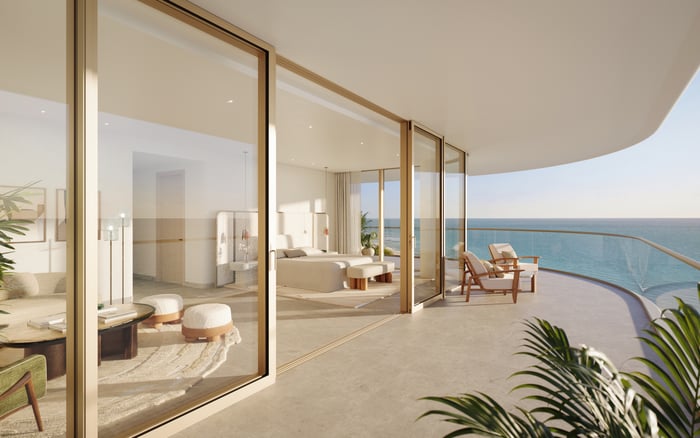
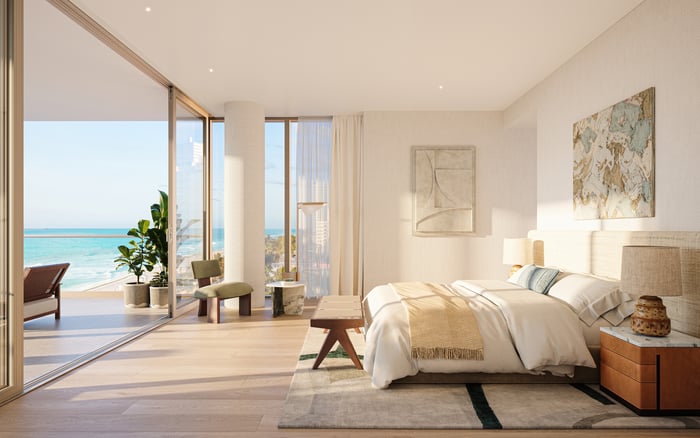
From Ocean Drive’s Art Deco icons to Morris Lapidus-era towers and Venetian Islands bayfront living, vintage condos are back in focus. Today’s buyer is balancing architectural pedigree with Florida’s post-Surfside inspection and reserve realities, while watching a resale market where older inventory can trade faster than newer product. This MILLION Luxury editorial outlines what makes vintage compelling, what due diligence now demands, and how to compare classic buildings with today’s new-construction benchmarks.
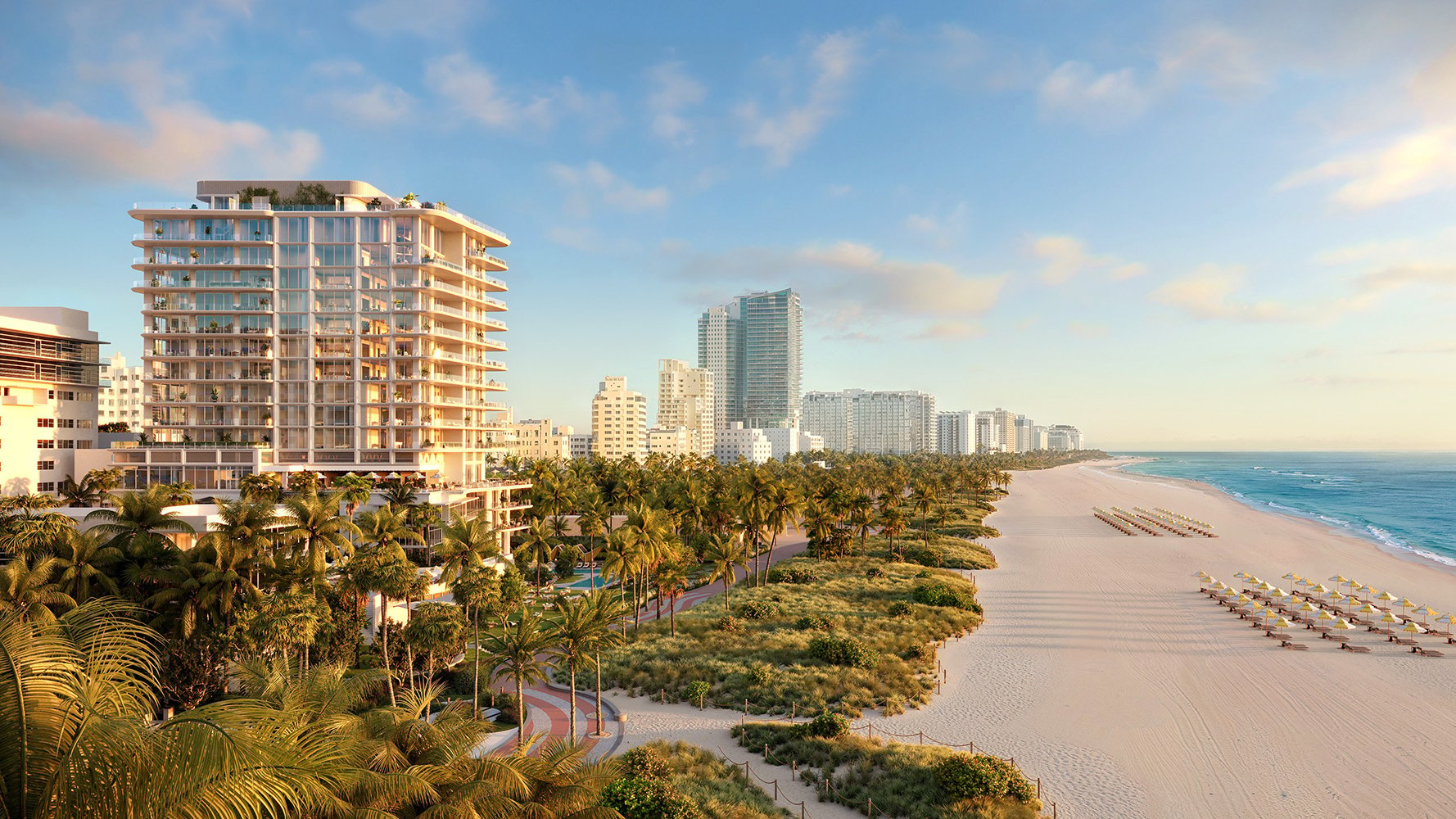
Luxury in South Florida is often framed through height, glass, and brand recognition. Miami Beach offers a parallel definition of status, one grounded in architectural lineage and the texture of a walkable city. The Art Deco Historic District, roughly spanning 5th Street to 23rd Street along Ocean Drive, Collins Avenue, and Washington Avenue, is widely described as containing about 800 historic buildings. That scale is the point. A vintage address here can sit inside an entire neighborhood of protected character, not just behind a single memorable façade.
This is why “vintage” in Miami Beach is less about age and more about authorship. Mid-century Miami Beach carries its own pedigree, with Morris Lapidus regularly cited as a central figure in the city’s design legacy. Buyers drawn to that era are rarely purchasing only square footage. They are buying proportion, rhythm, and a specific kind of glamour that modern product can reference, but seldom replicates.
For many Miami-beach households, the ideal is a discreet residence with a clear point of view: a lobby that feels cinematic, a corridor that reads like a set, and a balcony that frames water and sky with intention.
As vintage has regained cultural cachet, it has also absorbed a new operational baseline. Florida’s post-Surfside condo safety regime introduced “milestone inspections” and stronger reserve-funding expectations that particularly affect buildings around 30 years old and beyond. For buyers, that shifts the conversation from “Does the building have character?” to “How is the building being maintained, and how is that work being funded?”
In practical terms, an attractive asking price can be offset by higher ongoing obligations or episodic costs. Special assessments, elevated HOA fees, and expanded reserve contributions can materially change the true carrying cost of a Resale condo. Discipline now means comparing like with like: not only purchase price versus purchase price, but purchase price plus monthly expenses, plus the building’s anticipated capital plan.
Recent legislation adds nuance. HB 913, signed in 2025, introduced flexibility for some associations to pause or reduce reserve contributions temporarily, for up to two years, in order to prioritize urgent repairs identified by milestone inspections. That flexibility can help sequence work, but it is not a free pass. It is a prompt to read budgets and board decisions closely. In well-managed buildings, any pause is treated as a financing and scheduling tool, not a reason to defer reality.
Miami Beach vintage inventory is not a single category. Most buyers gravitate toward one of three distinct experiences, each with its own trade-offs.
First: the South Beach Art Deco and early-modern corridor. Here, lifestyle value often comes from walkability and immediate proximity to the city’s cultural energy. A reference point is The Carlyle, an Ocean Drive property that opened in 1941 and is associated with architect Richard Kiehnel. In this pocket, architectural identity can function as the amenity.
Second: Mid-Beach oceanfront and near-oceanfront towers, where mid-century scale meets direct coastal access. Crystal House, at 5055 Collins Avenue, is profiled as a Morris Lapidus-designed oceanfront condominium on Millionaire’s Row, and is described as having 165 residences. Nearby, buildings such as Seacoast 5151 are commonly marketed as older Mid-Beach options with broad resale price ranges and active inventory. In this submarket, the defining questions tend to be operational: what has been upgraded, what has been deferred, and how clearly is the association communicating its plan?
Third: the Venetian Islands bayfront lifestyle. This appeals to buyers who prioritize calmer water views, boating adjacency, and a more residential cadence. Belle Plaza is presented as a 1962-era waterfront condominium tower with 226 units. Belle Towers, a 1958 boutique building with 46 residences, is frequently highlighted for its mid-century sensibility and boating-oriented amenities, including a bayfront pool. Island Terrace at 5 Island Avenue is also presented as a Morris Lapidus-designed, 1960s-era bayfront building. Here, scarcity can be driven by smaller unit counts and a setting that feels removed from the beach’s primary thoroughfares.
A common hesitation is that older buildings will be harder to resell. Recent Miami-Dade market snapshots complicate that assumption. As of November 2025, condos 30-plus years old spent 66 days on market versus 81 days for newer condos, indicating older inventory moved faster in that period. This is not a guarantee for every address, but it is a useful counterpoint to the idea that age automatically equals illiquidity.
Two additional signals help frame liquidity. First, cash sales represented 49.8% of Miami existing condo sales as of November 2025. This investor and international-buyer footprint can support transaction velocity, especially when financing standards tighten for certain buildings. Second, sales in the $200,000 to $400,000 condo range rose to 164 in November 2025 versus 135 the prior year, a 21% increase, suggesting demand can concentrate in older product when it is perceived as attainable.
For an Investment buyer, the takeaway is specific: vintage can be liquid, but liquidity is often building-specific. Inspection status, reserve posture, and any litigation issues can directly influence financing availability and, therefore, the size of your future buyer pool.
Even a buyer committed to vintage should tour a few contemporary buildings, if only to sharpen priorities. Miami Beach’s new-construction and new-to-market ultra-luxury inventory makes trade-offs explicit: service levels, new systems, and contemporary layouts versus historic identity and often more idiosyncratic floorplans.
If your focus is Oceanfront in Miami Beach with a modern expression, consider how a boutique new tower like 57 Ocean Miami Beach frames the current standard for materials, privacy, and amenity programming.
If your taste runs toward cultural capital and design-as-lifestyle, Faena House Miami Beach remains a useful reference point for full-service positioning and a strong aesthetic narrative in the same broader geography.
If you prefer a resort-to-residence bridge, Shore Club Private Collections Miami Beach and Setai Residences Miami Beach help illustrate how hospitality DNA can influence privacy, staffing, and daily rhythm.
Use these tours as calibration tools. A vintage building does not need to mimic New-construction to compete, but it should compete on fundamentals: a credible capital plan, transparent governance, and an ownership profile aligned with long-term stewardship.
A disciplined process is the new luxury, particularly in older buildings.
Start with documentation. Review the most recent budgets, reserve schedules, and meeting minutes with the seriousness you would apply to a renovation scope. Look for patterns rather than one-off complaints: recurring water intrusion, elevator disruptions, façade concerns, or chronic underfunding.
Next, connect milestone inspections to real financial decisions. If the association is using statutory flexibility to redirect reserve contributions, understand the timeline and the endpoints: what is being addressed now, what is being postponed, and what will need funding later?
Then validate the lifestyle promise. In a bayfront Venetian Islands building, ask about dock access and how it is allocated. In a mid-century tower, ask what has been modernized in the systems you cannot see, including plumbing, electrical, concrete restoration, and waterproofing. The goal is not perfection. The goal is predictability.
Finally, plan your exit from day one. If your strategy includes rental income, verify the building’s rental rules early. If your strategy is generational ownership, prioritize governance quality and reserve discipline. Vintage can support a long hold, but only when the asset is managed like one.
What qualifies as a “vintage condo” in Miami Beach? Typically, older buildings associated with distinct architectural eras, including Art Deco and mid-century.
Is the Art Deco Historic District truly large enough to matter for buyers? Yes. It is widely described as spanning a long South Beach corridor and containing about 800 historic buildings.
Why is Morris Lapidus mentioned so often in Miami Beach real estate? He is a central figure in the area’s mid-century design legacy, associated with landmark Mid-Beach projects.
Do older condos always have higher monthly costs? Not always, but carrying costs can rise due to reserves, insurance, and special assessments tied to repairs.
What are Florida milestone inspections, in simple terms? They are safety-focused evaluations that affect many buildings around 30 years old and older and can trigger repair plans.
What did HB 913 change for condo reserves? It added limited flexibility for some associations to temporarily pause or reduce reserve contributions to prioritize urgent repairs.
Are older condos selling slower than newer condos right now? Not necessarily. In November 2025, Miami-Dade condos 30-plus years old averaged 66 days on market versus 81 for newer condos.
How important are cash buyers in the condo market? Very. Cash represented 49.8% of Miami existing condo sales as of November 2025, influencing liquidity.
Can a boutique building be safer or better run than a larger tower? It can be, but quality is governance-specific. Review budgets, reserves, and maintenance history rather than assuming.
How should I compare vintage value to newer luxury product? Compare total carrying cost, inspection and reserve posture, and lifestyle fit, then weigh those against design pedigree.
For a private consultation on Miami-beach acquisitions across vintage, Investment, and New-construction opportunities, connect with MILLION Luxury.
If branded residences are on your mind — as a home or as an allocation — we would be glad to share what we are seeing, privately.
Begin a quiet conversation