Luxury real estate in South Florida is moving from the pandemic-era sprint to a more measured, analytical cycle. For investors and second-home buyers, the most reliable wins increasingly come from disciplined underwriting, tax-aware holding periods, and best-in-class assets that remain liquid even when the broader market slows.
South Florida luxury is not one market. It operates as a collection of micro-markets, each with its own liquidity, pricing power, and buyer psychology. At the top, the prevailing view is that the post-pandemic surge has shifted into a steadier, healthier rhythm. In practice, that rewards buyers and investors who underwrite with discipline, act quickly when the asset is truly exceptional, and avoid strategies that require perfect timing.
A parallel evolution is what many advisors call “smart luxury.” Affluent buyers still pay for beauty, provenance, and a sense of place, but practicality is increasingly part of the purchase decision. Taxes, estate planning, long-term utility, and confidence that the home will still feel desirable years from now are no longer secondary considerations. That is especially relevant in Miami Beach, where lifestyle demand remains real, yet the gap between extraordinary and merely good has widened.
Another structural shift is influencing deal flow: younger cohorts are participating in greater numbers. They may be more design-forward, but they also tend to be more analytical about value, operating costs, and how a property fits within a broader balance sheet.
Flipping can still work in South Florida, but the math is less forgiving than it was in the most exuberant years. Nationally, typical flip returns have compressed, with recent reporting showing a 25.1% ROI before expenses and a typical gross profit around $65,300. Those are not luxury-level margins, and they matter because the same pressures, higher carry costs, longer timelines, and more cautious buyers, also show up at premium price points.
Two widely cited data points help explain why “easy flips” have become rarer:
In a luxury context, these constraints often intensify. Finish standards must be impeccable, design decisions need to resonate with a sophisticated buyer, and a misread of the end-user can turn a quick resale into an expensive hold. In a balanced market, buyers have the option to wait. A property must earn urgency, not assume it.
Even in a moderated cycle, best-in-class segments can remain liquid. Public reporting in 2025 pointed to Miami-Dade ultra-luxury sales ($10M+) tracking toward record-setting levels, and the $2M+ condo segment posting year-over-year sales growth. That is not a blanket guarantee for every listing. It is a clear signal that scarcity, views, and brand-level execution can still transact while lesser product sits.
This is where Miami-beach becomes a case study in two-speed luxury. A home with durable desirability, waterfront orientation, quiet privacy, and a strong service proposition can still behave like a global currency. Buyers seeking that experience often pay to avoid compromise, and many prefer all-cash execution, which remains a defining feature of luxury transactions.
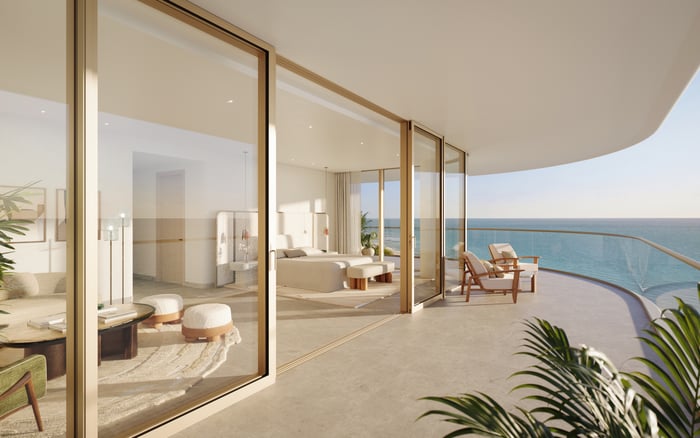
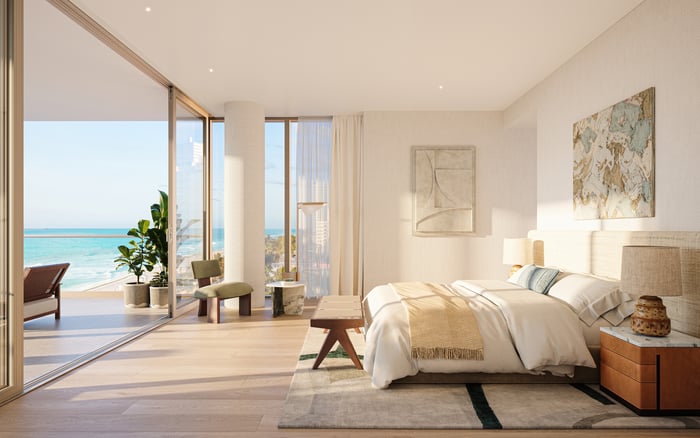
For buyers who prioritize a polished, low-friction ownership experience, branded and hospitality-aligned living continues to anchor demand. The market’s perception of service ethos and positioning is part of the underwriting. Consider residences with a clear operational promise and strong identity, such as Setai Residences Miami Beach and The Ritz-Carlton Residences® Miami Beach. In a steadier cycle, “best in class” is not a slogan. It functions as a liquidity strategy.
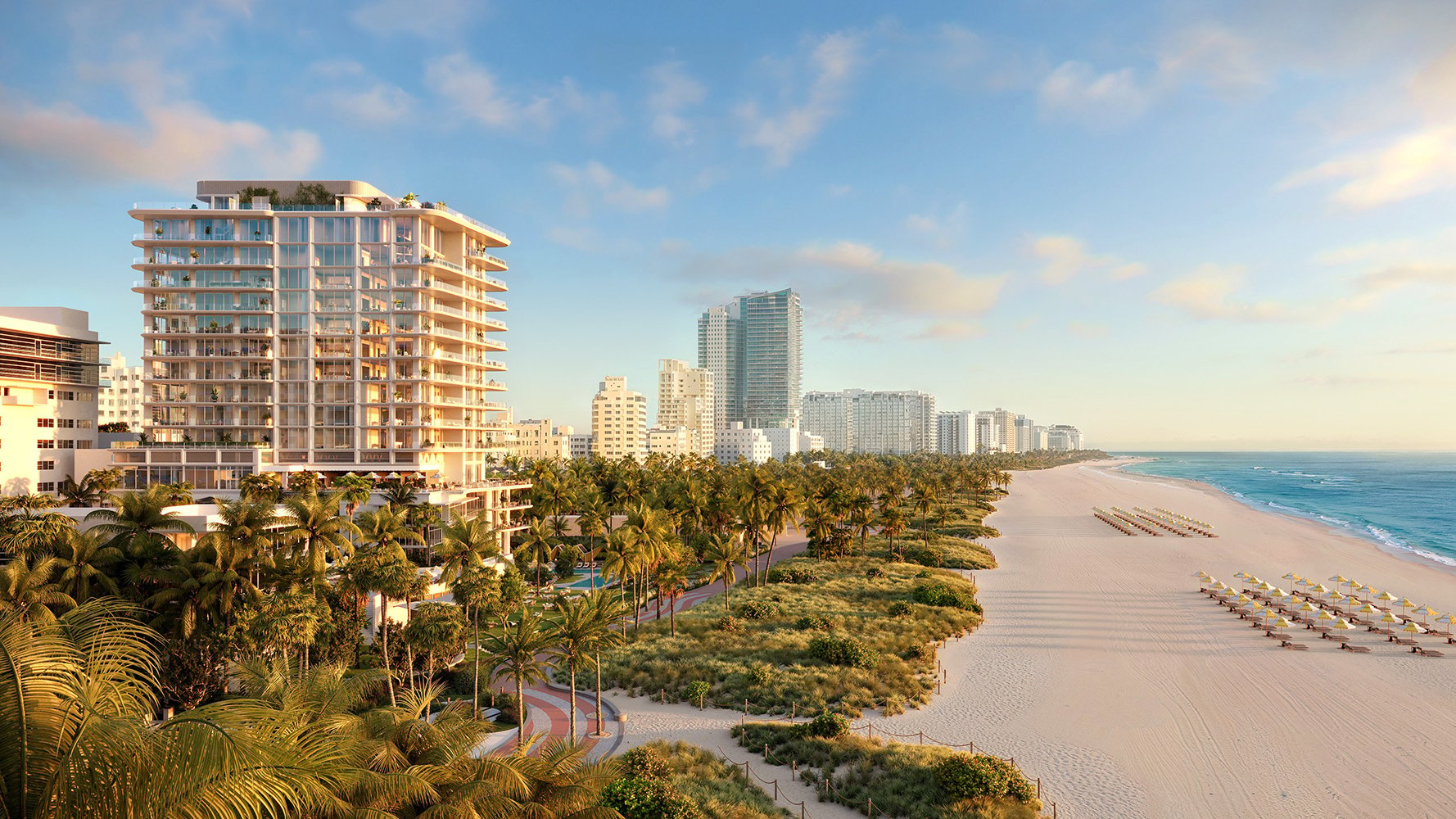
In South Florida, oceanfront is one of the few attributes that can act like a durable moat across cycles. Shoreline cannot be manufactured, and in Miami Beach the combination of walkability, international recognition, and true waterfront positioning remains unusually compelling.
For investors, this matters because the hold thesis becomes cleaner. When you own scarcity, you are less dependent on the next buyer arriving tomorrow. You are underwriting long-term desirability rather than short-term momentum.
The oceanfront narrative also intersects with new-construction preferences. Many affluent buyers want modern systems, current hurricane standards, and a design language that reads current without being trend-bound. Along that continuum, 57 Ocean Miami Beach reflects the boutique oceanfront proposition that can stay in demand as the market grows more selective.
Smart luxury is not simply a higher finish budget. It is a selection strategy that reduces friction and protects downside.
In practice, that often means:
Homes that emphasize discretion and club-like living also align with what today’s buyer increasingly values: utility, longevity, and a residence that behaves like an asset, not a project.
That is where the experience layer can be as important as the square footage. In that conversation, Casa Cipriani Miami Beach illustrates the broader point: modern luxury demand is often driven by certainty, consistency, and the quality of daily living.
This is also where resale strategy becomes more nuanced. A sophisticated buyer may pay a premium for turnkey certainty, especially when renovation costs and timelines feel unpredictable. For a would-be flipper, the competition is not only other renovated homes. It is also the market’s growing preference for “already perfect.”
Gross profit is not net profit, and in luxury real estate the difference can be decisive. One reason buy-and-hold strategies can outperform expectations is that tax and ownership structure often reward time and planning.
Several concepts shape real outcomes:
None of these tools turns a weak asset into a good one. In a recalibrating cycle, however, they can be the difference between an average outcome and a high-quality net return, especially when paired with conservative leverage and the optionality that all-cash buyers often maintain.
National luxury rankings sometimes spotlight unexpected markets. At points in 2025, Detroit led a luxury market ranking, driven by relative affordability and demand dynamics. For some investors, that kind of data reinforces a buy-and-hold mindset: acquire scarcity or value, accept a longer horizon, and avoid betting on fast appreciation.
South Florida’s counterargument is not that it is cheap. It is that it remains unusually liquid at the very top, with depth in high price tiers and a buyer base that includes cash purchasers, second-home owners, and globally mobile families.
Add one more tailwind: trillions in real estate are expected to transfer to Gen X and Millennials over the next decade, which can influence both demand and estate-driven transactions. That generational shift tends to favor assets with a clear identity, low operational friction, and enduring desirability.
If you are evaluating an acquisition in 2026, start with a straightforward premise: mortgage rates may edge lower versus 2025 but remain elevated compared with the ultra-low-rate era. That keeps carrying costs meaningful and makes timeline discipline non-negotiable.
A simple framework can clarify which strategy fits:
On Miami Beach, a hybrid approach often expresses itself as owning an icon that functions as a lifestyle base while remaining a clean, globally understandable resale proposition. The goal is not to predict the market’s next quarter. The goal is to own the kind of home the market repeatedly chooses.
What does “recalibrating” mean for South Florida luxury? It generally signals slower, more rational decision-making and pricing discipline, not a uniform decline.
Are all-cash buyers still important? Yes. Cash remains a major advantage in luxury because it reduces financing risk and can shorten timelines.
Is flipping still viable in Miami-beach? It can be, but margins are tighter and timelines can be longer, so execution and underwriting matter more.
Why do longer flip timelines increase risk? More days held typically mean higher carrying costs and more exposure to market shifts.
What is “smart luxury” in one sentence? Luxury that prioritizes practical value like taxes, utility, and long-term desirability.
How does short-term capital gains tax affect flips? Gains on properties held one year or less are generally taxed at ordinary income rates, which can materially reduce net returns.
Can a primary residence sale reduce taxes? Potentially. Eligible owners may exclude up to $250,000 in gains if single or $500,000 if married filing jointly, subject to the rules.
Why do buy-and-hold investors focus on depreciation? Depreciation can reduce taxable income while the property may still appreciate over time.
What is the role of a 1031 exchange? It is commonly used to defer capital gains taxes by reinvesting proceeds into qualifying replacement real estate.
What is the safest way to choose between New-construction and Resale? Match the choice to your timeline and risk tolerance: New-construction can reduce surprise repairs, while Resale can offer immediate use and established comps.
For tailored, discreet guidance, explore MILLION Luxury.
If branded residences are on your mind — as a home or as an allocation — we would be glad to share what we are seeing, privately.
Begin a quiet conversation