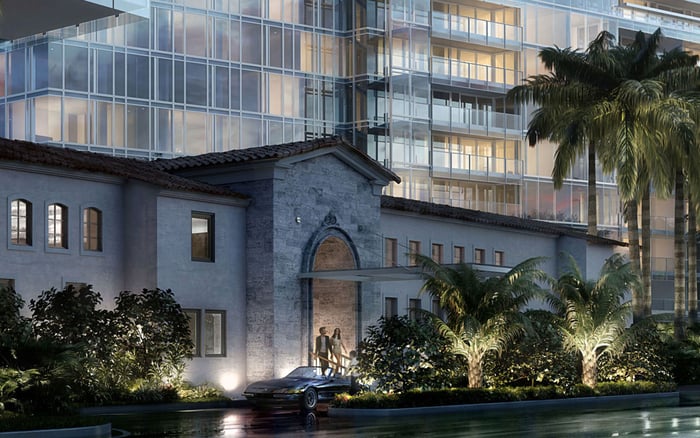
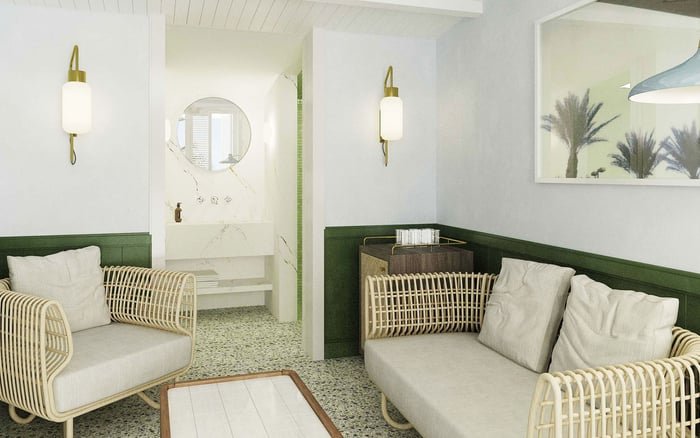
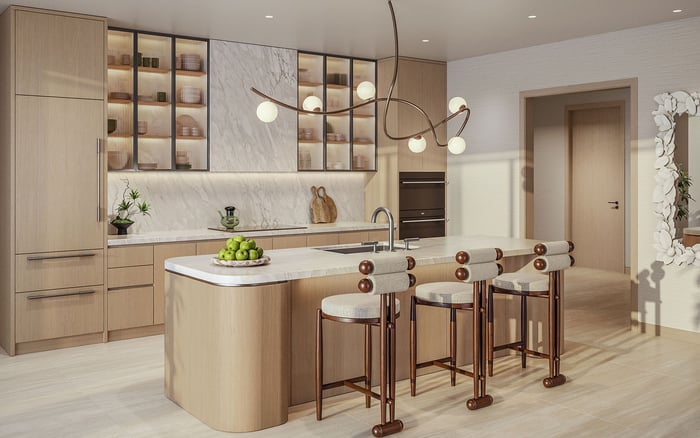
A discreet buyer’s guide to full-time ownership questions at Viceroy Brickell and The Surf Club Four Seasons Surfside, with emphasis on club access, private amenities, resident privacy, and the everyday rhythm that defines livability beyond brand prestige.
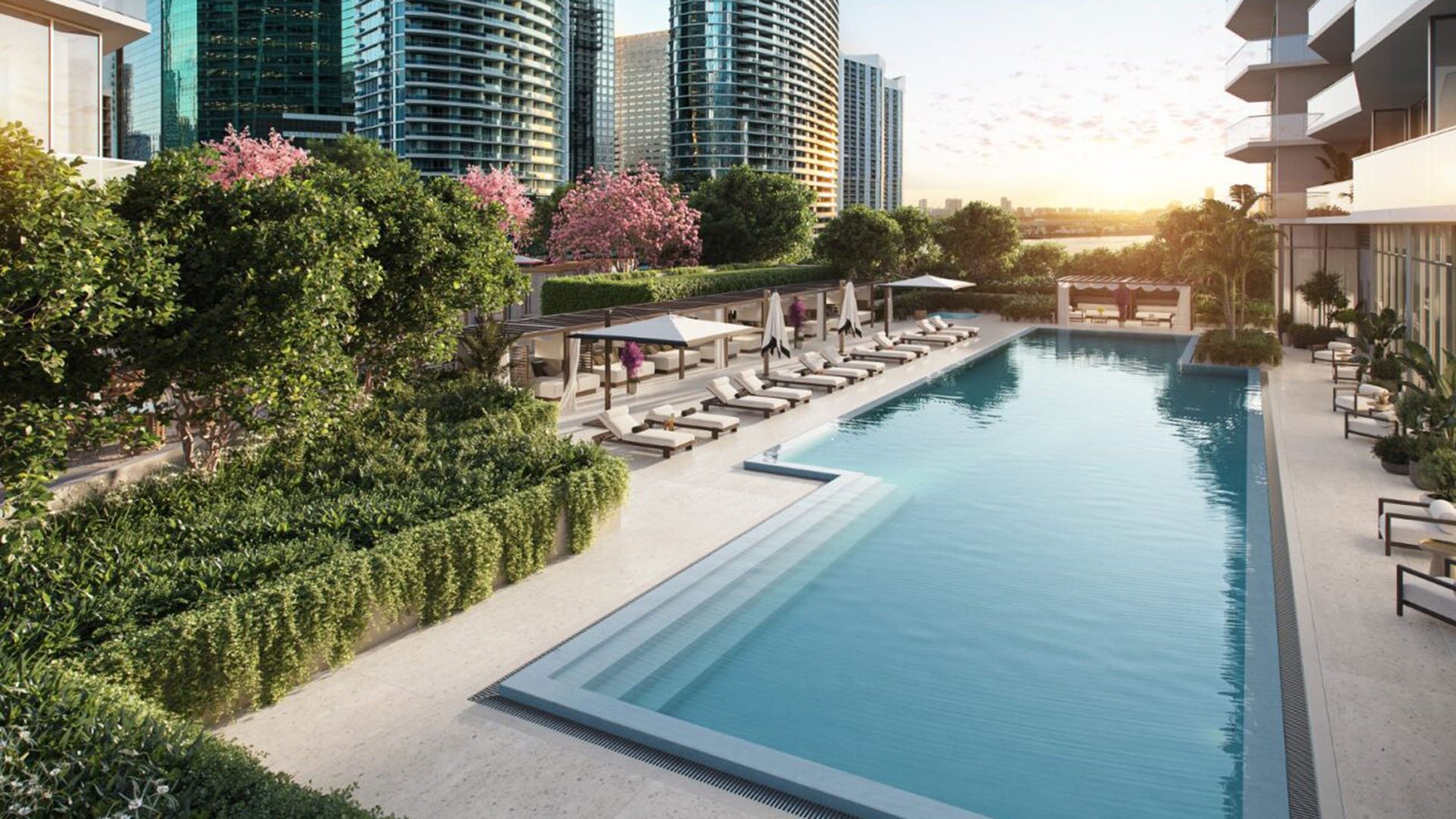
For a full-time owner, the distinction between a beautiful branded residence and a truly livable one often sits in the fine print. Viceroy Brickell and The Surf Club Four Seasons Surfside occupy very different emotional geographies: one shaped by the vertical pulse of Brickell, the other by the coastal restraint of Surfside. Yet the central diligence question is the same. Who controls the experience once the marketing brochure is set aside?
That answer matters because club access, private amenities, and hospitality service models can make daily life feel effortless, or they can introduce ambiguity. A full-time buyer is not only purchasing square footage, finishes, views, and a recognizable name. The buyer is purchasing patterns: who enters the building, who uses the pool, who occupies the dining room, how valet flow is managed, and whether weekday quiet survives a high-demand winter weekend.
At The Surf Club Four Seasons Surfside, the issue is especially clear. It should be evaluated as a branded-residence case study in which residential, hospitality, and private-club components may overlap operationally. The essential task is to separate private residential access from hospitality-facing access, then confirm that distinction in documents rather than assumptions.
Club language is powerful in South Florida because it suggests intimacy, continuity, and social curation. For full-time owners, however, the practical question is not whether a club exists. It is whether privileges are automatic, membership-based, limited, transferable, revocable, or subject to separate fees.
At The Surf Club Four Seasons Surfside, buyers should verify how any club privileges work before relying on broad language around exclusivity. That means obtaining governing documents, club rules, fee schedules, and written access policies. It also means asking how those rights function when the property is busy, when guests are in residence, and when seasonal demand pushes every amenity to its highest use.
The same discipline applies to Viceroy Brickell. Without assuming specific access rights, a purchaser should ask direct questions about which amenities are reserved for owners, which are shared, which may be programmed by management, and which are subject to guest policies. In Brickell, where the surrounding neighborhood already carries an intense urban rhythm, the internal operating structure becomes even more important.
A private amenity is not defined by design alone. It is defined by access, capacity, hours, guest rules, staffing, and enforcement. For owners who plan to live in residence year-round, this is where the true quality of the purchase is revealed.
At The Surf Club Four Seasons Surfside, full-time buyers should ask how pool, beach, dining, spa, fitness, valet, and concierge spaces are allocated among residents, hotel guests, and club members. Pool allocation is more than a lifestyle detail; it affects morning routines, family visits, privacy, noise, towel service, seating availability, and the ability to use the property without planning around outsiders.
Beach access should be reduced to operational questions as well. Is the beach experience meaningfully separated for residents, or does it function within a broader hospitality environment? How are chairs, attendants, guest passes, cabanas, and peak-time capacity handled? These are not adversarial questions. They are the standard questions of a serious buyer who understands that oceanfront life depends on the choreography behind the service.
Condo-hotel comparisons can be useful here, even when the ownership structure is different, because they force buyers to distinguish between private residential living and hotel-style amenity sharing. The most refined buildings make that distinction feel invisible. The best documents make it unmistakable.
Surfside offers a quieter residential backdrop than Brickell, but quiet surroundings do not automatically guarantee a private building experience. The Surf Club Four Seasons Surfside draws part of its allure from a layered ecosystem of residence, hospitality, and club culture. That ecosystem can be a powerful advantage for an owner who values service, dining, and social texture close at hand. It can also require careful expectations around foot traffic, guests, and peak-season energy.
Brickell begins from the opposite premise. The neighborhood is defined by density, dining, offices, wellness concepts, nightlife, and rapid movement. For a full-time Viceroy Brickell owner, the question becomes whether the residence creates a sufficient private threshold from the city around it. In a vertical urban district, a serene elevator arrival, predictable valet experience, and well-managed amenity floor can matter as much as the residence itself.
Neither model is inherently better. Surfside asks whether a resort-caliber environment can feel residential enough. Brickell asks whether an urban branded address can feel calm enough. The right answer depends on whether the owner wants coastal ritual, city immediacy, or a disciplined balance between the two.
South Florida buyers often inspect stone, millwork, appliances, terraces, and views with great care. Full-time owners should inspect service systems with the same seriousness. Hotel-style service infrastructure can elevate daily life, but it can also alter residential predictability if the operating model is not clearly understood.
At The Surf Club Four Seasons Surfside, the relevant questions include concierge scope, valet priority, guest flow, package handling, spa access, dining reservations, event programming, maintenance protocols, and security boundaries. The point is not to diminish the appeal of a hospitality-branded environment. It is to understand when the service model serves the owner first, and when the owner is part of a broader ecosystem.
For Viceroy Brickell, the service questions should be framed through city living. How does the building handle weekday arrivals, dinner-hour demand, service vendors, rideshare movement, and visitors? How does management protect the residential experience during high-traffic moments? A full-time residence in Brickell succeeds when service reduces friction rather than adding another layer of coordination.
A serious buyer should ask for the documents that define reality: condominium declarations, association rules, club rules, fee schedules, access policies, rental restrictions if relevant, guest policies, and amenity reservation procedures. Marketing language may describe a private world, but documents explain who can enter it.
For The Surf Club Four Seasons Surfside, buyers should specifically confirm which areas are residents-only and which are shared with hotel guests or club users. They should also ask how rules change during holidays, winter weekends, private events, and peak dining periods. The appeal of full-time ownership depends partly on whether the amenity ecosystem remains comfortable during the moments when demand is highest.
For Viceroy Brickell, buyers should focus on the everyday neighborhood rhythm: arrival, exit, elevator flow, amenity access, sound control, guest management, and the ease of moving between private residence and public city. In luxury real estate, location is not only geography. It is also tempo.
The most sophisticated South Florida buyers are increasingly less persuaded by brand alone. They want to know how a property operates on an ordinary Tuesday, how it feels during a fully booked weekend, and whether the promise of privacy holds when everyone wants the same amenity at the same time.
That is the proper frame for Viceroy Brickell and The Surf Club Four Seasons Surfside. One invites a conversation about urban energy and private retreat. The other invites a conversation about coastal heritage, branded service, and the boundaries between residence, hotel, and club. Both deserve attention not only for how they present, but for how they function.
For a full-time owner, the most valuable amenity may be confidence: confidence that access is clear, service is predictable, privacy is protected, and the building’s rhythm aligns with the life being purchased.
What should full-time owners verify first at The Surf Club Four Seasons Surfside? They should verify which amenities are residents-only and which may be shared with hotel guests or club users.
Is club access automatically included with ownership? Buyers should not assume that. They should confirm whether privileges are automatic, membership-based, limited, transferable, or separately priced.
Why is amenity allocation so important? Allocation determines how private and predictable daily use feels, especially for pool, beach, dining, spa, fitness, valet, and concierge spaces.
How should buyers think about Viceroy Brickell? They should focus on how the residence manages urban rhythm, privacy, access, arrivals, guests, and amenity demand.
Does a branded residence always mean more privacy? Not necessarily. Branding can elevate service, but privacy depends on access rules, management practices, and enforcement.
What makes Surfside different from Brickell for daily living? Surfside offers a more coastal residential setting, while Brickell delivers a denser urban rhythm with greater city immediacy.
Should buyers rely on sales language around private amenities? No. They should review governing documents, club rules, fee schedules, and written access policies before relying on marketing language.
Why do winter weekends matter in diligence? They reveal how the building performs when demand is highest and whether privacy remains intact during peak seasonal use.
Is hotel-style service a benefit for full-time owners? It can be, provided the service infrastructure supports residential predictability rather than creating operational overlap.
What is the best way to shortlist comparable options for touring? Start with location fit, delivery status, and daily lifestyle priorities, then compare stacks and elevations to validate views and privacy.
For a discreet conversation and a curated building-by-building shortlist, connect with MILLION.
If branded residences are on your mind — as a home or as an allocation — we would be glad to share what we are seeing, privately.
Begin a quiet conversation