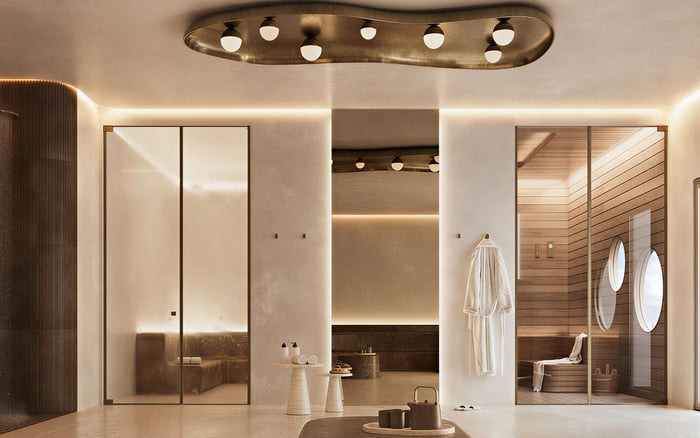
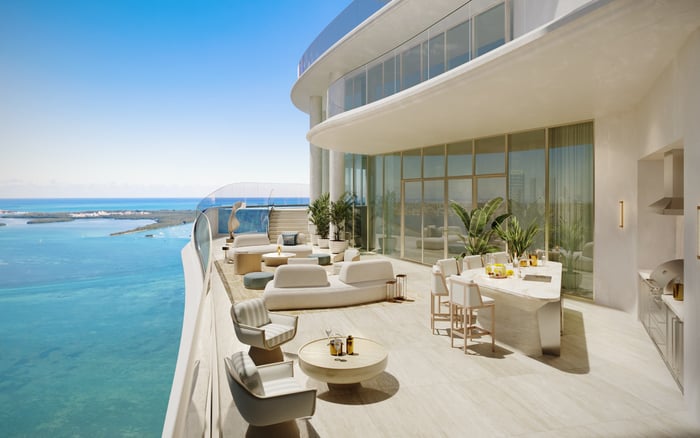
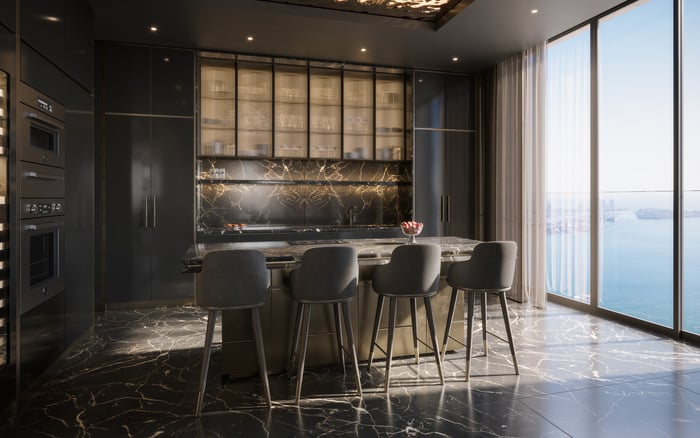
In-unit wellness rooms have become a refined marker of privacy and control in luxury condos, but their long-term value depends on design discipline, building compatibility, and resale flexibility.
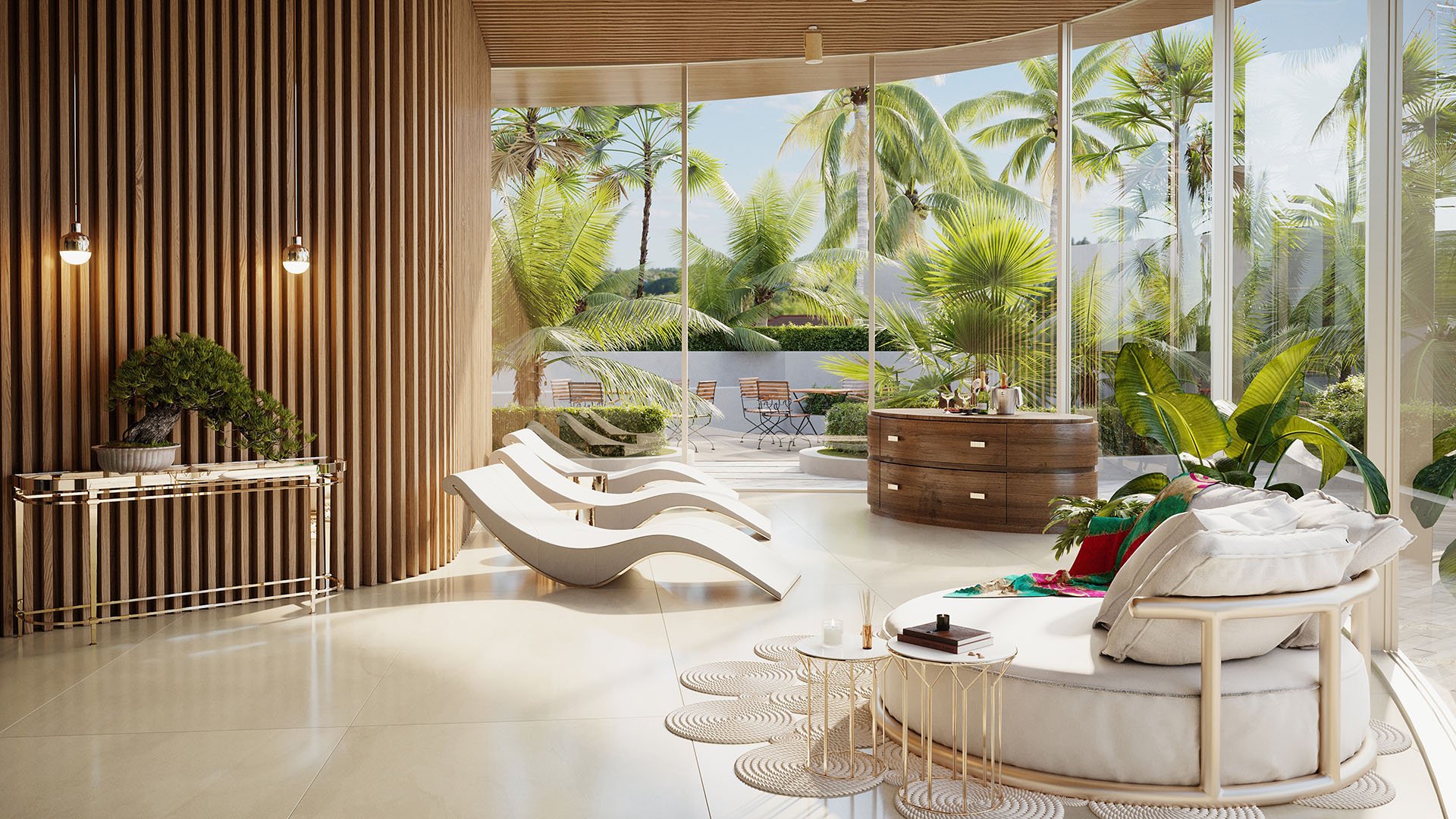
In South Florida’s most refined condominium market, wellness has moved from the shared amenity deck into the residence itself. A private room for stretching, recovery, meditation, treatment, or light fitness can feel like the ultimate luxury: no elevator ride, no schedule, no public threshold. It answers the modern buyer’s desire for control, privacy, and ritual.
Yet the quieter question is not whether an in-unit wellness room is desirable. For many ultra-premium buyers, it clearly is. The question is whether the room has been conceived as a durable residential asset, or as an impressive customization that could create technical, regulatory, or resale friction later.
That distinction matters in a market where buyers are increasingly sophisticated. A beautiful wellness room can enhance daily life, but the wrong installation can introduce moisture concerns, sound transfer, heat load, maintenance obligations, or an overly narrow use case. The most compelling residences are not simply adding wellness; they are integrating it with the discipline of architecture, building systems, and future marketability.
A true in-unit wellness room is not merely a bedroom with a mat, mirror, and sculptural bench. It is a room whose function has been considered in relation to the surrounding residence. Flooring, lighting, ventilation, acoustics, storage, privacy, and service access all matter.
The risk begins when the room is treated as decoration rather than infrastructure. Steam, heat, water, resistance equipment, massage tables, cold-plunge concepts, and recovery technology each carry different implications. Even a quiet meditation room calls for a different approach than a high-use fitness room with weights, machines, or amplified sound.
Luxury buyers should ask a practical question: if the wellness use disappeared tomorrow, would the room still make sense? A flexible room that can become a study, guest suite, media lounge, nursery, or staff room will generally carry broader appeal than one locked into a single specialized experience. At the highest end of the market, the best customization is often the kind that can retreat gracefully.
The most important risks are rarely visible during a polished showing. Moisture is one of them. Any room involving steam, wet recovery, humidification, or water-based therapies requires serious attention to containment, ventilation, finishes, and neighboring spaces. In a condominium, the consequences of a poorly planned wet wellness feature can extend beyond the unit itself.
Sound is another understated issue. A treadmill, reformer, weights, or vibration platform may feel unobtrusive inside a large residence, but the structure may carry impact noise in unexpected ways. Buyers should understand whether the building has rules governing exercise equipment, flooring underlayment, permitted hours, or modifications to slabs and walls.
Heat and power loads also deserve attention. Some wellness concepts generate more heat than a typical room use. Others require dedicated electrical planning or equipment clearance. If a system depends on extra ventilation, drainage, waterproofing, or building approval, it should be evaluated before design enthusiasm becomes a costly commitment.
The issue is not confined to one enclave. It applies across Miami Beach, Sunny Isles, Surfside, Brickell, Fort Lauderdale, Boca Raton, and Palm Beach, especially where private terraces, pools, spa suites, or recovery rooms expand the wellness program inside the home.
In-unit wellness rooms can be deeply personal. That is their appeal, and their risk. One owner may want a Pilates studio, another a sauna ritual, another a soundproof meditation suite, another a treatment room for visiting practitioners. The more specific the room becomes, the smaller the future audience may be.
A buyer planning a wellness room should consider three resale scenarios. First, the next buyer loves the concept and values the room as installed. Second, the next buyer likes the idea of wellness but wants a different use. Third, the next buyer wants the room restored to a conventional function. The strongest designs support all three outcomes with minimal friction.
That usually means avoiding irreversible interventions where possible. Built-ins should be elegant but not oppressive. Specialty equipment should not dominate circulation. Finishes should feel residential rather than clinical. Lighting should allow both performance and calm. Storage should conceal accessories without making the room feel like a gym closet.
The luxury market rewards rooms that feel inevitable. A wellness room should appear as though it belongs to the residence, not as though it was imported from a spa brochure.
Before assigning a room to wellness, buyers should review the condominium documents, alteration guidelines, insurance requirements, and approval process. The most relevant questions are straightforward: What changes are permitted? Are wet installations allowed? Is additional waterproofing required? Are mechanical changes restricted? Are there rules for equipment, flooring, sound, or structural penetrations?
A second review should focus on lifestyle. Will the room be used daily, weekly, or occasionally? Is privacy more important than view? Does the owner need morning light, blackout conditions, or acoustic separation? Should the room be near the primary suite, secondary bedrooms, service corridor, or terrace? The best wellness spaces are choreographed around actual behavior, not abstract aspiration.
A third review should consider staffing and service. If a massage therapist, trainer, physiotherapist, or beauty professional will visit the residence, the plan should account for entry sequence, powder room access, parking or valet logistics, storage, linens, and discreet cleanup. An ultra-private wellness room should not create awkward circulation through the most intimate parts of the home.
The most sophisticated in-unit wellness rooms tend to share certain qualities. They have layered lighting rather than one dramatic fixture. They use calm, durable materials rather than theatrical finishes. They offer hidden storage. They accommodate technology without letting screens dominate. They feel quiet before any treatment begins.
Flooring is especially important. It should support the intended activity while remaining consistent with the residence’s aesthetic. Mirrors can be useful, but too many can turn a serene room into a commercial studio. Millwork can elevate the space if it is proportioned with restraint. Art, texture, and natural materiality can keep the room from feeling overly programmatic.
Ventilation should be treated as a comfort feature, not an afterthought. So should scent. The line between subtle atmosphere and overwhelming fragrance is thin, particularly in enclosed rooms. Wellness design at the highest level is less about adding things and more about removing friction from the owner’s day.
For developers and sellers, the wellness room can be a persuasive signal when it is presented with discipline. It should not be marketed as a novelty corner. It should be framed as an extension of the residence’s private world: a space for recovery, stillness, movement, and care.
But precision matters. If a room is staged as wellness, the narrative should match what the room can reasonably support. A serene stretching room is not the same as a wet spa. A flex den with calming finishes is not the same as a fully engineered recovery suite. Overstatement invites disappointment during inspection, board review, or post-closing planning.
For buyers, the best approach is to appreciate the aspiration while underwriting the practicalities. In-unit wellness can be one of the most civilized luxuries in a South Florida residence, provided it is planned with technical restraint and future flexibility.
Is an in-unit wellness room always a value-add? Not always. It adds the most value when it is flexible, technically sound, and consistent with the residence’s overall design quality.
What is the biggest hidden risk? Moisture is often the most consequential risk when steam, water, or humidification is involved. Sound and heat can also become issues in condominium settings.
Should a wellness room include plumbing? Only if the building rules, waterproofing plan, and long-term maintenance obligations are fully understood. Plumbing can improve function, but it also increases complexity.
Can a bedroom be converted into a wellness room? Yes, but the best conversions preserve the ability to return the space to a conventional use. Resale flexibility should remain part of the plan.
Are heavy fitness machines a concern in condos? They can be. Buyers should review rules related to weight, vibration, sound transfer, flooring, and permitted equipment before installation.
Where should a wellness room be located within a residence? It depends on use. Quiet practices may suit a private interior location, while movement or recovery rooms may benefit from light, ventilation, and service access.
What design features make the room feel more luxurious? Layered lighting, concealed storage, calm materials, acoustic comfort, and restrained millwork tend to age better than highly themed design.
Should sellers stage a room as wellness? Yes, if the room can credibly support that use. The presentation should remain elegant, flexible, and not overly dependent on specialized equipment.
Can a wellness room hurt resale? It can if the installation is too specific, difficult to reverse, or inconsistent with building rules. Adaptability helps protect future appeal.
What should buyers ask before making an offer? Ask what is permitted, what has already been approved, and what systems or alterations would be required for the intended wellness use.
For a confidential assessment and a building-by-building shortlist, connect with MILLION.
If branded residences are on your mind — as a home or as an allocation — we would be glad to share what we are seeing, privately.
Begin a quiet conversation