A discreet buyer-diligence guide for families evaluating lobby seating privacy at Turnberry Ocean Club in Sunny Isles Beach, with practical questions on sightlines, service culture, caregiver routines, staff protocols, and day-to-day discretion.
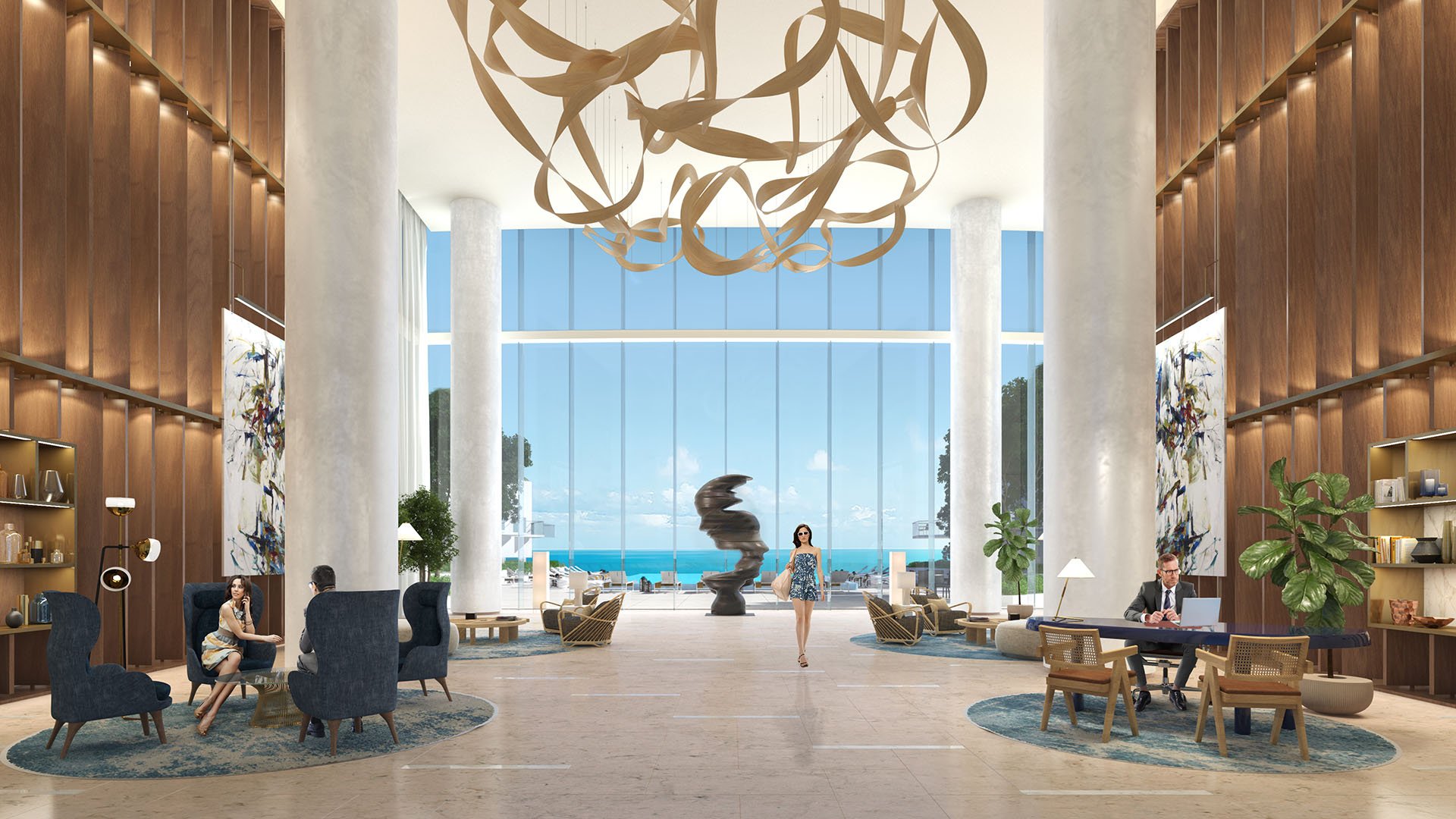
At Turnberry Ocean Club Sunny Isles, family buyers are often drawn first to the oceanfront setting, the scale of the residences, the service environment, and the lifestyle promise of a high-caliber Sunny Isles Beach address. Yet for households with children, caregivers, grandparents, drivers, tutors, and frequent guests, one of the most revealing spaces to study is not inside the residence. It is the lobby seating area.
The lobby is the threshold between private family life and the more visible choreography of condominium living. It is where valet arrivals, visitor greetings, staff interactions, package movement, broker traffic, service appointments, and elevator circulation can overlap. For buyers relocating from single-family homes, this can be a meaningful adjustment. A gated driveway or private motor court may have previously absorbed daily transitions. In a condominium, those transitions can become more observable.
This is not an argument that a dramatic lobby is a flaw. In the luxury market, arrival experience matters. The point is that families should evaluate whether the seating environment supports the level of discretion they expect. The most useful question is not simply whether the lobby is beautiful. It is whether the lobby allows a child, caregiver, parent, or grandparent to wait comfortably without becoming part of the room’s social traffic.
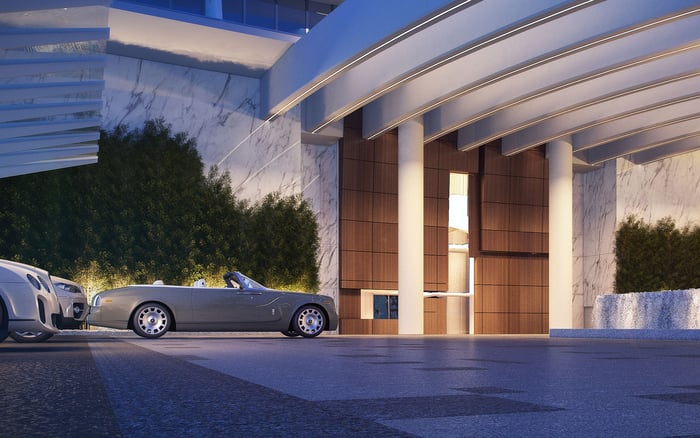
The first walk-through should be practical. Where does lobby seating sit in relation to the porte-cochère, valet area, concierge desk, elevator banks, mail or package areas, and other high-traffic paths? A seating group that photographs well may still feel exposed if every arriving guest, delivery person, or resident must pass directly in front of it.
Family buyers should stand in the actual seating area and look outward. Can someone waiting there see incoming vehicles? Can drivers, visitors, or staff easily see the person waiting? Is the seating positioned near a main conversation point, or set back in a quieter zone? The goal is not to demand invisibility. The goal is to understand the degree of exposure during ordinary routines.
The difference can be subtle. A lobby that feels calm during a private showing may feel more active during morning departures, afternoon returns, holidays, or peak season. Ask which hours are busiest and whether seating becomes congested. School runs, extracurricular departures, weekend outings, and vehicle waits are precisely the moments when a family may discover whether the room functions as a gracious residential threshold or as a hotel-style social stage.
Privacy is not only a question of furniture placement. It is also a question of rules. Families should ask whether lobby seating is intended for residents and their guests only, or whether brokers, vendors, delivery personnel, drivers, household staff, and other visitors may also wait in the same area.
The answer matters most for households with children. A caregiver waiting with a child after a lesson, a grandparent waiting for a car, or a parent pausing with shopping bags may not want to share the same seating zone with people who are unfamiliar to the family. A clear resident-and-guest standard can feel very different from an informal lobby where many categories of visitors linger.
Buyers should also ask whether caregivers, tutors, drivers, and household staff have separate check-in or waiting procedures. In a high-service building, efficiency and warmth are valuable, but so is discretion. The service culture should balance recognition with privacy, particularly for families that do not want routines, names, or unit references overheard from the seating area.
For families comparing Sunny Isles residences, this is a useful lens across the broader oceanfront market. The question is not new construction versus resale in the abstract. It is how each building’s arrival sequence handles daily family life.
Every family buyer should ask whether there is a quieter or less-visible place to wait if the main lobby seating feels too exposed. This may matter for young children, teenagers, grandparents, caregivers, or any family member who prefers not to be observed during a vehicle delay.
A discreet alternative can be especially valuable during private-school morning departures, after-school pickups, athletic weekends, and holiday travel days. These are moments when multiple families may be moving at once, staff may be coordinating vehicles, and the lobby may feel busier than it did during a midday tour.
The question should be specific: if the main seating area is full or visible, where can a child and caregiver wait for a car? Can staff coordinate the vehicle before the family comes down? Can a household member remain closer to an elevator area until the car is ready, if that is safer or more private? These questions do not require the building to disclose sensitive operating details. They simply help the buyer understand how the property manages discretion in daily use.
A refined lobby depends as much on staff behavior as on architecture. Families should ask how the team handles unwanted approaches, casual conversations, photography, or attention directed at children or family members seated in the lobby. In an ultra-luxury environment, politeness should not come at the expense of boundaries.
It is also worth asking whether staff avoid announcing names, unit numbers, or family routines in ways that can be overheard. A friendly greeting is part of luxury hospitality. A spoken routine, a child’s schedule, or a unit reference audible from nearby seating is a different matter.
Security-camera questions should be handled with tact but asked directly. Do cameras cover lobby seating? Who can access footage? How long is footage retained? Buyers do not need to know sensitive security layouts to understand privacy governance. They do need confidence that monitoring, access, and retention are handled in a manner appropriate for a high-profile residential building.
Some lobby layouts are fixed for design reasons. Others can be adjusted if residents raise concerns about privacy, noise, child safety, or circulation. A family buyer should ask whether seating arrangements are considered permanent, seasonal, or responsive to resident feedback.
This question can reveal the building’s governance culture. A luxury residence may have impeccable finishes, but family comfort often depends on the willingness to refine small operational details. A chair angled away from an arrival path, a clearer waiting protocol, or a staff practice around vehicle timing can make daily life feel more private without compromising design intent.
At Turnberry Ocean Club, the family buyer’s most productive approach is to combine design and operations into one conversation. Ask about sightlines, seating permissions, staff discretion, caregiver procedures, visitor waiting rules, and security protocols together. Lobby privacy is not a single feature. It is a system.
For MILLION readers evaluating Turnberry Ocean Club Sunny Isles, the right standard is not paranoia. It is control. Families should be able to decide when they are visible, when they are social, and when daily life remains quietly in the background.
The most elegant condominium lobby is not merely grand. It is composed. It welcomes residents while protecting the private rhythms that make a residence feel like home. For households with children and staff, that distinction can be as important as views, finishes, and amenities.
Why should family buyers focus on lobby seating privacy? Because the lobby is where private residential life meets valet, visitors, staff, deliveries, and other public-facing movement.
Is lobby seating privacy a design issue or an operations issue? It is both. Furniture placement, sightlines, guest rules, staff protocols, and security practices all shape the experience.
What sightlines should buyers test during a tour? Look from the seating area toward the valet approach, concierge desk, elevators, package paths, and main visitor circulation.
Should families ask who may sit in the lobby? Yes. Clarify whether seating is limited to residents and guests or also used by brokers, vendors, delivery personnel, or other visitors.
When does lobby privacy matter most for families? It can matter during school runs, extracurricular departures, weekend outings, holiday periods, and waits for vehicles.
What should buyers ask about caregivers and tutors? Ask whether household staff have separate check-in or waiting procedures that reduce exposure in the main lobby.
How should buyers approach camera questions? Ask whether cameras cover seating areas, who may access footage, and how long footage is retained, without requesting sensitive layouts.
Can staff recognition conflict with privacy? It can if names, unit numbers, or routines are spoken where others can overhear them. Buyers should ask how discretion is maintained.
Should families seek a quieter waiting area? Yes. A less-visible place for children, caregivers, or grandparents can make vehicle waits and busy periods more comfortable.
What is the main lesson for buyers coming from single-family homes? Condominium arrivals and handoffs can be more visible, so lobby privacy should be evaluated before closing.
If you'd like a private walkthrough and a curated shortlist, connect with MILLION.
If branded residences are on your mind — as a home or as an allocation — we would be glad to share what we are seeing, privately.
Begin a quiet conversation