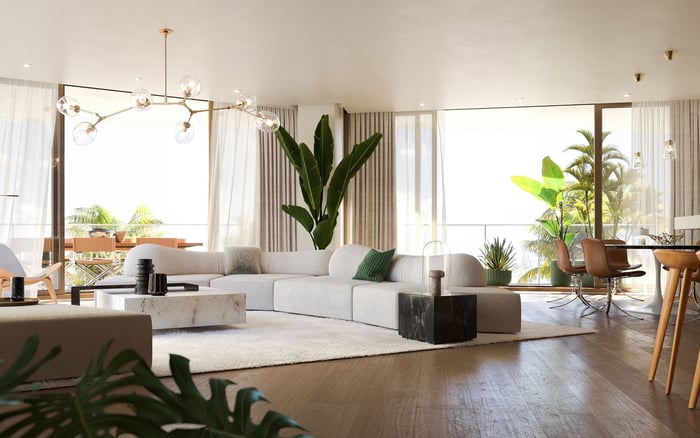
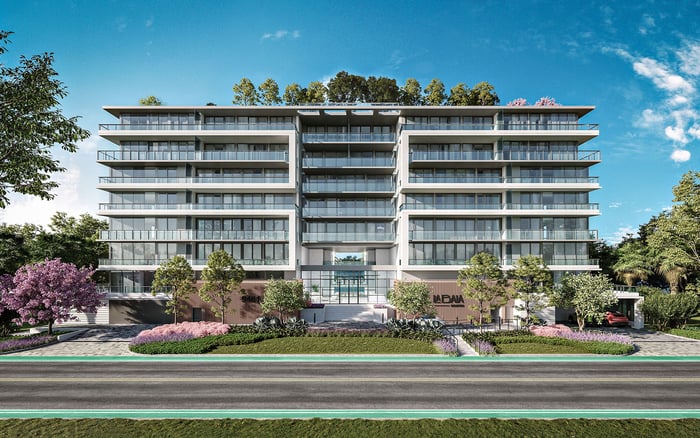
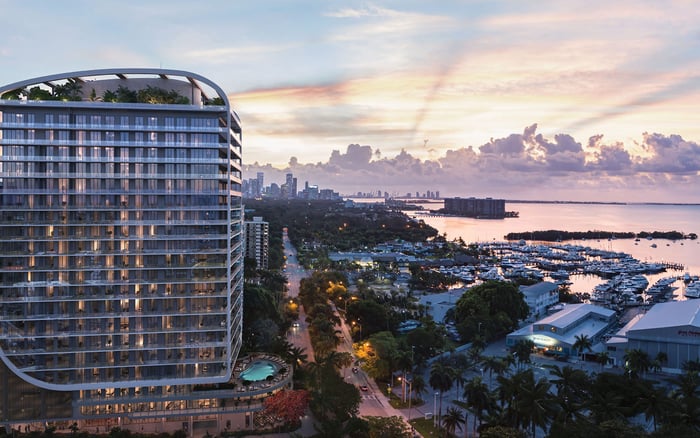
A discreet buyer-focused comparison of North Bay Village and Bay Harbor Islands through the lens of club-centric living, privacy, family routines, water access, and long-term lifestyle fit.
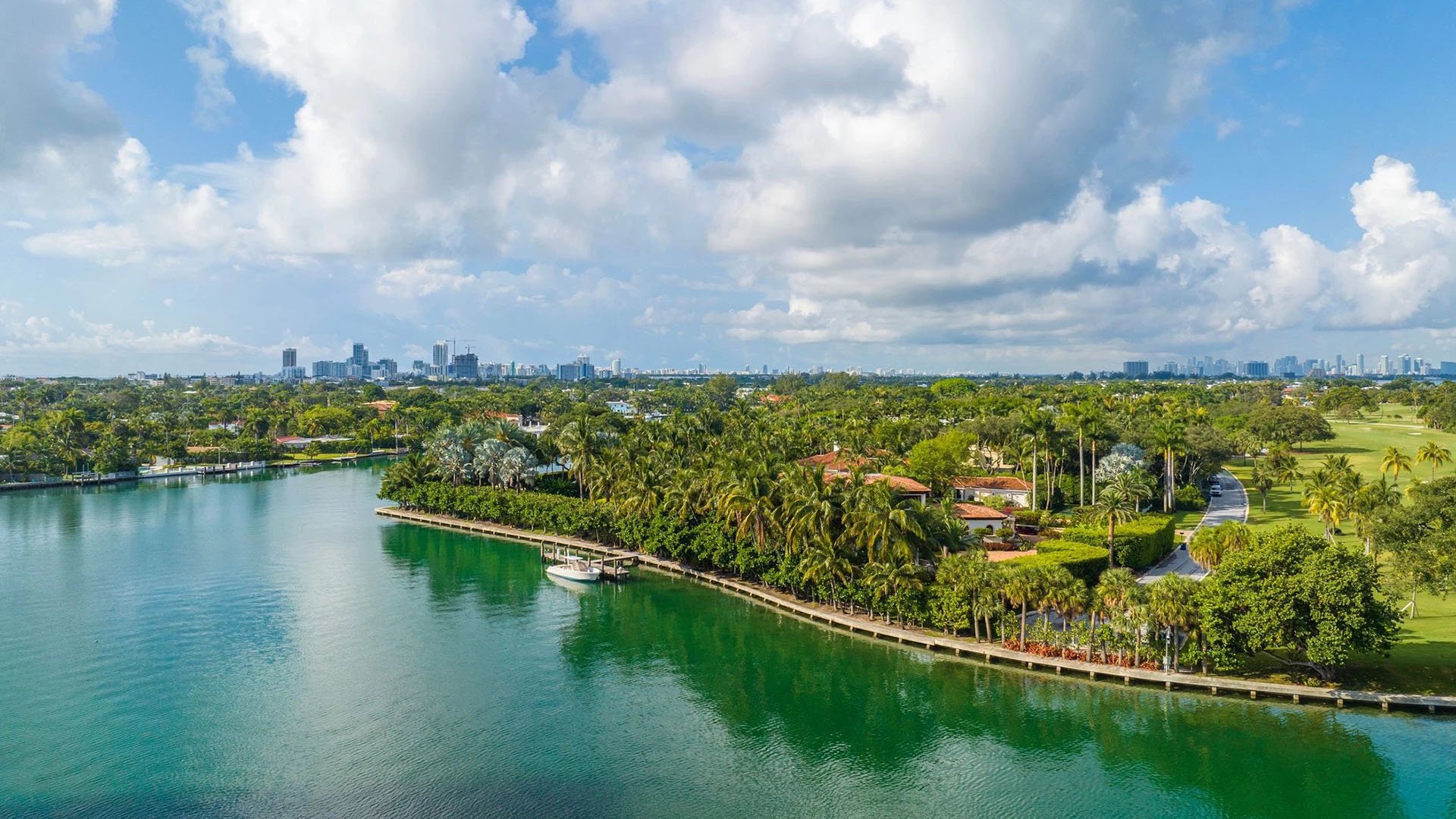
For South Florida’s most discerning buyers, “club-centric” living is not simply about having a pool deck, a lounge, or a wellness room. Those elements are now table stakes. The real question is whether a residence lets the club become part of the day’s architecture: coffee after a morning workout, a quiet table after school drop-off, an easy swim before dinner, a guest arrival that feels considered rather than improvised.
That is why the comparison between North Bay Village and Bay Harbor Islands deserves a more nuanced reading. Both appeal to buyers who want a residential setting with access to Miami’s broader energy. Yet the club lifestyle expresses itself differently in each place. One feels more outward, social, and water-facing. The other tends to reward privacy, household rhythm, and a quieter sense of belonging.
For search purposes, buyers may see these markets abbreviated as North-bay-village and Bay-harbor, but the emotional difference between them is not abbreviated at all. It is felt in how one entertains, how children move through the week, how often guests visit, and whether the club is a stage or a sanctuary.
A club-oriented residence should do more than ornament a brochure. It should reduce friction. At its best, it brings fitness, dining, social space, pool culture, wellness, service, and guest hospitality into one natural routine. When it works, the buyer uses private amenities not as occasional indulgences, but as an extension of home.
This distinction matters because many affluent households already belong to private clubs, dine well, travel often, and maintain layered social calendars. A building or neighborhood that claims a club atmosphere must therefore offer something more personal: immediacy. The resident should not have to stage a production around every workout, children’s afternoon, meeting, swim, or informal drink.
In that sense, a true club lifestyle is measured less by spectacle than by repeat use. The question is not, “Which address sounds more glamorous?” It is, “Where will this household actually live better on a Tuesday?”
North Bay Village is often compelling for buyers who want residential life to feel connected to movement, water, and a broader metropolitan pulse. For the club-centric buyer, that can mean a lifestyle in which amenities serve as a social bridge. The residence is not only a private retreat; it is also a launch point for entertaining, meeting, and remaining visible within the city’s evolving luxury conversation.
This profile tends to suit owners who prefer a more animated home base. They may be seasonal residents who want the building’s private spaces to help them reconnect quickly when they arrive. They may be professionals who want wellness and hospitality close at hand. They may be empty nesters who prefer a residence that feels less isolated and more plugged into Miami’s daily electricity.
The appeal becomes especially strong when club features are used for informal hosting. A private dining room, lounge, pool terrace, or wellness setting can let residents entertain without turning the home itself into the event. That is a subtle but meaningful luxury: the ability to be social while preserving the privacy of the residence.
For buyers who use the word marina as part of their lifestyle vocabulary, or who care about the possibility of a boat slip in the broader ownership conversation, the water-oriented mindset can become central. Not every residence will solve that need, and every buyer should verify specifics carefully, but the desire itself often belongs naturally to this side of the comparison.
Bay Harbor Islands can appeal to a different kind of club-centric buyer: one who values the club not as a place to be seen, but as a private support system. Here, the stronger question is often domestic. How does the residence help a family operate? How does it support quiet wellness, measured social life, and everyday ease that does not need to announce itself?
This is where a boutique sensibility can matter. Some buyers prefer a smaller-feeling environment, even within a highly serviced property, because it allows the club component to feel familiar rather than performative. The lounge is not a scene. The pool is not necessarily a spectacle. The amenity level is judged by comfort, discretion, and whether residents feel recognized without feeling observed.
For families, the conversation may also include private-school routines, household logistics, visiting relatives, after-school rhythms, and the importance of calm transitions. A club-centric building in this context is valuable when it simplifies the family calendar. It becomes the place where wellness, gathering, and decompression are close enough to use, but refined enough not to disrupt the home’s privacy.
Bay Harbor Islands may therefore matter more to the buyer who wants the club to be dependable rather than dramatic. The amenity is not the point of the purchase. It is the quiet infrastructure that makes the purchase feel intelligent five years later.
The answer depends on the buyer’s relationship with social life. If the club is meant to expand the owner’s Miami presence, North Bay Village may carry the stronger emotional case. It suits a buyer who wants the residence to participate in the city’s tempo and sees amenities as a platform for hospitality, wellness, and casual connection.
If the club is meant to protect time, Bay Harbor Islands may matter more. It suits the buyer who wants the benefits of a refined residential ecosystem without making every shared space feel like an event. In that world, the most important amenity may not be what photographs best, but what makes the household feel more composed.
This is the central distinction. North Bay Village is compelling when the club lifestyle is outward-facing. Bay Harbor Islands is compelling when the club lifestyle is inward-supporting. Both can be luxurious. Only one is likely to align with how a particular buyer truly lives.
A serious buyer should begin with a use-pattern audit. How often will the fitness facilities be used? Will the pool be a daily ritual or a weekend gesture? Will guests stay often? Is the private dining room a practical advantage or a rarely used talking point? Does the household want neighbors to become part of its social fabric, or does it prefer anonymity?
The answers often reveal the better geography. Buyers who imagine frequent hosting, spontaneous meetups, and a more visible Miami lifestyle may find North Bay Village more aligned. Buyers who imagine quiet mornings, family structure, controlled privacy, and a lower-volume social rhythm may lean toward Bay Harbor Islands.
It is also wise to separate club quality from club quantity. More spaces do not automatically create better living. The finest amenities are those residents can use easily, repeatedly, and without ceremony. A beautiful room that sits unused is not a lifestyle advantage. A modestly described space that becomes part of daily life may be invaluable.
Club-centric living matters most where it changes the way a household actually functions. North Bay Village may be the stronger choice for buyers who want a residence that feels connected, social, and outward-facing. Bay Harbor Islands may be the stronger choice for buyers who want the club experience to reinforce calm, privacy, and routine.
The best decision is not a ranking of neighborhoods. It is a match between temperament and infrastructure. In the ultra-premium market, that is often the difference between an impressive acquisition and a deeply satisfying home.
Is North Bay Village better for a social club lifestyle? It may be better for buyers who want amenities to support entertaining, movement, and a more outward-facing residential rhythm.
Is Bay Harbor Islands better for privacy? It may appeal more to buyers who want club features to feel discreet, calm, and integrated into family or personal routines.
Which area is better for families? Families should focus on daily logistics, privacy, school routines, and how often shared amenities will genuinely simplify the week.
Does club-centric living require a large amenity program? No. The most valuable amenity program is the one a resident uses often, comfortably, and without friction.
Should buyers prioritize wellness amenities? Wellness matters when it becomes habitual, especially for buyers who want fitness, recovery, and calm close to home.
Is a smaller residential setting a disadvantage? Not necessarily. Some luxury buyers prefer a more intimate environment because it can feel more personal and discreet.
How should boat-oriented buyers approach the comparison? They should verify all water-access and docking specifics property by property rather than assuming suitability from geography alone.
Which market feels more understated? Bay Harbor Islands may feel more understated for buyers who prize quiet routines over a highly social residential atmosphere.
Which market feels more connected to Miami energy? North Bay Village may feel more connected for buyers who want their residence to participate in a broader social current.
What is the most important decision factor? The deciding factor is how the household will use the club spaces every week, not which address sounds more impressive.
For a confidential assessment and a building-by-building shortlist, connect with MILLION.
If branded residences are on your mind — as a home or as an allocation — we would be glad to share what we are seeing, privately.
Begin a quiet conversation