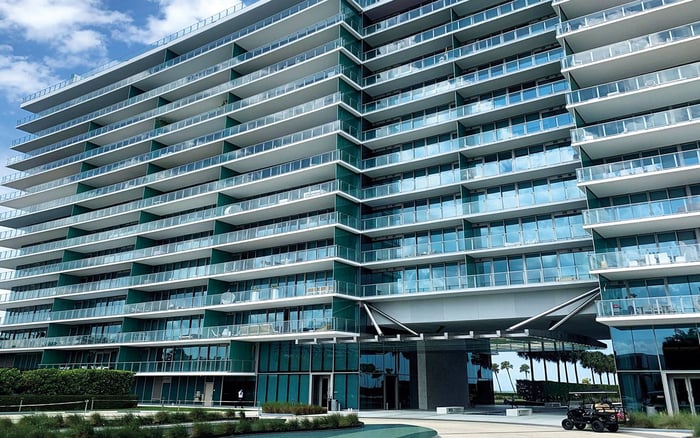
A buyer-oriented guide to evaluating theater-room ventilation at Oceana Key Biscayne, with emphasis on acoustic privacy, quiet HVAC performance, service access, humidity control, and long-term resale positioning.

At Oceana Key Biscayne, a theater or media room should be evaluated as part of the broader luxury-condominium experience, not as a decorative extra. The room may have velvet wall panels, refined millwork, sculptural lighting, and a calibrated screen, but its true quality is revealed only when the door closes, the equipment is running, and the space is occupied for more than a few minutes.
For a buyer, the question is not simply whether the air conditioning feels adequate during a brief showing. Theater-room ventilation must support privacy, quiet operation, temperature stability, humidity control, serviceability, and eventual resale positioning. In a waterfront South Florida condominium, those factors are not secondary. They shape how comfortably the residence lives and how confidently the feature can later be presented to another discerning buyer.
This is especially relevant for owners who view Oceana Key Biscayne through a long-term lifestyle lens. A private cinema can be a signature space for family evenings, guests, sports events, and quiet retreat. It can also become a maintenance complication if the mechanical design was not reviewed with the same rigor as the finishes.
The first question is acoustic privacy. Theater rooms are meant to contain sound, but ducts, returns, transfer grilles, wall cavities, and shared air paths can become unintended conduits. A room may appear acoustically isolated while still allowing voices, bass, or mechanical hum to move into adjacent living areas or toward shared building spaces.
A buyer should ask how supply air enters the room and how return air leaves it. If the theater relies on shared supply and return paths from a neighboring living area, privacy may depend on more than the door and wall assembly. If the room has dedicated zoning, the next question is whether that zoning is genuinely quiet and responsive during real use.
Privacy also includes discretion. In a luxury condominium, service staff, guests, and family members may move through the residence at different times. A theater that leaks sound into corridors or nearby bedrooms can undermine the very reason the room exists. The most elegant media room feels sealed from daily life without feeling airless.
A theater room is less forgiving than a bedroom or family room. Fan noise, air rush, vibration, grille rattle, or cycling equipment can become noticeable as soon as the soundtrack softens. In premium residences, silence is not the absence of design. It is part of the design.
During a showing or inspection, ventilation should be tested with the doors closed, seating occupied if possible, lighting dimmed, and AV equipment active. A brief walk-through can miss how a fan ramps up after the room warms, or how airflow becomes audible during a longer viewing session. The buyer should listen from inside the room and from adjoining spaces.
Mechanical vibration also matters. If the fan-coil unit, ductwork, or access panel sits near the theater envelope, the room may transmit low-level hum that competes with the audio system. The goal is not merely cold air. The goal is controlled, quiet air that disappears into the experience.
A theater room can behave differently from the rest of a residence. Closed doors, upholstered walls, equipment heat, recessed lighting, and multiple occupants can shift the load quickly. A room that feels comfortable during a five-minute visit may become warm or uneven during a full screening.
Temperature stability should therefore be evaluated under realistic conditions. Ask whether the room can hold a comfortable set point while the AV system is operating and the door remains closed. Notice whether some seats feel cooler than others, whether air blows directly onto viewers, or whether the room becomes stuffy once the system cycles down.
Humidity control is equally important in a waterfront setting. South Florida living brings beauty, light, and sea air, but it also rewards careful mechanical planning. In a theater room, excess humidity can affect comfort, odors, fabrics, wall coverings, and the perceived freshness of the space. For buyers balancing Key Biscayne, oceanfront, waterview, resale, and second-home priorities, humidity performance is part of the ownership brief, not a technical afterthought.
The best theater rooms conceal complexity, but they should not bury it. Before purchase or renovation, buyers should understand how filters, fan-coil units, returns, dampers, and access panels are reached. If servicing requires removing custom panels, disturbing millwork, or interrupting specialty wall finishes, the room may become more expensive and inconvenient to maintain than it first appears.
Serviceability is a luxury issue because it affects continuity. A room that is difficult to service may be neglected, and neglected ventilation eventually reveals itself through noise, uneven comfort, odor, or visible wear around vents and access points. In a residence positioned for high-end living, maintenance should feel planned rather than improvised.
Ask to see the access points. Confirm whether they are large enough for practical service. Understand whether filters can be changed without a contractor dismantling the room. If a renovation is contemplated, mechanical access should be protected before aesthetic decisions are finalized.
Buyers should identify the actual HVAC configuration before assuming changes are simple. A residence may involve centralized chilled water, fan-coil units, split systems, VRF, or another arrangement. Each configuration has different implications for zoning, duct routing, access, and modification.
High-rise condominium architecture can limit where supplies, returns, and exhaust paths may be moved. Slabs, shafts, structural elements, ceiling heights, association rules, and shared building systems can all affect feasibility. The theater room may look like an independent space, but its ventilation may be connected to broader building infrastructure.
This is why mechanical review should occur before purchase negotiations conclude or before renovation drawings become too ambitious. An engineer or qualified mechanical specialist can help distinguish between a simple adjustment, a meaningful upgrade, and a change that may be impractical within the condominium envelope.
Ventilation upgrades should be reviewed for engineering feasibility and condominium-association approval. In a luxury building, the question is not only whether a contractor can perform the work. It is whether the proposed work respects building systems, shared elements, noise expectations, access requirements, and approval procedures.
For resale, performance matters. A theater room that photographs beautifully but performs poorly may disappoint once a buyer sits down and closes the door. A quiet, comfortable, well-serviced room can strengthen the perceived quality of the residence because it signals care beneath the surface.
At Oceana Key Biscayne, the strongest theater-room narrative is not excess. It is refinement. The room should feel private, composed, easy to enjoy, and easy to maintain. Those attributes travel well from owner to owner, especially in a market where sophisticated buyers often understand that luxury is measured in systems as much as surfaces.
Begin with use. Sit in the room with the door closed and imagine a full-length film, a championship game, or a family gathering. Does the air feel fresh after ten minutes, or does the room begin to feel sealed?
Then listen. Turn the system on, lower the room volume, and identify fan noise, air rush, grille vibration, or mechanical cycling. Step outside the theater and listen for sound transfer into adjacent rooms.
Next, inspect access. Locate returns, filters, dampers, access panels, and any equipment serving the space. Ask whether service can be performed without damaging finishes. Finally, clarify zoning and approvals. Determine whether the room has dedicated control, whether the system ties into adjacent areas, and whether future adjustments would require association review.
A theater room should not be judged only by its screen size or seating count. In the upper tier of condominium living, invisible systems are what make the room feel effortless.
Why is theater-room ventilation important at Oceana Key Biscayne? It affects comfort, quiet, privacy, serviceability, and resale appeal, all of which shape the luxury living experience.
Should I rely on how the room feels during a showing? No. A short visit may not reveal heat buildup, fan noise, humidity, or air stagnation during a longer screening.
What is the first thing to ask about the HVAC? Ask whether the theater has dedicated zoning or depends on shared supply and return paths from nearby spaces.
Can ductwork affect privacy? Yes. Duct paths and air movement can transmit sound between rooms or toward shared building areas.
Why does quiet operation matter so much? Fan noise, air rush, and vibration can compete with the audio experience and reduce the room’s sense of refinement.
How should temperature stability be tested? Evaluate the room with doors closed, equipment running, and occupancy conditions that resemble actual use.
Is humidity control part of theater-room due diligence? Yes. In waterfront South Florida living, humidity control helps preserve comfort and the quality of finishes.
What should I know before planning ventilation upgrades? Identify the HVAC configuration and confirm whether duct routing or equipment changes are feasible in the building.
Do association approvals matter for HVAC changes? Yes. Ventilation modifications may require review because they can affect shared systems, access, and building standards.
Can a well-performing theater room help resale? Yes. A quiet, comfortable, serviceable theater can support stronger luxury positioning than one that only looks impressive.
If you'd like a private walkthrough and a curated shortlist, connect with MILLION.
If branded residences are on your mind — as a home or as an allocation — we would be glad to share what we are seeing, privately.
Begin a quiet conversation