A discreet underwriting guide for buyers weighing Tula Residences North Bay Village against The Well Bay Harbor Islands through scale, lobby privacy, and resident familiarity.

Comparing Tula Residences North Bay Village with The Well Bay Harbor Islands is less about choosing the more visible name and more about underwriting how each building may feel after closing. In the ultra-premium segment, the decisive questions often arise before a buyer studies view corridors or finish packages. How many residents share the arrival sequence? How visible is the lobby from the street? Will staff know the household, its guests, its schedule, and its preferences, or will the experience feel more anonymous?
That is the frame for this comparison. The Well Bay Harbor Islands can be discussed as a Bay Harbor Islands project, while Tula Residences North Bay Village should be assessed through verified offering materials, private presentations, and contract documentation before any buyer assigns premiums to specific features. The purpose is not to overstate what remains undisclosed. It is to clarify what a disciplined purchaser should measure.
This is a Bay Harbor Islands and North Bay Village conversation centered on boutique positioning, new-construction evaluation, and investment discipline. Those labels matter because they point to a buyer profile typically less interested in spectacle than in control, comfort, and long-term livability.
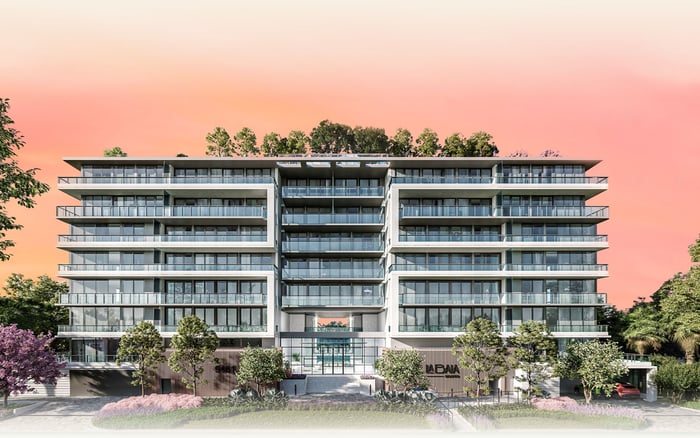
Scale is not merely the number of residences. It is the operational character of a building. A smaller or more controlled environment can support familiarity, lighter common-area traffic, and a more intuitive relationship with staff. A larger building may offer broader services, more amenity programming, and potentially deeper resale comparability. Neither is inherently superior. The right answer depends on how the household intends to live.
For a primary resident, scale should be studied through the weekday cadence. Morning elevator use, school and driver activity, valet rhythm, package handling, pet circulation, and guest registration all shape the perception of ease. For a second-home owner, the question may be different: will the building recognize a resident who arrives seasonally, and can it make each return feel seamless rather than transactional?
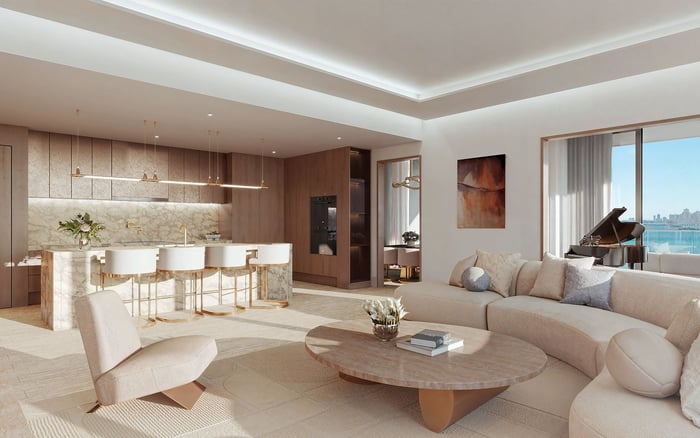
When assessing Tula Residences North Bay Village, buyers should verify the building’s final scale, service model, circulation plan, and amenity allocation through official materials. With The Well Bay Harbor Islands, the underwriting should similarly focus on how the building’s wellness identity translates into daily residential operations. A brand or concept can create expectation, but ownership value is determined by execution.
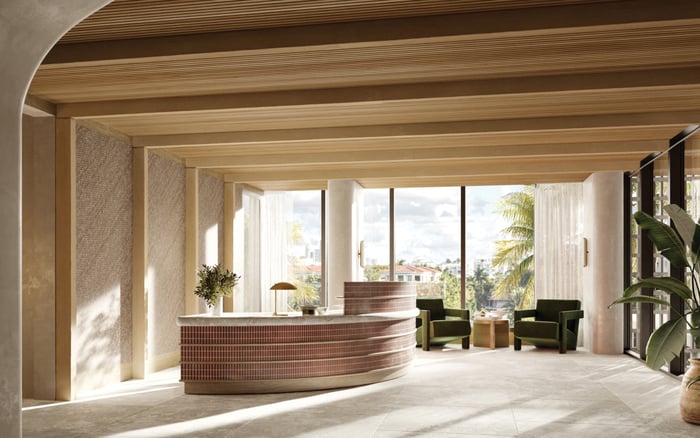
Lobby privacy is one of the clearest distinctions between a trophy address that photographs well and a residence that lives well. The lobby is where the building decides whether residents are quietly recognized or publicly processed. The best lobbies in South Florida’s luxury market choreograph arrival with discretion: limited sight lines from public areas, controlled guest movement, logical valet transitions, and seating that does not expose every resident to every visitor.
Buyers should underwrite four questions. First, is there meaningful separation between resident arrival, visitor arrival, and service access? Second, do elevators create unnecessary encounters or a calm residential sequence? Third, does the staff desk control movement without making the space feel institutional? Fourth, does the lobby encourage lingering, or does it support elegant passage?
For The Well Bay Harbor Islands, the wellness-oriented identity may attract buyers who value calm, ritual, and a softer daily tempo. That makes lobby privacy especially important, because a serene brand promise can be weakened if the arrival experience feels crowded or overly exposed. For Tula Residences North Bay Village, the same principle applies without assuming specifics: the lobby plan, staffing protocol, and circulation hierarchy should be reviewed before buyers treat privacy as a given.
In the best buildings, familiarity is not informality. It is precision. A resident should not have to explain the same preference repeatedly. A staff member should know when a household prefers discretion, when guests are expected, and when service should be present but nearly invisible. This is where boutique positioning can create real value if it is paired with strong operations.
Resident familiarity is particularly relevant for high-net-worth buyers who travel frequently, maintain multiple homes, or rely on household staff. A familiar building can reduce friction. It can also improve perceived security, since unknown patterns, unfamiliar guests, and irregular access become easier for trained staff to notice.
The caution is that familiarity must be earned. A small building without disciplined staffing can still feel inconsistent. A larger building with excellent systems can feel highly personal. Buyers should ask how the building trains staff, how guest authorization is handled, how maintenance requests are tracked, and whether management continuity is likely. Those questions are often more revealing than a rendering.
Location context should be weighed with the same discipline as the building itself. Bay Harbor Islands tends to appeal to buyers who value a quieter residential setting near established coastal and village-style amenities. North Bay Village often enters the conversation for buyers who want a central bayfront position with connectivity across Miami Beach, the mainland, and surrounding waterfront neighborhoods.
The point is not to declare one context more prestigious. The more useful question is where the owner’s real life occurs. A household anchored to Bal Harbour, Surfside, and Miami Beach may prize one rhythm. A buyer moving between downtown Miami, Miami Beach, and the northern beaches may find another rhythm more efficient. In South Florida luxury, minutes matter, but so does mental distance. A route that looks short on a map can feel different when repeated daily.
For new-construction buyers, this context also affects rental logic, resale language, and future buyer pools. An investment-minded purchaser should ask who the next buyer is likely to be: a wellness-focused end user, a second-home owner, a bayfront view buyer, or someone primarily seeking privacy within a quieter enclave.
Before comparing price per square foot or finish narratives, buyers should create a private scorecard. Assign weight to building scale, lobby privacy, staff-to-resident familiarity, elevator logic, parking experience, service access, amenity intensity, and neighborhood rhythm. The goal is not to reduce luxury to a spreadsheet. It is to keep emotion from overwhelming practical value.
For The Well Bay Harbor Islands, the buyer should test whether the project’s identity aligns with the household’s daily rituals. Does wellness mean meaningful calm, or simply a marketing layer? Does the building support privacy as much as programming? For Tula Residences North Bay Village, the buyer should confirm all project-specific details before underwriting any premium, particularly around scale, delivery expectations, amenities, and operations.
A sophisticated buyer can admire both ideas while still demanding proof. In this segment, the best purchase is rarely the one with the most dramatic language. It is the one where the resident experience, from porte cochere to elevator to front door, matches the way the owner actually lives.
Is this comparison a ranking of Tula Residences North Bay Village and The Well Bay Harbor Islands? No. It is an underwriting framework for evaluating how each option may serve a buyer’s privacy, scale, and lifestyle priorities.
What should buyers verify before relying on Tula-specific assumptions? Buyers should confirm building scale, residence count, amenities, pricing, timing, and service plans through official materials and counsel.
Why is building scale so important in luxury condos? Scale shapes elevator rhythm, staff familiarity, amenity crowding, visitor flow, and the way privacy feels day to day.
Does a smaller building always mean more privacy? Not always. Privacy depends on circulation design, staffing, access control, elevator planning, and how guests and services move through the property.
How should The Well Bay Harbor Islands be evaluated by wellness-oriented buyers? Buyers should look beyond branding and test whether the arrival, amenities, staff protocols, and residence experience support genuine calm.
What does resident familiarity mean in practice? It means staff recognize residents, understand preferences, manage guests discreetly, and create continuity without becoming intrusive.
Can lobby design affect resale value? Yes, because experienced buyers often read the lobby as a signal of privacy, operating quality, and the building’s long-term culture.
Which location is better, Bay Harbor Islands or North Bay Village? The better location depends on a household’s daily routes, school or club patterns, beach access preferences, and desired neighborhood rhythm.
Should investors weigh these projects differently than end users? Yes. Investors should focus on future buyer depth, rental logic where applicable, resale story, and whether the building’s identity remains durable.
What is the most important due diligence step before purchase? Review official documents, confirm operational assumptions, and walk through the arrival and circulation experience as if living there full time.
For a confidential assessment and a building-by-building shortlist, connect with MILLION.
If branded residences are on your mind — as a home or as an allocation — we would be glad to share what we are seeing, privately.
Begin a quiet conversation