A buyer-focused comparison of Continuum on South Beach and the House of Wellness Brickell concept, centered on smart-home readiness, privacy posture, and service expectations.
Continuum on South Beach and House of Wellness Brickell occupy the same rarefied conversation because both speak to buyers who expect privacy, service, and architectural confidence. Yet the more meaningful comparison is not whether either address can claim prestige. It is how each model answers three increasingly decisive questions: how smart the residence is, how much data the building environment may collect, and how quickly service responds when luxury becomes operational.
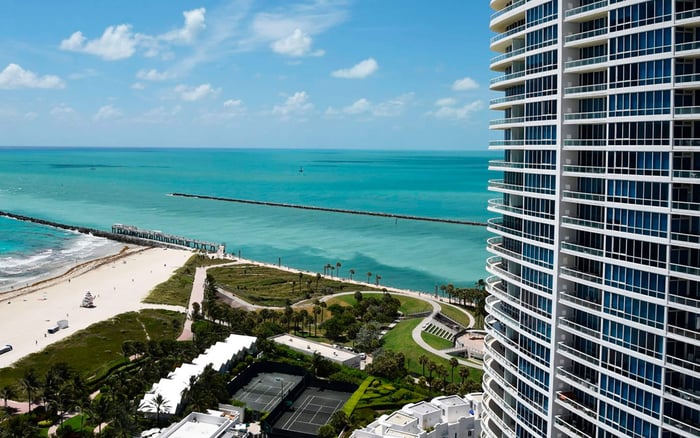
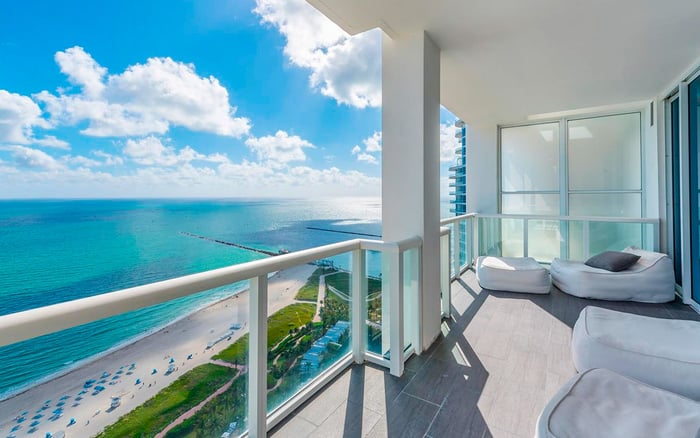
Continuum on South Beach is the legacy property in this pairing, an ultra-luxury oceanfront condominium associated with Miami Beach’s South of Fifth lifestyle. Its strength is not that it was conceived for a cloud-first residential era. It is that it has matured into a proven resort-style setting, with the rare scale, coastal position, and service culture that newer urban towers often try to recreate through programming.
House of Wellness Brickell, by contrast, should be evaluated as a contemporary wellness-branded Brickell proposition unless and until a buyer has reviewed definitive building documents, technology specifications, privacy policies, service standards, and sales materials. That distinction matters. Newness can imply native systems, but buyers should not confuse branding with verified infrastructure.
The central appeal of Continuum on South Beach remains physical and experiential: resort-scale living, coastal orientation, mature staffing, and an established ultra-luxury residential rhythm. For many buyers, that is precisely the point. The building does not need to win the technology race to remain compelling. Its value proposition is stability, setting, and confidence.
Still, smart-home readiness at Continuum must be studied at the residence level. As a legacy luxury condominium, its original infrastructure may predate today’s cloud-first smart-home and prop-tech standards. Renovated residences may vary materially in wiring, lighting controls, climate systems, shades, audiovisual architecture, access coordination, and vendor ecosystems. Two units in the same building can feel very different technologically.
That makes diligence more granular. Buyers should ask what has been modernized inside the residence, what still depends on legacy systems, and how easily a preferred integrator can upgrade or replace existing platforms. A spectacular view and a polished interior do not automatically answer questions about network reliability, device compatibility, cybersecurity posture, or the future serviceability of installed systems.
For search context, buyers often group this decision under Miami Beach, South of Fifth, oceanfront, and resale priorities. Those labels are useful, but they do not replace inspection. At Continuum, the right question is not whether the address is important. It is how far the specific unit, and the association’s broader workflows, have moved into the present.
A Brickell wellness concept speaks to a different luxury instinct. It suggests immediacy, vertical convenience, urban energy, and a more digitally mediated lifestyle. The likely buyer is not only asking for amenities, but for a building that can coordinate comfort, wellness, access, reservations, communications, and service through a contemporary interface.
That promise should be welcomed and interrogated in equal measure. A wellness-branded tower may offer a more native approach to smart-building infrastructure, but buyers should ask which systems are actually embedded, which are optional upgrades, and which depend on third-party applications. They should also ask whether personal preferences, access credentials, amenity usage, package activity, guest permissions, fitness routines, or environmental settings are collected, stored, shared, or retained.
For some buyers, app-mediated hospitality is a benefit. It can make service faster, more visible, and more measurable. For others, especially those who prize discretion, the very systems that make life seamless can feel too observant. The most elegant technology is not simply powerful. It is understandable, controllable, and quiet.
This is where Brickell’s density sharpens the contrast. In a denser urban tower, service responsiveness may rely more heavily on digital orchestration, resident portals, amenity scheduling, and workflow systems. That can be efficient, but it should be documented. Buyers should ask what happens when an app fails, when a request becomes urgent, or when a resident wants human discretion rather than digital tracking.
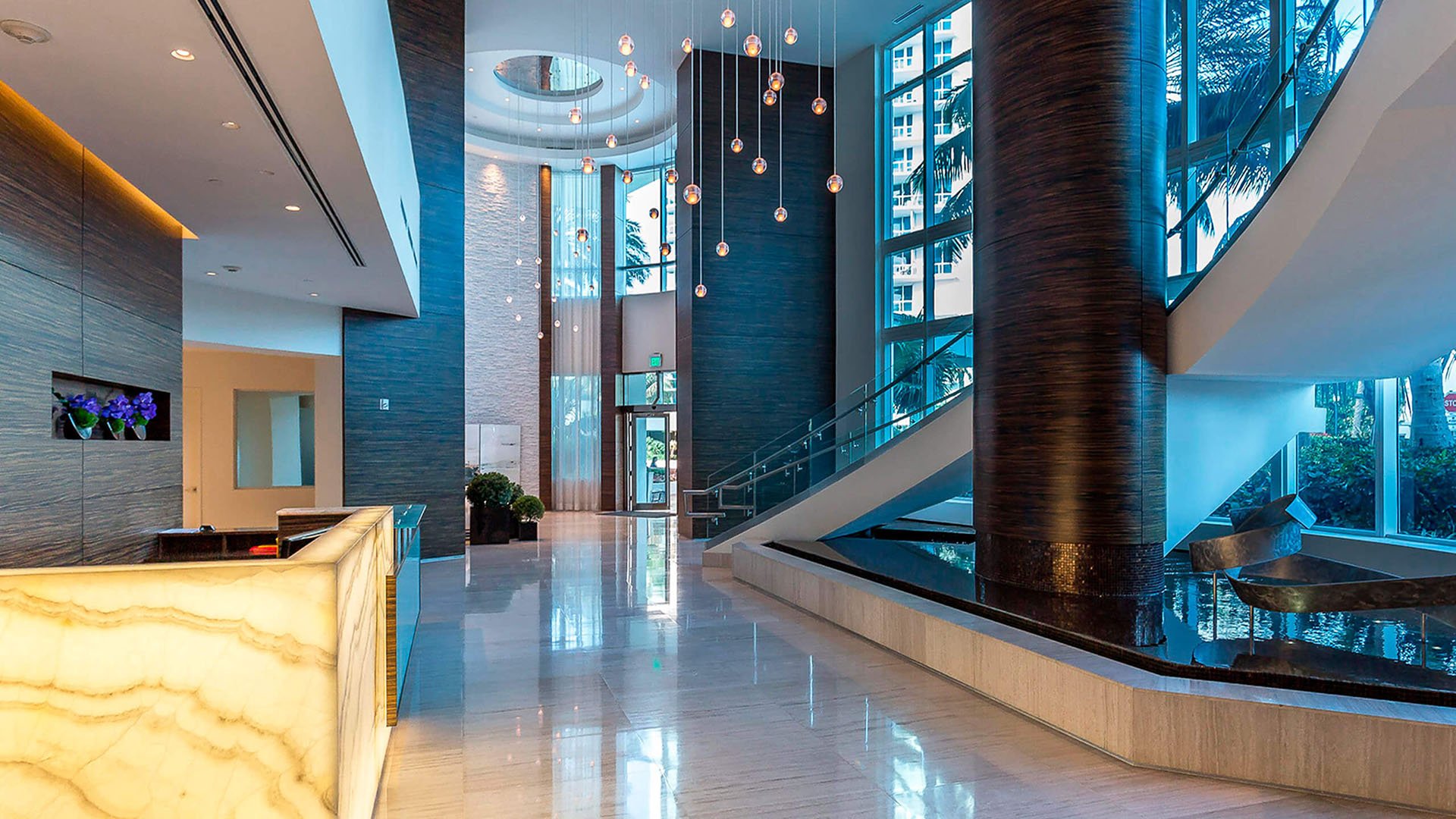
Continuum’s service advantage is best understood as staffing depth and long-established on-site culture. In buildings of this type, trust is often built over years, through repeated interactions, remembered preferences, and continuity of personnel. The luxury is not only that a request is completed. It is that the building already understands the resident’s standards.
A new Brickell wellness address may be designed around more formalized service channels. That can produce speed, transparency, and consistency. It can also introduce friction if every request must pass through an interface, queue, or standardized protocol. The buyer’s preference matters. Some residents want the trackability of a modern platform. Others want the privacy of a quiet call, a known face, and an answer that does not feel logged into a dashboard.
Neither model is inherently superior. Continuum’s risk is uneven modernization, especially from one residence to another. A new wellness concept’s risk is overpromising the harmony between technology, privacy, and hospitality before operations have been tested over time. Prestige may open the door, but service is proven in repetition.
For Continuum, begin inside the residence. Review the smart-home platform, network hardware, wiring pathways, access controls, lighting and shade systems, climate integration, and vendor support. Ask what has been replaced, what has merely been dressed over, and what would be required to bring the residence to a current standard.
Then study the building-wide layer. Selective modernization can be entirely sufficient in a legacy luxury condominium, but it should be understood clearly. Buyers should know how access, packages, guests, maintenance requests, communications, and emergency procedures are handled, and where analog service remains part of the experience.
For House of Wellness Brickell, request clarity before assuming capability. Ask for technology specifications, privacy language, data retention practices, opt-out rights, service-level expectations, amenity booking rules, guest access procedures, and vendor responsibilities. If wellness is part of the promise, buyers should understand whether that promise is architectural, operational, digital, or all three.
The decision ultimately turns on temperament. Continuum on South Beach will appeal to buyers who want an established resort envelope and are comfortable evaluating technology residence by residence. House of Wellness Brickell will appeal to buyers intrigued by a more contemporary urban wellness model, provided the technology, privacy, and service framework withstands scrutiny.
Is Continuum on South Beach considered a modern smart building? It is better understood as a legacy ultra-luxury condominium with selective modernization rather than a fully native smart-building platform.
Should buyers evaluate smart-home systems unit by unit at Continuum? Yes. Renovated residences may differ significantly in automation, wiring, controls, connectivity, and vendor systems.
What is Continuum’s primary advantage in this comparison? Its core strength is an established resort-style environment with mature service culture and a proven luxury setting.
Does House of Wellness Brickell automatically offer better technology? Not automatically. Buyers should review actual specifications, privacy policies, and service documents before assuming native smart infrastructure.
Why does data privacy matter in wellness-branded residences? Wellness and app-based services may involve personal preferences, access patterns, amenity usage, or environmental settings that require clear privacy controls.
Who may prefer Continuum’s model? Buyers who value discretion, coastal scale, established service, and potentially less sensor-heavy living may find Continuum especially compelling.
Who may prefer a Brickell wellness concept? Buyers who want urban convenience, coordinated amenities, and digitally enabled service may prefer the Brickell model if the documents support it.
Is older infrastructure always a disadvantage? No. In a proven luxury building, older infrastructure can be acceptable when residence-level upgrades and building workflows are well understood.
What should buyers ask about service responsiveness? They should ask how requests are made, tracked, escalated, and resolved, and whether human discretion remains available when needed.
What is the simplest way to frame this decision? Continuum offers retrofitted intelligence inside a proven resort envelope, while House of Wellness Brickell raises questions about native technology and privacy.
For a tailored shortlist and next-step guidance, connect with MILLION.
If branded residences are on your mind — as a home or as an allocation — we would be glad to share what we are seeing, privately.
Begin a quiet conversation