A discreet buyer's guide to comparing Tula Residences North Bay Village and The Well Bay Harbor Islands when verified details remain limited, with a focus on location logic, wellness positioning, and due diligence priorities.
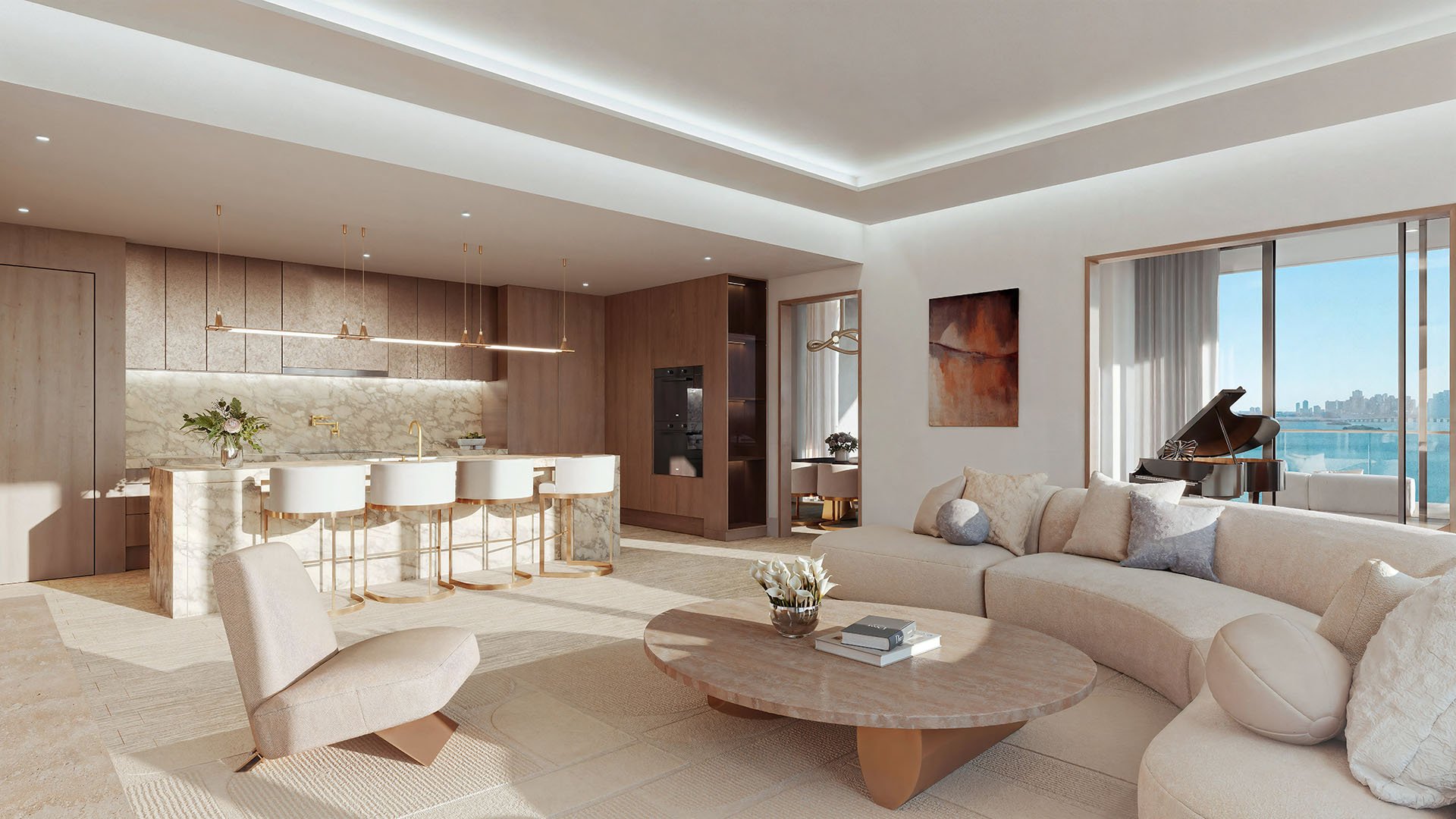
For a luxury buyer, the comparison between Tula Residences North Bay Village and The Well Bay Harbor Islands is less about declaring a simple winner and more about understanding what, exactly, is being purchased.
One proposition appears to lean into the promise of North-bay-village: a waterfront district still shaping its next chapter, where early entry can be compelling if product, pricing, and long-term neighborhood trajectory align. The other leans into Bay-harbor and a more legible wellness narrative, where the appeal is not just the residence, but a lifestyle concept buyers can grasp immediately.
That distinction matters. In ultra-prime South Florida, buyers are not merely acquiring square footage. They are buying coherence, conviction in the developer story, confidence in execution, and clarity around how the home will feel once the novelty of launch has faded.
A clean side-by-side comparison would normally rest on four pillars: current pricing, amenity depth, sales momentum, and operator credibility. Here, the more important reality is that publicly disclosed details remain limited. That means any serious assessment has to remain disciplined.
Tula is best understood, for now, as a specialized luxury development in North-bay-village with a concept that draws attention precisely because the enclave is evolving. The Well Bay Harbor Islands is likewise a specialized luxury development, but its identity is easier to frame through the lens of wellness branding and turnkey credibility. Beyond that, buyers should be careful not to mistake assumptions for evidence.
In practical terms, this is not yet a debate that can be settled by marketing language alone. It is a question of which project can substantiate its promise most convincingly when unit mix, delivery quality, services, and ownership experience are examined closely.
North-bay-village has become interesting to sophisticated buyers for a familiar South Florida reason: it sits at the edge of established luxury geographies while still carrying a sense of forward movement. For purchasers who prefer entering a neighborhood before it feels fully priced in, that can be compelling.
If Tula ultimately resonates, it will likely be because buyers see it as a more nuanced play on position. Not speculative in the loose sense, but strategic in the luxury sense: identifying where future lifestyle relevance may deepen over time. That logic is easier to appreciate when viewed alongside other North-bay-village developments such as Pagani North Bay Village and Continuum Club & Residences North Bay Village, both of which reinforce the idea that the area is being read as a design-conscious waterfront destination rather than a secondary option.
Still, a value proposition in this bracket is never just about buying into an improving district. It must be anchored by the product itself. Buyers at this level want confidence that the architecture, finish quality, privacy profile, services, and resale positioning justify the leap from an interesting narrative to a durable luxury asset.
Bay-harbor offers a different kind of confidence. Its appeal is not about waiting for a neighborhood to become legible. It already is. For many purchasers, that matters more than the possibility of capturing upside elsewhere.
The Well Bay Harbor Islands benefits from a framing that is immediately understandable: branded wellness integrated into a luxury residential setting. Whether that promise proves exceptional in practice depends on execution, but the core idea is clear. Buyers know what they are being invited into.
That matters because wellness in luxury real estate has matured. It is no longer enough to gesture toward a spa treatment room or a meditation terrace. Sophisticated buyers now ask whether the wellness identity is operationally real, thoughtfully programmed, and consistent with the building’s service culture. A project with that clarity tends to feel lower-friction for second-home owners, global buyers, and anyone who wants a residence with a pre-composed lifestyle script.
Bay-harbor already supports that kind of buyer psychology. In the surrounding market, projects such as La Baia North Bay Harbor Islands and Onda Bay Harbor reflect the area’s established boutique-luxury identity, where intimacy, polished design, and daily ease often matter as much as spectacle.
The temptation is to compare Tula and The Well as though they are offering the same aspiration through different branding. They are not. The more useful comparison is to ask which risks a buyer is more comfortable underwriting.
With Tula, the appeal may center on North-bay-village as an emerging luxury setting and on the possibility that a buyer secures a more favorable entry point relative to more established enclaves. The risk is that the buyer must become comfortable with less publicly legible proof of the finished lifestyle proposition.
With The Well Bay Harbor Islands, the attraction is the opposite. The project’s strongest argument is not necessarily abstract value, but the credibility of a turnkey concept. The risk, if there is one, is that buyers must determine whether the wellness positioning will feel genuinely differentiated once delivered rather than simply elegantly packaged.
That is why the key comparison is not price per square foot in isolation, nor brand recognition in isolation. It is operational truth. How real will the daily experience feel? How strong is the service architecture? How coherent is the buyer profile? Which residence will feel more persuasive three years after move-in, when novelty has given way to routine?
For buyers deciding between North-bay-village and Bay-harbor, three filters tend to sharpen the choice.
First, evaluate neighborhood fit before unit fit. North-bay-village appeals to buyers who like waterfront energy with a sense of future movement. Bay-harbor tends to suit those who prioritize an already refined, more composed village sensibility.
Second, press for specifics on wellness execution. If wellness is central to the purchase, broad language is not enough. Buyers should want clarity around staffing, programming, service integration, resident access, and what remains part of the core ownership experience rather than an optional add-on.
Third, consider resale storytelling. In luxury residential markets, homes are sold twice: once to the first buyer and again to the next. A residence with a crisp identity can perform better in buyer imagination than one whose narrative is still being assembled.
For some, Tula will feel like the sharper play because value is often created where conviction arrives before consensus. For others, The Well Bay Harbor Islands will feel inherently more investable because turnkey credibility lowers the burden of interpretation.
At this stage, the most intellectually honest conclusion is also the most useful: Tula looks like a neighborhood-led thesis, while The Well Bay Harbor Islands looks like an experience-led thesis.
If your luxury-buying instinct favors North-bay-village, Tula may represent the more intriguing proposition, especially for those who see emerging waterfront districts as the source of tomorrow’s prestige. If your instinct favors immediate clarity, Bay-harbor and The Well present a more complete emotional proposition today.
That does not make one superior. It makes them different in precisely the way sophisticated buyers should care about. In this comparison, the premium is not simply for views, finishes, or branding. It is for certainty. And until each project’s details are fully legible, the most astute buyer will focus less on promises and more on proof.
Is Tula Residences North Bay Village clearly the better value play? Not conclusively. Its appeal is tied to North-bay-village potential, but value depends on the final product, pricing, and execution.
Does The Well Bay Harbor Islands have stronger wellness credibility? It presents a clearer turnkey wellness identity. Buyers should still verify how that promise will operate day to day.
Are current pricing comparisons reliable between the two projects? No definitive public comparison is available here. Serious buyers should request current pricing and inventory directly.
Is Bay-harbor a more established luxury setting than North-bay-village? In buyer perception, yes. Bay-harbor generally reads as more immediately settled and boutique in character.
Who is Tula best suited for? Buyers drawn to emerging waterfront neighborhoods and to the idea of securing position before a submarket fully matures.
Who is The Well Bay Harbor Islands best suited for? Buyers who want a residence with a clearer lifestyle script centered on wellness and ease of use.
Should investors favor North-bay-village over Bay-harbor? It depends on strategy. North-bay-village may appeal to buyers seeking future upside, while Bay-harbor may appeal to those seeking immediate clarity.
Does wellness branding automatically improve long-term resale? Not automatically. Resale strength usually depends on whether the concept is executed in a way future buyers still find distinctive.
Are there comparable luxury projects nearby worth watching? Yes. In these submarkets, buyers often monitor projects like Pagani, Continuum Club & Residences, La Baia, and Onda.
What is the smartest next step before deciding? Ask for current availability, detailed amenity plans, service structure, and construction progress for both projects before committing.
For a tailored shortlist and next-step guidance, connect with MILLION.
If branded residences are on your mind — as a home or as an allocation — we would be glad to share what we are seeing, privately.
Begin a quiet conversation