A discreet buyer’s guide to private elevator access control in Fisher Island residences, focusing on permissions, guest protocols, service access, privacy, redundancy, and closing-stage diligence.
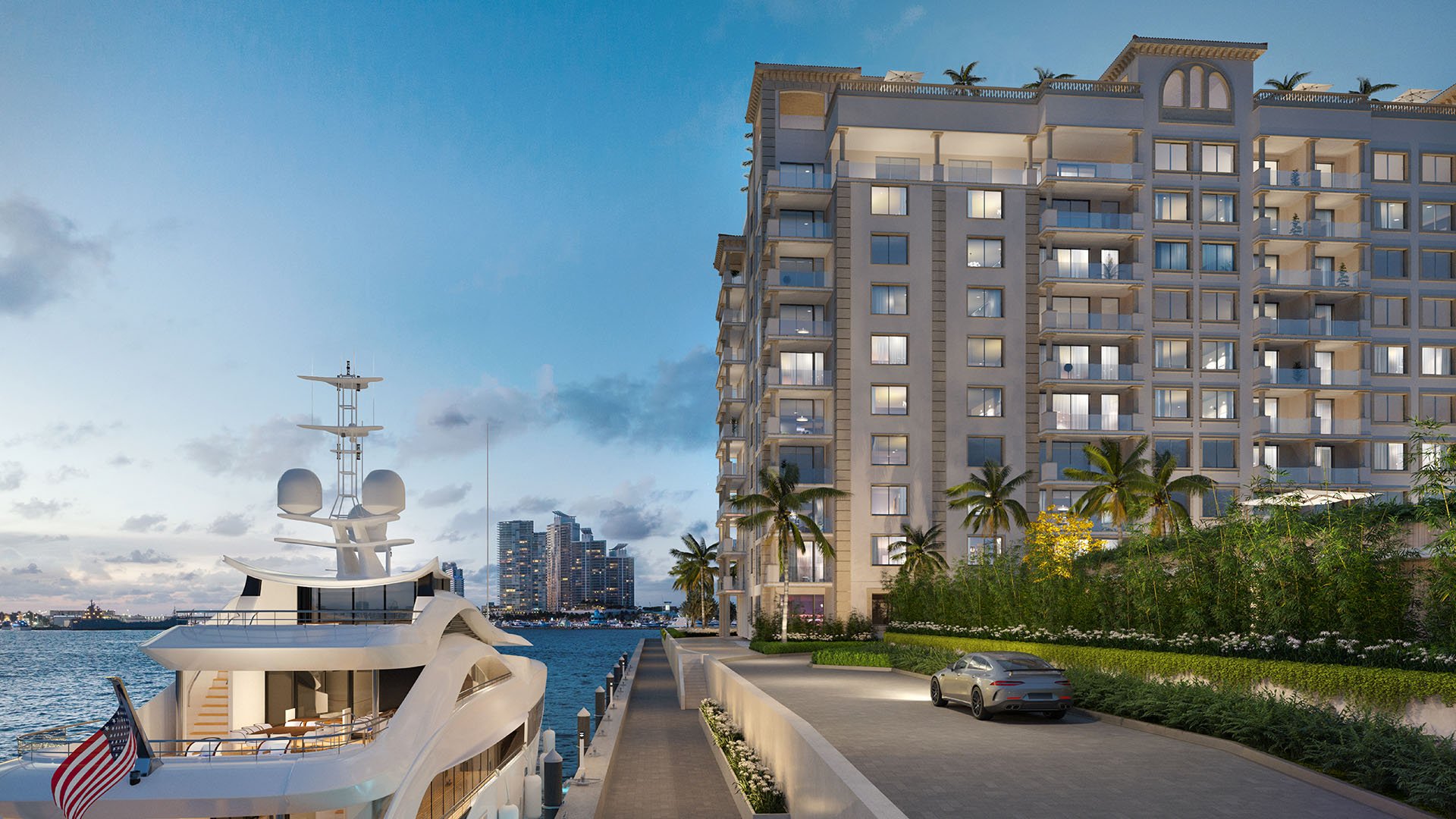
On Fisher Island, privacy is not a decorative amenity. It is part of the purchase thesis. Buyers weigh views, ceiling heights, terraces, arrival sequence, club lifestyle, and finish quality, yet the private elevator is often treated as a convenience. In practice, it is a controlled threshold between the building, the resident, invited guests, household staff, service providers, and the residence itself.
That threshold should be understood before signing, not after closing. This is especially true in a gated-community setting, where the broader arrival experience can feel reassuring while the in-building access details remain specific to each association, building, stack, and residence. A private elevator may open directly into a foyer, a shared vestibule, a semi-private landing, or a service zone. The distinction matters.
The most useful questions are rarely theatrical. They are operational. Who controls the credentials? What happens when a guest arrives? Can staff access be limited by day or time? How are lost devices revoked? Who sees the audit trail? These are not abstract concerns. They shape daily life in a waterfront home where discretion is expected.
Before focusing on technology, ask for a plain-language walkthrough of the path from property entry to your front door. The answer should cover residents, invited guests, household staff, delivery personnel, vendors, and emergency responders. If the elevator opens directly into the residence or a private foyer, ask what separates the elevator cab from the living area and how the home is secured when the elevator is in use.
For Fisher Island buyers considering residences such as The Residences at Six Fisher Island, the question is not simply whether access feels private. It is whether access can be managed in a way that suits the buyer’s household structure. A seasonal owner with a property manager has different requirements from a full-time resident with children, staff, and frequent guests.
Ask the sales team, association representative, or building manager to define the controlled points. Does access begin at the lobby, the elevator bank, the cab, the floor, or the residence entry? Is the elevator programmed by residence, by floor, by user, or by credential type? A refined building should be able to explain the difference without ambiguity.
The most important access-control question is not technological. It is governance. Who has the authority to create, modify, suspend, and delete elevator credentials? Is that authority held by the association, property management, front desk, security team, owner, or a third-party integrator? The answer determines how quickly access can be changed and who must approve the change.
A buyer should ask whether permissions can be tailored by category. Resident access should not necessarily match household staff access. Vendor access should not necessarily match family access. Guest access should be temporary, traceable, and revocable. If the system allows time-limited permissions, ask whether those permissions can be set in advance for recurring staff or one-time visitors.
For homes in low-density, estate-like settings such as The Links Estates at Fisher Island, the elevator question may arise alongside garage, gate, staff, and service-entry protocols. The objective is consistency. A highly secure elevator loses its value if adjacent access points are handled casually.
Luxury residences often depend on invisible choreography. Guests should feel expected, staff should be able to work efficiently, and vendors should not have unnecessary access to private areas. Ask how the building handles pre-registered guests, unannounced visitors, recurring domestic staff, drivers, chefs, medical support, pet care, housekeeping, and maintenance vendors.
The buyer should request examples. If a dinner guest arrives before the owner returns home, can the guest be sent to the residence? If a housekeeper works three days a week, can access be limited to those days and hours? If a vendor needs to service an appliance, is access routed through management, staff, or the owner? If a resident is traveling, who can authorize entry?
These details are particularly relevant in a residence where the elevator arrival is part of the home’s presentation. At Palazzo del Sol Fisher Island, as with any ultra-luxury condominium environment, the private arrival sequence should support both elegance and control. The point is not to make life difficult. The point is to make permissions deliberate.
Ask what credentials are used and how they are replaced. Buildings may use fobs, cards, keypads, mobile credentials, biometric systems, staff codes, or combinations of these tools. The technology itself is less important than the policy around it. A sophisticated credential that is not promptly revoked is still a vulnerability.
Before waiving contingencies, confirm how quickly a lost credential can be deactivated, who can request deactivation, and whether a written record is maintained. Ask whether credentials are assigned to named individuals rather than general categories. A credential tied to a person is easier to manage than one labeled only as staff, guest, or vendor.
Also ask whether the system can produce access logs for a specific residence and who may request them. A resident may not need routine reporting, but the ability to review access after an incident, staffing change, or dispute can be important. If logs exist, ask how long they are retained and who is permitted to view them.
A private elevator is not automatically a private vestibule. Ask whether the elevator opens into a fully private foyer, a semi-private landing, a shared corridor, or an anteroom with a separate locked residence door. Each layout creates a different privacy and security profile.
If the elevator opens directly into the residence or a private foyer, ask what happens if the cab arrives unexpectedly. Is there an interior lock, a secondary door, a camera, an intercom, or a release protocol? If the elevator serves more than one residence or more than one function, ask how the system prevents accidental stops, unauthorized floor selection, or service overlap.
At Palazzo della Luna Fisher Island, buyers comparing private-entry residences should consider the landing as part of the architecture. The vestibule is not merely transitional space. It is the ceremonial and secure hinge between common building systems and the private home.
Private passenger elevator access is only one part of the building’s circulation plan. Ask how service elevators, loading areas, staff routes, package rooms, storage rooms, and garage areas connect to the residence. A building can offer an impressive front-of-house arrival while still relying on service paths that require careful oversight.
A buyer should ask where deliveries are received, who signs for them, how oversized items are handled, and whether staff can reach the residence without using the private passenger elevator. If the home is being renovated, furnished, or staged after closing, service access may become especially important. The question is not only who enters, but how often, through which route, and under whose supervision.
For seasonal owners, this can determine how easily the residence is maintained while unoccupied. Ask whether management can coordinate supervised access, whether the owner must be present, and how permissions are documented when the owner is away.
Do not wait until the final walkthrough to ask access-control questions. Make them part of document review, association interviews, management conversations, and property inspections. If a representation matters to you, request it in writing from the appropriate party. Marketing language is not a substitute for operating rules.
The cleanest approach is to create an access-control checklist during due diligence. Include credential authority, guest protocol, staff access, vendor access, logs, emergency procedures, service elevators, garage entry, revocation timing, and post-closing onboarding. Then compare the answers with the condominium documents, house rules, management policies, and any technology manuals that are made available.
A buyer who values privacy should also ask what changes require board approval, management approval, or vendor work. If you plan to add interior cameras, smart locks, vestibule controls, or staff-management systems, confirm what is allowed before closing.
Is private elevator access always the same as direct residence access? No. It may mean controlled floor access, a private vestibule, or an elevator opening closer to the residence, depending on the building and layout.
Who should explain the elevator access system before I buy? Ask the seller’s representative, association, building management, and, when appropriate, the access-control vendor through approved channels.
Can I limit access for household staff? You should ask whether the building allows time-limited, role-specific, or person-specific credentials before assuming that it can be done.
Should guest access be temporary? In a privacy-focused residence, temporary and revocable guest access is generally preferable to broad or open-ended permissions.
Are access logs important? Yes, if they are available. Logs can help clarify who used a credential and when, subject to the building’s rules.
What should I ask about lost fobs or cards? Ask who can deactivate them, how quickly they can be revoked, and whether replacement credentials are tracked by user.
Does the service elevator matter as much as the private elevator? Yes. Service routes often determine how staff, deliveries, vendors, and maintenance reach the residence.
Can I add my own smart lock or camera near the elevator landing? Possibly, but you should confirm association rules, common-area restrictions, wiring requirements, and approval procedures first.
What if the elevator opens directly into my foyer? Ask about secondary locking, arrival alerts, intercoms, cameras, and procedures for preventing unexpected access.
When should I complete elevator access-control diligence? Complete it before key contract deadlines and before closing, so important answers can be documented and reviewed.
To compare the best-fit options with clarity, connect with MILLION.
If branded residences are on your mind — as a home or as an allocation — we would be glad to share what we are seeing, privately.
Begin a quiet conversation