A discreet buyer’s guide to aligning Bal Harbour luxury real estate decisions with capital gains timing, residency planning, liquidity events, and long-term wealth strategy.

For a Silicon Valley founder, executive, investor, or early employee, a move to Bal Harbour is rarely just a change of scenery. It often arrives alongside a liquidity event, a concentrated stock position, a business sale, venture distributions, or the disposition of a long-held California residence. The residence decision and the capital gains decision begin to inform one another.
The most refined buyers are not asking only what they can afford. They are asking when to buy, how to title the asset, how much liquidity to retain outside the purchase, and whether the timing of realized gains should shape the closing calendar. In that sense, Bal Harbour becomes more than a destination. It becomes a planning table.
This is not a substitute for tax, legal, or investment advice. It is a buyer-oriented framework for knowing which questions to raise before a contract, wire transfer, or major sale creates consequences that are difficult to reverse.
Capital gains planning begins with identifying what is actually being sold. Founder’s stock, vested equity, an investment portfolio, a primary residence, a second residence, a partnership interest, or a private company stake can each require a different conversation. The same is true for a buyer selling a Bay Area estate while reallocating public securities to fund an Oceanfront acquisition in South Florida.
Before touring, the buyer should understand three things: the size of the embedded gain, the likely timing of recognition, and the available liquidity after tax reserves. That last point is especially important in the luxury market, where the purchase price is only one part of the capital plan. Reserves, assessments, furnishings, insurance, philanthropy, family transfers, and future investment flexibility all belong in the same model.
A buyer considering Rivage Bal Harbour may view the home as a long-term primary residence, a second home, or part of a broader investment portfolio. Each intention can lead to a different planning posture. The question is not simply whether the residence is desirable. It is whether the acquisition fits the broader balance sheet after the gain has been addressed.
Relocating from Silicon Valley to Bal Harbour often brings a second question: where is the buyer truly resident for tax purposes? Buyers should treat residency as a matter of evidence and consistency, not as a marketing phrase. A driver’s license, voter registration, club memberships, physicians, school decisions, office location, travel calendar, charitable life, and the location of valuable personal property can all become part of a larger narrative.
The key is alignment. If a buyer claims that Bal Harbour is now home, the buyer’s calendar, documents, family routines, and financial life should make the same statement. This is especially relevant when a major gain is recognized near the time of relocation. A move that looks casual, incomplete, or temporary can invite avoidable uncertainty.
For many buyers, the most elegant approach is also the most disciplined: build the residency file before the gain event, not after. The purchase contract, move-in sequence, advisory meetings, and calendar management should be coordinated early.
Luxury real estate contracts often move faster than tax planning. That is a mistake when a buyer is relying on the sale of appreciated assets. If the gain event is uncertain, the purchase structure should preserve options. If the gain is imminent, the advisory team should evaluate whether closing before or after recognition changes the buyer’s position.
This is where discretion matters. A buyer may have substantial net worth but limited liquid cash before a transaction closes. Another may prefer to keep securities intact and use financing to maintain optionality. A third may want to realize gains deliberately in phases. None of these choices is inherently superior. The best structure is the one that gives the buyer control, privacy, and enough liquidity to make decisions without pressure.
In Bal Harbour, Oceana Bal Harbour sits within the kind of ultra-prime conversation where buyers compare not only views and finishes, but also timing, holding period, and long-term flexibility. Waterfront and Oceanfront real estate should be evaluated as part of a complete capital plan.
High-net-worth buyers often ask whether a residence should be acquired individually, through a trust, through an entity, or in another structure. The answer depends on family governance, privacy objectives, financing, estate planning, asset protection, insurance, and tax considerations. It should be addressed before the purchase agreement is signed.
A structure that is convenient for closing may not be ideal for long-term ownership. Conversely, a sophisticated structure can create its own administrative demands. The goal is not complexity. The goal is coherence. The buyer’s estate plan, marital plan, philanthropic plan, and succession plan should not be contradicted by the way the residence is titled.
This is especially relevant for buyers whose wealth is concentrated in one company or one exit. A Bal Harbour residence may be emotionally significant, but it is still an asset. It should be integrated into the same architecture as the rest of the family balance sheet.
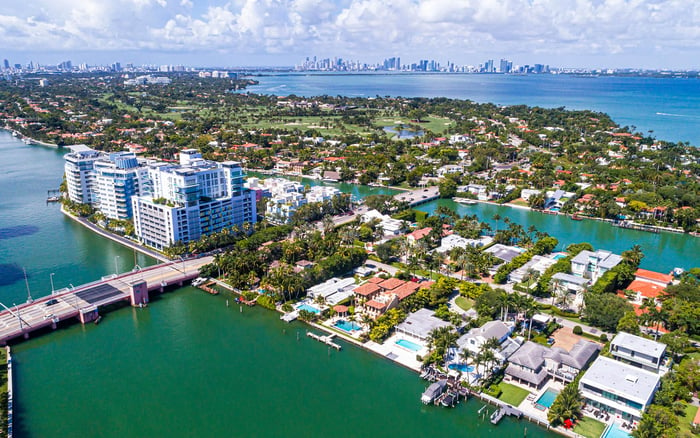
Bal Harbour’s appeal is highly specific: quiet luxury, proximity to Miami Beach, immediate access to the water, and a residential atmosphere suited to buyers who prefer refinement over spectacle. Yet the planning lens may also include nearby Surfside, Bay Harbor Islands, Fisher Island, Brickell, and Coconut Grove, depending on lifestyle and balance sheet objectives.
A buyer comparing Bal Harbour with Fendi Château Residences Surfside may be weighing a neighboring coastal setting. Another considering The Surf Club Four Seasons Surfside may be focused on a different hospitality-driven residential experience. A family that wants the conversation to include seclusion and estate-style positioning may also evaluate The Residences at Six Fisher Island as part of a wider South Florida review.
The point is not to chase every address. It is to decide which property best supports the buyer’s life after the transaction. Capital gains planning should make the purchase calmer, not narrower.
Before signing, a Silicon Valley buyer should assemble a coordinated advisory group: tax counsel, estate counsel, investment advisor, lender, insurance advisor, and real estate advisor. The conversation should cover the likely gain event, timing of the move, source of funds, liquidity reserves, ownership structure, and intended use of the property.
Buyers should also avoid letting the residence become the only planning priority. Concentrated equity, private company shares, philanthropic commitments, and family transfers may all require attention at the same time. The strongest strategy is usually written before the most emotional property decision is made.
For South Florida buyers, the most useful principle is simple: let the lifestyle decision and the tax decision inform each other, but do not let either one dominate. The best Bal Harbour purchase feels effortless only because the preparation was meticulous.
Should I buy in Bal Harbour before selling appreciated stock? It depends on liquidity, timing, and the expected gain. Coordinate the purchase calendar with your tax and investment advisors before committing funds.
Does moving from Silicon Valley automatically change my tax residency? No. Residency depends on a broader pattern of facts, documents, behavior, and intent that should be consistent over time.
Can capital gains planning affect which residence I choose? Yes. Timing, financing, reserves, and ownership structure can influence whether a particular property fits your broader balance sheet.
Should I use cash or financing for a Bal Harbour purchase? The right choice depends on liquidity, portfolio exposure, interest costs, and personal risk tolerance. Many buyers evaluate both before making an offer.
Is a trust or entity always better for privacy? Not always. Ownership structure should be reviewed with counsel because privacy, financing, tax, estate, and administrative issues can conflict.
What documents help support a relocation plan? Buyers often coordinate housing, personal records, professional relationships, family routines, and travel patterns so their life reflects the move.
Can I plan gains after I close on the residence? Some planning may still be possible, but the best options are often considered before the gain is realized or the contract is signed.
Is Bal Harbour suitable for a Second-home strategy? It can be, provided the buyer’s intended use, carrying costs, financing, and tax posture are reviewed before purchase.
Should I compare Bal Harbour with Miami Beach and Surfside? Yes. Miami Beach and Surfside can provide useful context for lifestyle, access, privacy, and long-term ownership preferences.
What is the first step for a buyer with a major liquidity event? Start with an integrated review of the gain, residency plan, purchase timing, and title structure before selecting the final residence.
For a confidential assessment and a building-by-building shortlist, connect with MILLION.
If branded residences are on your mind — as a home or as an allocation — we would be glad to share what we are seeing, privately.
Begin a quiet conversation