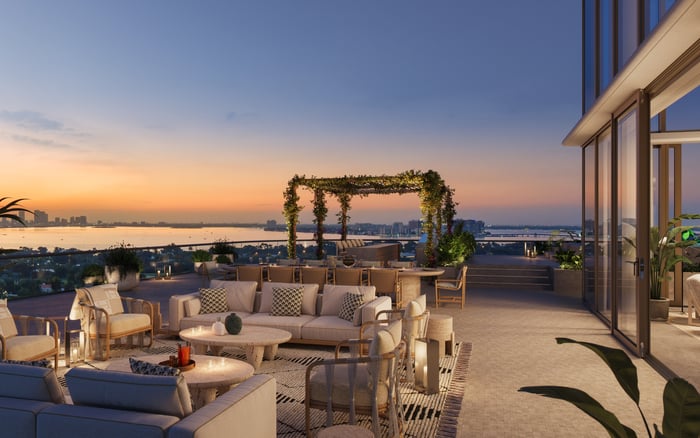
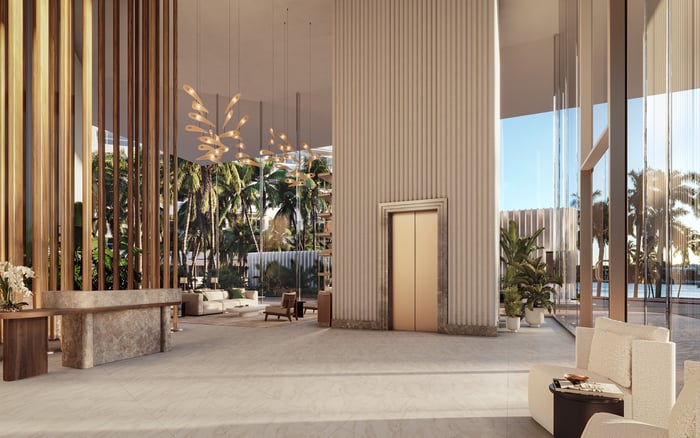
In Miami Beach, direct private elevator access is the quiet hallmark of true ultra-luxury: fewer neighbors, fewer touchpoints, and a daily arrival sequence that feels closer to a private home than a condominium. This editorial frames what that feature really means, how to evaluate it beyond the brochure language, and where buyers typically find it across Miami Beach’s most privacy-driven enclaves.
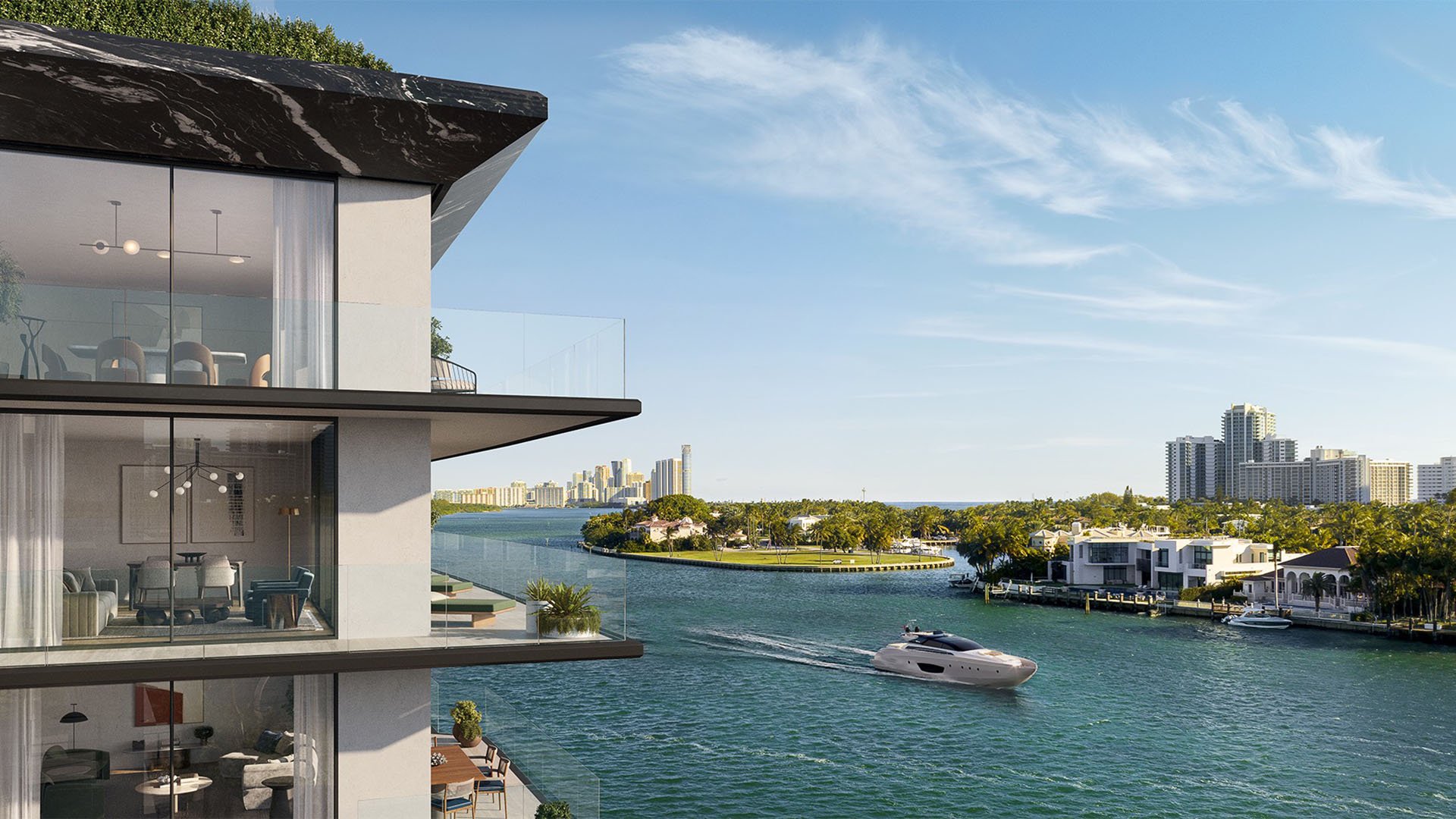
In Miami Beach, the most valuable luxury is not a view line or a designer nameplate. It is control. Direct private elevator access to each residence reduces the shared choreography of condominium living: fewer encounters in corridors, fewer unknowns at the front door, and fewer moments when “home” feels like a public venue. The result is a lifestyle that reads closer to a private house, especially for buyers who split time between multiple properties or arrive with staff, security, or high-profile guests.
At its best, this feature delivers a true arrival sequence. The elevator opens into a private vestibule or foyer, the front door becomes a real threshold, and the home’s first sightline is intentional. For many buyers, that sense of editorial control carries as much weight as square footage.
Still, “private elevator” is a term that gets stretched. Some buildings offer a keyed elevator that may still serve multiple residences per floor. Others reserve direct entry for select stacks or penthouses. If direct access to all residences is the requirement, diligence is less about brochure language and more about how the core is engineered-and how the access and ownership rights are documented.
When a development genuinely offers direct private elevator access to every residence, the elevator experience typically includes three elements.
First is exclusivity of the cab at arrival: a private elevator that opens directly into the home-not into a shared hallway, and not onto a semi-private landing with multiple doors.
Second is controlled entry. Look for key-only operation, programmed access, and a defined protocol for guests and deliveries. The strongest buildings make the owner’s elevator feel like a private address while sustaining the operational cadence of a tower.
Third is separation of “front of house” and “back of house.” True luxury planning keeps service traffic out of the owner’s arrival path. Even with direct elevator entry, the overall experience rises when there is a distinct service elevator system, discreet staging areas, and sound-buffered vestibules.
For buyers weighing boutique oceanfront living against larger resort-style towers, this can be the differentiator that keeps daily life serene-even in peak season.
The following ranking reflects Miami Beach’s privacy-first buyer priorities: discreet arrivals, limited touchpoints, and layouts that feel residential in spirit.
1. South of Fifth boutique towers - SoFi arrival culture
South of Fifth, often shortened to SoFi, remains the shorthand for a walkable, security-forward lifestyle at the ocean and the park edge. In this submarket, buyers tend to prioritize low-density living and discreet building circulation, and private elevator patterns are part of that expectation.
If your goal is a daily rhythm that feels more like an exclusive residential enclave than a typical beach condominium, SoFi is frequently the starting point.
2. Oceanfront boutique inventory - the “one-home-per-landing” mindset
Oceanfront boutique developments have long catered to owners who want the beach at their doorstep without the lobby traffic that can accompany larger resort programs. In these buildings, private elevator access is not an accessory; it is a planning premise: minimal doors per level, purposeful vestibules, and a sense that each floor is curated rather than maximized.
The practical payoff is straightforward: fewer neighbors, quieter cores, and a controlled arrival for owners and guests.
3. Wellness-forward beachfront design - privacy without heavy formality
A newer strand of Miami Beach luxury pairs privacy engineering with a lighter, wellness-driven sensibility. Instead of grand gestures, the experience leans into calm: softer acoustics, cleaner corridors, and entrances that feel composed rather than ceremonial.
For buyers who want private elevator access but prefer an understated mood over a “statement lobby,” this category can be especially compelling.
4. Full-service, club-like living - when operations matter as much as architecture
Private elevator access is only as strong as the building’s operational discipline. In full-service environments, the day-to-day choreography becomes the luxury: guest screening, package handling, vendor routing, and staff professionalism.
In other words, the elevator is the feature-but the service ecosystem is what preserves the feature.
5. Design-forward collector buildings - where the entry is part of the interior story
In certain Miami Beach developments, the elevator entry is treated as part of the residence itself. Sightlines, material continuity, and lighting design often begin at the elevator door, not at the living room.
For collectors who care about how a home reads the moment the doors open, these buildings can feel more bespoke-and more emotionally finished.
6. Bay-facing privacy plays - quiet water views with discreet circulation
Not every buyer wants the ocean’s energy. Bay-facing Miami Beach living often delivers calmer vistas and a more residential street atmosphere, especially outside the most touristed corridors. In these settings, private elevator access can feel even more valuable, because the entire lifestyle premise is quiet.
The right bay-side building can deliver a private-house feel while keeping you minutes from the best of Miami Beach.
7. Legacy ultra-luxury condos - established privacy expectations
Some of Miami Beach’s most prized residences sit in legacy buildings where the market expectation of discretion has been baked in for years. In these properties, private elevator access is often tied to a broader culture of controlled access, conservative staffing, and an ownership base that values privacy as a shared norm.
For certain buyers, that known quantity carries real value.
Because the term is frequently used as shorthand, verification should be precise. Ask whether each residence has direct access from a private elevator into the unit, and whether any floors or stacks deviate. Confirm whether there are shared vestibules or corridors, and how many doors are served by any given elevator bank.
Next, clarify the guest path. A residence can have private entry for the owner while guests arrive via a different elevator to a controlled landing. That can be ideal, but it should be intentional-not improvised.
Finally, evaluate service separation. Deliveries, housekeeping, and contractors should have a route that does not compromise the owner’s arrival sequence. If service elevators are shared, ask how scheduling and access are managed.
In Miami Beach, a higher floor can be spectacular, but privacy is not strictly vertical. Many buyers pay a premium for how a building performs at the thresholds: curb to lobby, lobby to elevator, elevator to home. Direct private elevator access reduces friction across that entire chain.
It also changes how owners use their residences. Entertaining becomes easier because the first impression is controlled. Staff can work without turning the home into a stage. Arrivals after travel feel restful instead of exposed.
This is why private elevator access often tracks with boutique scale, strong staffing, and an ownership culture that values discretion. It is not only a feature. It is a philosophy.
Miami Beach remains the reference point, but many buyers compare it with adjacent coastal markets for similar privacy engineering. In Sunny Isles, ultra-luxury towers often emphasize direct-to-unit arrival as part of the vertical estate concept. In Surfside and Bal Harbour, boutique beachfront buildings frequently lean into fewer residences per floor and cleaner circulation.
For readers exploring beyond Miami Beach, it can be useful to see how other elite projects position privacy as a core value. The oceanfront calm of 57 Ocean Miami Beach often comes up in conversations about boutique living and controlled arrivals, while the collector-grade positioning associated with The Perigon Miami Beach reflects how new inventory continues to push for more private, more residential experiences.
For those who want Miami Beach proximity with a different neighborhood cadence, Five Park Miami Beach is frequently discussed in the context of contemporary full-service living, and the private-arrival conversation naturally extends to iconic South of Fifth ownership at Apogee South Beach.
Across the causeway, buyers who prioritize total discretion sometimes compare Miami Beach condominiums with private-island living, where controlled access is the baseline. That broader lens can sharpen what “private elevator” should actually deliver inside a building.
Once private elevator access is confirmed, the next layer of value is execution.
Vestibules matter. A small private foyer that buffers sound and sightlines can make the home feel meaningfully more secure and composed. Door placement matters, too. If the elevator opens directly to the main living area without a threshold, the feature can read as exposed rather than elevated.
Acoustics matter. Elevator cores and mechanical rooms should not back up to primary bedrooms or quiet rooms. A beautiful plan can be undermined by vibration or corridor noise.
Storage and service zones matter. Residences that handle deliveries, housekeeping supplies, and luggage discreetly tend to feel calmer-especially for second-home owners who arrive with more than a weekend bag.
Ultimately, private elevator access is a proxy for a larger truth: the best buildings are designed for the way sophisticated owners actually live.
Does private elevator access always mean one residence per floor? Not necessarily. Some buildings provide direct-to-unit access for multiple residences per floor via separate elevator cabs.
Is a keyed elevator that opens to a shared hallway considered private access? It is more controlled than a standard elevator, but it is not the same as opening directly into the residence.
What is the difference between a private elevator and a semi-private elevator? Private typically means direct entry to one home; semi-private often means two or more homes share a landing.
Should I prioritize private elevator access over a larger amenity program? If discretion is your primary goal, private access often improves daily life more than added amenities.
How do guest arrivals work in buildings with direct-to-unit elevators? Many buildings route guests through a concierge-managed process with controlled access to the residence level.
Do private elevators improve security? They can, especially when paired with staffed entry, access control, and service separation.
Will private elevator access affect resale value in Miami Beach? In the ultra-luxury segment, it is often viewed as a premium feature that supports long-term desirability.
Is service-elevator separation really necessary if I have a private elevator? It is highly beneficial; it preserves the owner’s arrival experience and reduces day-to-day friction.
Can I modify the elevator entry vestibule after purchase? Sometimes, but changes are typically subject to building rules, approvals, and life-safety requirements.
Which Miami Beach submarkets most reward privacy-first buyers? South of Fifth and boutique oceanfront corridors are commonly favored for low-density, discreet living.
For a confidential assessment and a building-by-building shortlist, connect with MILLION Luxury.
If branded residences are on your mind — as a home or as an allocation — we would be glad to share what we are seeing, privately.
Begin a quiet conversation