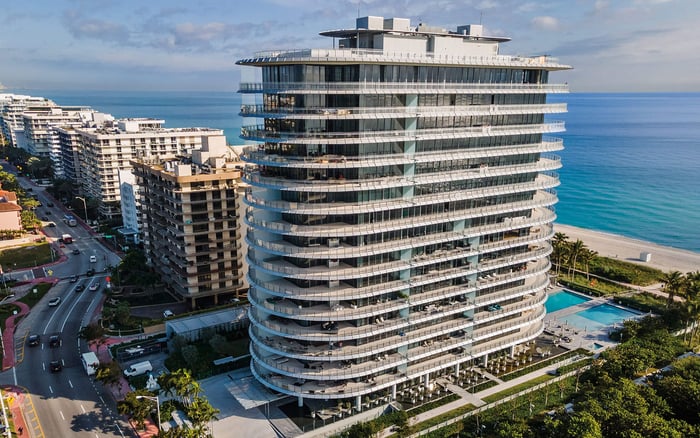
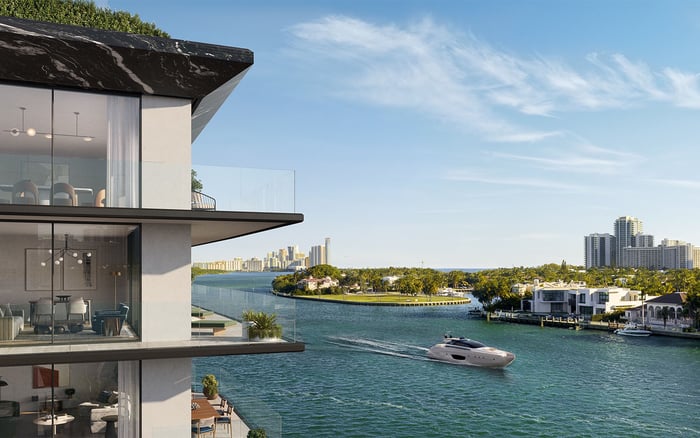
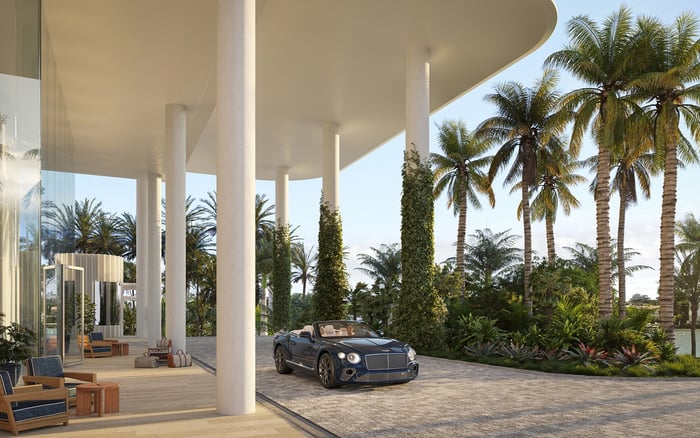
Two headline new-construction towers are redefining Miami Beach from different vantage points: The Perigon’s oceanfront quiet on Mid-Beach’s Millionaires’ Row, and Five Park’s sky-high, city-facing energy at the gateway to South of Fifth. Both are design-forward and privacy-conscious, but they deliver fundamentally different daily rhythms, view geometries, and resident cultures. This guide maps the decision to what matters most at the ultra-luxury end: exposure, density, arrivals, and how the building’s architecture shapes your sense of retreat.
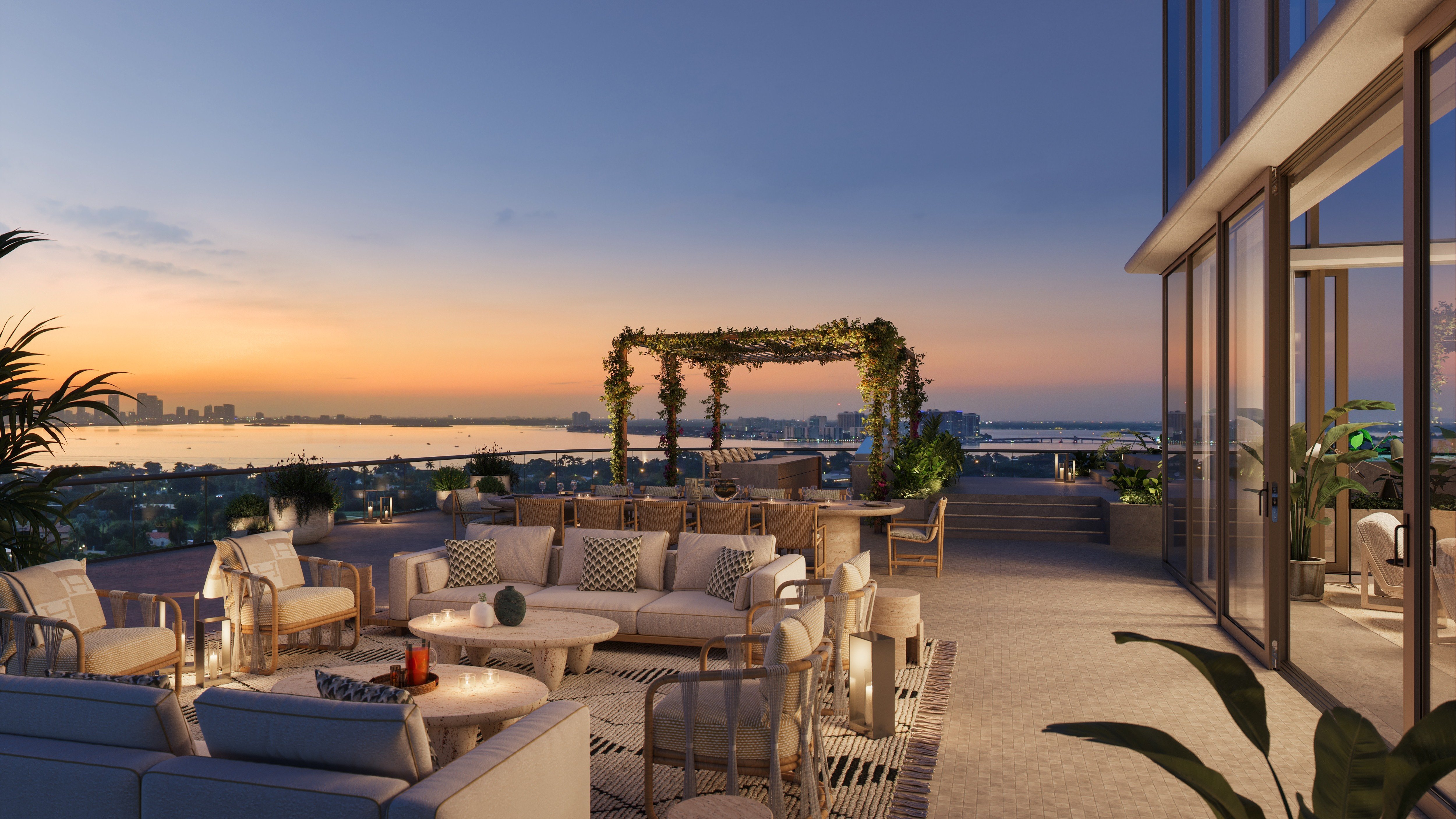
Miami Beach has become a city of micro-neighborhoods, where two addresses a few miles apart can deliver entirely different day-to-day experiences. In that context, The Perigon and Five Park offer a clear choice between two luxury archetypes.
The Perigon sits at 5333 Collins Ave on Mid-Beach’s oceanfront, a stretch long associated with discretion and a more residential pace. Five Park, located at 500 Alton Rd, anchors the gateway to South of Fifth, where proximity and spontaneity are part of the appeal. Neither approach is universally “better.” The right answer is the one that matches how you actually want to live here.
The Perigon’s position on Millionaires’ Row is decisively water-first. The site runs from the Atlantic Ocean to the bay side along Indian Creek, reshaping the lived experience of the building: you’re not simply near the water-you’re defined by it. For many buyers, that means mornings with sunrise exposure and evenings that catch softer, westward light.
Five Park’s setting is more urban in orientation. At Alton Road, you’re closer to the city’s movement and the speed of access that comes with it. It’s a strong match for owners who prefer to step directly into South Beach rather than retreat from it.
In this part of Miami Beach, buyers often cross-shop established South of Fifth icons for long-term livability and waterfront framing, including Continuum on South Beach, where the neighborhood’s residential character is part of the value proposition.
The Perigon is designed by OMA, with Rem Koolhaas’s studio language expressed through rotated, faceted volumes. The intent is functional, not decorative: the angles are designed to orient residences toward water views while limiting direct sightlines between neighbors. In practical terms, the architecture actively reinforces privacy.
Five Park is designed by Arquitectonica and defined by a rounded, elliptical form. That geometry is about opening view corridors around the building and amplifying the sense of sweep at elevation. Five Park is widely marketed as Miami Beach’s tallest residential tower at about 519 feet, and the perspective that height provides is central to its identity.
If you evaluate buildings in terms of “view choreography,” The Perigon tends to prioritize framed, water-oriented exposures, while Five Park leans toward panoramic outlooks that can include ocean, bay, and skyline depending on floor and orientation.
Density changes everything: elevator rhythms, amenity usage, hallway quiet, and whether a building reads as a private club or a more active residential community.
The Perigon is a boutique tower with 73 residences-an important distinction in Miami Beach, where many luxury buildings skew larger. It typically translates to lower resident traffic, fewer daily touchpoints, and a more consistent feel in shared spaces.
Five Park has 98 residences. That remains selective by broader metropolitan standards, but it does imply a larger owner community, more varied schedules, and a slightly more animated amenity cadence.
For many buyers, the question is straightforward: if you want the building itself to recede behind your lifestyle, a smaller community can matter as much as the view.
The Perigon includes private elevator entry for residences-an important decision for privacy and for the psychological shift from public Miami Beach to personal refuge. Private entry can feel especially relevant for second-home owners who want to arrive and reset quickly.
Five Park is positioned as fully finished, with 10-foot ceilings and extensive glass emphasized as part of the residential experience. The core premise is that the home functions as a light-filled viewing platform as much as a residence.
When comparing the two, focus on the difference between “privacy by plan” and “drama by elevation.” Both are legitimate forms of luxury; they simply satisfy different instincts.
For buyers familiar with other design-forward Miami Beach towers, the discussion often extends to how a building executes quiet luxury and day-to-day servicing. It’s common to benchmark against properties such as Setai Residences Miami Beach, where discretion and routine are part of the appeal.
The Perigon markets uninterrupted Atlantic Ocean and Biscayne Bay views, directly tied to its ocean-to-bay site condition. In a city where view corridors can be vulnerable to future development, dual-water exposure functions as a specific kind of hedge: it broadens what “the view” can mean over time.
Five Park’s height and form are positioned to deliver panoramic views from many residences, with the key caveat that exact exposure depends on orientation and floor. The thesis is clear: you’re buying a Miami Beach perspective that’s less about shoreline intimacy and more about scale.
On a personal level, The Perigon tends to suit buyers who want to watch weather, tides, and light move across the water. Five Park tends to suit buyers who want Miami as a living skyline.
Five Park offers a residents-only Canopy Club concept, positioned as multi-level club and lounge programming with wellness and work-friendly spaces. The aim is for the building itself to operate as a social and lifestyle hub.
Five Park also emphasizes connectivity via the Canopy Bridge to the South Pointe Park and Baywalk area, reinforcing the idea that the tower is part of a walkable daily circuit rather than a self-contained enclave.
The Perigon’s posture is different. Its boutique scale, water-to-water site, and private elevator entry align more naturally with an understated amenity culture-less programmed social life, more controlled calm.
When buyers want maximum retreat, they sometimes look north to similarly low-density, design-led beachfront living such as Eighty Seven Park Surfside, where the emotional center of the property is serenity rather than scene.
Market positioning is often framed this way: The Perigon is presented as ultra-boutique with higher entry pricing, while Five Park is positioned with a broader range that can include smaller residences, with pricing varying by stack, floor, and market conditions.
Translated into buyer logic:
For second-home owners, also factor in how frequently you expect to be in residence. A building designed around programmed amenity life can feel vibrant with weekly use, and slightly superfluous if your calendar is more seasonal.
Do you want your daily backdrop to be water first, or city first?
Is your idea of luxury more about controlled quiet, or curated social energy?
Do you place higher value on private elevator arrival, or on fully finished convenience?
Are you buying for framed exposures at lower density, or for panoramic sweep at height?
Which neighborhood pattern fits you: Mid-Beach’s quieter stretch or the South of Fifth gateway?
These questions tend to settle the choice faster than brochure language because they tie directly to lived experience.
Miami Beach luxury is no longer a single market. It’s a collection of tightly defined experiences: oceanfront sanctuaries, skyline-facing towers, and legacy enclaves that function like private worlds.
If you are evaluating The Perigon, it helps to view it as part of the next wave of oceanfront, design-forward, boutique inventory-similar in spirit to the limited-supply proposition that draws buyers to The Perigon Miami Beach itself and other low-density coastal addresses.
If you are evaluating Five Park, think of it as the South Beach counterpoint: taller, more outward-facing, and designed to connect you to the neighborhood’s movement. For buyers who want that gateway energy without giving up a residential product, it’s a compelling combination.
Either way, the most sophisticated choice is the one that fits your personal definition of Miami Beach: a retreat, or a vantage point.
Where is The Perigon located? The Perigon is at 5333 Collins Ave in Mid-Beach on an oceanfront site.
Where is Five Park located? Five Park is at 500 Alton Rd at the gateway to South of Fifth in South Beach.
How many residences are in The Perigon? The Perigon is a boutique tower with 73 residences, supporting lower density.
How many residences are in Five Park? Five Park has 98 residences, creating a larger owner community than The Perigon.
Who designed The Perigon? The Perigon is designed by OMA, led by Rem Koolhaas with partner Jason Long.
Who designed Five Park? Five Park is designed by Arquitectonica with a rounded, elliptical tower form.
What is distinctive about The Perigon’s architecture? Its faceted volumes are intended to angle homes toward water views and reduce sightlines.
Is Five Park really the tallest residential tower in Miami Beach? It is widely marketed as Miami Beach’s tallest residential tower at about 519 feet.
Do residences at The Perigon have private elevator entry? Yes, private elevator entry is a highlighted feature designed to support privacy.
What is the Canopy Club at Five Park? It is a residents-only amenity concept promoted as multi-level club and lifestyle space.
If you'd like a private walkthrough and a curated shortlist, connect with MILLION Luxury.
If branded residences are on your mind — as a home or as an allocation — we would be glad to share what we are seeing, privately.
Begin a quiet conversation