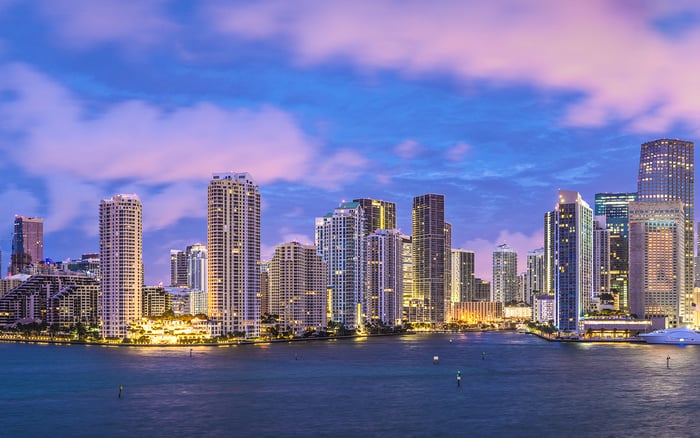
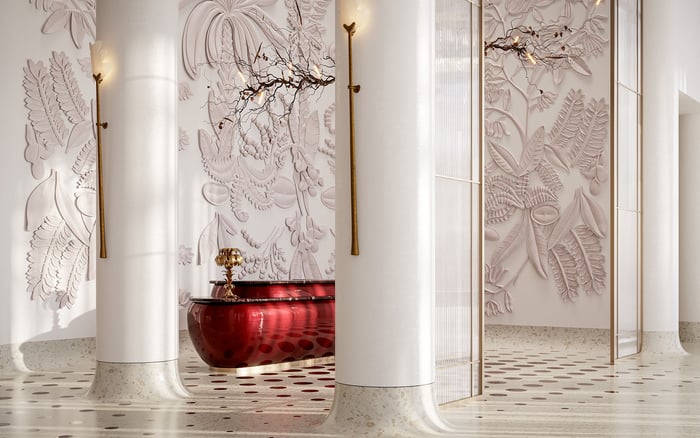
In Downtown Miami, the private cellar has evolved into an amenity that feels closer to a members club than a storage closet. Today’s most coveted towers treat wine as an experience: temperature-stable collections, curated tastings, and rooms designed to host quietly impressive evenings. With few public details consistently disclosed across buildings, the most useful way to evaluate “bespoke” wine spaces is to focus on what matters to owners: climate integrity, security and inventory control, hospitality-level presentation, and the ease of transitioning from cellar to dining. The result is less about labels and more about a lifestyle that rewards restraint, precision, and a sense of occasion. Below, MILLION Luxury outlines five archetypes of wine storage and tasting rooms that appear again and again in Downtown Miami’s best new and legacy towers, along with what discerning buyers should look for when the cellar becomes part of the purchase decision.
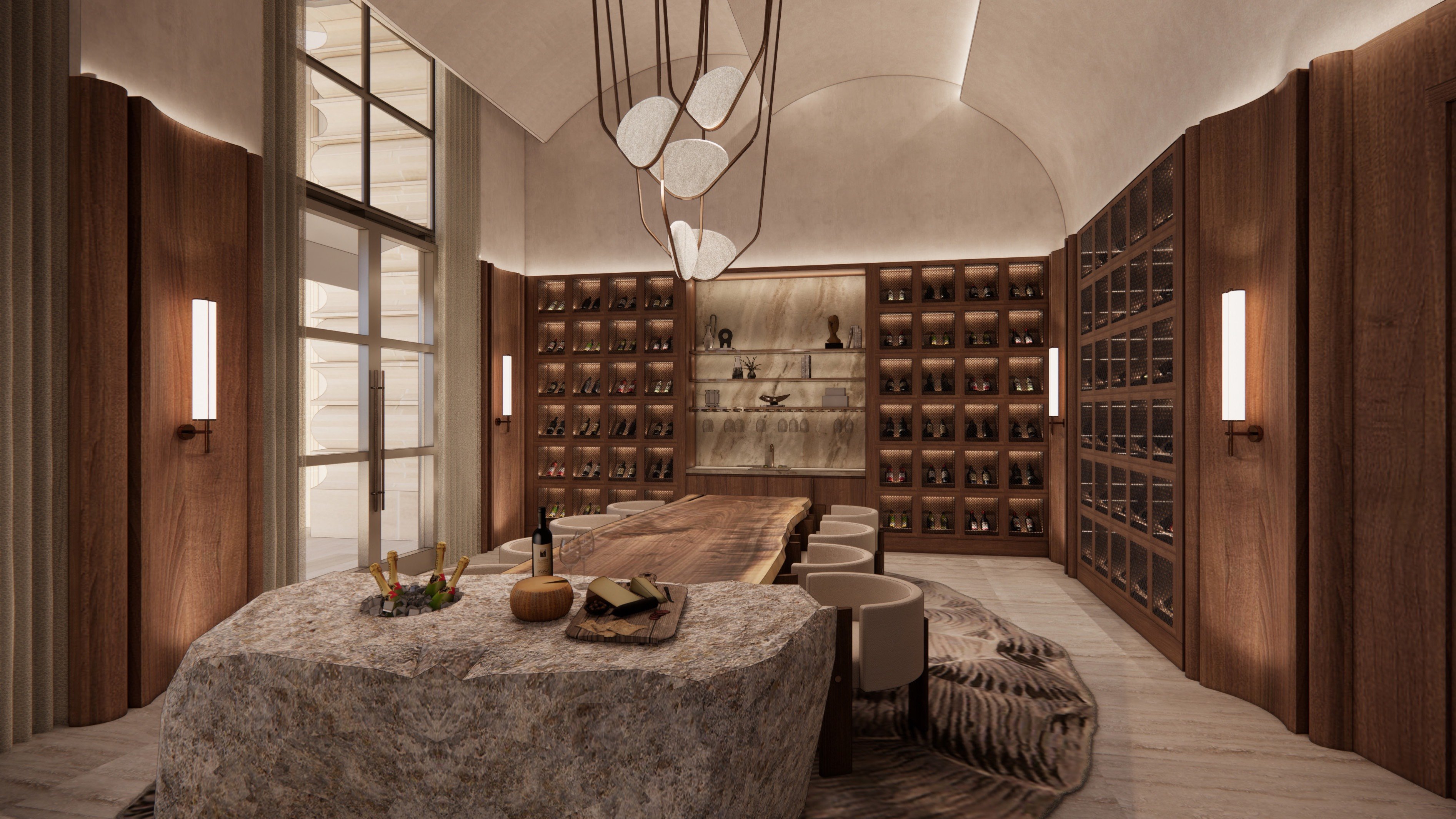
Downtown has long rewarded vertical living, but today’s clearest signal of luxury isn’t limited to views and finishes. It’s found in the private, controlled spaces that make entertaining feel effortless. Wine storage and tasting rooms have become a discreet marker of a building’s ambition-especially for buyers who split time between residences and want a collection protected, organized, and ready for a spontaneous dinner.
In practice, “bespoke” in a luxury tower means far more than handsome millwork. It implies a system: consistent temperature and humidity, limited light exposure, secure access, and a layout built for hospitality. The strongest rooms also reflect modern ownership patterns. Residents may keep part of a collection offsite, rotate inventory seasonally, or rely on staff to stage bottles for a planned evening.
For buyers considering Downtown and its adjacent core neighborhoods, it’s smart to pair wine-focused priorities with the broader culture of the building. Towers that deliver curated social spaces often execute the wine program with the same discipline. In that context, buildings such as Aston Martin Residences Downtown Miami and Waldorf Astoria Residences Downtown Miami tend to attract owners who value service, discretion, and well-composed amenity environments.
Before the ranking, a practical lens. In Downtown, wine rooms vary widely in how they’re engineered and managed-and those differences matter.
Climate integrity over cosmetic design.
A beautiful room is secondary to stable conditions. Prioritize a dedicated, conditioned environment with minimal temperature swings, controlled humidity, and a layout that keeps bottles away from sunlight and heat-generating equipment.
Security and accountability.
Private lockers, keyed or fob-controlled access, and clear guest-entry policies are foundational. If the room supports tastings, confirm how reservations are handled and whether staff oversight is available.
Hospitality-grade presentation.
The most compelling rooms read like a small private club: comfortable seating, thoughtful lighting, and a serving zone that makes a tasting feel deliberate rather than improvised.
Logistics that suit real life.
The best systems anticipate move-ins, deliveries, and inventory management. Ask whether there’s a staging area for cases, whether bottles can be transferred discreetly, and how breakage risk is minimized.
The following ranking reflects five distinct, buyer-relevant archetypes found in elite Downtown Miami high-rises and neighboring luxury towers that function as part of the same urban core. Each entry highlights what to prioritize when touring, reviewing offering materials, or negotiating a purchase.
1. The Members-Club Tasting Salon - reservation-ready entertaining
This is the most socially driven format: a dedicated tasting lounge designed to host a small group with confidence. Expect refined seating, controlled lighting, and a sense the room was built for conversations that carry well past the final pour.
For buyers, the differentiator is governance. The best salons have clear reservation protocols, defined guest limits, and an easy transition to dining-whether that means a private room, a resident lounge, or your own residence.
2. The Private-Locker Vault - collector-first, security-forward
This archetype prioritizes what matters most to serious collectors: compartmentalized storage, secure access, and a layout that supports real organization. Private lockers or cages create separation between owners, reducing the “shared pantry” feel and increasing confidence in long-term storage.
During due diligence, concentrate on access rules and accountability. Ask how entry is tracked, what happens during building maintenance, and whether owners can reach their allocation at all hours.
3. The Sommelier-Style Tasting Bar - service and presentation elevated
Here, the tasting experience leads. The room often features a bar-height service zone that supports decanting, glassware, and a guided tasting rhythm. Even without a formal sommelier, the design signals that hospitality was a priority.
Buyers should press on the details: where glassware is stored, whether there’s a sink and prep area, how spill risk is managed, and whether lighting is flattering without compromising bottle integrity.
4. The Chef-Adjacent Pairing Room - seamless from cellar to table
This format is built around food. The wine room sits in the orbit of private dining and catering functions, ideal for owners who host often and want pairings to feel effortless. The best versions make it simple to stage bottles, keep them at service temperature, and move them discreetly to the table.
Ask how outside catering is handled, whether the room can be used independently of other spaces, and what rules apply to bringing in your own staff.
5. The Design-Forward Trophy Cellar - visual impact with real performance
A trophy cellar is about presence. It’s often the most photographed amenity in a tower, with architectural shelving, dramatic materials, and lighting that communicates luxury on first glance. But truly bespoke execution requires performance to match the aesthetics.
As you tour, confirm climate controls aren’t an afterthought. If the room is glass-fronted or visually open, verify how heat and light are mitigated-and where the building draws the line between display and preservation.
A wine program rarely stands alone. In Downtown and Brickell, buyers often judge a tower by how well it supports a full entertaining circuit: arrival experience, concierge culture, resident lounges, and private dining. This is why some of the most talked-about new inventory in Brickell, such as 888 Brickell by Dolce & Gabbana, draws attention from buyers who want amenities that feel intentional and design-led.
The same logic extends slightly south in Brickell, where ORA by Casa Tua Brickell aligns with a dining-forward lifestyle. Even if your primary focus is the wine room, the best long-term fit is typically a building where food, service, and social spaces are treated with equal seriousness.
For those shopping the broader urban waterfront, the conversation often expands from “wine storage” to “collection culture,” including art, cigars, and private entertaining. In that wider field, Casa Bella by B&B Italia Downtown Miami is the kind of Downtown address where buyers tend to ask more nuanced questions about how amenities feel after the novelty wears off.
Because public disclosures vary, the most reliable approach is to confirm operational realities early in the buying process. Consider the following as non-negotiables.
Confirm the environmental spec in plain language.
You don’t need engineering diagrams, but you do need clarity on whether the space is actively conditioned, how temperature stability is maintained, and who services the equipment.
Understand allocation and access.
If there are private lockers, ask how they’re assigned, whether they can be transferred, and what happens if demand exceeds supply. If the room is communal, ask how conflicts are handled.
Clarify liability and insurance expectations.
Buildings may limit responsibility for high-value collections. Ask what is covered, what is excluded, and what owners typically insure privately.
Assess hosting rules.
Some tasting rooms are designed to be used frequently but governed tightly. Confirm reservation windows, guest limits, quiet hours, and whether glassware and cleaning are provided.
Stress-test the logistics.
If you arrive with multiple cases, where do they go first? Is there an appropriate service elevator route? Are there policies around deliveries and third-party access?
Different owners need different rooms, and the best “top five” list is ultimately personal.
If you collect broadly and rotate often, prioritize access and staging. You want a room that makes retrieval easy without an administrative process.
If you keep a concentrated, high-value selection, prioritize security and compartmentalization. Private lockers, controlled access, and accountability matter more than a dramatic backdrop.
If you host, prioritize comfort and flow. Seating, lighting, and adjacency to dining often determine whether the room gets used-or becomes a rarely visited storage space.
If you split time between cities, prioritize management reliability. A pristine room on day one matters less than consistent operations six months later.
What is the ideal temperature range for a residential wine room? Many collectors target a steady, cool environment; consistency typically matters more than a specific number.
Do luxury towers usually offer private wine lockers or shared shelving? Both exist; private lockers provide stronger security while shared rooms can offer better tasting space.
How can I tell if a tasting room is actually usable for entertaining? Look for comfortable seating, reservation policies, and a service zone for glassware and pouring.
Is humidity control important in a high-rise wine cellar? Yes, because it supports cork integrity and helps prevent long-term storage issues.
Can I store large-format bottles in most tower wine rooms? Some can accommodate them, but many systems are optimized for standard formats, so confirm in advance.
Are wine rooms typically available 24/7 to residents? Access policies vary; some rooms are always available while others have controlled hours.
What should I ask about security for a shared wine room? Ask about key or fob access, entry logs, camera coverage, and how management handles disputes.
Do I need separate insurance for a valuable wine collection? Often yes; building policies may not cover full collection value, so discuss appropriate coverage.
How far in advance do I need to reserve a tasting room in a luxury tower? It depends on demand and rules, but premium buildings often require advance booking for weekends.
Does a wine room add resale value in Downtown Miami? It can, especially when the amenity feels curated and well-managed, but condition and rules matter.
For a tailored shortlist and next-step guidance, connect with MILLION Luxury.
If branded residences are on your mind — as a home or as an allocation — we would be glad to share what we are seeing, privately.
Begin a quiet conversation