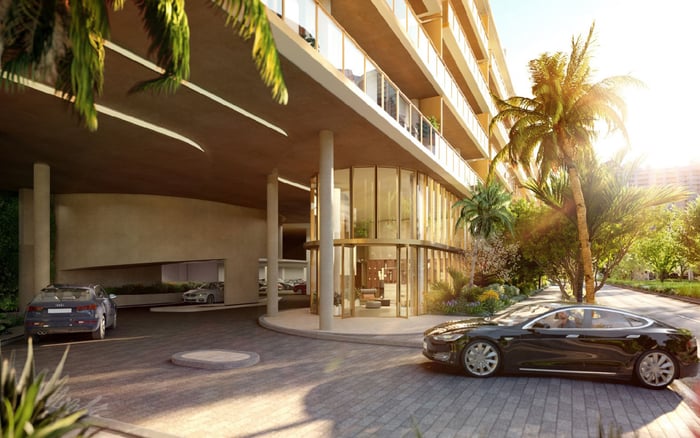
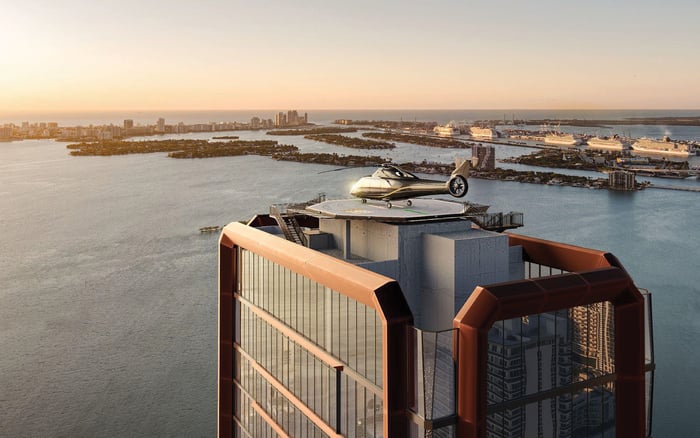
In Brickell, an exotic-car collection quickly outgrows the two-space norm. This guide lays out discreet, buyer-oriented strategies to secure additional parking without compromising convenience, security, or liquidity, from negotiating deeded spaces to arranging off-site, climate-controlled storage and driver logistics. It also outlines the contract language, building rules, and operational details that separate a seamless ownership experience from a recurring headache.
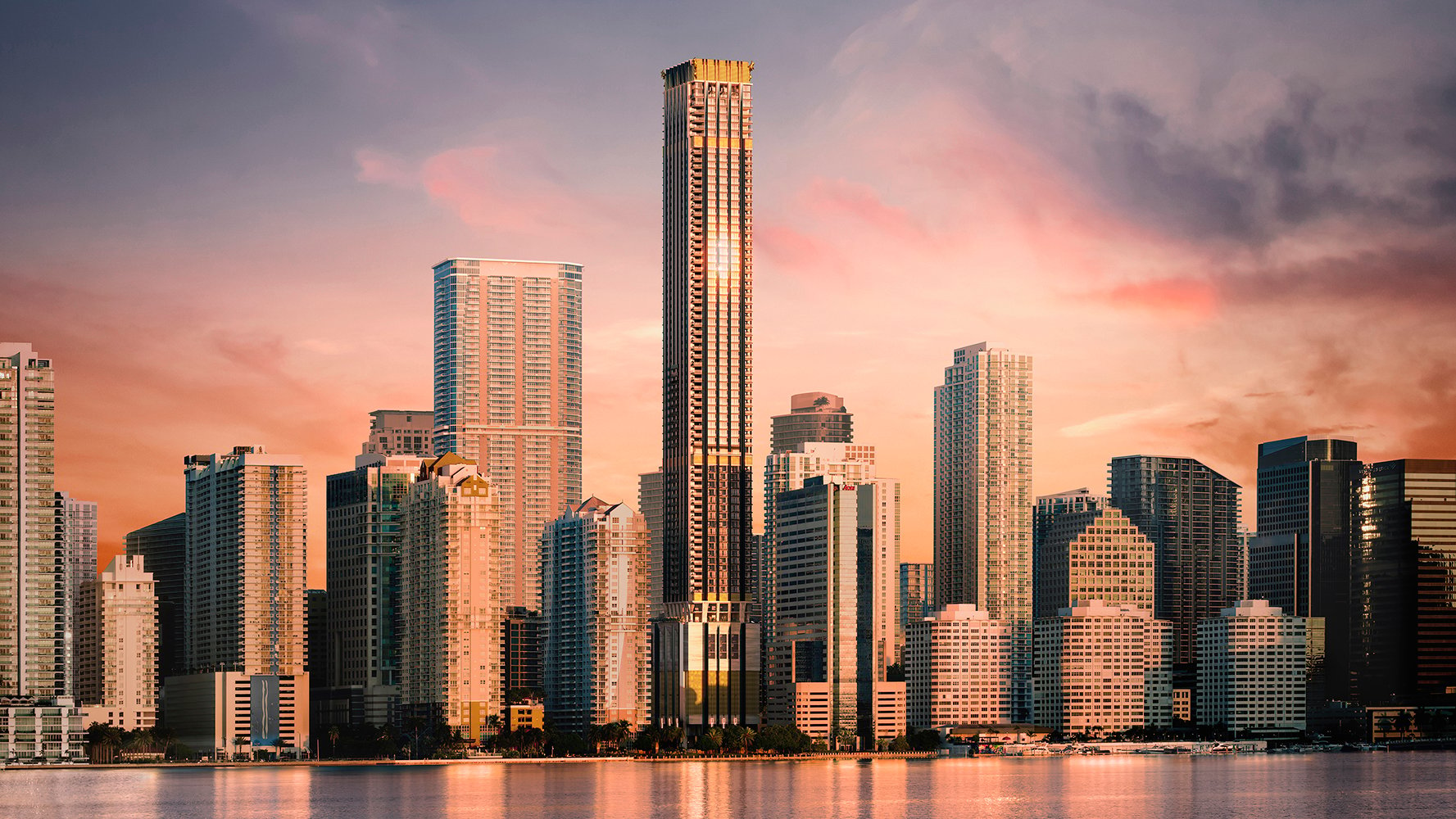
Brickell has mastered vertical living: concierge lobbies, private elevators, walkable dining, and waterfront views that feel effortless. For collectors, however, the pressure point is rarely the residence itself. It’s where the cars live, how quickly they can be accessed, and whether the solution stays reliable through building policy changes, HOA leadership shifts, and resale cycles.
Exotic-car ownership is less forgiving than ordinary commuting. Ground clearance, wheel finish, battery maintenance, tire temperature, and dust control all turn “a space” into an operational requirement. Add Brickell’s realities-tighter garage geometries, evolving security protocols, and a neighborhood built for density-and the practical move is to treat parking as a layered portfolio, not a single checkbox.
That’s where sophisticated buyers separate preference from necessity. A deeded, transferable parking space is an asset. A valet program is a service. A short-term lease in a third-party garage is an arrangement. All can work, but each carries different implications for risk, flexibility, and resale.
Before you negotiate anything, map the fleet like a private mobility plan. A collector with three cars used weekly needs a different system than a six-car collection where four vehicles are rotated monthly.
Focus on four practical questions:
Which cars must be on-site for same-hour access, without scheduling?
Which cars can be retrieved with notice, via driver or valet coordination?
Which vehicles require enhanced care: climate control, tender power, wash bay access, or lift-friendly layouts?
What are the failure modes you will not tolerate: door dings, repeated idling, long queues, or inconsistent staffing?
This usage map tells you whether you should pay a premium for in-building solutions, or whether a hybrid plan is smarter: one or two guaranteed on-site spaces for daily rotation and an off-site facility for the museum-grade pieces.
Luxury towers often advertise parking, but the category matters. In practice, you will encounter combinations of the following:
Deeded or appurtenant spaces tied to the unit, sometimes limited by unit size or line item schedules.
Limited common element spaces that may be assigned, re-assigned, or governed by HOA policies.
Valet-managed inventory where the building controls placement, stacking, and retrieval.
Guest parking with restrictions that can change as the building matures.
For an exotic collection, prioritize control and predictability. A deeded space can often be treated like a miniature real estate interest: you plan around it, insure it appropriately, and document its transfer. Anything dependent on a policy memo is inherently less durable-especially when your vehicles are significant assets.
If you are purchasing in Brickell, parking terms should be negotiated with the same discipline as finishes, closing timelines, and assessment exposure. The difference is that parking is often handled casually-then becomes expensive to correct.
Ask for clarity on:
Transferability: Whether additional spaces convey with the unit upon resale.
Assignability: Whether spaces can be assigned to different drivers or LLCs tied to your ownership.
Dimensional realities: Whether there are known tight turns, ramps, or columns that affect low cars.
Access protocol: Key fob levels, camera coverage, and what happens after-hours.
Alterations: Whether you may install wheel stops, protective bollards, EV charging, or tender outlets.
If a deal includes “extra spaces,” insist on identification beyond a casual promise. The cleanest outcomes specify the exact spaces (or a recorded schedule) and define what happens if the building’s parking-allocation policies change.
In buildings with a prominent valet component, treat retrieval time and handling standards as part of the value proposition. Some collectors keep a daily driver under valet control and reserve private spaces for the cars that cannot tolerate repeated movement.
Even when you secure additional spaces, many Brickell collectors end up with a two-tier system:
Tier 1: On-site spaces for the cars that need immediate access.
Tier 2: Off-site private storage for the cars that require higher care or lower frequency.
This hybrid approach reduces daily friction and protects the collection. It also limits exposure to garage traffic, holiday crowds, and building events that increase vehicle movement.
A practical advantage: off-site storage can be upgraded without changing residences. If your collection evolves, your storage provider can evolve with it. Your condo garage cannot.
Brickell is not a single experience. The block you choose dictates how you live with your cars: pickup patterns, street congestion, and the ease of late-night returns. When you tour, bring a collector’s eye into the garage.
Look for:
Ramp grades and transition angles that threaten front splitters.
Turning radii at entry gates and inside corners.
Space placement relative to doors, elevators, and high-traffic choke points.
Camera placement and the feel of control at access points.
Whether the garage is bright, clean, and managed like hospitality, or merely functional.
If you’re drawn to newer luxury inventory, the parking conversation tends to be more straightforward during the purchase process. For example, buyers exploring 2200 Brickell often treat the garage tour as seriously as amenity decks, because it’s central to the day-to-day ownership experience.
For those who prefer a branded, lifestyle-forward tower, 888 Brickell by Dolce & Gabbana and similar offerings can be compelling-but the practical question remains the same: what is the parking structure, and what is the path to additional spaces over time?
When a collection grows beyond what any high-rise garage can comfortably support, off-site becomes the rational next step. Done properly, it isn’t a compromise-it’s a professionalization.
A strong off-site plan includes:
Security you can audit: controlled access, monitored entry, and clear incident procedures.
Consistent retrieval: scheduled pull-out with confirmation, not informal texts.
Vehicle care: tender power as needed, basic battery and tire protocols, and a clean environment.
Insurance alignment: clarity on custody and liability boundaries.
Collectors also use off-site storage to preserve the “quiet luxury” feel of their building. Too many cars cycling through a condo garage draws attention and increases the risk of accidental contact.
Valet can be excellent, especially for a daily driver. For an exotic, it depends on your tolerance for variables.
Consider valet when:
You value speed at the lobby more than direct garage access.
The vehicle is robust enough for frequent handling.
The building’s staffing is stable and trained.
Avoid relying on valet as your primary plan when:
You cannot accept the risk of minor contact or curb rash.
You require precise warm-up routines or specialized startup procedures.
You need guaranteed immediate access during peak building traffic.
The right compromise for many collectors is to place one vehicle in valet rotation and keep the higher-value, more sensitive cars under your personal control in private spaces or off-site.
Parking becomes complicated when it’s acquired informally. For collectors who purchase under an LLC or family office structure, align parking documentation with the ownership vehicle. Ensure any parking license, lease, or deeded interest is compatible with your entity and long-term plan.
Prioritize clean transferability. If you expect to sell or refinance, avoid arrangements that cannot be assigned. Keep a dedicated folder with:
Parking deeds or schedules (if applicable).
HOA approvals and any written permissions for upgrades.
EV or tender installation permissions.
Access credentials policies and replacement procedures.
This ownership hygiene protects not only your day-to-day experience, but also your liquidity. Future buyers value clarity, and uncertainty tends to translate into a discount.
Brickell’s best luxury living is discreet. That extends to your mobility routines. If your collection is significant, consider operational choices that reduce visibility and risk:
Use a driver for retrieval and staging when rotating cars.
Standardize an arrival and departure route that avoids tight curbs and congested loops.
Schedule maintenance pickup directly from storage rather than from the condo lobby.
A practical mindset is to treat your car routine like a hotel’s back-of-house: seamless for you, effectively invisible to everyone else.
Many South Florida collectors live in multiple neighborhoods. Brickell can be the primary residence or the weekday base, while coastal or quieter areas hold secondary garages. A two-home strategy can solve the parking puzzle cleanly: keep one or two cars in Brickell for city life, and keep the rest where space is naturally abundant.
If you split time between urban and waterfront living, you can align each property with a different purpose. A Brickell residence such as Cipriani Residences Brickell can serve as the refined, walkable anchor, while another home elsewhere supports larger-scale garaging and longer-term storage.
Even within the core Miami market, some buyers diversify their parking capacity by choosing an additional residence where vehicle logistics are simpler. For instance, a Downtown option like Aston Martin Residences Downtown Miami may complement Brickell living depending on your routes and preferences-while giving you another operational base.
Use this checklist during tours, negotiations, and final review:
Can you independently access your spaces 24/7 without staff?
Are the spaces wide enough for comfortable door swing without risk?
Is the path from entry to space suitable for low clearance?
Is there a documented path to acquire additional spaces later?
Are modifications allowed for protective measures or charging?
If valet is involved, what is the handling standard and escalation path?
In Brickell, the right parking plan isn’t only about quantity. It’s about control, consistency, and preserving the condition of assets meant to be enjoyed.
What is the first step to securing more parking in Brickell? Clarify how many cars need same-hour access versus scheduled retrieval, then negotiate for control-based solutions.
Are deeded parking spaces better than valet access? Deeded spaces tend to be more durable and transferable, while valet is a service that can change with policies.
Can I buy additional spaces after I close? Sometimes, but it depends on building rules and availability, so it is best to secure rights and clarity upfront.
Is off-site storage a downgrade from in-building parking? Not necessarily; many collectors use off-site for higher care standards and to scale beyond condo limits.
How do I protect low-clearance cars in a high-rise garage? Test the ramps and transitions during a tour and plan routes and protective measures before daily use.
Do HOAs typically allow EV charging or tender outlets at a space? Policies vary; get written approval and understand installation responsibilities and ongoing obligations.
What should I ask a valet program before trusting it with an exotic? Ask about training, supervision, incident procedures, and how cars are staged, parked, and moved.
Does extra parking improve resale value in Brickell? It can, especially when the spaces are clearly documented and transferable to the next owner.
Can I keep cars under an LLC while living personally in the unit? Often yes, but align parking agreements with the ownership structure and access credential policies.
What is the safest overall approach for larger collections? A layered plan: one or two controlled on-site spaces plus discreet off-site storage for the balance.
For a discreet conversation and a curated building-by-building shortlist, connect with MILLION Luxury.
If branded residences are on your mind — as a home or as an allocation — we would be glad to share what we are seeing, privately.
Begin a quiet conversation