Miami’s next era of luxury is being written in vertical form. Waldorf Astoria Hotel & Residences Miami is planned as a 100 story mixed use supertall, conceived as nine stacked, offset glass cubes that spiral upward above Downtown. Beyond its silhouette, the project is a case study in how branded residences, construction execution, and true hotel service are converging into a single buyer proposition for South Florida.
Downtown Miami has spent the last decade evolving from a daytime business core into a true 24 hour neighborhood, but luxury buyers remain selective about what merits full time living. Branded residences are changing that calculus by importing a familiar promise: consistent service, consistent standards, and a hospitality mindset that does not fade after closing. That is the context in which Waldorf Astoria Residences Downtown Miami arrives. Planned as a 100 story mixed use tower with a Waldorf Astoria hotel and branded condominium residences, it is designed to read at city scale while still feeling intentional at the front door. The goal is not simply height. It is a redefinition of what “Downtown” means to an ultra premium buyer who could just as easily choose the ocean, the Grove, or a private island.
The tower’s most important luxury feature may be the one that cannot be upgraded: its form. The building is designed as nine stacked, offset glass cubes arranged in a spiraling composition. It reads as a sculptural object, but it also serves a practical role in a market where identity has become currency. When a residence is branded, the buyer is not only purchasing finishes and a view corridor. They are purchasing recognizability. Miami’s best new residential architecture tends to split into two camps: quiet, refined minimalism and overt icon making. This project lands firmly in the second camp, but with discipline that feels architectural rather than theatrical. The cubes create a sense of “rooms in the sky,” with each shift implying a different relationship to the bay, the skyline, and Bayfront Park. For buyers comparing branded offerings, it is worth noticing how iconography intersects with livability. A strong form can support long term value because it stays distinct even as new towers rise around it. That is one reason the branded supertall is becoming a category of its own.
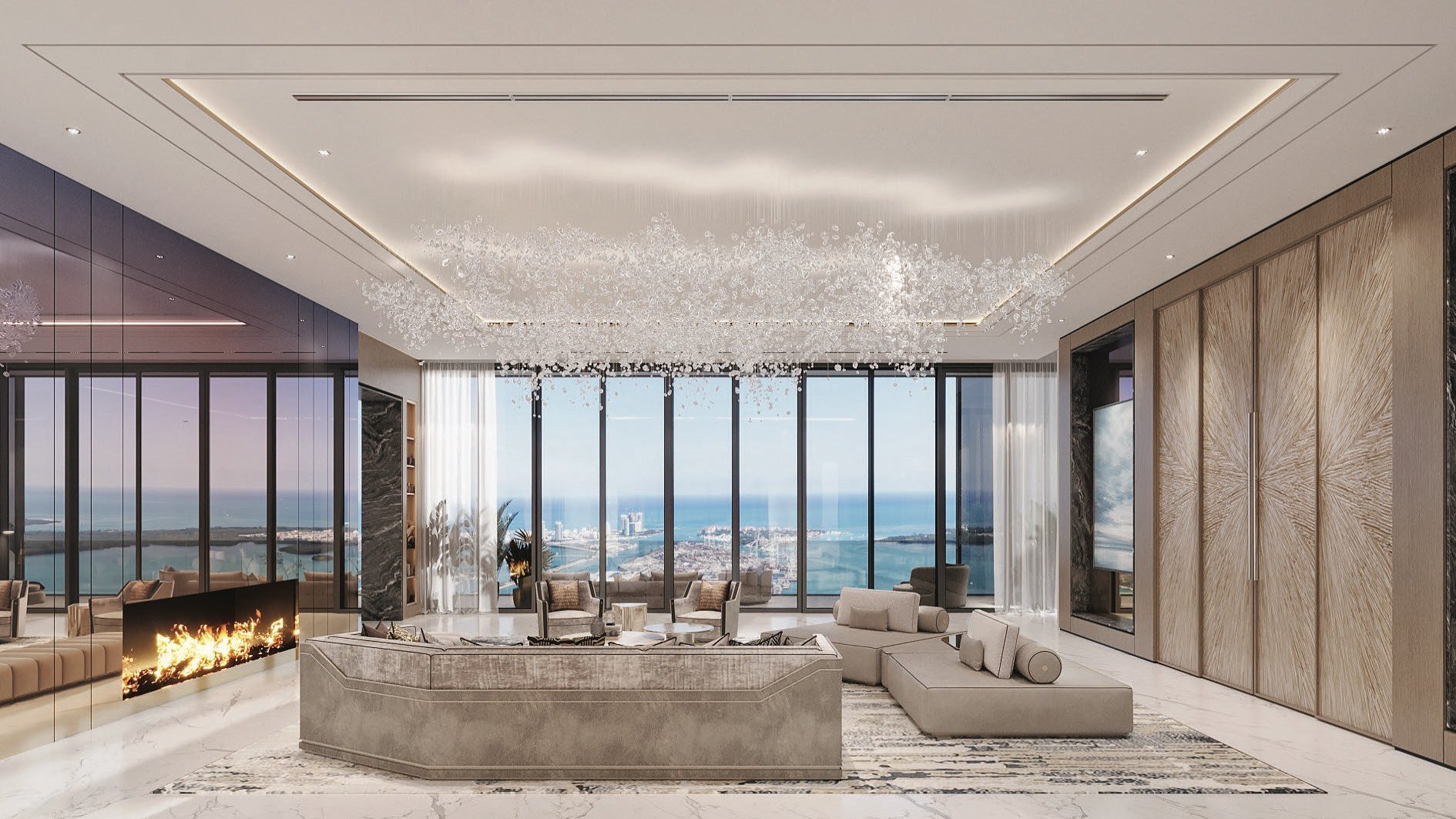
The headline is height, but the program tells the real story. The development combines 205 hotel rooms and suites with 387 condominium residences. That mix matters. It suggests the service ecosystem is not an add on. It is built into the building’s daily operations. The residences are marketed as fully finished, with some homes also positioned as fully furnished for a turnkey arrival. For an ultra premium audience, “turnkey” is not about convenience alone. It is about time, predictability, and risk management. A finished product reduces the friction of post closing construction, vendor coordination, and the delays that can compromise a move in timeline. The services and amenities narrative is equally specific. “Peacock Alley,” a signature Waldorf Astoria concept, is planned as a social and dining anchor. More broadly, residents are offered a hospitality driven service model tied to the Waldorf Astoria brand, including concierge oriented support. In a market where many luxury towers offer amenities, fewer offer true hotel rhythm, staffing culture, and the expectation of discretion.
In branded pre construction, buyer confidence is rarely won by renderings alone. It is won by execution: financing, contractor pedigree, and visible vertical progress. Construction started in 2022 with a targeted completion year of 2028, and the tower is being delivered by John Moriarty and Associates as general contractor. The project publicly disclosed a $668 million construction loan in 2024, a scale of financing that signals institutional conviction. By late 2025, the superstructure passed a notable midpoint milestone at the 50th floor, and the pace at that time was described as roughly one floor every 10 days. For a buyer weighing timing risk, those are not abstract details. They translate into a clearer probability that a purchase will convert into a delivered residence on an intelligible schedule. Sales velocity is another barometer. The official marketing states the tower is over 90 percent sold. It is a marketing claim, but it still signals strong absorption in a sector where buyers are increasingly sophisticated about where they place deposits.
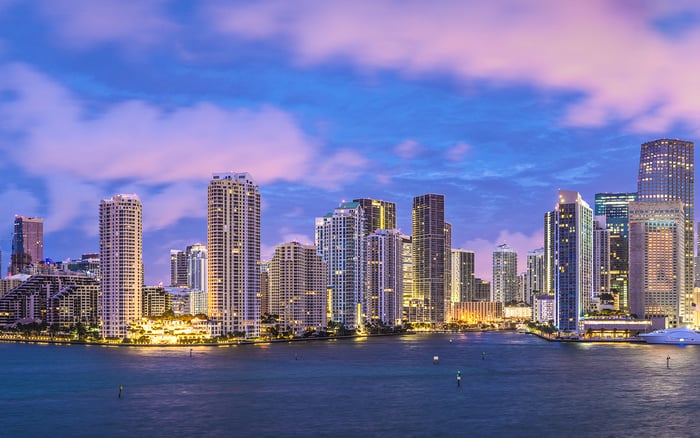
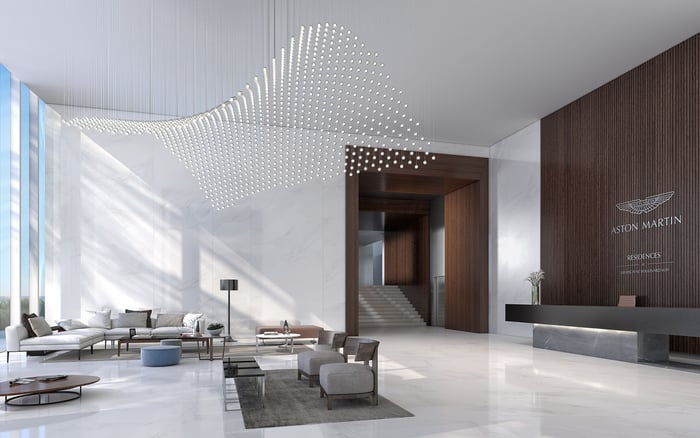
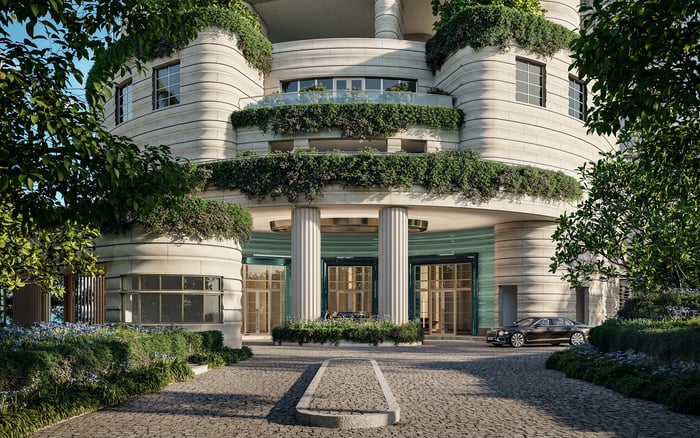
South Florida’s branded landscape is no longer limited to oceanfront. Brickell and Downtown have become arenas for global luxury brands that see Miami as a year round city rather than a seasonal escape. The buyer profile often blends primary residence needs with second home flexibility, and expects an elevated baseline of service. In Brickell, the city’s luxury corridor is expanding with projects like St. Regis® Residences Brickell, where the narrative centers on a classic hospitality name and the lifestyle infrastructure of Brickell’s walkable core. Nearby, a different kind of brand expression is emerging with 888 Brickell by Dolce & Gabbana, which leans into fashion house identity and the idea of residence as collectible design. Downtown’s Waldorf proposition is distinct because it pairs brand gravity with a supertall scale that is inherently civic. It is less about blending into the neighborhood and more about becoming part of how the neighborhood is navigated and described. Along the water, another type of brand adjacency shows up in Aston Martin Residences Downtown Miami, where the icon is tied to automotive design language and a dramatic waterfront presence. Together, these projects illustrate a broader shift: the luxury buyer increasingly evaluates Miami through global brand cues, then filters down to layout, services, and day to day comfort.
A supertall residence is not automatically better than a boutique beachfront building. It is a different proposition, and buyers should be candid about the trade offs.
Vertical living can deliver spectacular sightlines, but it also introduces more complex elevator logistics and building systems.
Mixed use can be an advantage because hotel staffing supports services, but it requires clear separation of resident privacy and hotel circulation.
A global brand can enhance resale perception, yet the value is only real if service delivery matches the brand promise over time.
In this context, the planned integration of hotel and residences, plus a signature social hub like Peacock Alley, is not a lifestyle garnish. It is part of the operational logic that makes a branded supertall credible.
Miami has learned that novelty alone is not timeless. What tends to endure is clarity: a form that remains coherent from multiple vantage points, and a residential product that is not over specified to a single moment in taste. The nine cube composition is memorable without relying on ornament. Glass massing can be risky if it reads as generic, but here the offset stacking creates a silhouette that is difficult to confuse with any neighboring tower. The positioning toward fully finished, turnkey delivery also tends to age well because it emphasizes quality control and immediate usability. Finally, consider the buyer psychology around “first in class.” As one of the most prominent branded towers planned for Downtown, the building is positioned to become a reference point for the district’s luxury identity. That can matter for long term value, especially in a neighborhood still defining its highest echelon.
This project will not be everything to everyone, and that is a strength. Its clearest audience includes:
Global buyers who want a Miami base with dependable hotel services and staff culture.
Full time Downtown residents who value walkable urban life and a strong amenity ecosystem.
Second home owners who prioritize turnkey arrival, predictable standards, and discreet servicing.
The celebrity attention around the project underscores its luxury positioning, but the more enduring story is the one buyers live with daily: reliability, privacy, and an address that communicates itself without explanation.
What is Waldorf Astoria Hotel and Residences Miami? It is a planned 100 story mixed use tower combining a Waldorf Astoria hotel and branded condominium residences in Downtown.
How many residences and hotel keys are planned? The program includes 387 condominium residences plus 205 hotel rooms and suites.
Who designed the tower’s signature stacked cube form? The design is by Carlos Ott with Sieger Suarez Architects, conceived as nine stacked, offset glass cubes.
Is the building positioned as a supertall? Yes, it is planned at a maximum permitted height of 1,049 feet above sea level.
When did construction begin and when is completion targeted? Construction started in 2022 and the targeted completion year is 2028.
Has the building reached a meaningful construction milestone? Yes, the project passed the 50th floor milestone in late 2025, roughly the midpoint of vertical construction.
Who is the general contractor? John Moriarty and Associates is the general contractor for the tower’s construction.
Are the residences intended to be move in ready? The residences are marketed as fully finished, with some homes also positioned as fully furnished for turnkey delivery.
What is Peacock Alley in this context? Peacock Alley is a signature Waldorf Astoria branded social and dining concept planned within the building’s hotel component.
Is demand strong for the residences? The official marketing states the residences are over 90 percent sold, indicating significant buyer interest.
For private guidance on Downtown’s branded market and comparable options, speak with MILLION Luxury
If branded residences are on your mind — as a home or as an allocation — we would be glad to share what we are seeing, privately.
Begin a quiet conversation