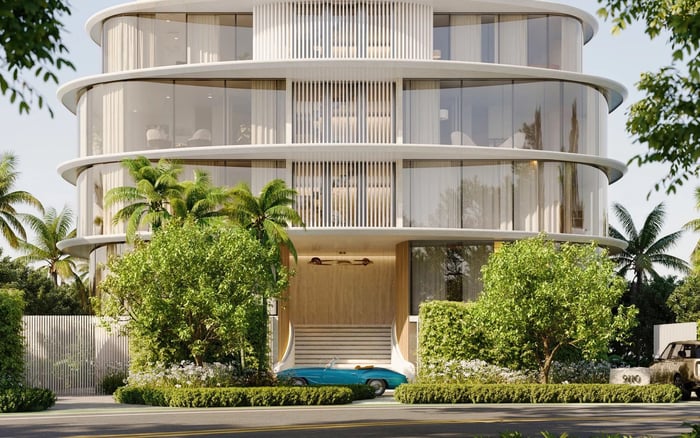
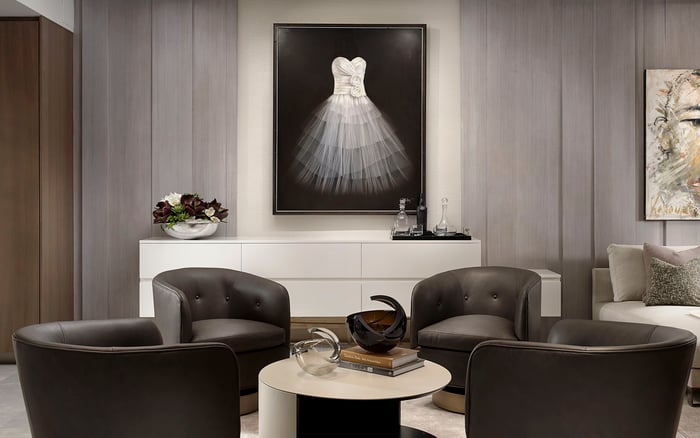
For ultra-high-net-worth buyers, privacy is no longer limited to gated arrivals and private elevators. In South Florida’s top residences, true discretion increasingly depends on operational privacy: the ability for housekeepers, chefs, security teams, and personal staff to move efficiently without crossing family life or entertaining spaces. These five residences stand out for low-density planning, separate circulation, resort-grade staffing ecosystems, and controlled arrival experiences.
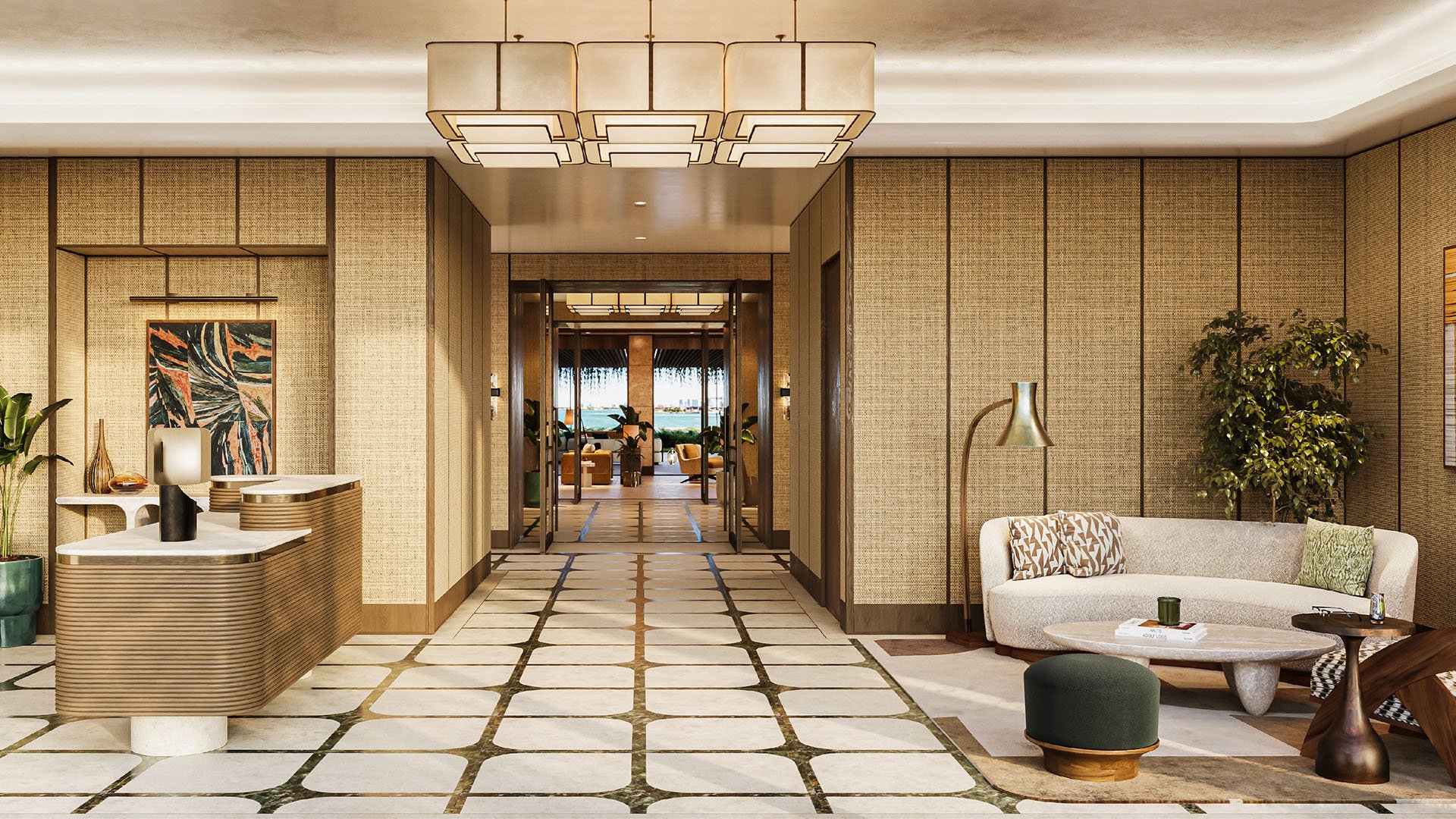
Among South Florida’s most sophisticated buyers, privacy is increasingly defined by what happens behind the scenes. A grand lobby, a private elevator, and a secure porte cochere still matter, but they no longer tell the full story. The sharper distinction is operational privacy: whether a residence allows chefs, housekeepers, nannies, wellness providers, and security personnel to enter, work, and leave without crossing owner entertaining areas or family circulation.
This is one reason newer and more fully conceived luxury residences continue to command attention. The best buildings are designed so service functions feel seamless rather than visible. In practical terms, that often means separate circulation, controlled arrivals, private vestibules, and a back-of-house mindset drawn from hospitality.
For buyers comparing South Florida inventory, this creates a useful lens. A residence may be beautiful, but if every staff movement follows the same arrival sequence as owners and guests, discretion is diminished. By contrast, the strongest properties are planned to preserve calm in the foreground while operations continue quietly in the background.
In neighborhoods where privacy is already prized, buyers often cross-shop buildings with similarly refined standards, including Ocean House Surfside, The Surf Club Four Seasons Surfside, and Setai Residences Miami Beach. What separates the very best, however, is not simply prestige. It is how intelligently the building supports daily life when full-time service is part of the equation.
1. Arte by Antonio Citterio - Surfside/Miami Beach
Arte by Antonio Citterio takes the top position because its planning is unusually well aligned with buyers who value invisible service. With only 16 residences, the building’s low-density format naturally reduces shared traffic and limits unnecessary resident crossover. That alone gives owners a calmer, more private experience than they would expect in a larger conventional tower.
More importantly, the residences are planned with private vestibules and separate circulation intended to keep service movement away from main living and arrival areas. For households employing regular staff, that distinction is highly meaningful. It allows support to function professionally without diluting the sense of retreat an oceanfront home should provide.
2. Residences at Turnberry Isle Miami - Aventura
The Residences at Turnberry Isle Miami rank second because the project benefits from a resort-managed environment that already supports on-site staffing, concierge, and hospitality-style operations. For buyers who prefer not to assemble every service layer independently, that ecosystem is a major advantage.
The appeal here is less about spectacle and more about operational ease. In a setting where housekeeping and culinary support can function separately from resident-facing spaces, daily life feels polished without becoming performative. Buyers considering Aventura often evaluate service-rich options alongside projects such as Avenia Aventura, but Turnberry Isle remains especially compelling for those who want built-in operational support.
3. One Thousand Museum - 1000 Biscayne Blvd, Miami
One Thousand Museum ranks third for a different reason: scale and engineering. The 62-story tower, designed by Zaha Hadid Architects, was conceived with highly sophisticated vertical circulation and building systems, making separate service functions more feasible than they are in many smaller condominium buildings.
For buyers accustomed to staffed residences in global cities, that matters. A supertall with complex infrastructure can often absorb back-of-house demands more elegantly, allowing owner arrivals and domestic operations to remain distinct. In Downtown Miami, this same logic informs interest in newer inventory such as **One Thousand Museum Downtown Miami Waldorf Astoria Residences Downtown Miami, where controlled arrival experiences have become central to luxury positioning.
4. The Setai Residences - Miami Beach
The Setai Residences place fourth because they are attached to a hospitality brand known for hotel-level service. That affiliation gives owners access to a service model that feels institutionalized rather than improvised, which is often exactly what discreet households want.
In branded residential environments, the real luxury is consistency. Owner assistance, housekeeping coordination, and concierge support can be handled within an established operating structure rather than through ad hoc arrangements. For buyers who want the assurance of a resort-service framework in Miami Beach, The Setai remains a natural fit.
5. Palazzo Della Luna - Fisher Island
Palazzo Della Luna earns the fifth spot on the strength of setting as much as building design. Located on Fisher Island, it benefits from restricted island access before one even reaches the property itself. That first layer of separation creates a naturally private environment that few mainland addresses can replicate.
Its low-density, ultra-luxury character further supports discreet arrivals and reduced visibility for staff movement. For buyers who prioritize estate-like quiet, Fisher Island remains a category of its own, and comparisons often extend to neighboring offerings such as **The Links Estates at Fisher Island Palazzo della Luna as they assess how privacy is achieved in practice.
When evaluating a residence for discreet staffing, the question is not simply whether there is a service entrance. It is whether the building’s circulation logic truly separates domestic operations from owner life. The best layouts allow staff to support the home without passing through formal entertaining rooms, family gathering areas, or primary arrival points.
Low-density projects often perform especially well here because fewer residences mean fewer shared touchpoints. Less crossover in corridors, elevators, and common areas generally translates to a quieter daily rhythm. This is one reason boutique and ultra-luxury formats remain so attractive to buyers who view privacy as a lived experience rather than a marketing phrase.
Resort-affiliated residences can be equally compelling, though for a different reason. They tend to offer stronger built-in staffing ecosystems, with concierge, housekeeping, and food-service support already embedded into operations. For owners who divide time between cities or expect turnkey management, that level of institutional support can be more valuable than square footage alone.
This preference for discreet service infrastructure is most visible in Miami Beach, Surfside, Downtown Miami, Aventura, and Fisher Island, where luxury buyers often expect the home to function almost like a private estate with hotel discipline. In these submarkets, privacy is increasingly architectural. It is planned into circulation, arrival sequencing, and staffing logistics rather than added as an afterthought.
That is also why certain residences keep surfacing in high-level searches. Surfside appeals to buyers who want a smaller, more controlled residential environment. Miami Beach attracts those who favor hospitality-backed service. Downtown Miami offers towers with enough scale and engineering to support more complex back-of-house needs. Fisher Island remains singular for purchasers who want multiple layers of separation before any guest or staff member reaches the front door.
For the most discerning buyers, the conclusion is straightforward: discretion is not just about being unseen by the public. It is about how elegantly a residence protects the boundary between service and private life.
What is operational privacy in a luxury residence? It is the ability for staff to enter, work, and exit without crossing owner entertaining or family zones.
Why is Arte by Antonio Citterio ranked first? Its 16-residence scale, private vestibules, and separate circulation make it especially well suited to discreet service.
Are low-density buildings better for privacy? Generally, yes. Fewer residences usually mean less shared traffic and reduced visibility around daily staff movement.
Why do resort-linked residences perform well on this list? They often have concierge, housekeeping, and hospitality systems already built into operations.
What makes Turnberry Isle Miami stand out? Its resort-managed environment supports on-site staffing and service coordination with minimal resident overlap.
Does a taller tower automatically provide better service separation? Not automatically, but larger, more engineered towers can often support more sophisticated back-of-house circulation.
Why is One Thousand Museum notable for this buyer profile? Its scale and vertical systems make separated staff and service functions more feasible than in many conventional towers.
What is Palazzo Della Luna’s privacy advantage? Fisher Island’s restricted access adds a layer of discretion before building-level security even begins.
Is branded hospitality important for discreet service? For many buyers, yes. It can provide a more consistent and institutionalized support model than a standard condominium setup.
Which South Florida areas best suit buyers seeking discreet staff access? Surfside, Miami Beach, Downtown Miami, Aventura, and Fisher Island are among the strongest markets for this priority.
If you'd like a private walkthrough and a curated shortlist, connect with MILLION Luxury.
If branded residences are on your mind — as a home or as an allocation — we would be glad to share what we are seeing, privately.
Begin a quiet conversation