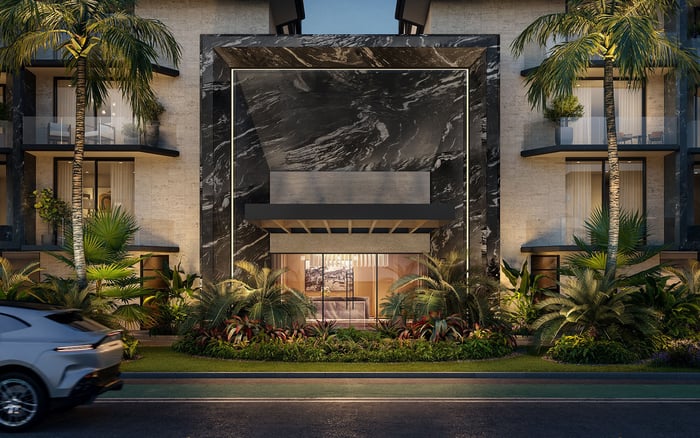
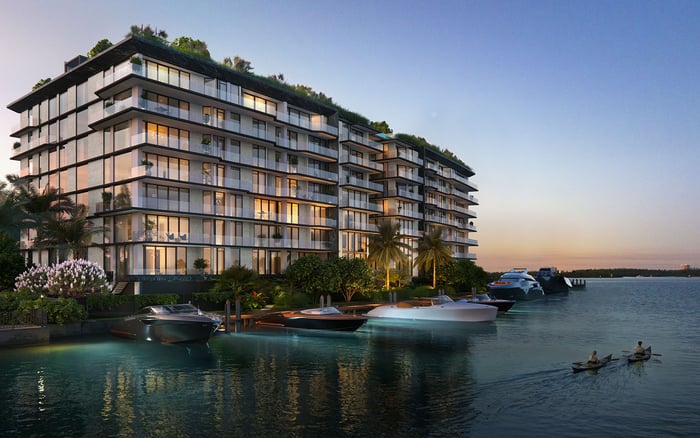
In Bay Harbor Islands, the choice between Bay Harbor Towers and Mila Bay Harbor Islands is less about geography than timing, evidence, and finish philosophy. One presents a stabilized luxury resale profile with observable pricing, limited turnover, and immediate occupancy potential. The other speaks to buyers who want untouched interiors, contemporary layouts, and the appeal of buying into new construction before a resale history fully matures.
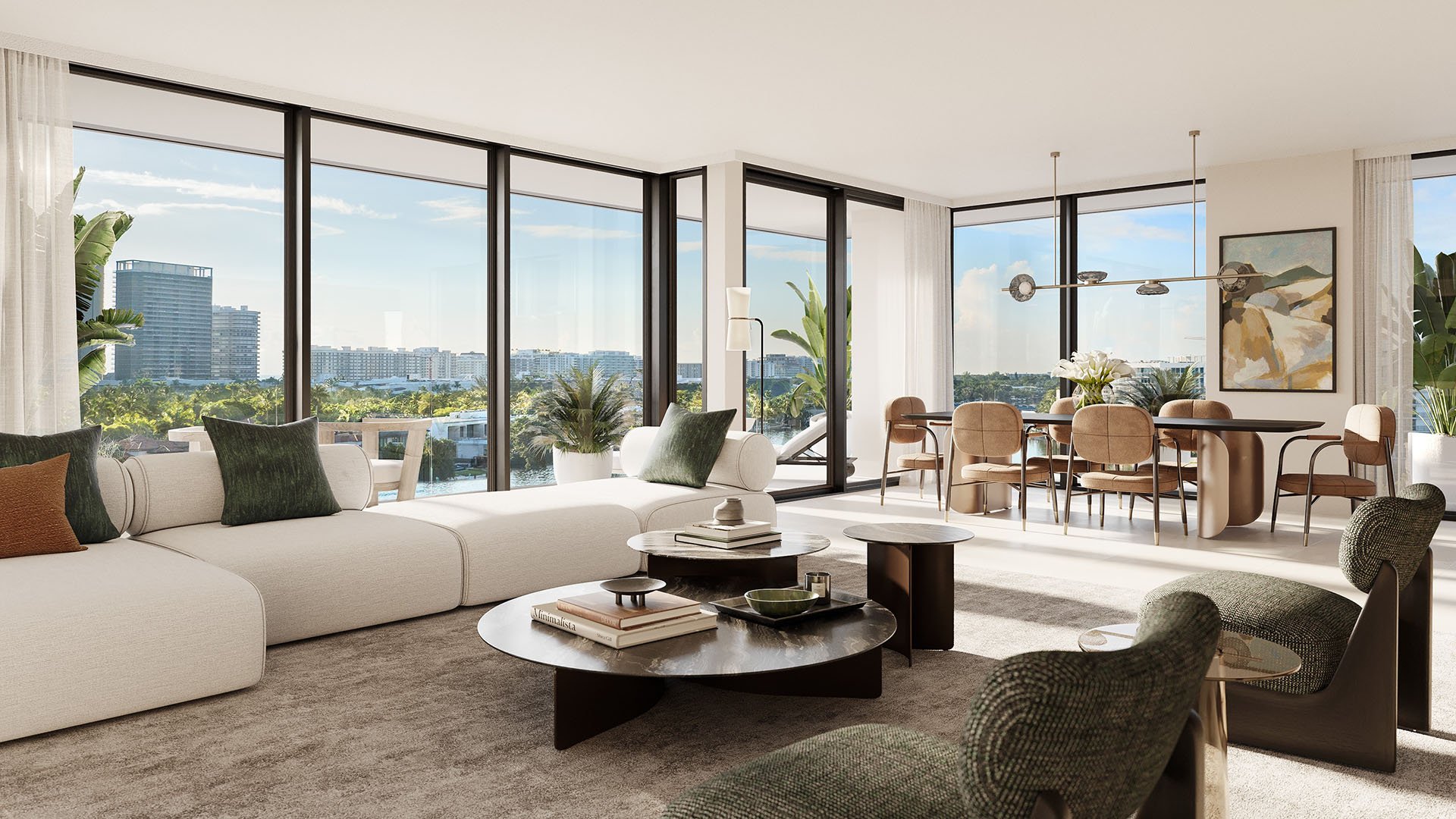
In Bay Harbor Islands, premium buyers are often comparing buildings within the same rarefied village that nonetheless offer very different forms of confidence. That is precisely the case with Bay Harbor Towers and Mila Bay Harbor Islands. Both are part of a municipality that has become increasingly relevant to high-end residential buyers seeking a calmer alternative to the larger beach-and-urban circuits nearby. But the investment logic behind each project is distinct.
Bay Harbor Towers is a stabilized luxury condominium at 10901 East Bay Harbor Drive in Bay Harbor Islands. That fact matters more than it may first appear. A stabilized building offers a true resale market, actual transaction history, visible asking prices, and a clearer sense of how buyers have already valued the product. Mila, by contrast, is positioned as a newer luxury condominium for buyers drawn to fresh construction, modern finish packages, and the appeal of being among the first owners rather than the next owners.
For the luxury purchaser, this is not simply a question of old versus new. It is a question of whether one prefers seasoning or purity, observed market behavior or early-stage design appeal, inherited individuality or newly delivered uniformity.
Bay Harbor Towers has the advantage of existing in the open market as a living, tradable asset. Buyers can review active resale inventory, study where asking prices sit in the multi-million-dollar range, and recognize that turnover appears limited, which is often the mark of a building residents are reluctant to leave. In a segment where discretion and scarcity carry their own value, limited availability can reinforce a sense of stability.
This is where a stabilized property tends to outperform a newer entrant from a risk-calibration standpoint. Buyers are not relying solely on launch-era positioning or a developer’s release strategy. Instead, they are evaluating homes that can be toured, compared, and, in many cases, occupied without delay. Immediate occupancy remains one of the market’s more understated luxuries, especially for second-home buyers and those relocating on a precise timetable.
Bay Harbor Towers also benefits from established luxury branding, with interiors and amenities already presented to the market as part of a top-tier lifestyle proposition. Pool, fitness, spa, and concierge-style services support that profile. Yet sophisticated buyers will also understand the tradeoff within the resale category: not every residence ages in the same way. Some units may feel highly current; others may reflect original selections or later renovations that now read as more personal than universal.
That variation can be a strength or a complication. For a buyer with a keen eye, it creates room to find a residence with character, value, or upgraded detailing. For a buyer who wants consistency throughout the building, it introduces more due diligence.
Mila Bay Harbor Islands is compelling for a different reason. It speaks to the purchaser who wants the first chapter, not the second. New construction carries a clear emotional and practical appeal: untouched finishes, contemporary planning, current code standards, and the expectation of more uniform delivery across residences. For many owner-users, that matters deeply.
The attraction of Mila is not merely cosmetic. It is psychological. Fresh materials, modern layouts, and the absence of a prior owner’s taste can make a residence feel more intentional from day one. Buyers who place a premium on clean-lined contemporary interiors often prefer this route, even when it comes with less secondary-market evidence.
That logic is visible throughout the broader new-construction landscape in South Florida. Projects such as Onda Bay Harbor and La Maré Bay Harbor Islands have helped reinforce Bay Harbor as a destination where boutique scale and current design are part of the local luxury vocabulary. Mila fits comfortably into that conversation, especially for buyers who value design freshness over historical comparables.
The compromise, of course, is that newer projects typically have less mature resale data. Until closings deepen and secondary transactions emerge, market proof is inherently thinner. Buyers can assess positioning, product quality, and release pricing, but they cannot study the same depth of seasoned resale behavior available in an established building.
At the ultra-premium level, finishes are not superficial. They influence carry costs, renovation timelines, ease of move-in, and even eventual resale strategy. Here, Bay Harbor Towers and Mila diverge sharply.
At Bay Harbor Towers, luxury finishes are part of the building’s profile, but the lived reality may differ from residence to residence. A beautifully maintained resale can offer immediate elegance and a degree of customization that newer buildings sometimes lack. But a less-updated residence may require edits before it feels aligned with current expectations. That introduces nuance into valuation. Buyers are not purchasing a single standardized product; they are purchasing a specific home within a respected building.
At Mila, the appeal is more likely to be consistency at delivery. Early owners can expect a more unified design language across the collection, which tends to simplify the shopping process. For style-driven buyers, that clarity is compelling. It can also be advantageous for owner-users who want the least friction between contract and occupancy.
This same preference split can be seen among buyers considering nearby boutique projects such as Origin Bay Harbor Islands or wellness-oriented concepts like The Well Bay Harbor Islands. In each case, the question is similar: is the buyer prioritizing a proven resale profile, or a newer expression of luxury with a more contemporary finish story?
One of the most important distinctions between these two projects is price certainty. In Bay Harbor Towers, the market is speaking in real time. Buyers can evaluate current resale asks and, by extension, gain a more practical sense of where value is being tested. This does not eliminate negotiation or volatility, but it creates a more legible framework.
With Mila, pricing is more closely tied to developer-era positioning and the value assigned to newness. That does not make it inferior. In some cycles, fresh inventory commands a meaningful premium precisely because there is so little untouched product available in an established enclave. But it does shift the analysis. The buyer is paying not only for space and location, but also for first-generation finishes, early ownership status, and the intangible appeal of brand-new delivery.
For investment-minded buyers, the distinction is especially relevant. Bay Harbor Towers offers more visible comparables today. Mila may offer aesthetic and lifecycle advantages, but the market evidence supporting future resale value takes longer to form.
Bay Harbor Towers is often the stronger fit for the purchaser who wants immediate clarity. This includes buyers who value tradable comparables, those who may want occupancy without a prolonged development timeline, and those who prefer to evaluate a residence exactly as it exists. It also suits buyers who appreciate the prestige of a completed luxury asset with observable market behavior.
Mila is better suited to the buyer who prizes novelty, finish freshness, and the feel of entering a building at the beginning of its story. This often includes owner-users, design-sensitive purchasers, and those willing to pay a premium for newness rather than rely on a building’s past pricing history.
In practical terms, Bay Harbor Towers offers established proof. Mila offers first-mover polish. In Bay Harbor Islands, both can be compelling. The better choice depends on whether your definition of luxury begins with evidence or with immaculate delivery.
Is Bay Harbor Towers in Miami Beach or Bay Harbor Islands? It is located in Bay Harbor Islands, even though some property portals place it within a broader Miami Beach search area.
What is Bay Harbor Towers' main advantage? Its key advantage is a stabilized resale market with observable pricing, limited turnover, and potential for immediate occupancy.
What is Mila Bay Harbor Islands' main advantage? Mila’s central appeal is new-build freshness, including modern layouts and untouched finishes at delivery.
Which project offers more pricing transparency today? Bay Harbor Towers does, because buyers can evaluate current or recent resale asking prices in a live market.
Which project has more uniform interiors? Mila is more likely to feel uniform at initial delivery, while Bay Harbor Towers can vary from unit to unit.
Is Bay Harbor Towers considered upper-luxury? Yes. Public asking prices place it in the multi-million-dollar segment, consistent with the upper end of the local condo market.
Who is the typical buyer for Mila? Mila is likely to attract owner-users and style-driven buyers who want clean, current interiors rather than inherited design choices.
Why does limited inventory matter at Bay Harbor Towers? Limited turnover can support pricing perception and often suggests that owners are holding rather than exiting frequently.
Is new construction always the better investment? Not necessarily. New construction can offer appeal and efficiency, but stabilized buildings often provide more immediate comparable-based clarity.
How should a buyer choose between the two? The decision comes down to priorities: proven market performance at Bay Harbor Towers, or newness and finish consistency at Mila.
For a confidential assessment and a building-by-building shortlist, connect with MILLION Luxury.
If branded residences are on your mind — as a home or as an allocation — we would be glad to share what we are seeing, privately.
Begin a quiet conversation