A buyer-focused comparison of The Well Bay Harbor Islands and Continuum Club & Residences North Bay Village, centered on ownership flexibility, association rules, and daily livability rather than surface-level amenity counts.
Choosing between The Well Bay Harbor Islands and Continuum Club & Residences North Bay Village is not simply a comparison of finishes, views, or amenity menus. For a serious luxury buyer, the more consequential question is how each building is likely to live over time. The right choice depends on ownership flexibility, association rules, and the daily rhythm a buyer expects from a South Florida residence.
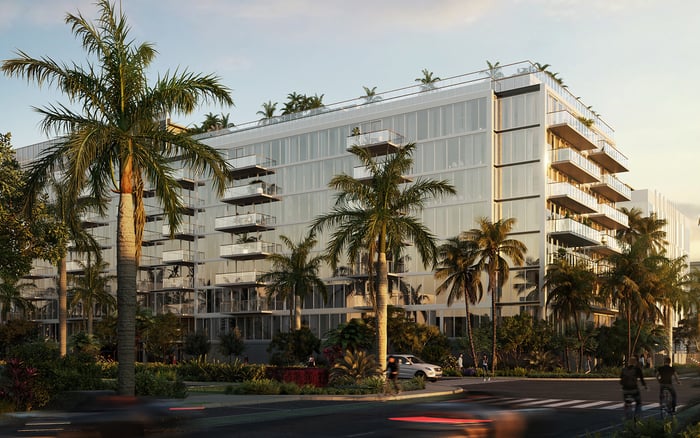
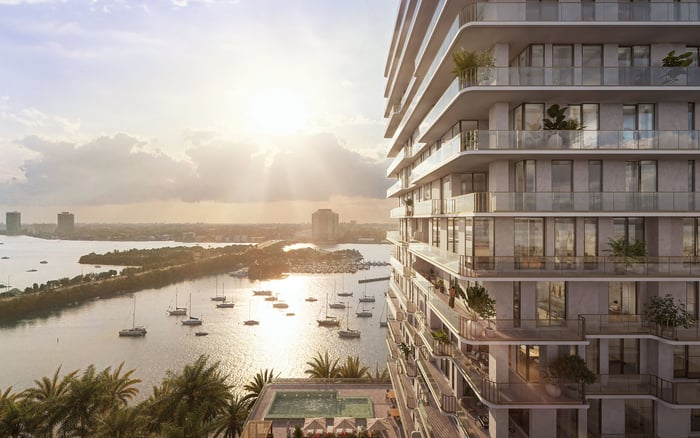
The Well Bay Harbor Islands is positioned as a boutique, wellness-oriented residential project in a calmer setting. Its appeal is less about spectacle than an insulated lifestyle shaped by holistic amenities, residential scale, and proximity to the established luxury orbit of Bal Harbour and Surfside. Continuum Club & Residences North Bay Village reads differently: a waterfront tower concept with resort-style programming, water views, and a more skyline-defining presence within an evolving urban island setting.
That distinction matters because luxury buyers often begin with emotion but close on structure. A residence may feel ideal during a presentation, yet the condominium documents determine how it can be used, leased, renovated, occupied by guests, and enjoyed over a decade or more.
The Well Bay Harbor Islands appears best suited to buyers seeking a refined primary or seasonal base rather than a high-turnover investment instrument. Its boutique identity, wellness positioning, and calmer setting point toward end-user livability. In practical terms, the buyer who values privacy, routine, and a more residential atmosphere may find the project’s personality easier to align with long-term ownership.
Bay Harbor Islands offers a quieter, more village-like setting with convenient access to Bal Harbour and Surfside. For many buyers, that combination is the draw: a base that feels tucked away without being disconnected from luxury retail, dining, and beach-adjacent social life. The Well may also appeal to owners who are less interested in the energy of a large tower and more focused on measured arrival, wellness amenities, and neighborhood continuity.
In the taxonomy of South Florida luxury, this is a Bay Harbor decision with a boutique sensibility. The buyer is not necessarily rejecting amenities. Instead, the priority is atmosphere, predictability, and a building culture that may feel more compatible with residential use.
Continuum Club & Residences North Bay Village presents a different proposition. Its waterfront tower profile, resort-style programming, and emphasis on water views create a more dynamic ownership experience. For buyers who want visual drama, a stronger amenity narrative, and a setting connected to the changing character of North Bay Village, Continuum may feel more compelling.
The essential question is whether that energy enhances the ownership experience or complicates it. Waterfront projects can offer a broader sense of arrival and a more active resident environment. They can also involve layered governance, operational complexity, and association rules that matter greatly to owners who plan to lease, host guests, keep pets, or renovate over time.
North Bay Village’s evolving urban character may suit buyers who are comfortable with transformation and waterfront density. In that sense, North Bay Village is not merely a location tag. It signals a different ownership psychology: more open to change, more comfortable with vertical living, and potentially more interested in a resort-style condominium ecosystem.
For both projects, the condominium documents should be treated as central decision material, not closing paperwork to be reviewed late in the process. Buyers should verify final rental rules, association policies, use restrictions, guest procedures, leasing approvals, pet rules, renovation controls, amenity access rights, and assessment exposure before relying on presentation-level impressions.
This is especially important for buyers who want optionality. A residence used only by the owner has a different risk profile than one intended for seasonal occupancy, family use, or leasing. Long-term rentals may be treated very differently from shorter stays, and small differences in minimum lease periods or approval procedures can change the financial and lifestyle logic of a purchase.
The same applies to guest policies. Some associations are relatively permissive, while others take a stricter view of occupancy, registration, elevator access, amenity use, or unaccompanied guests. In an ultra-premium building, those rules are not merely restrictions. They shape the privacy, tone, and day-to-day culture of the property.
The Well appears more naturally aligned with owners who prize livability over maximum rental flexibility or hotel-like turnover. That does not mean it should be assumed to prohibit rentals, nor does it mean Continuum should be assumed to allow broader use. The point is subtler: the brand and setting of The Well suggest a lifestyle-first orientation, while Continuum’s scale and resort-style identity may attract buyers who want a more active ownership platform.
A buyer considering rental use should ask precise questions before committing. What is the minimum lease term? How many leases are permitted per year? Is board approval required for tenants? Are background checks or fees involved? Can immediate family use the residence without the owner present? Are guests permitted to access all amenities? Are there blackout periods, move-in restrictions, or limits on furnished leases?
These answers can make one project significantly better suited to a buyer’s plans, even if the other appears more attractive on design or view.
In South Florida’s ultra-premium market, the most sophisticated buyers increasingly define luxury by ease. A residence should be beautiful, but it should also be manageable. It should support routines, protect privacy, and remain practical as family needs evolve.
For an owner-occupant, The Well’s wellness-forward and quieter profile may offer a more natural fit. The daily experience is likely to be judged by calm arrival, amenity intimacy, and the feeling of living in a residential enclave near established luxury nodes. For a buyer drawn to waterfront presence and a more animated building environment, Continuum may feel more aligned. Its appeal is tied to views, programming, and the larger visual statement of a North Bay Village tower.
Neither choice is universally better. The better fit is the one whose rules, culture, and setting match the buyer’s actual use case.
Before choosing between these two projects, a buyer should build a decision matrix around use, not aesthetics alone. Primary residence, seasonal home, family compound, and income-oriented ownership all require different answers. A buyer should also review whether the association’s policies are final or still subject to change, especially in the pre-completion or early governance stages of a new development.
The most important review should occur before contract confidence hardens. Legal counsel should evaluate the condominium documents, while the buyer and advisory team should test every assumption about rentals, pets, guests, renovations, insurance, reserves, assessments, and amenity access. In this comparison, the winning address is not only the more beautiful one. It is the one that will be easiest to own.
Which project feels more residential in character? The Well Bay Harbor Islands reads as the calmer, more boutique wellness-oriented option, especially for buyers prioritizing end-user livability.
Which project feels more waterfront and resort-like? Continuum Club & Residences North Bay Village is framed as the waterfront tower option, with resort-style programming and water-view appeal.
Is one project clearly better for rentals? Not from positioning alone. Buyers must review final condominium documents, rental minimums, approval procedures, and use restrictions.
Why do association rules matter so much? Association rules determine how an owner may lease, host guests, renovate, keep pets, access amenities, and manage the residence over time.
Who is The Well likely to suit best? It may suit buyers seeking a quieter residential base near Bal Harbour and Surfside, with wellness amenities and a more insulated atmosphere.
Who is Continuum likely to suit best? It may suit buyers who want a dynamic waterfront setting, resort-style amenities, and comfort with North Bay Village’s evolving character.
Should buyers rely on marketing language about flexibility? No. Marketing can describe lifestyle, but the condominium documents and association policies govern actual ownership rights.
What should pet owners verify? Pet owners should confirm breed, size, number, registration, service-area, and amenity-access rules before assuming the residence will work.
What should renovation-minded buyers review? They should study alteration approvals, contractor access, work-hour limits, insurance requirements, elevator use, and any design restrictions.
What is the best way to shortlist comparable options for touring? Start with location fit, delivery status, and daily lifestyle priorities, then compare stacks and elevations to validate views and privacy.
For a tailored shortlist and next-step guidance, connect with MILLION.
If branded residences are on your mind — as a home or as an allocation — we would be glad to share what we are seeing, privately.
Begin a quiet conversation