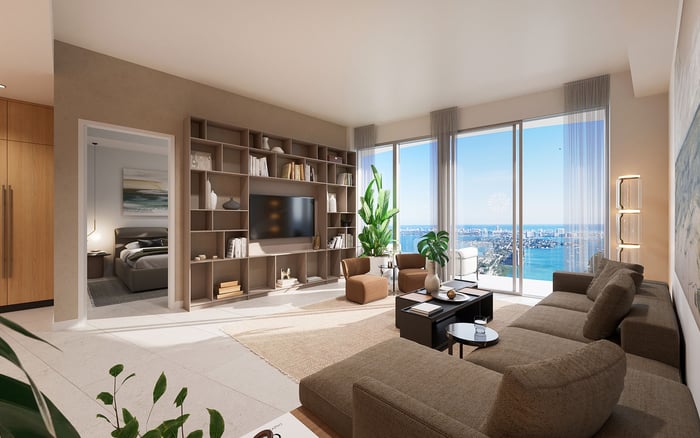
For many high-net-worth buyers, South Florida’s most persuasive luxury feature is not another club level, but the long-term financial architecture created by no state income tax.
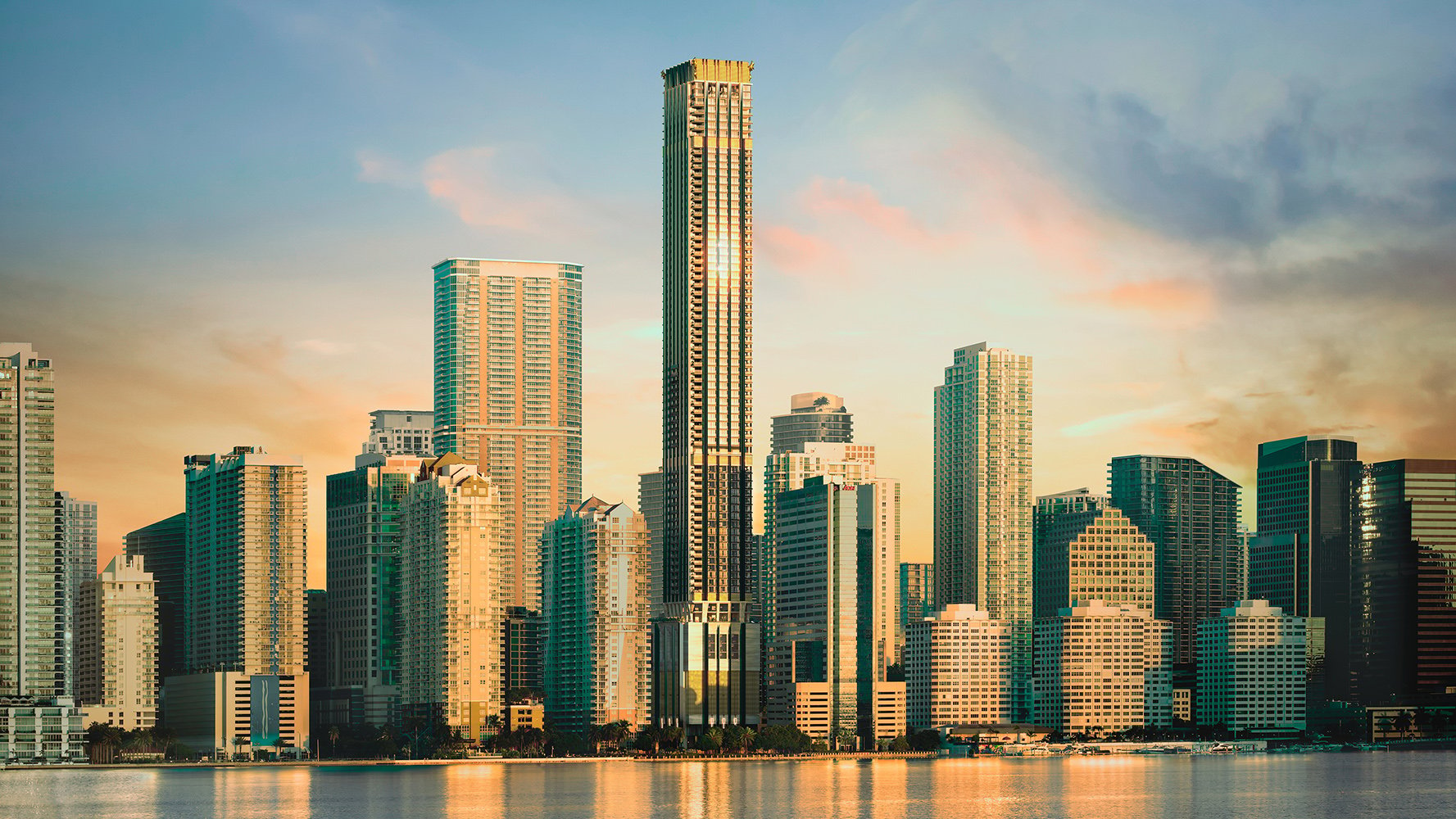
In South Florida luxury real estate, the conversation often begins with views, architecture, service, and the private language of arrival. Buyers compare porte-cochères, wellness suites, club rooms, screening lounges, marina access, and the quiet choreography of staff who understand discretion. Yet for a certain buyer, the most meaningful feature is not on an amenity floor at all. It is the broader financial framework of owning in a state with no state income tax.
That distinction matters because ultra-premium buyers rarely evaluate a residence as a standalone indulgence. A home sits within a wider structure that may include business income, investment liquidity, estate planning, family mobility, philanthropic commitments, and time divided across more than one jurisdiction. In that context, a spectacular amenity program can be desirable, but tax efficiency can be decisive.
This does not make design, service, or lifestyle secondary. It simply reframes them. The question is no longer whether a building has enough amenities. The sharper question is whether the full ownership decision improves the buyer’s life after closing, year after year.
At the top of the market, amenities can begin to feel repetitive. Most sophisticated buyers expect an elegant lobby, attended arrival, wellness space, pool environments, private dining opportunities, fitness programming, and service that feels anticipatory rather than theatrical. Once those expectations are satisfied, an additional floor of amenities may add pleasure, but not necessarily conviction.
The buyer who already belongs to private clubs, travels with ease, and entertains selectively may not need a building to provide every possible experience. For that buyer, privacy, operational excellence, parking ease, elevator discipline, staff quality, and long-term building stewardship can matter more than a crowded menu of features. The appeal is not abundance for its own sake. It is usefulness.
No state income tax enters the decision differently. It is not a room that can be toured in fifteen minutes. It is not a finish package or a branded hospitality promise. It is a recurring structural advantage that can influence the economics of residency, compensation, investment gains, and family planning. For buyers who think in decades, that can be more compelling than another lounge, bar, or treatment room.
The tax conversation tends to matter most for buyers whose income profile is active, variable, or highly liquid. Entrepreneurs, executives, asset managers, professional investors, founders after liquidity events, and families with complex balance sheets often evaluate location through both lifestyle and governance. They may love South Florida for its climate and waterfront living, but they also study what their chosen address allows them to preserve, redirect, or simplify.
This is where the idea of value becomes more nuanced. A residence may be expensive on paper while still feeling rational within a broader financial plan. Conversely, a residence with extraordinary amenities may be less persuasive if it does not support the buyer’s long-term lifestyle rhythm. In search terms, the decision often touches investment, second-home use, Brickell, Miami Beach, Palm Beach, and new construction, but the real work is personal.
For some, the South Florida home becomes a primary residence. For others, it is the anchor of a seasonal life that gradually becomes more permanent. Either way, the buyer is not simply purchasing square footage. The buyer is selecting a base of operations.
Tax efficiency may open the conversation, but lifestyle must still close it. South Florida’s appeal is strongest when financial logic and daily pleasure align. A buyer who chooses Brickell may prioritize proximity to finance, restaurants, cultural energy, and a vertical urban rhythm. A buyer drawn to Miami Beach may place greater weight on ocean proximity, architectural identity, and the pleasure of moving easily from residence to sand, dining, or art.
Palm Beach carries a different cadence, shaped by privacy, tradition, landscape, and a quieter form of social capital. Waterfront enclaves, island settings, and low-density neighborhoods attract buyers who value separation as much as convenience. The right answer depends less on which market is most glamorous and more on how a household actually lives.
This is why the amenity-floor debate can mislead. A building may offer everything and still be wrong for a buyer’s daily routine. Another may appear more restrained, yet deliver the exact privacy, service, view corridor, and neighborhood fit the household needs. For truly experienced buyers, restraint can be a luxury signal.
No state income tax functions like an invisible amenity. It does not appear in renderings, but it can affect the ownership calculus with unusual force. To weigh it properly, buyers should compare not only purchase price and monthly carrying costs, but also the broader after-tax context of where they earn, invest, reside, and spend time.
That does not mean every buyer should make a decision based primarily on tax policy. A home must still be emotionally right. It must support family, hospitality, rest, security, and identity. But if two residences offer comparable lifestyle satisfaction, the state tax environment can become the deciding factor. It may justify choosing a better-located but more restrained home over a more embellished building elsewhere.
The most disciplined buyers ask direct questions. Will this address support the way we actually live? Does the building offer services we will use, not merely admire? Is the location resilient for our family’s next chapter? Does the purchase fit our broader wealth strategy? Those questions bring clarity to a category often distracted by surface drama.
For developers, the lesson is not to reduce ambition. South Florida buyers still reward beauty, craftsmanship, hospitality, and intelligent programming. The lesson is to recognize the limits of the amenity arms race. A buyer motivated by tax efficiency and residency planning may be less impressed by spectacle and more focused on execution.
That means layouts should live well, not just photograph well. Service areas should be discreet. Parking and arrival should feel effortless. Wellness should be serene rather than performative. Outdoor space should be usable. Governance should be credible. The building should give a buyer confidence that life will be easier, not merely more decorated.
For sellers, the same principle applies. The strongest narrative may not be that a property has more amenities than a competitor. It may be that the property offers a clear, elegant, and practical way to inhabit South Florida at a very high level. In the ultra-premium segment, clarity is persuasive.
The most sophisticated South Florida purchase is often about optionality. It gives a buyer the ability to spend more time in a favorable tax environment, host family in comfort, conduct business with ease, and enjoy a lifestyle that does not feel like a compromise. It can also provide a graceful bridge between markets, seasons, and phases of life.
Another amenity floor may be enjoyable. No state income tax may be transformative. The difference is duration. Amenities are consumed through use. Tax structure works in the background, quietly influencing the broader equation. For buyers at this level, the background often matters as much as the view.
The best decision is not austerity disguised as prudence. It is alignment. When architecture, neighborhood, service, privacy, and tax logic all point in the same direction, the residence becomes more than a beautiful address. It becomes a strategic home.
Why can no state income tax matter so much to luxury buyers? It can influence the broader economics of residency, income, and investment planning, especially for buyers with complex financial lives.
Does this mean amenities are no longer important? No. Amenities still matter, but they are most valuable when they support the buyer’s real routine rather than simply adding spectacle.
Who should weigh tax considerations most carefully? Entrepreneurs, executives, investors, founders, and families with multi-state lives often benefit from a more deliberate analysis.
Can a second home become part of a tax strategy? It can, but the details depend on how the owner actually lives, works, and documents residency decisions.
Is Brickell better for tax-motivated buyers than the beach? Not inherently. Brickell may suit an urban business lifestyle, while coastal areas may better serve privacy, leisure, and family use.
Should buyers choose fewer amenities if the tax case is strong? They should choose the home that best balances financial logic, service quality, privacy, location, and daily comfort.
What is the biggest mistake in comparing luxury buildings? Focusing on amenity count alone can distract from layout, governance, arrival experience, and long-term livability.
Does new construction always make more sense? Not always. New construction can offer modern systems and design, but the right choice depends on execution, location, and fit.
How should families compare South Florida neighborhoods? They should consider school needs, airport access, privacy, dining patterns, boating, beach use, and the cadence of daily life.
What makes a South Florida purchase feel truly strategic? The strongest purchase aligns lifestyle pleasure with financial efficiency, privacy, service, and long-term flexibility.
For a tailored shortlist and next-step guidance, connect with MILLION.
If branded residences are on your mind — as a home or as an allocation — we would be glad to share what we are seeing, privately.
Begin a quiet conversation