A buyer-oriented comparison of The Village at Coral Gables and Ziggurat Coconut Grove through the lens of discreet household operations, valuable deliveries, wine logistics, art handling, and service visibility.
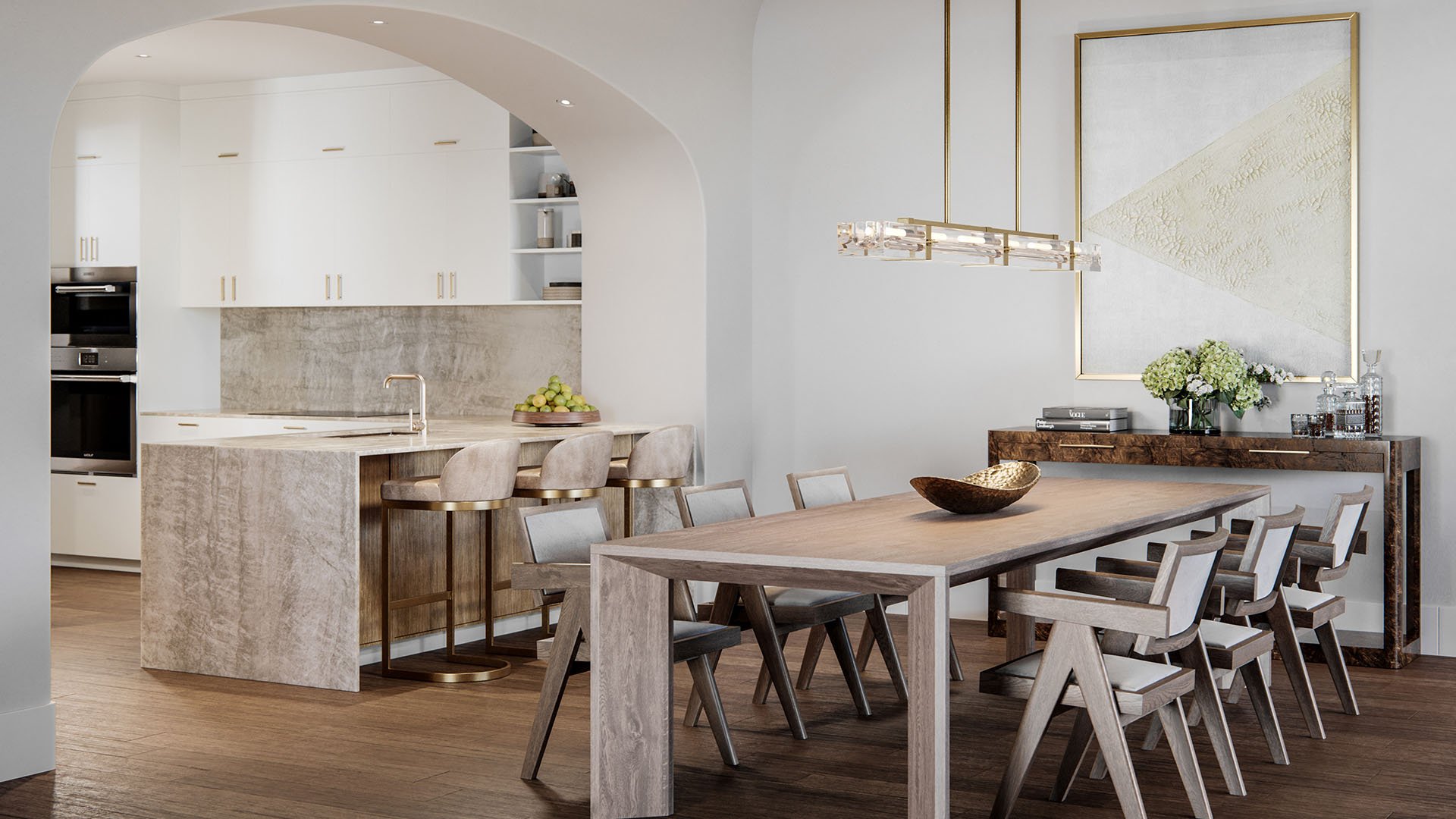
For a certain South Florida buyer, the choice between The Village at Coral Gables and Ziggurat Coconut Grove is not only about architecture, finishes, or neighborhood atmosphere. It is about how a household actually functions. The relevant question is not simply which residence appears more refined, but which one can support a life that includes art shipments, wine deliveries, couture, design installations, private staff, and frequent high-value movement in and out of the home.
That distinction matters. A residence can be beautiful and still create friction every time a crate arrives, a wine allocation lands, or a designer needs to coordinate with movers. The most sophisticated buyers tend to evaluate these properties as they would a private estate: through access, visibility, staging, timing, and control.
The Village at Coral Gables represents the Coral Gables side of this comparison, while Ziggurat Coconut Grove represents the Coconut Grove option. Both speak to a luxury audience, but this analysis uses a narrower lens: household operations for owners who value discretion as much as design.
The buyer in this category is often managing far more than routine residential deliveries. A painting may arrive in a large crate. Wine may need to move quickly into appropriate storage. Luxury goods may require signature protocols and minimal exposure. Furniture and design pieces may need careful staging before installation. In each case, the operational path matters.
The core issues are direct: where vehicles arrive, where packages or crates are received, where items wait before entering the residence, what elevator or stair route is used, how visible staff and handlers become, and how much control the owner has over the flow. These are not decorative questions. They affect privacy, condition risk, insurance coordination, staff scheduling, and the everyday calm of the household.
For new-construction buyers, this layer of diligence is especially important because sales presentations often emphasize lifestyle, materials, and amenities. The more private question is whether the building or residence can operate like a well-run household without turning every delivery into a visible event.
At The Village at Coral Gables, buyers should focus on how the Coral Gables setting translates into day-to-day service. The relevant diligence begins with vehicle arrival. Can a delivery vehicle approach without drawing attention? Is there a defined point of handoff? Is that handoff separate from the owner’s primary arrival experience, or does it overlap with guest and resident circulation?
The next issue is staging. If an art crate, designer shipment, or wine delivery arrives before the owner or household manager is ready, where does it wait? Buyers should ask whether there is a formal receiving procedure, whether items are logged, and who has custody while the shipment is on property. No verified operational details are available here on dedicated service elevators, loading areas, private garages, package rooms, or art-storage protocols, so the responsible posture is to request written confirmation rather than assume.
For collectors, dimensions matter. A beautiful stair sequence is not the same as a workable path for a large crate. Ask how bulky items move from curb or arrival point to the residence, whether routes are protected from public view, and whether staff can coordinate time-sensitive deliveries without exposing household patterns.
The Village at Coral Gables may appeal to buyers who want a Coral Gables lifestyle with a residential sensibility, but the operational verdict depends on confirmed plans, procedures, and staff practices.
Ziggurat Coconut Grove should be evaluated with the same discipline. Coconut Grove has its own residential rhythm, and buyers drawn to Ziggurat Coconut Grove may be responding to a more Grove-oriented sense of privacy and design. Yet the operational questions remain the same: how does a high-value item enter, who sees it, where does it pause, and how does it reach the residence?
For wine, the most important questions involve temperature, timing, and transfer. Buyers should not assume climate-controlled receiving, humidity control, wine-storage capacity, or backup power unless those elements are specifically confirmed. If a shipment arrives during heat, delay can matter. Strong diligence asks how quickly items move from delivery point to owner-controlled space and whether household staff can be notified and involved at the right moment.
For art, buyers should ask about art-handler access, freight elevator dimensions, crate staging, private loading bays, and insurance or security protocols. None of those operational details should be treated as verified unless they appear in sales materials, condominium documents, building plans, or written staff protocols.
Ziggurat Coconut Grove can be considered within a Coconut Grove lifestyle framework, but operational discretion should be proven, not inferred from branding or renderings.
The defining luxury in this comparison is not volume. It is privacy. A small delivery can become conspicuous if it moves through the wrong area at the wrong time. A large crate can feel seamless if the route is controlled, staff understand the protocol, and the owner has advance command over scheduling.
Buyers should ask each property to describe a real scenario. A wine shipment arrives late morning. A gallery crate arrives on a weekday. A luxury fashion delivery needs signature confirmation while the owner is away. A designer sends several pieces before an installation appointment. What happens next? Who receives the item? Is the owner notified immediately? Can household staff receive on the owner’s behalf? Is the item visible to other residents, guests, or building personnel beyond those required to handle it?
Boutique properties often market intimacy, but intimacy alone does not answer these questions. In fact, smaller environments can make circulation more visible unless protocols are carefully designed. Larger service infrastructure can help, but only if procedures and staffing support it. The correct comparison is not scale versus scale. It is control versus ambiguity.
The best approach is to request a practical walkthrough focused solely on household operations. Begin at the most likely vehicle arrival point. Follow the exact path an art crate would take. Then repeat the exercise for a wine shipment, a standard luxury package, and a furniture delivery. Ask where delays occur and who has authority to solve them.
Buyers should also request written answers on delivery windows, after-hours procedures, insurance requirements, vendor access, security logging, staff communication, and owner approval rights. If an item must wait, ask where it waits. If an elevator is involved, ask whether its size, protection rules, and reservation policies are compatible with valuable goods. If stairs are part of the route, ask whether that path is realistic for fragile or heavy items.
The deciding factor may not be which property promises more. It may be which property can document more clearly. For households with collections, wine, and frequent luxury deliveries, clarity is a form of service.
There is no responsible basis to state that The Village at Coral Gables or Ziggurat Coconut Grove is categorically superior for discreet art, wine, or luxury deliveries without confirmed operational materials. The stronger conclusion is that both should be evaluated through the same private-household lens.
The Village at Coral Gables should be tested for how its Coral Gables residential context supports controlled arrival, staging, and owner-directed movement. Ziggurat Coconut Grove should be tested for how its Coconut Grove context supports equally discreet receiving and transfer. In both cases, buyers should move beyond amenity language and ask for the mechanics.
For the ultra-luxury owner, the most elegant residence is often the one where nothing feels improvised. Deliveries arrive without theater. Staff know the route. Valuable objects are protected. The household remains calm.
Is this comparison about design or household operations? It is primarily about household operations, especially discreet handling of art, wine, luxury goods, and service movement.
Can buyers assume either property has dedicated service elevators? No. Dedicated service elevators should be confirmed through written materials, plans, or direct project documentation.
What should art collectors ask first? Ask how crates arrive, where they are staged, what route they take, and whether art handlers have controlled access.
What should wine collectors verify? Verify receiving procedures, temperature exposure, transfer timing, storage assumptions, and any backup power provisions.
Is The Village at Coral Gables better for discreet deliveries? That should not be assumed. Buyers should request confirmed operational procedures before making that judgment.
Is Ziggurat Coconut Grove better for art or wine logistics? That should not be assumed either. Its suitability depends on verified access, staging, staff, and security protocols.
Why does staff visibility matter? Staff visibility can reveal household patterns, delivery value, and owner routines, all of which matter to privacy-minded buyers.
Should buyers ask for a delivery walkthrough? Yes. A route walkthrough can reveal whether the property supports discreet, practical movement from arrival point to residence.
Do boutique residences always offer more privacy? Not automatically. Boutique scale can feel intimate, but privacy depends on circulation, staffing, and operating protocols.
What is the safest way to compare these two options? Compare documented procedures for vehicle arrival, receiving, staging, elevator or stair routes, staff visibility, and owner control.
For a discreet conversation and a curated building-by-building shortlist, connect with MILLION.
If branded residences are on your mind — as a home or as an allocation — we would be glad to share what we are seeing, privately.
Begin a quiet conversation